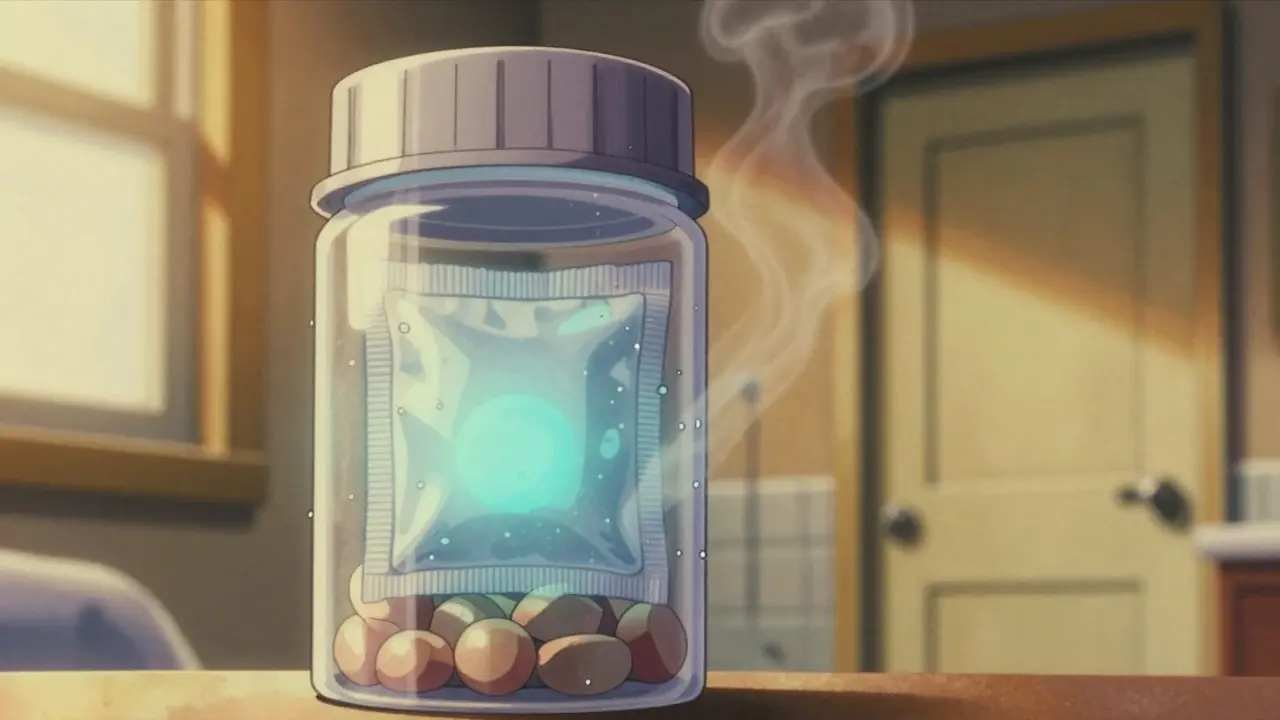
If you’ve ever opened a bottle of pills and found them stuck together, discolored, or smelling weird, you’re not alone. Moisture is the silent killer of medications - and it doesn’t care if you live in a dry desert or a humid coastal city like Durban. In fact, moisture damage is one of the most common reasons pills lose their effectiveness, and in some cases, become harmful. The good news? It’s preventable. You don’t need a lab or a PhD to stop it. Just a few smart habits and a basic understanding of how moisture attacks your meds.
Why Moisture Destroys Pills and Capsules
Water doesn’t just make pills soggy. It triggers chemical reactions that break down the active ingredients. This process, called hydrolysis, turns effective drugs into useless - or even dangerous - substances. Aspirin, for example, turns into vinegar and salicylic acid when wet. That’s not just ineffective; it can irritate your stomach. Vitamin C, antibiotics like amoxicillin, and even some heart medications are especially vulnerable. The problem isn’t just humidity in the air. Every time you open a pill bottle, you let in moist air. A 500-pill bottle used daily gets about 250 new air exchanges. Each one brings in more moisture. Over weeks or months, that adds up.
Studies show that 67% of medication shortages in the U.S. between 2010 and 2012 were linked to quality issues caused by moisture. That’s not just a manufacturer problem - it’s a patient safety issue. If your pills degrade, you’re not getting the dose you paid for. In tropical climates or places like Durban, where humidity regularly hits 80%, this becomes even more urgent.
What Makes Some Pills More Vulnerable?
Not all pills are created equal. Some are built to resist moisture. Others? Not so much. The key difference lies in how they’re made.
- Uncoated tablets - These are the most at risk. The powder inside absorbs water like a sponge.
- HPMC-coated tablets - These have a basic film coating made from hydroxypropyl methylcellulose. It helps, but it’s not enough. In tests, these tablets lost up to 100% of their active ingredient after just 10 days outside sealed packaging.
- PVA-coated tablets - These use polyvinyl alcohol, a much stronger barrier. Brands like Opadry® amb II reduce moisture transmission by 30-40% compared to HPMC. In real-world use, pharmacies switching to PVA-coated antibiotics saw customer complaints drop from five per month to nearly zero.
Look at the brand name or ask your pharmacist. If it’s a generic, it might not have the best coating. That doesn’t mean it’s bad - but it does mean you need to be extra careful with storage.
The Three-Layer Defense System
Preventing moisture damage isn’t about one trick. It’s about layers. Think of it like waterproofing a house. You don’t just rely on the roof. You use siding, flashing, gutters, and sealant. The same applies to pills.
Layer 1: The Coating - Your First Shield
The best defense starts at the factory. Manufacturers use film coatings to wrap the tablet or capsule. As mentioned, PVA-based coatings are far superior to older HPMC types. If you’re choosing between two brands of the same medicine, pick the one with the better coating. You won’t always see it on the label, but ask your pharmacist. They often know which versions have the most protective film.
Layer 2: The Container - Don’t Trust Plastic Alone
HDPE (high-density polyethylene) bottles are common. They’re cheap, lightweight, and keep out liquid spills. But they’re like a screen door - great for bugs, useless against moisture vapor. A plastic bottle without a desiccant is asking for trouble. The same goes for blister packs that aren’t sealed with aluminum foil. If the packaging feels flimsy or you can see air gaps, it’s not doing enough.
Layer 3: The Desiccant - The Silent Hero
This is the unsung hero. A small packet inside your pill bottle, usually labeled "Do Not Eat," is filled with silica gel. It’s like a sponge for water vapor. High-quality silica gel can absorb up to 40% of its own weight in moisture. In a study by Wisesorbent, adding the right-sized desiccant to a 500-pill bottle kept moisture levels stable over 24 months - even in 40°C heat and 80% humidity.
But here’s the catch: many bottles come with undersized desiccants. A packet that’s too small can’t handle the 250+ air exchanges from daily use. Look for a desiccant that’s at least 1.5 times the size needed for the bottle’s headspace. If your bottle has a tiny packet and you’re using it daily, replace it with a larger one. You can buy medical-grade silica gel packs online or ask your pharmacy for them.
What Not to Do
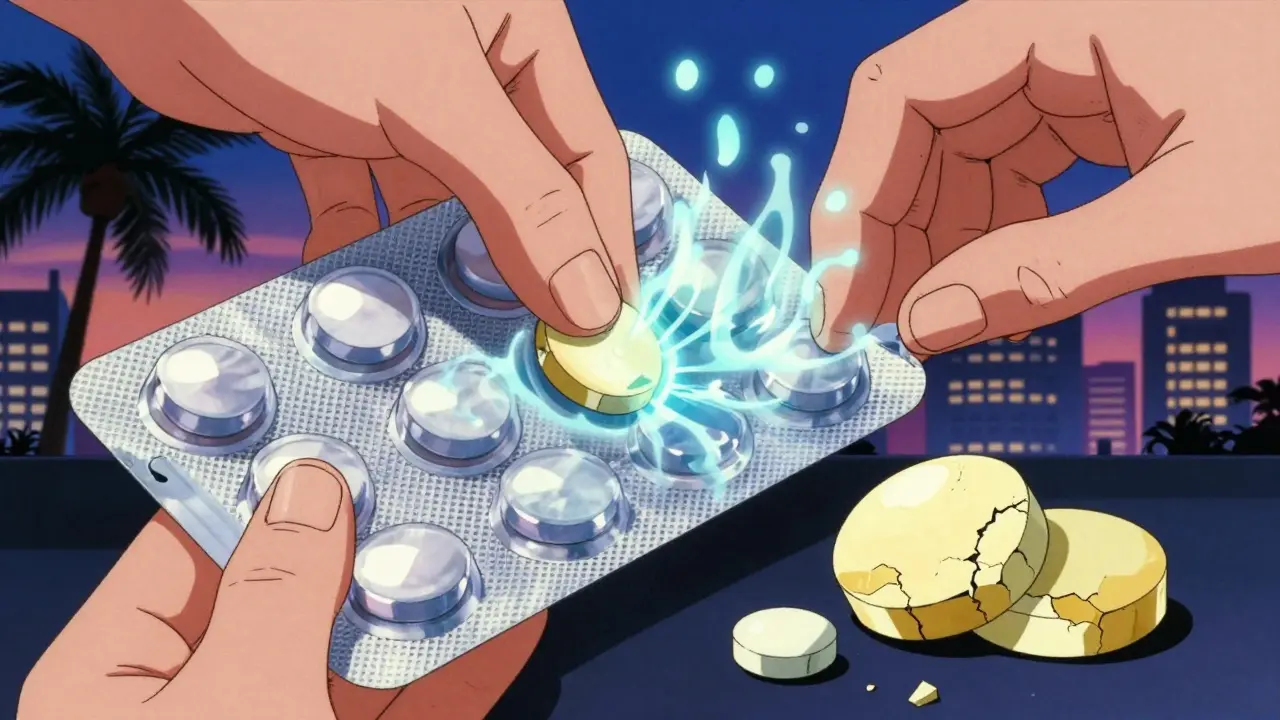
Here are the biggest mistakes people make - and why they’re dangerous.
- Keeping pills in the bathroom - Steam from showers, sinks, and baths floods the air with moisture. This is the worst place in your house for meds.
- Transferring pills to pill organizers - Plastic pill boxes don’t have desiccants. If you use one, refill it weekly and keep the original bottle sealed and dry.
- Leaving the cap off - Even a few minutes with the lid open lets in humidity. Always close it immediately after taking your dose.
- Using old or expired desiccants - If the silica gel packet is hard, cracked, or has changed color (some turn pink when full), it’s done its job. Replace it.
- Storing in the fridge - Cold air holds less moisture, but when you take the bottle out, condensation forms on the outside and inside. This can cause more damage than leaving it at room temperature.
How to Store Pills Right
Here’s a simple, foolproof routine:
- Keep pills in their original bottle - with the desiccant still inside.
- Store them in a cool, dry place - like a bedroom drawer, not the bathroom or kitchen.
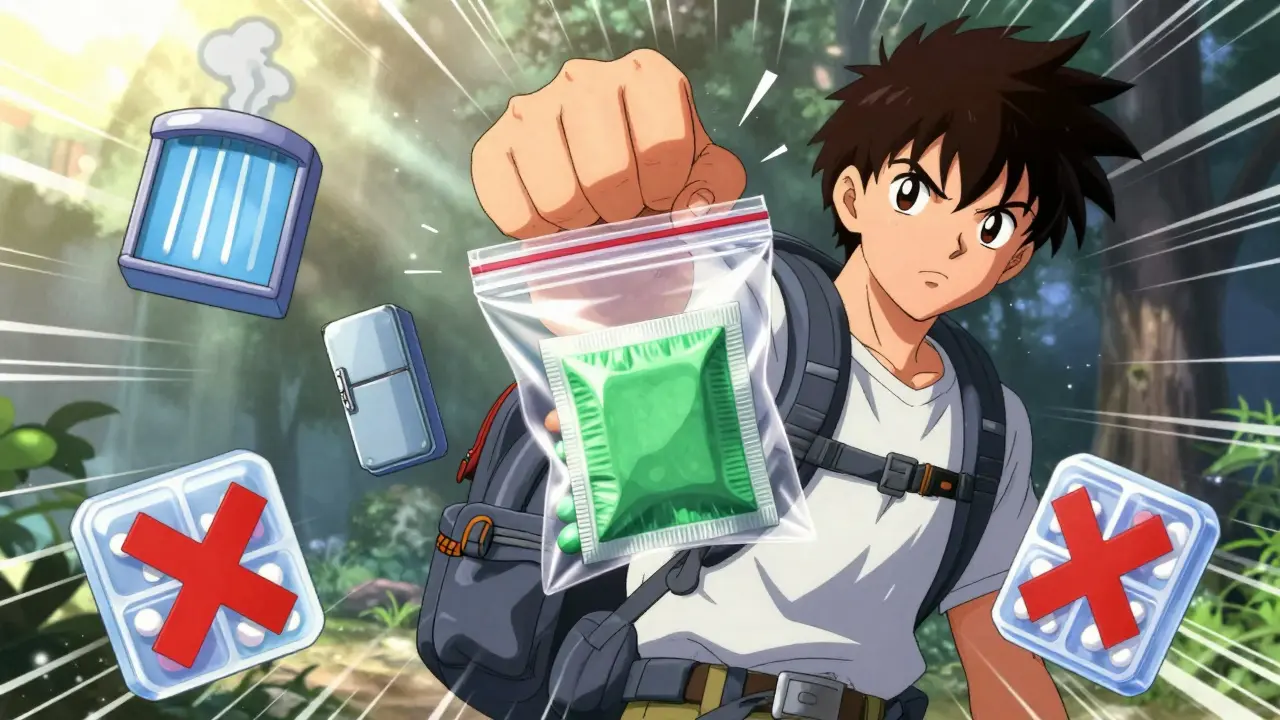
- Use airtight containers if you’re traveling or living in a humid area. Small zip-lock bags with a fresh silica gel pack work in a pinch.
- Check the desiccant every 3 months. If it’s hard or discolored, replace it.
- If you use a pill organizer, only fill it for the week. Keep the rest sealed.
For travelers in humid climates: Always carry a small silica gel pack in your pill case. A 1-gram packet costs less than $1 and can save your whole supply.
What to Do If Your Pills Are Already Damaged
If you notice any of these signs, don’t take them:
- Pills stuck together or crumbly
- Unusual smell - like vinegar or mold
- Discoloration - yellowing, dark spots, or fading
- Change in texture - overly hard, soft, or oily
Return them to your pharmacy. Most will replace them. And tell them what happened. That feedback helps manufacturers improve packaging.
What’s Changing in the Industry
Pharma companies are waking up. In 2023, 85% of moisture-sensitive medications now use at least two protection layers - coating plus desiccant. The market for desiccants is growing fast, hitting $1.8 billion by 2027. New innovations include:
- Color-changing labels that turn red when moisture leaks in
- Biodegradable desiccants made from plant-based materials
- Smart packaging with moisture sensors built in
These aren’t just fancy upgrades - they’re necessary. With climate change making humidity worse in more places, the old ways just don’t cut it anymore.
Final Takeaway
Moisture damage isn’t inevitable. It’s preventable. You don’t need to be a scientist to protect your meds. Just remember: coating matters, packaging matters, and desiccants matter. Combine them, and your pills will stay strong. Skip any one, and you’re gambling with your health. If you’re unsure, ask your pharmacist. They’ve seen what moisture does to pills - and they know how to stop it.
Can I reuse the desiccant packet from my pill bottle?
No. Once a silica gel desiccant has absorbed moisture, it’s no longer effective. Some packets change color (often from blue to pink) to show they’re full. Even if it looks dry, it can’t absorb more. Reusing it gives you false confidence. Always replace it with a new, medical-grade packet if you’re concerned about moisture.
Are all pill bottles the same in terms of moisture protection?
No. HDPE plastic bottles are common but don’t block moisture vapor. Aluminum foil blister packs with a sealed backing offer better protection. The best bottles combine a tight seal, a properly sized desiccant, and a moisture-resistant coating on the pills themselves. If your bottle is just plastic with a tiny packet, it’s not enough - especially in humid areas.
Why do some pills taste funny after being stored for a while?
Moisture causes chemical breakdown. For example, aspirin turns into salicylic acid and acetic acid (vinegar). Other medications degrade into bitter or metallic-tasting compounds. This isn’t just unpleasant - it means the drug may no longer work as intended. If your pill tastes off, don’t take it. Return it to the pharmacy.
Can I store pills in a glass jar with a tight lid instead of the original bottle?
Yes - but only if you add a fresh silica gel desiccant packet. Glass jars are non-porous and seal well, making them better than plastic bottles. But without a desiccant, moisture from the air will still get in. Always include a new, properly sized desiccant when transferring pills. Label the jar with the drug name and expiration date.
How do I know if my desiccant is the right size for my pill bottle?
A general rule: the desiccant should be able to absorb at least 150% of the expected moisture from headspace air. For a 500-pill bottle used daily, that means a 2-3 gram silica gel packet. If the packet is smaller than your pinky nail, it’s likely too small. When in doubt, ask your pharmacist or buy medical-grade desiccants online. They’re cheap and worth the extra protection.
Next time you open a pill bottle, check the desiccant. Look at the coating. Think about where you store it. Small steps - done consistently - keep your meds working when you need them most.




Sanjaykumar Rabari
23 February, 2026 03:36 AMMoisture ruins pills. No magic. No science. Just water. You leave your pills in the bathroom? You’re asking for poison. I’ve seen it. Pills turning to dust. Smelling like old vinegar. You think it’s fine? It’s not. Your heart med? Your diabetes pill? Gone. Effective? No. Dangerous? Yes. Store them right. Or suffer. Simple.
Khaya Street
23 February, 2026 11:54 AMInteresting read. As someone from Durban, I can confirm humidity here is brutal. I used to keep my meds in the bathroom cabinet-big mistake. Now they’re in a sealed glass jar with a fresh desiccant in the bedroom. No more sticky pills. No weird smells. Just simple changes. Pharmacies here should really push better packaging. Not everyone can afford to upgrade.
Christina VanOsdol
24 February, 2026 02:36 AMOkay, so let me get this straight: you’re telling me that the tiny, pathetic, barely-there silica gel packet that comes in my 500-pill bottle-yes, the one that looks like a crumpled tissue-has ZERO chance of handling 250+ air exchanges? And you want me to believe that? That’s not a desiccant-that’s a placebo for your anxiety! And don’t even get me started on the fact that most generics use HPMC coatings that melt like butter in a sauna. I’ve had amoxicillin turn into a chalky, moldy mess. I didn’t know it was hydrolysis-I just knew I was vomiting for three days. Pharma is scamming us. And yes, I’m filing a complaint. With receipts. And photos. And a lawyer.
Brooke Exley
25 February, 2026 03:32 AMYou’re not alone in this struggle-and you’re not powerless! 💪 Every time you check that desiccant, you’re taking control. Every time you swap out that plastic bottle for a glass jar with a fresh silica pack, you’re winning. This isn’t about being perfect-it’s about being consistent. Small steps. Daily choices. You’re not just storing pills-you’re protecting your health, your peace, your future self. And guess what? That’s worth every extra second. You’ve got this. Seriously. I believe in you.
Alfred Noble
25 February, 2026 11:52 AMHey, I’ve been using those ziplock bags with silica gel for travel-works great. But I always forget to replace the packet. Last trip, I opened my bottle and it felt kinda… squishy. Not sure if it was the meds or just me being paranoid. Anyway, now I write ‘REPLACE’ on my calendar every 3 months. Also, I store mine in the closet next to my shoes. Not the bathroom. Learned that the hard way. 😅
Matthew Brooker
26 February, 2026 18:59 PMThis is one of those things nobody talks about until you get sick from bad meds. I used to think the pharmacy knew what they were doing. Turns out they’re just using the cheapest packaging that passes basic regulations. I started asking for PVA-coated versions. Took me three calls. One pharmacist actually looked at me like I was from Mars. But I got it. And my pills haven’t changed since. It’s not about being fancy. It’s about being safe. We all deserve better.
Emily Wolff
28 February, 2026 00:24 AMIf you’re still using plastic bottles with undersized desiccants, you’re not just negligent-you’re reckless. This isn’t a suggestion. It’s a public health failure. The fact that this article even needs to exist is embarrassing. You wouldn’t store insulin in a paper bag. Why treat other life-saving meds like disposable junk?
Jacob Carthy
1 March, 2026 14:16 PMUSA makes the best pills. The best coatings. The best desiccants. If you’re having problems, you’re doing something wrong. Probably storing them in some humid basement or letting your dog sleep on the medicine cabinet. We don’t have this problem here. We have standards. You should too.
Bhaskar Anand
3 March, 2026 09:47 AMIndia has been storing medicines for centuries without silica gel. Our grandmothers kept them in clay pots. They worked. You think modern science is better? Maybe you’re just lazy. Or brainwashed by corporate pharma. Stop buying overpriced packets. Use a dry cloth. Keep them away from water. Simple. No need for 3-layer systems. Or glass jars. Or color-changing labels. Just common sense.
William James
3 March, 2026 14:20 PMIt’s funny how we obsess over the packaging when the real issue is how disconnected we’ve become from our own health. We don’t check our meds because we don’t feel connected to them. We treat them like objects, not lifelines. But if you pause-really pause-and look at that bottle, that desiccant, that coating-you start to see it as part of your body’s trust system. It’s not just chemistry. It’s care. And care is the most powerful protection of all.
David McKie
4 March, 2026 17:46 PMMy cousin died because her heart meds turned to sludge. She didn’t know. She trusted the bottle. The desiccant was cracked. The coating was HPMC. She thought she was fine. She wasn’t. They buried her with a pill organizer. I’ve thrown out every plastic bottle in my house. I use glass. I add triple the desiccant. I label everything. I scream at the pharmacy. I won’t let this happen again. If you’re not doing this, you’re one bad dose away from tragedy. And you won’t even know until it’s too late.