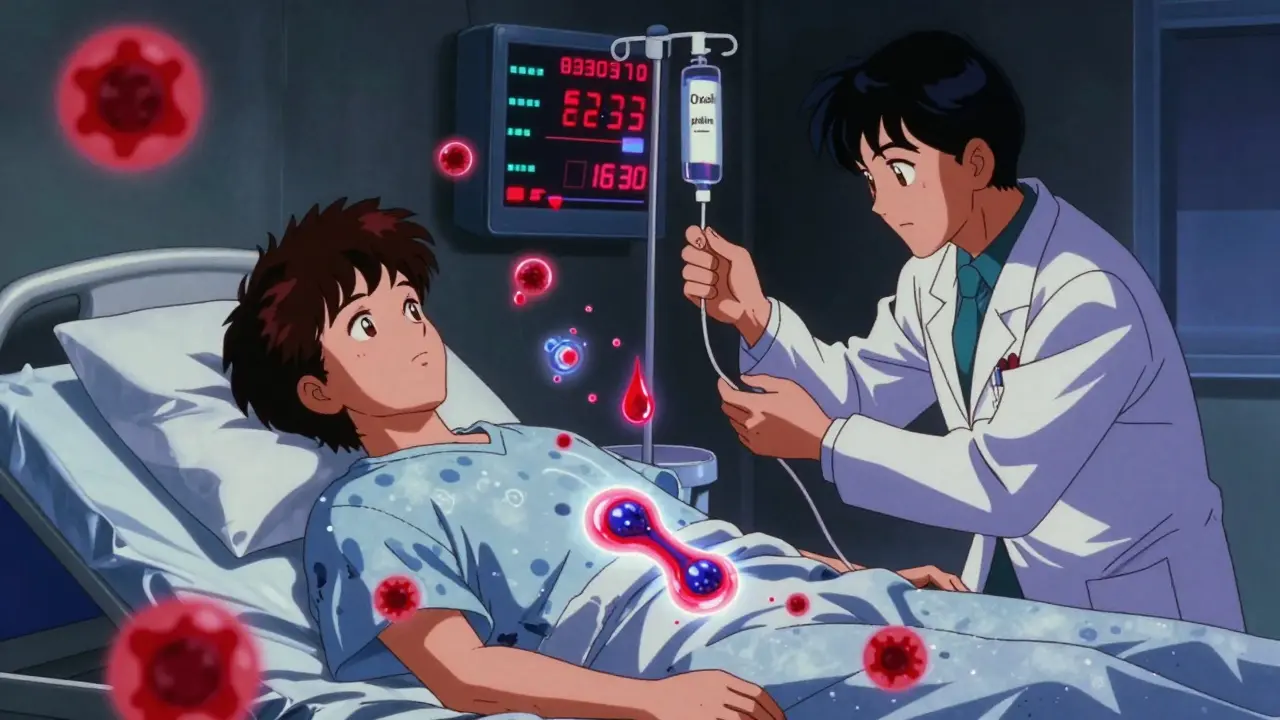
Disseminated Intravascular Coagulation from drug reactions isn’t something you read about in textbooks and forget. It’s a silent killer that can turn a routine chemotherapy session or a simple anticoagulant dose into a life-or-death emergency. If you’re managing a critically ill patient with unexplained bleeding, low platelets, and clots forming in tiny vessels, this is the condition you need to suspect - fast. And the trigger? It’s often a medication that wasn’t flagged as dangerous in its prescribing information.
What Exactly Is Drug-Induced DIC?
Disseminated Intravascular Coagulation (DIC) is not a disease. It’s a syndrome - a cascade gone wrong. Your body’s clotting system, designed to stop bleeding, goes into overdrive. Clots form everywhere - in the lungs, kidneys, brain. These clots suck up platelets and clotting factors until there’s nothing left. Then, suddenly, the patient starts bleeding out from IV sites, gums, or even internally. It’s like your blood switches from sealing leaks to draining the whole tank.
When drugs cause this, it’s called drug-induced DIC. And it’s more common than most doctors realize. A global review of over 4,600 cases found that 88 different medications have been linked to it. The worst offenders? Cancer drugs like oxaliplatin and bevacizumab, blood thinners like dabigatran, and even some antibiotics. Many of these drugs don’t even mention DIC as a risk in their official labels. That’s a problem. If you don’t know it’s possible, you won’t look for it.
Which Drugs Are Most Likely to Trigger DIC?
Not all drugs carry the same risk. Some are quiet killers. Others are loud and clear.
- Antineoplastic agents: Gemtuzumab ozogamicin has a Reporting Odds Ratio (ROR) of 28.7 - meaning it’s nearly 29 times more likely to cause DIC than average drugs. Oxaliplatin and bevacizumab are also major culprits, each linked to over 75 reported cases.
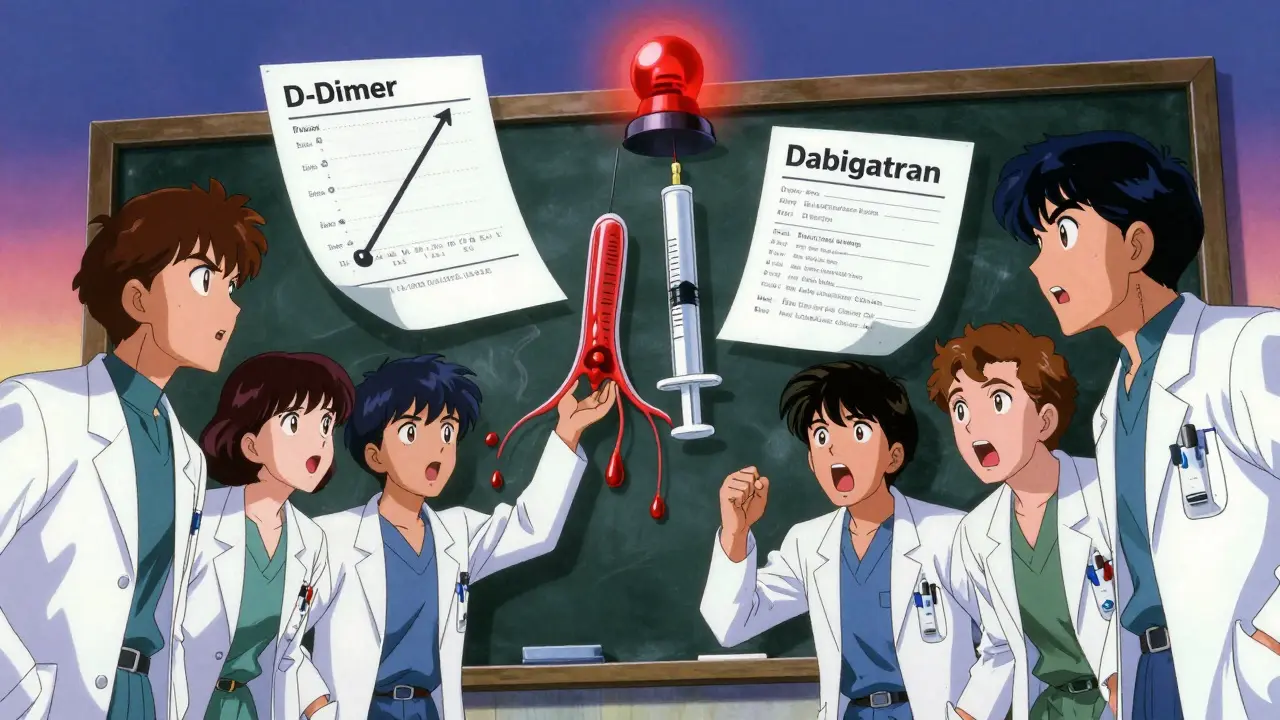
- Antithrombotics: Dabigatran (Pradaxa) showed up in 94 reports. It’s a direct thrombin inhibitor, and in rare cases, it triggers massive clotting followed by bleeding. Heparin-induced thrombocytopenia (HIT) can mimic DIC, but giving more heparin here makes things worse.
- Antibacterials: Vancomycin, though less common, still has a measurable risk (ROR 1.5). Infections can cause DIC too, but when the patient has no fever or source of infection, the drug is the prime suspect.
The FDA’s Adverse Event Reporting System saw a 23% jump in DIC cases tied to monoclonal antibodies between 2021 and 2022. That’s not just more usage - it’s better detection. But it also means more patients are at risk, especially those on newer cancer therapies.
How Do You Diagnose It?
You don’t diagnose DIC with one test. You piece it together like a puzzle.
The International Society on Thrombosis and Haemostasis (ISTH) scoring system is the gold standard. You score four things:
- Platelet count: Below 50,000? That’s 2 points.
- Prothrombin time (PT): More than 6 seconds longer than normal? Another 2 points.
- Fibrin degradation products: D-dimer more than 10x normal? That’s 3 points.
- Fibrinogen level: Below 1.0 g/L? That’s 1 point.
If the total is 5 or higher, you have overt DIC. Most patients with drug-induced DIC score 6-8. But here’s the catch - you need to rule out other causes. Sepsis? Trauma? Pregnancy? Those can cause DIC too. The key differentiator? Timing. Did the symptoms start 24-72 hours after giving the drug? That’s a red flag.
Lab findings are brutal:
- Platelets: Often below 50,000/μL
- Fibrinogen: Usually below 1.5 g/L - and below 80 mg/dL means you can’t even give DVT prophylaxis
- D-dimer: Sky-high, sometimes over 50,000 ng/mL
- PT and aPTT: Both prolonged
Don’t wait for all the labs to come back. If the clinical picture fits - bleeding, organ failure, recent drug exposure - treat it like DIC while you wait.
Management: Stop the Drug. Fix the Clotting. Save the Organ.
The single most important step? Stop the drug immediately. No exceptions. Continuing chemotherapy or anticoagulation while the patient is in DIC is like pouring gasoline on a fire. A 2021 case report showed a patient on oxaliplatin who developed DIC. The team stopped the drug on day two. The patient survived. The next patient? Same drug, same symptoms. The oncologist waited a day to confirm the diagnosis. The patient died of multiorgan failure.
After stopping the drug, you support the body while it recovers. There’s no magic pill. It’s all about replacing what’s been used up.
Replacing Clotting Factors
- Fibrinogen: Keep it above 1.5 g/L. Use fibrinogen concentrate or cryoprecipitate. Don’t wait until it’s below 1.0 - that’s too late.
- Platelets: Transfuse if platelets are below 50,000/μL and the patient is bleeding or having surgery. If they’re stable with no bleeding, 20,000/μL is enough.
- Fresh frozen plasma (FFP): Used to replace multiple clotting factors. Give 10-15 mL/kg per unit. But don’t overdo it - too much can overload the system.
What About Anticoagulants?
This is where things get tricky. In sepsis-induced DIC, some doctors give low-dose heparin to prevent clots. But in drug-induced DIC? It’s not that simple.
Studies show anticoagulants like antithrombin III or thrombomodulin might help - but only if the patient isn’t already on heparin. That’s because heparin interferes with them. And if the drug causing DIC is heparin itself (HIT), giving more heparin is deadly.
Warfarin? Never in acute DIC. It lowers protein C and S first, making the patient more prone to clots - even causing skin necrosis. Stick to direct replacements, not oral anticoagulants.
When to Use Reversal Agents
If dabigatran caused the DIC, give idarucizumab. It reverses the drug in minutes. For other direct oral anticoagulants (DOACs), there’s no specific antidote - but activated charcoal or dialysis might help if given early. For heparin, protamine sulfate is the antidote.
Always check the drug history. A patient on warfarin? Check INR. On enoxaparin? Check anti-Xa levels. Don’t assume - confirm.
Mortality Is High. But It’s Not Always Fatal.
Don’t sugarcoat it: DIC kills. Studies show mortality rates between 40% and 60% in severe cases, especially if organs start failing. One ICU doctor in a Reddit thread said he’s seen 12 cases in 15 years - and 7 of them died.
But survival is possible. The difference? Speed. Recognition. Stopping the drug.
A hematologist from Massachusetts General Hospital reported three cases of dabigatran-induced DIC over two years. All three got idarucizumab within 90 minutes and received aggressive blood product support. All survived. No long-term damage.
The key isn’t fancy tech. It’s asking the right question: "What did this patient take in the last 72 hours?" Too often, doctors focus on the bleeding and forget the trigger. The drug isn’t just a side note - it’s the root.

Prevention and Monitoring
The best way to handle drug-induced DIC? Don’t let it happen.
For high-risk drugs - bevacizumab, gemtuzumab, oxaliplatin - the International Council for Standardization in Haematology now recommends weekly blood tests: CBC, PT, aPTT, fibrinogen, D-dimer. Catch a falling platelet count early, and you can pause the drug before DIC starts.
Pharmacovigilance systems like WHO’s Vigibase are getting better. The EMA issued a safety alert in January 2023 about antibody-drug conjugates and DIC. Drug labels are slowly catching up. But until then, clinicians must stay alert.
There’s also research underway to find genetic markers that predict who’s at risk. A trial (NCT04567891) is testing whether certain gene variants make people more prone to drug-induced clotting. In the future, we might screen patients before giving high-risk drugs.
Final Thoughts
Drug-induced DIC is rare. But when it happens, it’s fast, brutal, and often preventable. It doesn’t care if the drug is new or old. It doesn’t care if the label says "rare side effect." If the patient’s platelets crash, their fibrinogen drops, and their D-dimer soars - you have DIC. And if they got a new drug in the last few days? Stop it. Now.
Survival depends on three things: suspicion, speed, and stopping the drug. No lab test is perfect. No guideline covers every case. But if you act before the bleeding starts, you can still win this fight.
Can a single dose of a drug cause DIC?
Yes. While DIC usually develops over 24-72 hours after exposure, some drugs - like gemtuzumab ozogamicin or high-dose oxaliplatin - can trigger it after just one infusion. The reaction isn’t always dose-dependent; it’s often an individual immune or biochemical response. Even a single dose can set off the cascade if the patient is genetically or physiologically vulnerable.
Is DIC reversible?
Yes, if caught early and the trigger is removed. The body can regenerate platelets and clotting factors once the drug is stopped and supportive care is provided. Recovery can take days to weeks. But if multiorgan failure sets in - especially kidney or brain damage - the damage may be permanent. Survival doesn’t always mean full recovery.
Can DIC happen without bleeding?
Absolutely. In fact, early DIC often presents with clotting, not bleeding. Patients may have stroke-like symptoms, sudden shortness of breath from pulmonary clots, or acute kidney injury from microthrombi. Bleeding only appears later, once clotting factors are depleted. That’s why lab tests are critical - you can’t wait for the gums to bleed.
Why isn’t DIC listed on drug labels more often?
Because it’s rare and hard to link definitively. Drug manufacturers rely on spontaneous reporting systems, and DIC can be mistaken for sepsis or trauma. Many cases go unreported or misclassified. Regulatory agencies like the FDA and EMA only update labels when multiple reports confirm a strong signal. That’s why drugs like dabigatran and bevacizumab only got updated warnings years after the first cases appeared.
What’s the difference between DIC and HIT?
HIT is a specific immune reaction to heparin that causes platelet activation and clotting. It can lead to DIC, but not all DIC is HIT. HIT usually shows up 5-14 days after heparin exposure and has a specific antibody test (PF4 ELISA). DIC is broader - it can be caused by many drugs and doesn’t require an immune response. The key: if a patient on heparin develops DIC, stop heparin immediately - don’t assume it’s just DIC.


Robin Keith
30 January, 2026 05:03 AMLook, I’ve seen this play out in the ICU too many times-patients on bevacizumab, bleeding out while their platelets vanish like smoke, and the team still asking, ‘Could it be sepsis?’ No. It’s the damn drug. The label says ‘rare’ like that makes it acceptable. Rare doesn’t mean impossible-it means you’re the first one who didn’t look hard enough. I’ve lost three patients to this. Not because the medicine was bad-but because we were too lazy to connect the dots. The body doesn’t care about regulatory delays. It just dies. And then we write another paper about ‘unusual presentations.’
Doug Gray
30 January, 2026 09:59 AMInteresting… but isn’t this just another case of ‘pharma negligence’ being framed as a clinical insight? I mean, we’ve known for decades that drugs can mess with coagulation. The real issue is that we’ve outsourced vigilance to algorithms and EHR alerts that say ‘no significant interaction.’ So now we’re surprised when reality disagrees with a computer? 🤷♂️
LOUIS YOUANES
30 January, 2026 12:36 PMLet’s be real-this isn’t medicine, it’s Russian roulette with IV bags. You give someone oxaliplatin like it’s a vitamin, then act shocked when their kidneys turn to jelly and their blood turns into gelatin. Labels are suggestions. The real risk is your ego thinking you know more than the pharmacokinetics.
Laia Freeman
31 January, 2026 13:02 PMOMG YES THIS!!! I had a patient on dabigatran who went from ‘fine’ to bleeding from her eyes in 12 hours. We stopped it, gave idarucizumab, and she walked out in 5 days. But the docs were like ‘isn’t that just a stroke?’ NO. IT WAS DIC. STOP OVERCOMPLICATING IT. 🙏
paul walker
2 February, 2026 00:19 AMGreat breakdown. I’ve been pushing for weekly labs on high-risk chemo patients for years. Nobody listens until someone dies. Then it’s ‘oh, we should’ve done this.’ Let’s make this standard. No more guessing. Just test, watch, pause. Simple. Why isn’t this protocol everywhere?
Alex Flores Gomez
2 February, 2026 21:09 PMEveryone’s acting like this is groundbreaking. It’s not. The literature’s been screaming about this since 2018. The EMA issued a warning in 2023. But no-still, we treat monoclonal antibodies like they’re harmless. It’s not ignorance. It’s willful blindness. And it’s killing people. Fix the system, not just the symptoms.
Sheryl Dhlamini
3 February, 2026 16:51 PMI read this whole thing with my coffee in one breath. I’m a nurse, not a hematologist, but I’ve seen the look on families’ faces when their loved one goes from ‘just a routine infusion’ to a code blue in hours. This isn’t just clinical-it’s human. Thank you for writing this. Someone needed to say it out loud.
Kristie Horst
3 February, 2026 20:11 PMIt’s almost poetic, isn’t it? We spend billions developing drugs to extend life-yet we treat their most lethal side effects as footnotes. The irony is that the same regulatory bodies that demand randomized trials for efficacy ignore spontaneous reports of death. We don’t need more data-we need more humility. And maybe, just maybe, a little less arrogance.
Andy Steenberge
4 February, 2026 18:27 PMThank you for writing this. I’m a med student, and this is exactly the kind of thing I wish we were taught early-not as a footnote in hematology, but as a core principle: drugs aren’t safe until proven dangerous, and sometimes, dangerous doesn’t mean common. It means catastrophic. I’ll be checking my patients’ drug lists differently from now on. And I’ll be asking: ‘What did they take in the last 72 hours?’ every single time. This isn’t just knowledge-it’s responsibility.