When you’re taking medication for osteoporosis or cancer that has spread to bone, you might not think about your teeth. But a rare but serious condition called osteonecrosis of the jaw (ONJ), now more accurately called medication-related osteonecrosis of the jaw (MRONJ), can sneak up on you - and it starts with something as simple as a sore gum or a loose tooth. This isn’t a common problem. For most people on oral osteoporosis drugs, the chance is less than 1 in 10,000. But when it happens, it’s serious. And if you ignore the early signs, it can lead to exposed bone, infection, and even surgery. The good news? If you know what to look for, you can catch it early - and stop it before it gets worse.
What Exactly Is MRONJ?
MRONJ happens when the jawbone stops healing after minor trauma - like a tooth extraction, denture pressure, or even brushing too hard. The bone dies because the medications you’re taking shut down the natural repair process. These drugs, mainly bisphosphonates and denosumab, are powerful. They stop bone from breaking down, which helps prevent fractures in osteoporosis or slows tumor growth in cancer. But that same power makes it hard for your jaw to heal. The result? Bone that’s stuck outside the gum, exposed, and unable to recover. By definition, if bone stays exposed for more than eight weeks, it’s MRONJ.
The most common culprits are drugs like alendronate (Fosamax), ibandronate (Boniva), and zoledronic acid (Reclast). If you’re on intravenous versions - usually for cancer - your risk jumps dramatically. Studies show that while oral bisphosphonates for osteoporosis carry a 0.001% to 0.01% risk, those getting IV doses for metastatic cancer face a 1% to 10% chance. That’s a 100 to 1,000 times higher risk. Denosumab (Prolia) carries similar risk levels, especially after three or more years of use.
The Top 6 Warning Signs You Can’t Ignore
MRONJ doesn’t always come with a siren. It often starts quietly. Here are the six most common signs, based on clinical data from the Leukaemia Foundation, the American Dental Association, and over 140 patient reports:
- Pain or swelling in the jaw - This isn’t a normal toothache. It’s dull, constant, and doesn’t go away with painkillers. In 87% of confirmed cases, this was the first symptom.
- Poor healing after a tooth extraction - If your socket still looks raw or empty after four weeks, or if you can see bone inside it, that’s a red flag. 76% of MRONJ cases began after a dental extraction.
- Loose teeth with no obvious cause - You didn’t get hit, and your gums aren’t bleeding. But teeth are shifting or falling out? That’s not normal aging. It happened in 63% of diagnosed patients.
- Exposed bone in your mouth - This is the defining sign. You might see grayish-white bone sticking out of your gums, especially near where a tooth was pulled. It’s painless at first, which is why so many miss it.
- Pus or foul-smelling discharge - A bad taste or drainage from your gums that won’t clear up? That’s infection. In 58% of cases, this was the reason patients finally went to the dentist.
- Heaviness or numbness in the jaw - It feels like your jaw is full of cotton, or you’ve lost feeling in part of your lower lip or chin. That’s nerve involvement. It showed up in 42% of cases.
None of these signs alone means you have MRONJ. But if two or more show up together - especially after starting a bisphosphonate or denosumab - it’s time to act. Don’t wait. Don’t assume it’s just a routine infection. Get checked by a dentist who knows about medication-related bone issues.
What Makes You Higher Risk?
Not everyone on these drugs gets MRONJ. But some factors stack the odds:
- IV over oral - If you’re getting zoledronic acid or pamidronate through an IV every few weeks for cancer, your risk is much higher than someone taking a weekly pill for osteoporosis.
- Long-term use - Risk starts rising after 3 years. After 5 years, it jumps to 0.015% for oral bisphosphonates. That’s still low, but not negligible.
- Dental work - Tooth extraction is the biggest trigger. One study found 3.2% of bisphosphonate users developed MRONJ after extraction - compared to 0.05% in people not on these drugs.
- Other health issues - Diabetes, smoking, poor oral hygiene, or steroid use all make healing harder. Combine those with these medications, and your risk climbs.
Here’s what’s surprising: Routine cleanings, fillings, and crowns don’t increase risk. It’s the invasive procedures - especially extractions - that are the problem. That’s why timing matters.
Prevention Is Simple - If You Act Early
The best way to avoid MRONJ? Don’t wait until something goes wrong. If you’re about to start an intravenous bisphosphonate or denosumab for cancer, get a full dental exam 4 to 6 weeks before your first dose. This gives your dentist time to fix loose teeth, treat infections, or remove teeth that might become a problem later. If you’re on oral bisphosphonates for osteoporosis, aim for a dental checkup 2 to 4 weeks before starting.
Already on the medication? Keep up with regular cleanings. Brush and floss daily. Use a chlorhexidine mouth rinse (0.12%) twice a day - it cuts your risk by 37%, according to a 2021 clinical trial. And if you need dental work, tell your dentist exactly what medications you’re on. Most patients who developed MRONJ said their dentist never asked.
One of the most powerful stats? 92% of people who had all their dental work done before starting these drugs never developed MRONJ - even after 5+ years of treatment. That’s not luck. That’s prevention.

What Happens If You Ignore It?
Left untreated, MRONJ doesn’t just hurt - it spreads. The exposed bone can become infected, leading to abscesses, bone loss, and even jaw fractures. Some patients need surgery to remove dead bone. Others require long-term antibiotics. In severe cases, parts of the jaw may need to be removed. Recovery takes months. And even then, function and appearance can be permanently affected.
And here’s the worst part: It often gets misdiagnosed. On patient forums, 89% said their dentist first thought it was a regular infection. Pain was dismissed as gum disease. Swelling was blamed on aging. It took months - sometimes over a year - before someone recognized it as MRONJ. By then, the damage was deeper.
What Should You Do Now?
If you’re on any of these medications - alendronate, zoledronic acid, denosumab, or similar - here’s what to do:
- Check your mouth - Look in the mirror. Are there any areas where gum tissue is missing? Is bone visible?
- Review your symptoms - Have you had pain, swelling, or loose teeth lately? Did a tooth extraction heal slowly?
- Talk to your dentist - Tell them you’re on a bisphosphonate or denosumab. Ask if they’ve seen MRONJ before. If they haven’t, ask for a referral to an oral surgeon or periodontist.
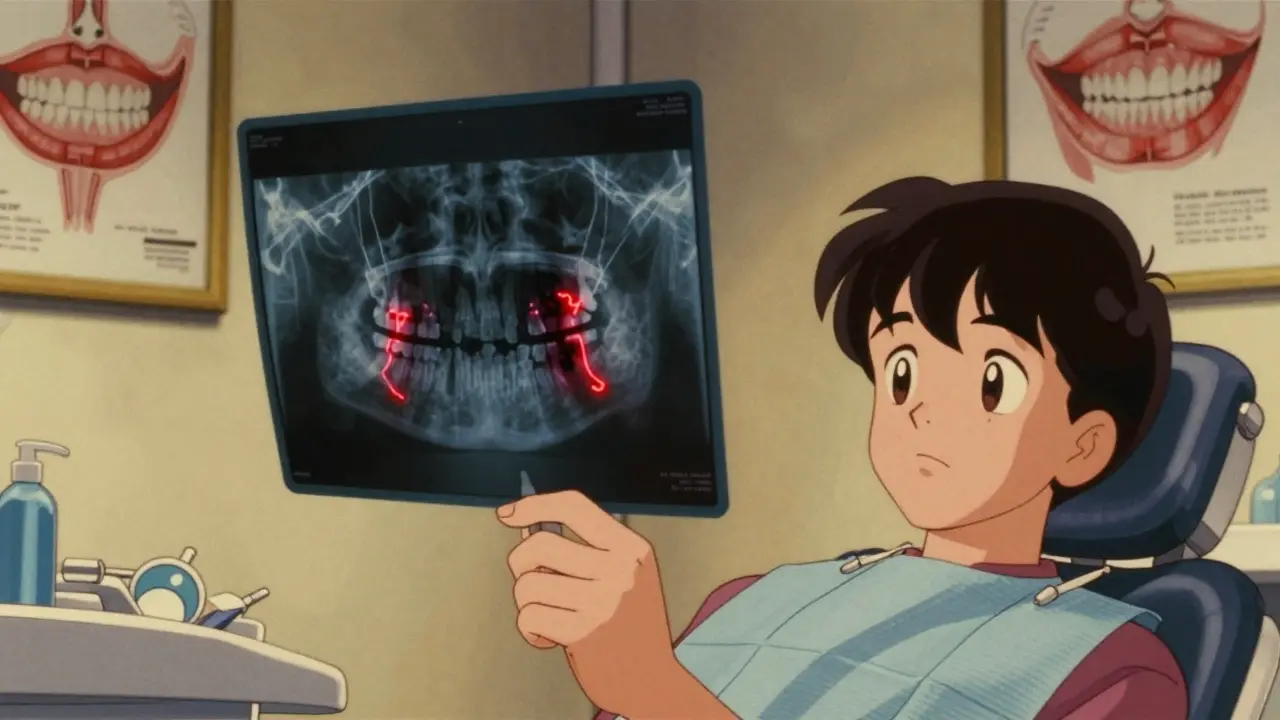
- Get an X-ray - A panoramic X-ray can show bone changes before they’re visible. Don’t skip this.
- Don’t delay - If you have two or more warning signs, don’t wait. Early intervention (within 2-4 weeks of symptoms) can stop progression.
Remember: These drugs save lives. They prevent broken hips, reduce cancer spread, and help people live longer. The risk of MRONJ is tiny - but the consequences are real. Awareness is your best defense.
Can you get osteonecrosis of the jaw from taking Fosamax?
Yes, but the risk is very low. Fosamax (alendronate) is an oral bisphosphonate used for osteoporosis. The chance of developing MRONJ while taking it is between 0.001% and 0.01% - roughly 1 in 10,000 to 1 in 100,000 people per year. Most cases happen after dental work like extractions. The risk is much higher with IV bisphosphonates used in cancer treatment.
Is MRONJ the same as jawbone infection?
No. A regular jaw infection (like a dental abscess) is caused by bacteria and usually responds to antibiotics and drainage. MRONJ is different - it’s caused by the medication stopping bone healing. The bone dies because it can’t repair itself, even after the infection is cleared. You can have both at the same time, but MRONJ requires special treatment - often involving removal of dead bone and long-term care.
Can you still have dental work if you’re on these medications?
Yes - but carefully. Routine cleanings, fillings, and crowns are safe. Avoid extractions, implants, or bone surgery unless absolutely necessary. If you need a tooth pulled, your dentist may recommend a short pause (2-3 months) in your IV bisphosphonate treatment. For oral drugs, the pause isn’t usually needed. Always get a full dental exam before starting these medications.
Do all bisphosphonates cause jaw problems?
Not equally. Intravenous bisphosphonates like zoledronic acid (Reclast) and pamidronate carry the highest risk. Oral forms like alendronate (Fosamax), risedronate (Actonel), and ibandronate (Boniva) have much lower risk. Denosumab (Prolia) has similar risk to IV bisphosphonates. The route (IV vs. pill) and duration matter more than the specific drug name.
How do you know if your dentist is experienced with MRONJ?
Ask if they’ve treated patients on bisphosphonates or denosumab. Look for dentists who work with oral surgeons or oncology teams. Academic dental centers and large hospitals are more likely to have protocols in place. The American Dental Association says 87% of U.S. dental schools now teach MRONJ recognition - so younger dentists are more aware. If your dentist says they’ve never heard of it, ask for a referral.



Richard Harris
12 March, 2026 11:02 AMI've been on Fosamax for 6 years and never thought twice about my teeth. Just had a routine cleaning last month and my dentist didn't ask about meds either. Guess I'm lucky? Or just blind. Good post though, made me check my gums today. No exposed bone, thank god.
Kandace Bennett
12 March, 2026 22:12 PMOMG I knew it!! 🙌 My sister got MRONJ after a tooth extraction and they had to remove half her jaw. 🤢 She’s on Prolia. I told everyone in my book club this was coming. Why isn’t this on every med label?? 🇺🇸 We need mandates. Also, chlorhexidine rinse? Duh. Basic hygiene. 🦷✨
Tim Schulz
13 March, 2026 22:15 PMOh wow. So the 'miracle drug' for osteoporosis is just a slow-motion jaw murder weapon? 🤡 I’m guessing the pharma reps didn’t mention this during their 'free lunch' sales pitches. Also, 1% to 10% risk for IV users? That’s not a side effect. That’s a feature. 😏
Jinesh Jain
15 March, 2026 04:44 AMInteresting. I'm on denosumab for cancer. My dentist here in Bangalore just said 'brush well' and moved on. No X-rays, no questions. Maybe in India, the risk is lower? Or just ignored?
douglas martinez
15 March, 2026 12:21 PMThis is a critically important public health message. The data presented is clear, well-sourced, and actionable. I urge all clinicians and patients to integrate this into routine care. Early dental intervention is not optional-it is preventive medicine. Thank you for sharing this.
Sally Lloyd
17 March, 2026 07:41 AMI wonder if this is all just a scam to sell more dental visits. I mean, why now? Why this exact symptom list? Who funded this study? I read somewhere that big pharma pays dentists to scare people. I’m not touching any of these meds now.
tamilan Nadar
19 March, 2026 01:21 AMIn Chennai, we call this jaw rot. My uncle had it after a tooth pull. He didn't tell the doc about his bisphosphonate. Now he eats soft food. No drama. Just quiet suffering. Brush. Rinse. Don't wait.
Adam M
19 March, 2026 18:01 PMDentists don't ask. Patients don't tell. Result? Jaw death. Simple.
Aaron Leib
21 March, 2026 08:25 AMI’m a caregiver for my mom on Prolia. We scheduled her dental work before she started. Her dentist had a protocol. They did a panoramic X-ray. She’s been fine for 4 years. Prevention works. Don’t wait for pain.
Kathy Leslie
23 March, 2026 03:15 AMI had a loose tooth last year and just thought it was aging. Turns out it was early MRONJ. I didn't even know the term. Thank you for explaining this so clearly. I’m telling all my friends on these meds. You saved me from a nightmare.
Amisha Patel
24 March, 2026 00:40 AMI’m on Boniva. My dentist said I'm low risk. But I started using chlorhexidine rinse anyway. It stings a bit but worth it. No loose teeth. No pain. Just being careful.
Elsa Rodriguez
25 March, 2026 14:12 PMI just found out my oncologist didn't tell me about this until AFTER I got MRONJ. I had to Google it myself. Now my jaw is half gone. They call it 'rare' but it's not rare when you're the one losing your teeth. Why didn't anyone warn me? I'm still angry.
Serena Petrie
26 March, 2026 05:21 AMSo... just don't get teeth pulled?