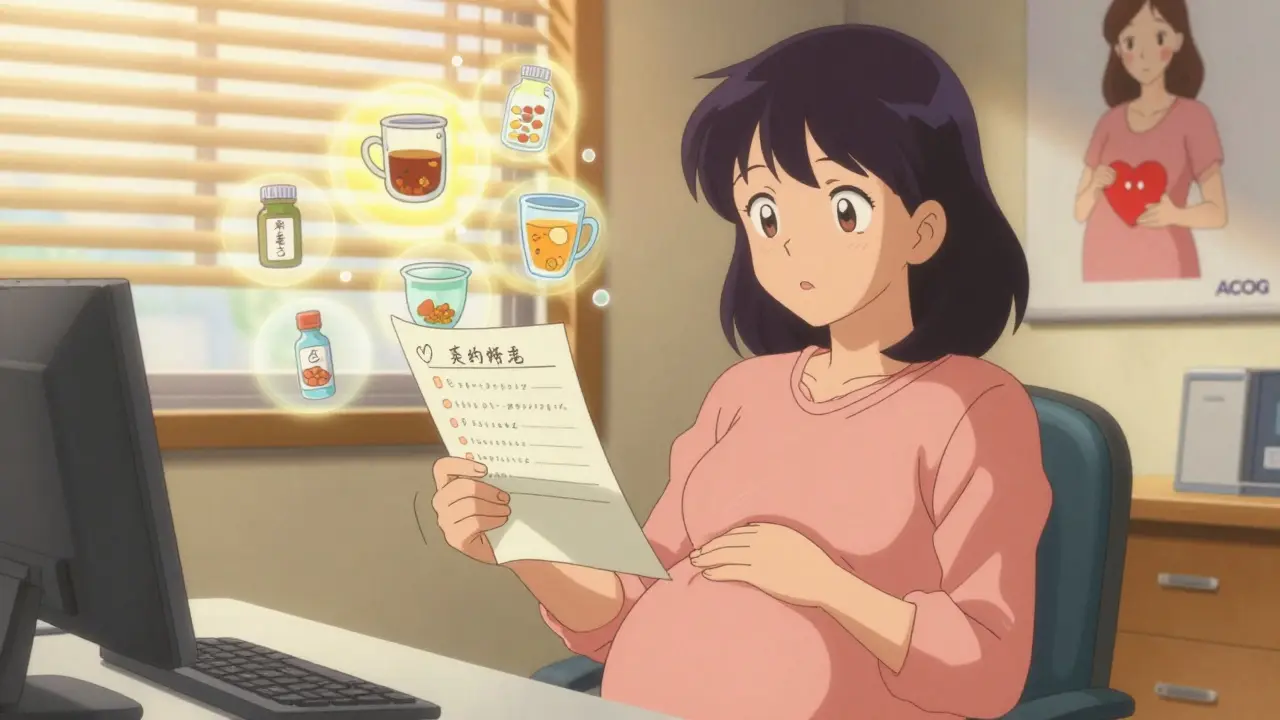
When you're planning a pregnancy or already pregnant, every pill, supplement, or over-the-counter medicine you take matters more than ever. What seemed like a harmless painkiller or herbal tea before could now carry risks you never considered. The truth? Medications aren't just for treating illness-they can affect your fertility, your baby's development, and your breastfeeding journey. Yet most women walk into their OB/GYN appointments without a clear plan for discussing what they're taking. That’s a gap you can close-and it starts with preparation.
What You Need to Bring to Your Appointment
Don’t rely on memory. Your brain is already juggling sleepless nights, cravings, and anxiety. Write it all down. Start at least 7 days before your visit. Gather every prescription, supplement, and OTC drug you’ve taken in the last 3 months. Include:- Exact brand and generic names (e.g., “Nature Made Prenatal Multivitamin” not just “prenatal vitamin”)
- Dosage and frequency (e.g., “Levothyroxine 75 mcg, taken every morning on an empty stomach”)
- How often you take it (daily, as needed, twice a week)
- Reason for taking it (e.g., “for migraines,” “for anxiety,” “for thyroid”)
- Any herbal products, teas, or supplements-even if you think they’re “natural” and safe
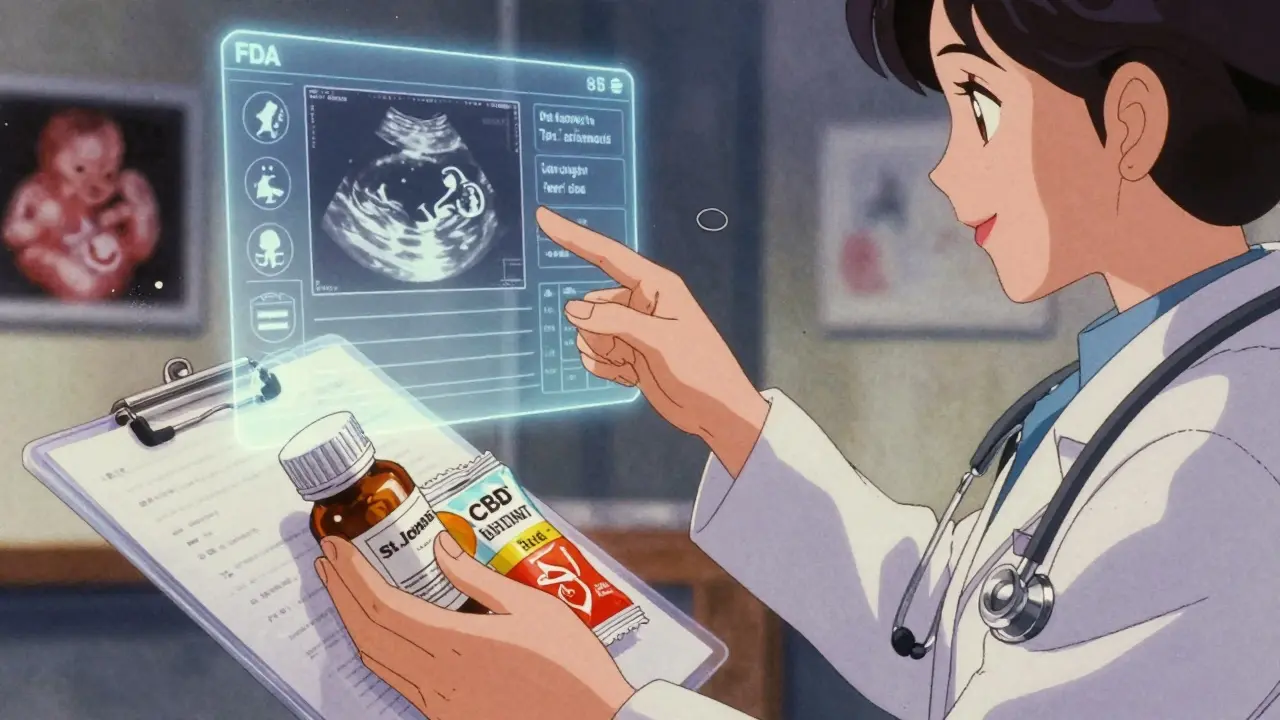
Many patients forget about things like St. John’s Wort, evening primrose oil, or CBD gummies. These aren’t harmless. St. John’s Wort can cut the effectiveness of birth control pills by half. Evening primrose oil might trigger early contractions. CBD use is rising, but there’s still no solid safety data for pregnancy-and most OB/GYNs aren’t even asking about it. A 2022 survey found that only 38% of providers routinely screen for medical marijuana, even though 18% of reproductive-aged women use it.
Pro tip: Take a photo of each medication bottle with your phone. If you forget the dosage, you’ve got a backup. Some OB/GYN offices now print these lists and file them in your chart. One patient on Reddit said her OB printed her spreadsheet and kept it in her file-“made my prenatal visits so much smoother.”
What to Ask Your OB/GYN
You’re not just there to hand over a list. You’re there to get clarity. Bring these questions with you:- “Is this medication safe during pregnancy-or should I stop before I conceive?”
- “Are there safer alternatives if I’m trying to get pregnant?”
- “Will this affect my chances of getting pregnant?”
- “What happens if I keep taking this while breastfeeding?”
- “Is there a pregnancy safety category for this? (A, B, C, D, or X)”
Don’t be afraid to ask for specifics. If your doctor says “this is safe,” ask how they know. The FDA’s Pregnancy and Lactation Labeling Rule (2015) requires drug labels to include safety info-but 42% of commonly prescribed meds still lack clear data. That means your doctor’s judgment matters. Ask if they’ve seen other patients take this drug safely. Ask if they’ve checked the latest guidelines from the American College of Obstetricians and Gynecologists (ACOG).
ACOG recommends that all women planning pregnancy review their meds during prepregnancy counseling. Why? Because 90% of pregnant women take at least one medication. And 68% continue meds for chronic conditions like hypertension, depression, or thyroid disease. You’re not alone. But you need to know if your meds are helping-or risking.
Why OB/GYNs Are Different Than Your Primary Care Doctor
Your family doctor might review your meds once a year. Your OB/GYN reviews them every visit-especially if you’re trying to conceive or already pregnant. Why? Because reproductive health changes everything.- OB/GYNs check for teratogenic effects (drugs that can cause birth defects). Most primary care providers skip this.
- They know which blood pressure meds are safe during pregnancy (like labetalol or methyldopa) and which aren’t (like ACE inhibitors).
- They understand how hormonal birth control interacts with antidepressants, antibiotics, or seizure meds.
- They know that Synthroid doses often need to be increased by 25-50% during pregnancy-and that TSH levels must be checked every 4 weeks.
But here’s the catch: OB/GYNs aren’t trained to manage complex polypharmacy. If you’re on four or more medications for diabetes, autoimmune disease, or mental health, they’ll likely refer you to a women’s health pharmacist. That’s not a failure-it’s smart coordination. Your OB/GYN’s job is to protect your reproductive health. Other specialists handle the rest.
What to Do If You’re Already Pregnant and Taking Meds
If you’re already pregnant and realize you’ve been taking something you shouldn’t, don’t panic. Don’t stop cold turkey. Call your OB/GYN. Some meds need to be tapered. Others need to be switched immediately.For example:
- Advil, Aleve, or other NSAIDs? Avoid after 20 weeks-they can affect your baby’s kidney development and reduce amniotic fluid.
- Antidepressants like Zoloft or Prozac? Many are considered low-risk during pregnancy and breastfeeding. Stopping suddenly can be more dangerous than continuing.
- Acne meds like Accutane? These are Category X-strictly forbidden during pregnancy. If you’re on it and thinking of conceiving, you need to wait at least one month after stopping.
The key is timing. The first 8 weeks of pregnancy are when organs form. That’s the most sensitive window. But even later, some meds can affect growth, brain development, or lung function. Your OB/GYN needs to know what you’re taking now, not just what you took last year.
What About Breastfeeding?
Many women assume if a drug is safe in pregnancy, it’s safe while nursing. Not true. Your baby’s liver is still immature. What passes into your breast milk can build up.Some safe options during breastfeeding:
- Acetaminophen (Tylenol) for pain
- Penicillin and cephalosporin antibiotics
- Most SSRIs like sertraline (Zoloft)
- Levothyroxine (Synthroid)
Some to avoid or use cautiously:
- Codeine (can cause breathing issues in babies)
- Lithium (concentrates in breast milk)
- Chronic opioid use (risk of sedation in infant)
- Many herbal supplements (lack safety data)
Always ask: “How much of this gets into breast milk? And how will it affect my baby’s weight, sleep, or feeding?” Your OB/GYN can refer you to LactMed, a free NIH database that gives detailed info on drug safety during breastfeeding.
Common Mistakes and How to Avoid Them
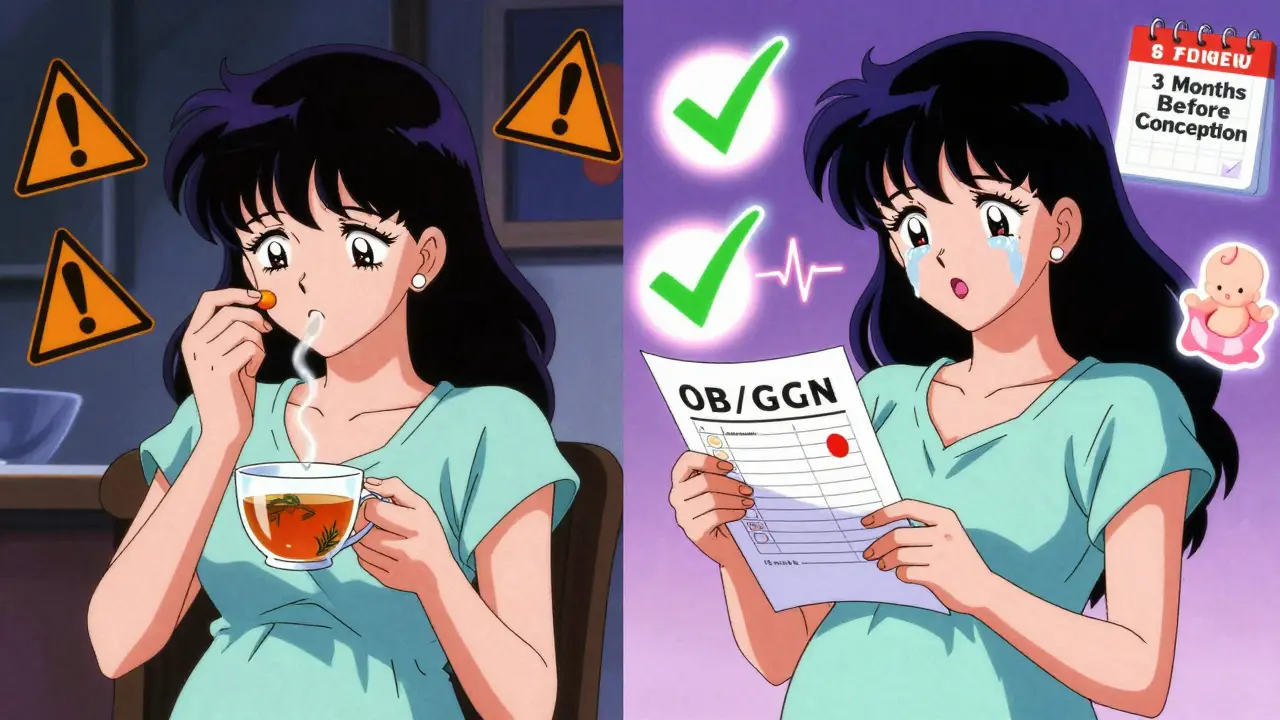
- Mistake: Thinking “natural” means safe. Solution: List every herb, tea, or supplement-even if you bought it at a health food store.
- Mistake: Forgetting to mention vitamins. Solution: Folic acid is critical-start 1 mg daily at least one month before conception. It reduces neural tube defects by up to 70%.
- Mistake: Waiting until you’re pregnant to ask. Solution: Start the conversation 3-6 months before trying to conceive. That’s when adjustments matter most.
- Mistake: Being embarrassed to talk about mental health meds or substance use. Solution: Your OB/GYN has heard it all. Honesty saves lives.
A 2022 survey by Colorado Women’s Health showed patients who prepared a full medication list had 40% better discussion quality and saved 15-20 minutes per visit. That’s time you can use to ask the real questions: “Can I still have a vaginal birth?” “Will this affect my milk supply?” “Is there a safer version?”
What’s Changing in 2026
The field is evolving fast. In 2023, ACOG updated its guidelines to include CBD and medical marijuana in routine screening. A new app from GW Medical Faculty Associates lets hypertensive pregnant women log blood pressure meds in real time-89% of users stick with it. And by mid-2024, ACOG plans to release a free patient checklist app to help you prepare for your visit.Meanwhile, researchers are testing genetic tests (like CYP2D6) to predict how your body processes antidepressants. This isn’t sci-fi-it’s already being piloted in academic OB/GYN clinics. The goal? To match you with the safest, most effective drug based on your DNA.
One thing won’t change: the need for you to speak up. No one else knows your body like you do. No one else will ask you about your supplements, your stress, your sleep, or your cannabis use. That’s why your preparation matters.
What if I forget to mention a supplement during my appointment?
It happens. Don’t panic. Call your OB/GYN’s office the same day or the next day. Many clinics have nurses or pharmacists on staff who can review your list and advise you. If you took something like evening primrose oil or high-dose vitamin A, they’ll tell you if it’s a concern. Most cases aren’t emergencies, but early correction prevents bigger problems.
Can I keep taking my antidepressants while pregnant?
For many women, yes. SSRIs like sertraline (Zoloft) and citalopram (Celexa) are among the safest options during pregnancy and breastfeeding. Stopping abruptly can increase risks of relapse, which affects both your health and your baby’s. Always work with your OB/GYN and a psychiatrist to adjust doses if needed. Your mental health is part of your reproductive health.
Are all OTC painkillers unsafe during pregnancy?
No. Acetaminophen (Tylenol) is generally safe throughout pregnancy when taken as directed. Avoid NSAIDs like ibuprofen (Advil) and naproxen (Aleve), especially after 20 weeks. They can affect your baby’s kidney development and reduce amniotic fluid. Always check with your OB/GYN before taking anything-even if it’s on the shelf at the drugstore.
Why does my OB/GYN care about my birth control if I’m trying to get pregnant?
Because some birth control methods can affect how quickly you conceive-and some medications interact with them. For example, St. John’s Wort can make hormonal birth control fail. If you’re switching off birth control to conceive, your OB/GYN needs to know what you’ve been using to predict your cycle, adjust fertility timing, and avoid unintended pregnancy during the transition.
What if I’m taking medication for a chronic illness like diabetes or epilepsy?
This is exactly why you need an OB/GYN who specializes in high-risk pregnancies. Many medications for these conditions are safe-some even essential. For example, insulin is safe during pregnancy, and certain seizure meds like lamotrigine carry lower risks than others. Your OB/GYN will coordinate with your specialist to adjust doses, monitor levels, and ensure both you and your baby stay healthy. Don’t try to manage this alone.
Preparing for your OB/GYN visit isn’t about being perfect. It’s about being informed. You’re not just a patient-you’re the most important person in your reproductive care. Bring your list. Ask your questions. Push for clarity. Your future self-and your baby-will thank you.





Larry Zerpa
27 February, 2026 00:40 AMLet me get this straight-you’re telling women to bring a spreadsheet of every pill they’ve ever taken to a 15-minute OB/GYN visit? And you think the doctor will actually read it? In 2024, doctors are drowning in EHRs and still can’t spell ‘thyroid’ correctly. This isn’t preparation, it’s performative compliance. I’ve been to three OBs. None of them asked about my CBD gummies. One asked if I ‘still did drugs.’ That’s the level of care we’re dealing with. Bring a list? Sure. But don’t expect anyone to care.
Gwen Vincent
27 February, 2026 12:00 PMI actually did this. Made a Google Sheet with columns: Drug, Dose, Reason, Date Started, Doctor Who Prescribed. Printed it. Gave it to my OB. She paused, looked at me, and said, ‘This is the most prepared patient I’ve had all month.’ We spent 40 minutes on meds alone. She changed my antidepressant because she didn’t know I was on Celexa for anxiety. I cried. Not because I was scared-because someone finally saw me. You don’t need to be perfect. You just need to show up with honesty.
Nandini Wagh
1 March, 2026 01:27 AMOh honey. 🤦♀️ So you’re saying if I drink turmeric tea every morning because ‘it’s natural’ and my OB doesn’t know, I’m gonna have a baby with three arms? I’m from Mumbai. We’ve been drinking neem, ashwagandha, and hibiscus tea since before our grandmas were born. And yet somehow, we’re still here. Maybe the real problem isn’t the tea-it’s that Western medicine thinks it owns biology now.
Holley T
2 March, 2026 08:29 AMOkay but let’s be real-this entire article is a glorified checklist for anxious millennials who think their bodies are ticking time bombs. I’ve been on levothyroxine since I was 17. My OB didn’t even blink when I told her I take it with coffee. She said, ‘If it works for you, keep doing it.’ And guess what? I got pregnant on my third try. No spreadsheet. No photos of bottles. No ‘ACOG guidelines.’ Just me, my body, and a decent OB who didn’t treat me like a walking FDA compliance form. The real takeaway? Trust your own experience. Not every doctor is a robot. And not every woman needs a 12-page dossier to be taken seriously.
Ashley Johnson
4 March, 2026 03:42 AMI know what’s really going on here. This isn’t about medication safety. It’s about Big Pharma pushing their drugs while hiding the truth. Did you know the FDA approved Zoloft for pregnancy after a secret meeting with Pfizer? And CBD? They banned it because it’s cheaper than antidepressants. My cousin’s OB told her to stop all supplements-except the ones from ‘approved’ pharmacies. Coincidence? I don’t think so. Also, if you’re taking prenatal vitamins, you’re already getting too much folic acid. Too much can cause autism. I read it on a blog. It’s true.
tia novialiswati
5 March, 2026 00:49 AMYESSSS 💕 this! I was SO nervous to tell my OB I was taking melatonin for sleep. Thought she’d judge me. She just smiled and said, ‘Good job being proactive!’ Then she gave me a free sample of a safer sleep aid. I cried. Like, actual tears. You’re not a burden. You’re not weird. You’re doing the right thing. Keep showing up. Keep asking. You’ve got this. 🌸
Lillian Knezek
6 March, 2026 18:15 PMI read this and immediately checked my supplements. 😳 I’ve been taking magnesium + zinc + vitamin D + ashwagandha + spirulina + fish oil. What if I’ve been poisoning my future baby?? I think I need to go to a ‘specialist’ now. Or maybe move to a cabin in the woods. I’ve heard the government puts tracking chips in prenatal vitamins. I’m scared. 😥
Maranda Najar
8 March, 2026 03:09 AMThis is not merely medical advice. This is a manifesto. A sacred covenant between womanhood and science. To walk into an OB/GYN’s office without a laminated, color-coded, timestamped, cross-referenced pharmacological dossier is to commit an act of spiritual negligence. I have read the FDA’s 2015 labeling rule in its original Latin. I have wept over the ACOG guidelines. I have handwritten letters to my pharmacist. If you are not prepared, you are not just unprepared-you are complicit in the systemic erasure of maternal autonomy. Your child will inherit your ignorance. And I will not rest until every woman in America carries a USB drive with her full medication history.
Christopher Brown
9 March, 2026 20:45 PMAmerica’s healthcare system is broken. But this? This is just performative weakness. Women should be strong. Take responsibility. Don’t whine about pills. Just don’t take the bad ones. Simple. No spreadsheets. No apps. No ‘checklists.’ Just common sense. We didn’t need this in 1990. We’re getting softer.
Sanjaykumar Rabari
10 March, 2026 22:55 PMIn India we never ask these questions. We take what doctor says. If he says tablet then we take. If he says no tablet then we dont. My sister took folic acid before pregnancy. Baby born healthy. No spreadsheet. No photo. No research. Just faith. This article is too much for simple people.
Kenzie Goode
11 March, 2026 00:15 AMI love how this post assumes everyone has access to a phone, a printer, a stable internet connection, or even a doctor who listens. What about the single mom working two jobs who can’t afford to miss a shift to make an appointment? What about the woman whose OB won’t even look her in the eye? This advice is beautiful. But it’s for people who already have privilege. The real issue isn’t that women don’t prepare-it’s that the system doesn’t make space for them to.
Bhaskar Anand
11 March, 2026 11:53 AMI have been reading this article for 47 minutes. I have underlined every word. I have written notes in the margins. I have emailed my OB. I have called my sister. I have printed this. I have laminated it. I have framed it. I have posted it on my fridge. I have told my husband. I have told my neighbor. I have told my dog. I have told the mailman. I have told the barista. I have told the IRS. I have told God. I have told the moon. I have told the stars. I have told the void. I have told the silence. I have told the truth. I have told the lie. I have told the silence again. I have told the silence one more time. I have told the silence until it screamed. I have told the silence until it wept. I have told the silence until it begged me to stop. I have told the silence until it became a voice. And now I ask you: WHO IS THE REAL PATIENT HERE?
William James
12 March, 2026 11:07 AMYou know what’s beautiful about this? It’s not about perfect lists or FDA categories. It’s about showing up as a human being who cares enough to ask. I’ve been a nurse for 22 years. I’ve seen women come in terrified, silent, ashamed. Then they say one sentence-‘I’ve been taking X because I didn’t know if it was safe’-and the whole room changes. That’s the moment healing begins. You don’t need to be perfect. You just need to be brave enough to say ‘I don’t know.’ That’s the real medicine.