
Forgetting to take your meds isn’t just a minor slip-it can land you in the hospital. Around 50% of people with chronic conditions miss doses regularly, and for seniors on four or more prescriptions, that number climbs to over 60%. The problem isn’t laziness or neglect. It’s brain fog, busy mornings, or simply too many pills to keep track of. But there’s a real, working solution: smart pill caps and dispensers. These aren’t fancy gadgets for tech lovers-they’re lifelines for people who need to take their medicine on time, every time.
Why Forgetting Pills Is a Silent Crisis
Imagine you’re 78, juggling blood pressure pills, diabetes meds, and a heart medication. You’ve been taking them for years, but lately, you’re not sure if you already took your 8 a.m. dose. You check the bottle. It’s half-empty. Did you take it? Maybe. Maybe not. This isn’t rare. In fact, 89% of seniors over 65 take at least one prescription, and more than half take four or more. That’s a lot of pills, a lot of times, and a lot of chances to mess up.
Skipping doses doesn’t just mean your blood pressure stays high or your sugar spikes. It leads to emergency room visits, hospital stays, and even death. The CDC estimates medication non-adherence costs the U.S. healthcare system between $100 billion and $300 billion a year. And most of that? It’s preventable.
How Smart Pill Caps Work (Without the App)
Not all smart pill systems are the same. Some are full dispensers. Others are just caps that fit over your regular pill bottles. The best ones don’t make you learn a new app, stare at a screen, or remember passwords.
Take Tenovi’s Cellular Pillbox. It’s a simple box with compartments for morning, afternoon, evening, and night. Inside, sensors detect when you open a compartment. When it’s time for your pill, a red light turns on. When you take it, you open the lid-the light turns green. No phone. No app. No Bluetooth pairing. Just a light that tells you: you’re on track. It’s designed for people who don’t want tech-they just want to remember.
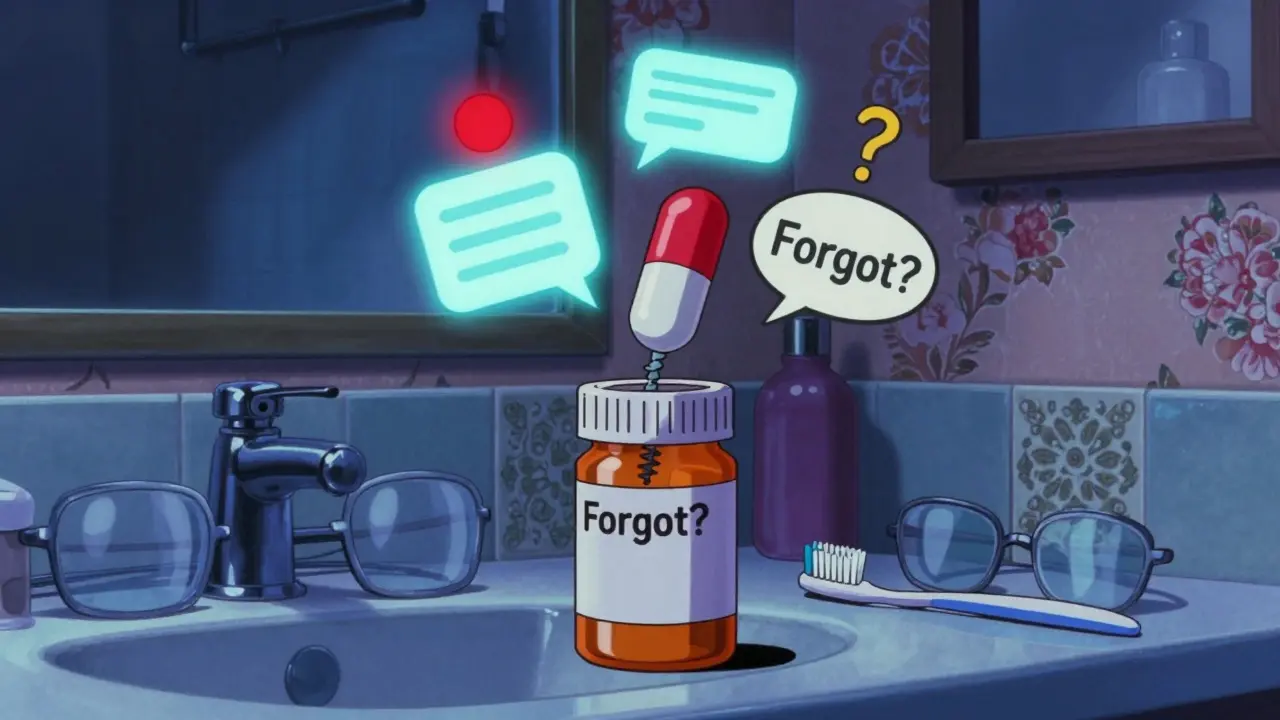
AdhereTech (now Aidia) does something similar but with your existing pill bottles. Their smart cap screws onto any standard prescription bottle. It doesn’t just track when you open it-it measures how much medicine is left. If you open the bottle at 9 a.m. but don’t take the pill, the cap knows. It sends a text, a call, and flashes a red light. And here’s the clever part: if you miss a dose, it asks you why. “Too many pills?” “Side effects?” “Forgot?” That feedback helps caregivers and doctors adjust your plan-not just nag you.
Dispensers That Actually Dispense
If you’re worried you’ll open the bottle and walk away, a full dispenser might be better. Hero Health’s automatic dispenser holds up to 28 doses. At the right time, it beeps, flashes, and opens a tray. If you don’t take the pill within 30 minutes, it beeps again. And again. And again. It won’t stop until you take it. One user on Reddit said it saved her mother’s life during a UTI scare-because the alarms forced her to take her antibiotics.
These systems aren’t just alarms. They’re safety nets. They can notify family members if a dose is missed. They can alert a nurse if a senior hasn’t taken their meds in 24 hours. And unlike simple caps, they physically control when pills are released. That’s huge for people with dementia or those who might accidentally take too much.
But there’s a catch: you have to refill them weekly. That’s 15 minutes of your time, or someone else’s. If you’re already overwhelmed, that’s another task on the list.
What’s the Real Difference Between These Systems?
Here’s how the top systems compare:
| System | How It Works | Cost (Device) | Monthly Fee | Best For |
|---|---|---|---|---|
| Tenovi Cellular Pillbox | Light indicators, no app, cellular connection | $199 | $29 | Seniors who hate apps |
| Aidia (AdhereTech) Smart Bottle Cap | Attaches to pill bottles, tracks volume, sends alerts | $149 | $39 | People who want to keep existing bottles |
| Hero Health Automatic Dispenser | Releases pills automatically, repeats alarms | $499 | $0 | High-risk patients, dementia |
| MedQ Electronic Dispenser | Repeats alarm every 30 minutes | $129-$249 | $0 | Low budget, simple reminders |
| AARDEX Pill Connect | Clinical-grade sensors, 70+ analytics, professional setup | $299 | $49 | Clinical trials, complex care plans |
Notice something? The cheapest options don’t have monthly fees. But they also don’t notify anyone if you miss a dose. The pricier ones do. And that’s the trade-off: convenience and safety cost money.
What No One Tells You About These Devices
Smart pill caps don’t work if you don’t use them. And many people stop after a few weeks. Why?
One user on Amazon said the MedQ alarm was “too quiet” for her hearing loss. Another on Reddit admitted she opened her Pill Connect cap without taking the pill-just to turn off the light. Technology can’t force you to swallow the pill. It can only remind you.
Also, subscriptions add up. $39 a month sounds small, but over a year, that’s nearly $500. For seniors on fixed incomes, that’s more than some prescriptions cost. A 2023 CMS survey found 32% of low-income seniors quit using smart dispensers because of the fees.
And don’t forget power. If the power goes out, does the device still work? Hero Health has a backup battery. Tenovi runs on replaceable batteries that last 90 days. But cheaper models? They just die. No warning. No backup.
Who Should Get One-and Who Shouldn’t
Here’s the truth: if you’re forgetting pills, you need help. But not every solution fits every person.
- Get a smart cap if you’re okay with opening your own bottles and just need a nudge. Aidia or Tenovi are great.
- Get a full dispenser if you’ve missed doses before, have dementia, or live alone. Hero Health’s repeating alarms are hard to ignore.
- Avoid cheap alarm-only devices if you’re at risk of overdose or have memory loss. They don’t prevent mistakes-they just remind you of them.
- Ask your doctor or insurer if they cover these devices. Medicare Advantage plans are starting to pay for them if they reduce hospital visits. UnitedHealthcare already does.

What’s Coming Next
By 2025, we’ll see pills with edible sensors that confirm you swallowed them. Hospitals will get real-time alerts when a patient skips a dose. Insurance companies will lower premiums for people who use these tools consistently.
But the real breakthrough won’t be in the tech. It’ll be in how we use it. The best systems are the ones you forget are there. Tenovi’s red light? It’s just part of your morning now. Aidia’s alert? It’s a quiet beep, not a demand. That’s the goal: not to fight forgetfulness, but to make it irrelevant.
What to Do Today
You don’t need to buy the most expensive system. Start simple.
- Write down every pill you take, when, and why.
- Ask your pharmacist if your meds can be combined into fewer doses.
- Try a $129 MedQ dispenser for a month. If it helps, great. If not, you’ve lost little.
- Call your insurance. Ask: “Do you cover smart pill dispensers?”
- If you’re caring for someone, set up a weekly check-in. No tech replaces human care.
Forgetfulness isn’t a moral failure. It’s a human problem. And smart pill caps and dispensers aren’t magic. But they’re one of the few tools that actually work-when used right.
Do smart pill dispensers really work?
Yes, when used correctly. Studies show users of devices like Aidia and Hero Health achieve 90%+ adherence rates, compared to under 70% without them. The key is choosing a system that matches your needs-simple lights for memory issues, alarms for dementia, or volume tracking for complex regimens.
Can I use a smart pill cap with any bottle?
Only if it’s a standard prescription bottle with a threaded neck. Most over-the-counter bottles won’t fit. Aidia’s cap works with common sizes like 30ml, 60ml, and 120ml bottles. Always check compatibility before buying.
Are these devices covered by Medicare?
Original Medicare (Parts A and B) doesn’t cover them. But many Medicare Advantage plans do-especially if your doctor documents that non-adherence led to hospital visits. Check with your plan or ask your pharmacist to help you submit a request.
What if I can’t afford the monthly fee?
Look for devices with no subscription, like MedQ or basic Hero Health models. Some nonprofits and senior centers offer free or discounted dispensers. Also, ask your doctor-they may have samples or partnerships with manufacturers.
Can these devices help with dementia?
Yes, but only if they lock pills away. Simple reminder caps won’t stop someone from taking too many. Locked dispensers like Hero Health or Alzstore models prevent overdosing and are designed for cognitive decline. Always pair them with caregiver check-ins.
Do I need Wi-Fi or a smartphone to use these?
No, not all of them. Tenovi uses cellular networks and needs no phone. Aidia sends texts and calls via its own cellular connection. Only some apps require Wi-Fi. If you or your loved one doesn’t use smartphones, choose a device that works independently.
How long do the batteries last?
Battery life varies. Tenovi lasts up to 90 days. Aidia lasts 30 days. Hero Health has a rechargeable battery that lasts 2 weeks. Always check if the device has a low-battery alert. If not, set a monthly reminder to check.
Final Thought
Medication isn’t optional. But remembering it shouldn’t be a full-time job. The right smart pill cap or dispenser doesn’t just track doses-it restores peace of mind. For the person taking the pills. For the family worrying. For the doctor trying to help. It’s not about being tech-savvy. It’s about being safe. And that’s something everyone deserves.





Christi Steinbeck
18 January, 2026 15:48 PMMy grandma started using a Tenovi last month and she hasn’t missed a single dose since. I used to get three calls a day wondering if she took her blood pressure pill. Now she just points to the green light like it’s the most natural thing in the world. Worth every penny.
Jacob Hill
19 January, 2026 13:05 PMI’ve been using the Aidia cap for six months now-my dad’s on seven meds, and it’s been a game-changer. It doesn’t just alert him; it texts me too. I’ve gotten alerts at 3 a.m. because he opened the bottle but didn’t take it. I’ve called him, he’s grumbled, but he took it. It’s not perfect, but it’s the closest thing to a personal nurse I’ve found.
Tracy Howard
20 January, 2026 09:41 AMWhy are we letting corporations sell us back our own dignity? These devices are expensive, subscription-based, and designed to make seniors feel like broken machines that need constant monitoring. In Canada, we just use pill organizers and family check-ins. No tech. No fees. No surveillance. You don’t need a cellular pillbox to be responsible.
Valerie DeLoach
22 January, 2026 00:22 AMIt’s not about the tech-it’s about the dignity of autonomy. The best devices don’t scream at you; they quietly remind you, like a friend who cares enough to show up. Tenovi’s red light doesn’t judge. It just waits. And that’s the quiet revolution here: technology that serves, not controls. I’ve seen people who stopped taking meds because they felt punished by alarms. These systems, done right, restore agency-not just adherence.
Lewis Yeaple
22 January, 2026 17:51 PMLet’s be precise: the CDC’s $100–300 billion estimate is derived from extrapolated hospitalization data, not direct causality. Many non-adherence cases are due to cost-related rationing, not forgetfulness. These devices address symptoms, not root causes. If you’re skipping pills because you can’t afford them, a $499 Hero Health unit won’t fix that. We need policy reform-not gadget marketing disguised as medical innovation.
Josh Kenna
23 January, 2026 15:00 PMmy mom got the medq for $129 and it’s been great but the alarm is so quiet she misses it half the time… i just set my phone to call her at med time and it works way better. also the thing runs on aaa batteries and you have to remember to change them every 2 months which is just another chore. not magic. just a tool.
Astha Jain
24 January, 2026 14:58 PMsmart pill caps? lol. in india we just use a chalk mark on the wall and a big spoon. if you forget, you die. simple. no apps. no subscriptions. no tech bros telling you how to live. why are we making life so complicated?
Phil Hillson
25 January, 2026 00:09 AMthese devices are a scam. they dont stop people from lying to themselves. i know people who open the cap just to turn off the light. the device thinks they took it. they didnt. the tech is useless if the person is determined to ignore it. its like putting a seatbelt on someone who refuses to sit down. the problem is human. not mechanical.
Aman Kumar
25 January, 2026 09:59 AMLet me elucidate: the pharmaceutical-industrial complex has engineered this entire narrative to monetize compliance. Smart caps? They’re data harvesters. Every pill you take, every delay, every missed dose-logged, sold, analyzed. Your adherence is now a commodity. And the subscription fees? That’s the real profit center. You think you’re buying safety. You’re buying surveillance. And the worst part? You’re paying for it monthly.
Jackson Doughart
25 January, 2026 19:21 PMI’ve watched my brother navigate this with our mother, who has early-stage dementia. The Hero Health dispenser didn’t just help-it gave us back hours of sleep. No more 2 a.m. panic checks. No more guilt. The device didn’t replace care; it made care sustainable. I don’t care if it costs $500. If it keeps someone alive, and keeps their family from breaking, then it’s priceless.
Erwin Kodiat
26 January, 2026 13:30 PMMy aunt tried the Tenovi and said it felt like the box was watching her. She stopped using it after two weeks. Then she started using a simple pill organizer with colored compartments and a sticky note that said ‘DID YOU SWALLOW IT?’ and she’s been fine since. Sometimes the simplest thing is the most human thing. Not every problem needs a smart solution.
Jake Rudin
28 January, 2026 06:25 AMWhat’s fascinating isn’t the technology-it’s the psychological shift. These devices don’t just track behavior; they rewire the relationship between the self and the ritual. The red light isn’t an alarm-it’s a quiet companion. The pill isn’t a chore-it’s a moment of connection. We’ve outsourced memory to silicon, but in doing so, we’ve rediscovered patience. The device doesn’t make you remember. It lets you remember without shame.
Lydia H.
29 January, 2026 20:31 PMMy neighbor’s husband has Parkinson’s and uses the Hero Health unit. Last week, the power went out for six hours. The thing kept going on battery. He took all his meds on time. No one called. No one panicked. Just a quiet machine doing its job. I used to think tech was cold. Now I see it’s sometimes the only warm thing left.
sujit paul
30 January, 2026 17:17 PMDo you know who really benefits from these devices? Not the elderly. Not the caregivers. The insurance companies. They save millions on ER visits, and then they charge you $39/month for the privilege of not dying. The real conspiracy? They call it innovation. I call it capitalism with a smile. You’re not buying safety-you’re buying insurance for their bottom line.