Medication Itch Risk & Relief Checker
Select your medication category and current status to analyze your risk level and recommended actions.
Analysis Result
Primary Mechanism:
Recommended Action Plan:
Note: This tool provides educational information based on general medical data. Always consult a healthcare professional before stopping or changing medications.
Have you ever started a new prescription only to find yourself scratching uncontrollably within days? You aren’t imagining it. Itching, medically known as pruritus, is a common but often overlooked side effect of many medications. While we usually associate itching with allergies or dry skin, your medicine cabinet might be the real culprit. This condition, called drug-induced pruritus, affects millions of people globally, disrupting sleep, causing anxiety, and sometimes leading to severe complications if left untreated.
The good news? Once you identify the trigger, there are effective ways to manage it. Whether you’re dealing with mild irritation from an antibiotic or intense, unrelenting itch from stopping a long-term allergy pill, understanding the cause is the first step toward relief. Let’s break down why this happens, which drugs are most likely to blame, and what you can do about it.
Why Do Medications Cause Itching?
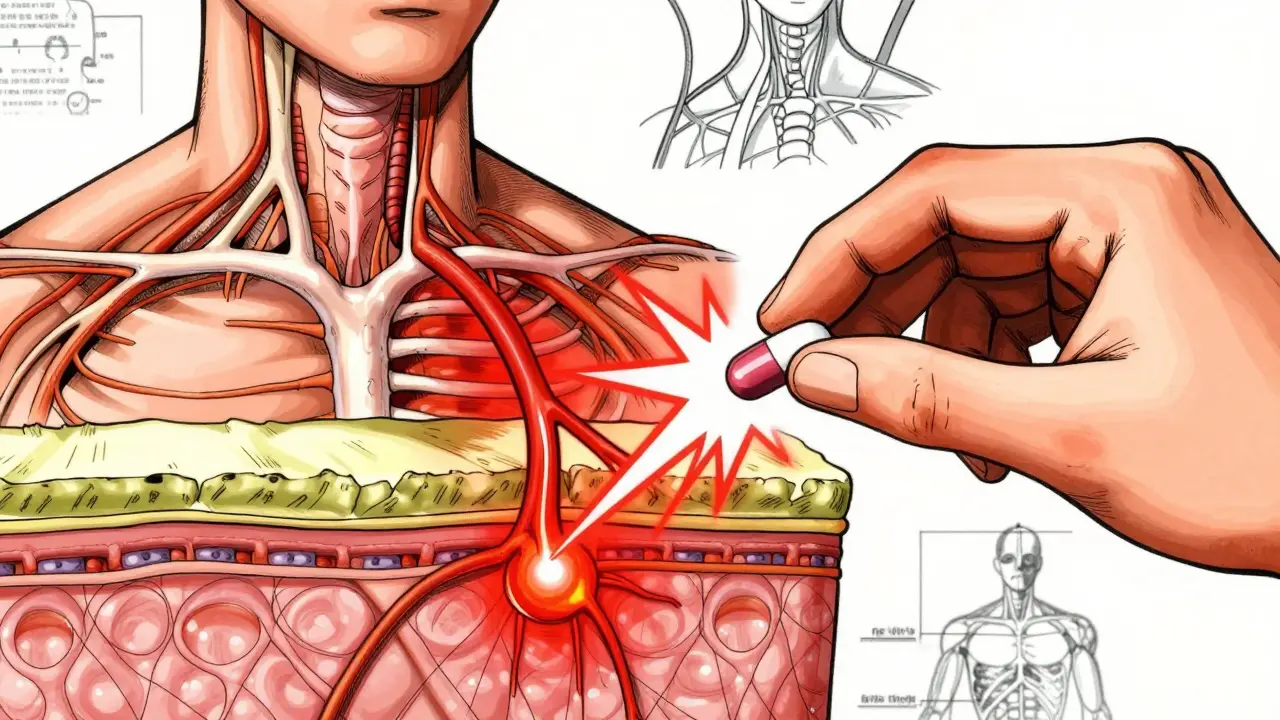
Itching isn’t just one thing. When a drug triggers it, the mechanism varies wildly depending on the substance. Some medications release histamine, the same chemical your body produces during an allergic reaction. Others affect nerve signals directly, bypassing histamine entirely. This distinction matters because it determines whether an over-the-counter antihistamine will help or if you need a different approach.
Research by Nakao et al. (2023) highlights that while H1 receptor blockers (standard antihistamines) work well for histamine-driven itch, they often fail when other chemical mediators are involved. For example, opioid-induced itching doesn’t respond well to traditional antihistamines because it involves mu-opioid receptors in the brain and spinal cord. Similarly, some drugs cause dry skin (xerosis) or liver stress (cholestasis), which indirectly leads to itching. Understanding these pathways helps doctors choose the right treatment rather than guessing.
High-Risk Medications to Watch Out For
Not all pills carry the same risk. A comprehensive study by Huang et al. (2019) at Johns Hopkins analyzed over one million patients and identified specific drugs with higher incidence rates of pruritus. Here are the usual suspects:
- Opioids: Morphine, fentanyl, and sufentanil cause itching in 60-90% of patients receiving spinal administration. The itch typically starts 6-12 hours after dosing.
- Antibiotics: Trimethoprim-sulfamethoxazole and tetracyclines are frequent offenders, with incidence rates around 1.06%.
- Cardiovascular Drugs: Calcium channel blockers (like amlodipine) and ACE inhibitors can trigger itching in nearly 1% of users.
- Antimalarials: Chloroquine causes severe itching in 55-90% of Black African patients, often lasting 1-3 days.
- Heparin: Used for blood thinning, it has an incidence rate of 1.11% for pruritus.
Interestingly, demographic factors play a role. The same Johns Hopkins study found that 70% of patients with drug-induced pruritus were female, and 40% were Black, compared to lower percentages in control groups. This suggests genetic or physiological differences may influence susceptibility.
| Medication Class | Incidence Rate | Primary Mechanism | Typical Onset |
|---|---|---|---|
| Opioids | 60-90% | Mu-opioid receptor activation | 6-12 hours |
| Trimethoprim-Sulfamethoxazole | 1.06% | Hypersensitivity/Histamine | Days to weeks |
| Calcium Channel Blockers | 0.92% | Vasodilation/Dry Skin | Variable |
| Chloroquine | 55-90% | Nerve Sensitization | 1-3 days |
The Antihistamine Withdrawal Surprise
Here’s a twist that caught many clinicians off guard: stopping certain antihistamines can cause severe itching. In July 2023, the FDA issued a warning regarding cetirizine and levocetirizine. After reviewing 209 cases between 2017 and 2023, they found that discontinuing these drugs after long-term use (median 33 months) triggered pruritus in many patients.
The symptoms didn’t appear immediately. The median time to onset was 2 days after stopping, with a range of 1-5 days. What makes this particularly alarming is the severity. Among the reported cases, 48 resulted in disability, 3 required hospitalization, and 2 involved thoughts of suicide or self-harm due to the unbearable nature of the itch. If you’ve been taking Zyrtec or Xyzal for years, don’t stop cold turkey without talking to your doctor.
How to Diagnose Drug-Induced Itching
Diagnosing medication-induced pruritus is largely a process of elimination. There’s no single blood test that says “this drug caused your itch.” Instead, healthcare providers rely on your history. As Rupert et al. (2022) noted in American Family Physician, an exposure history is key. Bring a complete list of everything you take-prescriptions, over-the-counter meds, supplements, and even herbal remedies-to your appointment.
Doctors look for patterns:
- Timing: Did the itching start shortly after beginning a new med?
- Duration: Is it acute (less than 6 weeks) or chronic (more than 6 weeks)?
- Resolution: Does it improve when you stop the drug?
Treatment Options That Actually Work
Managing drug-induced pruritus depends on the cause. Here’s a practical roadmap:
1. Stop or Switch the Offending Drug
In most cases, removing the trigger is the best solution. However, this isn’t always possible. If you’re on life-saving heart medication or painkillers, quitting isn’t an option. In these scenarios, your doctor might switch you to a different class of drug. For example, if an ACE inhibitor causes itching, an ARB (sartan) might be tolerated better.
2. Topical Relief
For mild cases, especially those linked to dry skin, topical treatments are first-line defense.
- Moisturizers: Apply thick creams or ointments daily. Look for ceramides or hyaluronic acid.
- Cooling Agents: Lotions with menthol or calamine soothe nerve endings.
- Topical Steroids: Hydrocortisone cream can reduce inflammation if secondary dermatitis develops.
3. Systemic Treatments
When topicals aren’t enough, oral medications come into play.
- Antihistamines: Effective for histamine-mediated itch (e.g., from antibiotics). First-generation ones like diphenhydramine also help you sleep through the night.
- Antidepressants: Surprisingly, low-dose amitriptyline or mirtazapine can relax itch receptors in the nervous system. The Cleveland Clinic notes these are useful for chronic, non-histaminergic itch.
- Opioid Antagonists: Naltrexone blocks opioid receptors and is highly effective for cholestatic or opioid-induced pruritus.
4. Managing Antihistamine Withdrawal
If you’re experiencing itching after stopping cetirizine or levocetirizine, the FDA data suggests restarting the medication resolves symptoms in 90% of cases. If you need to quit, tapering off slowly after restarting helped 38% of patients in the study. Never restart or change doses without medical supervision.
When to See a Doctor Immediately
Most drug-induced itching is annoying but harmless. However, seek urgent care if you notice:
- Rash with blisters or peeling skin (signs of Stevens-Johnson Syndrome).
- Yellowing of skin or eyes (jaundice), indicating liver involvement.
- Swelling of the face, lips, or throat (angioedema).
- Shortness of breath or wheezing.
Prevention Tips for Patients
You can reduce your risk by being proactive.
- Keep a Med Log: Note when you start new drugs and any new symptoms.
- Hydrate Your Skin: Many drugs dry out the skin. Use fragrance-free moisturizers daily.
- Avoid Triggers: Hot showers, wool clothing, and stress worsen itching. Stick to lukewarm water and cotton fabrics.
- Consult Before Quitting: Never stop chronic medications abruptly. Talk to your pharmacist or doctor about safer alternatives.
How long does medication-induced itching last?
Acute drug-induced pruritus typically resolves within days to weeks after stopping the offending medication. Chronic cases, lasting more than six weeks, may require ongoing management. For example, hydroxyethyl starch-induced itching can persist for up to 15 months, while antihistamine withdrawal itch often improves once the drug is restarted or tapered correctly.
Can antihistamines make itching worse?
Yes, paradoxically. Stopping long-term use of second-generation antihistamines like cetirizine can trigger severe rebound pruritus. Additionally, some antihistamines have sedative effects that mask discomfort, making sudden cessation feel more intense. Always consult a doctor before changing your regimen.
What is the difference between pruritus and an allergic rash?
Pruritus refers specifically to the sensation of itching, which can occur without visible skin changes. An allergic rash (urticaria or eczema) involves visible redness, bumps, or swelling. Drug-induced pruritus can exist alone or accompany a rash. If you have itch without a rash, think about systemic causes like liver issues or nerve-related drug effects.
Are certain races more prone to drug-induced itching?
Yes, studies show demographic variations. Research indicates that Black patients are significantly more susceptible to chloroquine-induced pruritus (55-90% incidence). Overall, women and Black individuals were overrepresented in large-scale studies of drug-induced pruritus compared to general populations, suggesting genetic or metabolic differences in drug processing.
Should I stop my medication if I start itching?
Do not stop essential medications like heart drugs, insulin, or antidepressants without consulting your doctor. Abruptly stopping can be dangerous. Instead, contact your healthcare provider immediately. They may adjust the dose, switch to an alternative, or prescribe treatment to manage the itching while you continue therapy.