
Most people with prediabetes don’t know they have it. Not because they’re ignoring their health, but because there’s often no obvious warning. No sharp pain. No sudden fatigue. Just a quiet, creeping shift in how your body handles sugar - one that can turn into full-blown type 2 diabetes if left unchecked.
But here’s the good news: prediabetes isn’t a life sentence. It’s a wake-up call. And unlike many chronic conditions, it’s one of the few where you can hit pause - even reverse it - with changes you can start today.
What Exactly Is Prediabetes?
Prediabetes means your blood sugar is higher than normal, but not high enough yet to be called type 2 diabetes. Think of it as a yellow light on your body’s dashboard. Not a crash, but a signal to slow down and check things out.
The American Diabetes Association sets clear thresholds: a fasting blood sugar between 100 and 125 mg/dL, an A1C level between 5.7% and 6.3%, or a 2-hour glucose level of 140-199 mg/dL after a sugar drink test. These aren’t guesses - they’re lab-backed markers showing your body is struggling to use insulin properly.
It’s not rare. In the U.S. alone, 96 million adults have it. That’s nearly 1 in 3 people. And over 80% of them don’t know it. In South Africa, similar trends are emerging - rising obesity, sedentary lifestyles, and processed food diets are pushing more people into this gray zone between health and disease.
Do You Have Prediabetes? The Real Signs (Even the Subtle Ones)
Let’s be clear: most people with prediabetes feel fine. That’s why blood tests matter more than symptoms. But when your body has been fighting high sugar for months or years, it starts to show up in ways you can’t ignore.
- Constant thirst and frequent urination - When your blood sugar climbs above 180 mg/dL, your kidneys can’t reabsorb all the glucose. So they pull water from your body to flush it out. You’re not just drinking more - you’re losing fluids, and your body is screaming for more.
- Unexplained fatigue - Your cells aren’t getting the fuel they need, even if you’re eating enough. Sugar is sitting in your bloodstream, not entering your muscles or brain. That’s why you feel drained after lunch, even if you didn’t do anything.
- Blurred vision - High sugar changes the shape of your eye’s lens. It’s temporary, but if you’re suddenly struggling to read signs or your screen, it could be your body’s way of saying your glucose is out of balance.
- Dark patches on skin - Acanthosis nigricans is a real, visible sign. Look at your neck, under your arms, or in your groin. If you see velvety, dark, thickened skin, it’s not dirt. It’s insulin resistance showing up on the surface.
- Increased hunger - You eat, but your cells are still starving. Your brain gets the signal: “We need more fuel.” So you crave carbs, sweets, snacks - even right after a meal.
- Slow-healing cuts or infections - High sugar damages blood vessels and weakens your immune system. A small scrape taking more than two weeks to heal? That’s not normal. Recurring yeast infections, urinary tract infections, or skin boils? These are red flags.
- Tingling or numbness in hands or feet - Nerve damage starts quietly. It’s not full-blown neuropathy yet, but if you feel pins and needles, especially at night, your nerves are being affected by sugar.
- Weight loss without trying - This sounds counterintuitive. If you’re eating normally but losing weight, your body may be breaking down muscle and fat because it can’t use glucose properly.
Women may notice additional signs: irregular periods, vaginal dryness, or infertility after a year of trying. These aren’t just “hormone issues” - they’re linked to insulin resistance affecting ovulation and hormone balance.
Why Most People Miss the Signs - And Why That’s Dangerous
Doctors don’t test for prediabetes unless you ask - or unless you’re overweight, over 45, or have a family history. But here’s the problem: 1 in 3 people with prediabetes are at a normal weight. Many are active. Many eat “healthy.” But if you’re eating refined carbs, drinking sugary drinks, or sitting most of the day, your insulin resistance can still creep up.
And the clock is ticking. Without action, 15-30% of people with prediabetes will develop type 2 diabetes within five years. That’s not a small risk. That’s a near-certainty if nothing changes.
The good news? You’re not powerless. The landmark Diabetes Prevention Program showed that losing just 5-7% of your body weight and getting 150 minutes of movement a week cuts your risk by 58%. That’s more effective than most medications.
How to Reverse Prediabetes - The Proven Way
Reversing prediabetes isn’t about extreme diets or punishing workouts. It’s about consistency, not perfection.
1. Move More - But Not Necessarily Harder
You don’t need to run marathons. You need to move daily. A 30-minute walk after dinner lowers blood sugar better than a 90-minute gym session once a week. Brisk walking, cycling, swimming, dancing - anything that gets your heart pumping for at least 10 minutes at a time counts.
Studies show that taking 10-minute walks after meals reduces post-meal sugar spikes by 30%. That’s huge. Your body uses sugar for energy during movement. The more you move, the less sugar stays in your blood.
2. Eat Smart - Not Just Less
Forget counting calories unless you’re trying to lose weight. Focus on food quality.
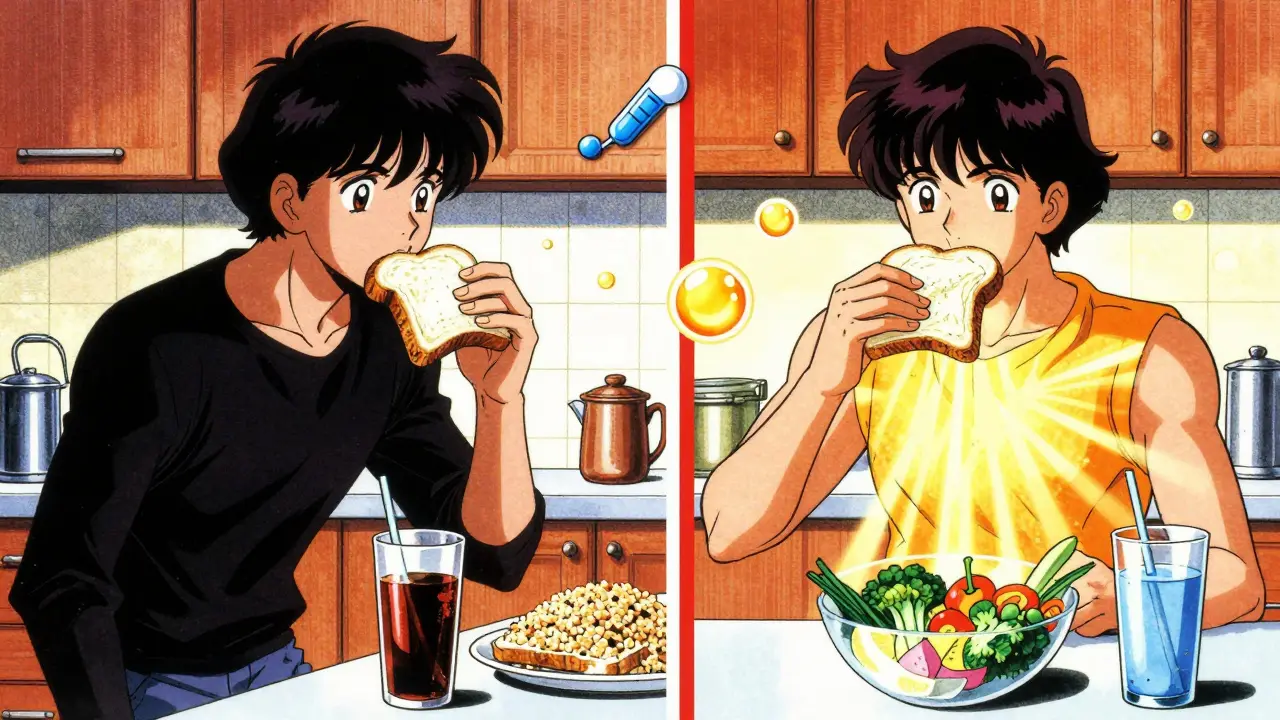
- Swap refined carbs - White bread, pasta, rice, pastries - for whole grains like oats, quinoa, barley, or brown rice.
- Fill half your plate with non-starchy veggies - Spinach, broccoli, peppers, zucchini, cauliflower. They’re low in sugar, high in fiber, and fill you up.
- Add protein and healthy fats - Eggs, fish, chicken, tofu, nuts, seeds, avocado. These slow down sugar absorption and keep you full longer.
- Ditch sugary drinks - Soda, juice, sweet tea, energy drinks. One can of soda a day increases diabetes risk by 26%. Water, herbal tea, or sparkling water with lemon are your new best friends.
The Mediterranean diet has been shown to reverse prediabetes in over 27% of people in just 12 months. It’s not magic - it’s olive oil, beans, fish, nuts, and vegetables. Simple. Real. Sustainable.
3. Lose a Little Weight - But Only If You Need To
You don’t have to be overweight to have prediabetes. But if you are, losing even 5-7% of your body weight can make a dramatic difference. For someone weighing 200 pounds, that’s just 10-14 pounds.
That weight loss doesn’t come from starvation. It comes from cutting out empty calories and moving more. A 1,500-1,800 calorie daily intake (adjusted for gender and size) with balanced meals is enough for most people to lose weight slowly and keep it off.
4. Sleep and Stress Matter More Than You Think
Sleep less than 6 hours a night? Your insulin sensitivity drops. Stress keeps your cortisol high? That raises blood sugar. Chronic stress and poor sleep are silent drivers of insulin resistance.
Try to get 7-8 hours of sleep. Practice deep breathing for 5 minutes a day. Take a walk without your phone. These aren’t luxuries - they’re part of your treatment plan.
What Doesn’t Work - And Why
Crash diets? They backfire. You lose weight fast, then gain it all back - often with more fat and less muscle. That makes insulin resistance worse.
Supplements? No pill, powder, or tea has been proven to reverse prediabetes. Berberine, cinnamon, apple cider vinegar? They might help a little, but they’re not replacements for food, movement, and sleep.
Medication? Metformin is sometimes prescribed, and it does reduce risk by 31%. But lifestyle changes are still twice as effective. And they come with no side effects.
When to Get Tested - And How
Don’t wait for symptoms. Get screened if:
- You’re 35 or older
- You’re overweight (BMI over 25, or over 23 if you’re Asian)
- You have a family history of type 2 diabetes
- You had gestational diabetes or gave birth to a baby over 9 pounds
- You have dark skin patches on your neck or armpits
The test is simple: a fasting blood sugar test or an A1C test. Both are cheap, quick, and covered by most insurance. Ask your doctor. If you’re not sure, get it done - it’s the most important test you might never need again.

Real Success Stories - Not Theory, But Reality
One woman in Durban, 52, had an A1C of 6.1%. She didn’t feel sick. She just didn’t have energy. She started walking 30 minutes after dinner, swapped white rice for quinoa, and cut out soda. In 6 months, her A1C dropped to 5.4%. Normal.
A man in Johannesburg, 48, had dark skin patches and constant hunger. He lost 18 pounds in 5 months by eating more vegetables, less bread, and walking his dog twice a day. His doctor said, “You’re not prediabetic anymore.”
These aren’t outliers. They’re people who made small, steady changes - and their bodies responded.
You Can Reverse This - But Only If You Start Now
Prediabetes isn’t a diagnosis you live with. It’s a chance to reset. The longer you wait, the harder it gets. Your body remembers insulin resistance. But it also remembers healing.
You don’t need a gym membership. You don’t need to give up everything you love. Just start with one change: swap one sugary drink for water. Take a 10-minute walk after dinner. Eat one extra serving of vegetables today.
These aren’t big steps. But they’re the ones that matter. Because prediabetes isn’t about fear. It’s about power. You have more control over your blood sugar than you think. And the window to reverse it? It’s open right now.
Can prediabetes be reversed completely?
Yes. Studies show that with lifestyle changes - losing 5-7% of body weight, moving 150 minutes a week, and eating whole foods - up to 60% of people can return to normal blood sugar levels. Some reverse it permanently. Others maintain control for years. It’s not a cure, but it’s a reset.
Do I need medication to reverse prediabetes?
No. Medications like metformin can help, but lifestyle changes are more effective and have no side effects. The Diabetes Prevention Program showed lifestyle changes cut diabetes risk by 58%, compared to 31% with metformin. Start with food, movement, and sleep before considering pills.
How long does it take to reverse prediabetes?
Most people see improvements in blood sugar within 3-6 months. A1C levels can drop by 0.5-1.0% in that time. Full reversal - back to normal glucose levels - often takes 6-12 months. The key is consistency, not speed. Slow and steady wins.
Can I still eat carbs if I have prediabetes?
Absolutely. But the type matters. Swap white bread, pasta, and rice for whole grains like oats, barley, quinoa, and brown rice. Pair carbs with protein or fat to slow sugar spikes. A banana with peanut butter is fine. A bagel with jam? Not so much.
Is prediabetes hereditary?
Family history increases your risk, but it doesn’t determine your fate. You can have a genetic predisposition and still avoid diabetes through lifestyle. The opposite is also true - people with no family history can develop prediabetes from poor diet and inactivity. Genetics load the gun, but lifestyle pulls the trigger.
What if I don’t lose weight - can I still reverse prediabetes?
Yes. Weight loss helps, but it’s not the only factor. One study found that people who improved their fitness level without losing weight still lowered their diabetes risk by 30%. Moving more, eating better, and sleeping well can improve insulin sensitivity even if the scale doesn’t budge.
Should I get a continuous glucose monitor (CGM)?
Not necessary for most people. CGMs are helpful if you’re trying to understand how food affects your sugar, but they’re expensive and not covered by insurance for prediabetes. Start with simple changes first. If you’re still struggling after 6 months, talk to your doctor about whether a CGM might help.
Next Steps: What to Do Today
Here’s your 7-day action plan:
- Drink water instead of soda or juice for the next 7 days.
- Take a 10-minute walk after each meal.
- Add one extra serving of vegetables to lunch and dinner.
- Swap white bread or rice for whole grain versions.
- Go to bed 30 minutes earlier.
- Write down your current weight and A1C (if you know it).
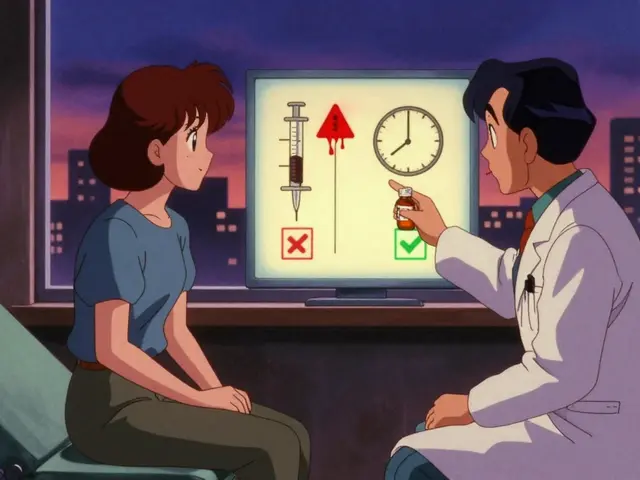
- Call your doctor and ask for a fasting blood sugar or A1C test.
You don’t need to do everything at once. Just start. Because prediabetes isn’t a life sentence - it’s a second chance. And you’ve already taken the first step by reading this.




Roshan Joy
11 January, 2026 19:39 PMMan, I had no idea about the dark patches thing 😳 I thought it was just dirt from working outside. Got my A1C checked last month - 5.9%. Started walking after dinner and swapping soda for sparkling water. Already feel less sluggish. Small changes, y’know?
Adewumi Gbotemi
12 January, 2026 01:17 AMMy uncle in Lagos had this. He just started eating more beans and less rice. Now he walks every morning. No medicine. Just food and movement. It’s simple but works.
Michael Patterson
13 January, 2026 09:10 AMOkay so first off - this article is basically just a glorified Weight Watchers pamphlet with extra steps. You say ‘swap carbs’ but you don’t mention insulin spikes from fruit or the fact that even quinoa raises glucose in some people. And you completely ignore circadian rhythm disruption as a root cause. Also, ‘150 minutes a week’? That’s 21 minutes a day - that’s not enough if you’re sitting 10 hours at a desk. And why no mention of intermittent fasting? I’ve seen studies where 16:8 reversed prediabetes in 8 weeks. You’re oversimplifying a complex metabolic condition. Also typo: ‘sugar is sitting in your bloodstream’ - sugar doesn’t sit, it circulates. Jeez.
Matthew Miller
14 January, 2026 03:23 AMWow. Another feel-good article from someone who clearly doesn’t understand biochemistry. You think walking after dinner fixes insulin resistance? Try telling that to someone with a BMI of 38 and a fasting insulin of 32. This is wellness theater. Real prediabetes isn’t fixed by ‘eating more veggies.’ It’s fixed by ketosis, resistance training, and pharmaceutical-grade interventions. Stop giving people false hope with yoga and quinoa. This is dangerous.
Madhav Malhotra
15 January, 2026 17:49 PMLove how you mentioned South Africa - same thing here in India. Everyone thinks diabetes is just ‘sweet too much’ but it’s more about rice, fried snacks, and sitting on the floor all day. My mom reversed hers by switching to millet rotis and walking after chai. No meds. Just old-school habits. 💪
Priya Patel
17 January, 2026 01:45 AMI’m 31, normal weight, and my A1C was 5.8%. I didn’t even know I was prediabetic until my doctor mentioned it during a routine check. I started drinking lemon water in the morning and taking the stairs. Two months later, it’s 5.3%. I didn’t think I could do it but… I did. 🙌 You’re not broken. You’re just out of rhythm. Fix that, and your body will thank you.
Jennifer Littler
18 January, 2026 07:38 AMFrom a clinical perspective, the HbA1c threshold of 5.7–6.4% is statistically valid but clinically heterogeneous. Insulin resistance manifests differently across phenotypes - metabolically obese normal weight (MONW) individuals often present without overt adiposity. The DPP protocol remains gold standard, but adherence is < 30% in real-world settings. Non-pharmacological interventions require sustained behavioral economics support, which is rarely integrated into primary care. The article is accurate but lacks systems-level context.
Jason Shriner
18 January, 2026 14:44 PMSo let me get this straight… I’m supposed to believe that drinking water and walking my dog will undo 10 years of eating pizza and sleeping 4 hours? 🤡 The only thing reversing here is my eye roll. Next you’ll tell me yoga fixes cancer.
Alfred Schmidt
19 January, 2026 19:35 PMTHIS. IS. NOT. A. GAME. You think you can just ‘swap rice for quinoa’ and fix your broken metabolism? You’re playing Russian roulette with your pancreas. I’ve seen people die from this. I’ve seen them lose toes. I’ve seen them wake up in the ER with ketones at 8. This isn’t ‘lifestyle advice.’ It’s a death sentence if ignored. Stop being so nice about it. People need to be SCARED into action. You’re not ‘trying.’ You’re surviving.
Sean Feng
20 January, 2026 18:42 PMYeah I read it. Good info I guess. I'm gonna do the walk thing. Maybe.
Priscilla Kraft
20 January, 2026 20:07 PMMy sister was prediabetic and she did exactly what this says - veggies, walks, sleep, no soda. In 8 months, her A1C dropped to 5.2%. She didn’t even lose weight - but her energy went from ‘zombie’ to ‘I can hike now.’ 💖 It’s not about perfection. It’s about showing up. You don’t need a miracle. Just consistency. And yes, dark skin patches? Totally real. I saw one on my friend’s neck and she didn’t know what it was. Got tested. Changed her life.
Vincent Clarizio
20 January, 2026 22:46 PMLet’s be honest - prediabetes is capitalism’s way of selling you supplements and fitness trackers. The real issue? We’ve been conditioned to see food as fuel, not ritual. Our ancestors didn’t count carbs or walk 150 minutes a week - they ate seasonally, moved with the sun, and slept when dark. We’ve replaced wisdom with algorithms. Your body doesn’t care about your Apple Watch. It cares about rhythm. And right now, you’re out of sync with the earth. That’s the problem. Not the sugar. Not the rice. The disconnection. Reconnect. Not with a step counter. With silence. With meals eaten slowly. With your grandmother’s recipes. That’s the real reversal.
Sam Davies
22 January, 2026 17:06 PMHow delightfully quaint. You suggest ‘quinoa’ as if it’s some magical superfood. In 2024, the only thing that reverses prediabetes is a 2000-calorie deficit and a therapist to deal with the emotional eating. And please - ‘walk after dinner’? That’s like saying ‘take a bubble bath to cure pneumonia.’
Christian Basel
23 January, 2026 19:37 PMThe DPP data is overinterpreted. The 58% reduction is relative risk. Absolute risk reduction is 11%. Most people don’t understand statistics. Also, ‘whole grains’ are still high glycemic load. The real solution is low-carb, high-fat. Everything else is placebo.
Roshan Joy
25 January, 2026 01:55 AM@6730 - I get your point about circadian rhythm, but I didn’t say it’s magic. I just started walking after dinner and my afternoon slump disappeared. I’m not a scientist. I’m just a guy who didn’t want to be on metformin. Small wins count. 🙏