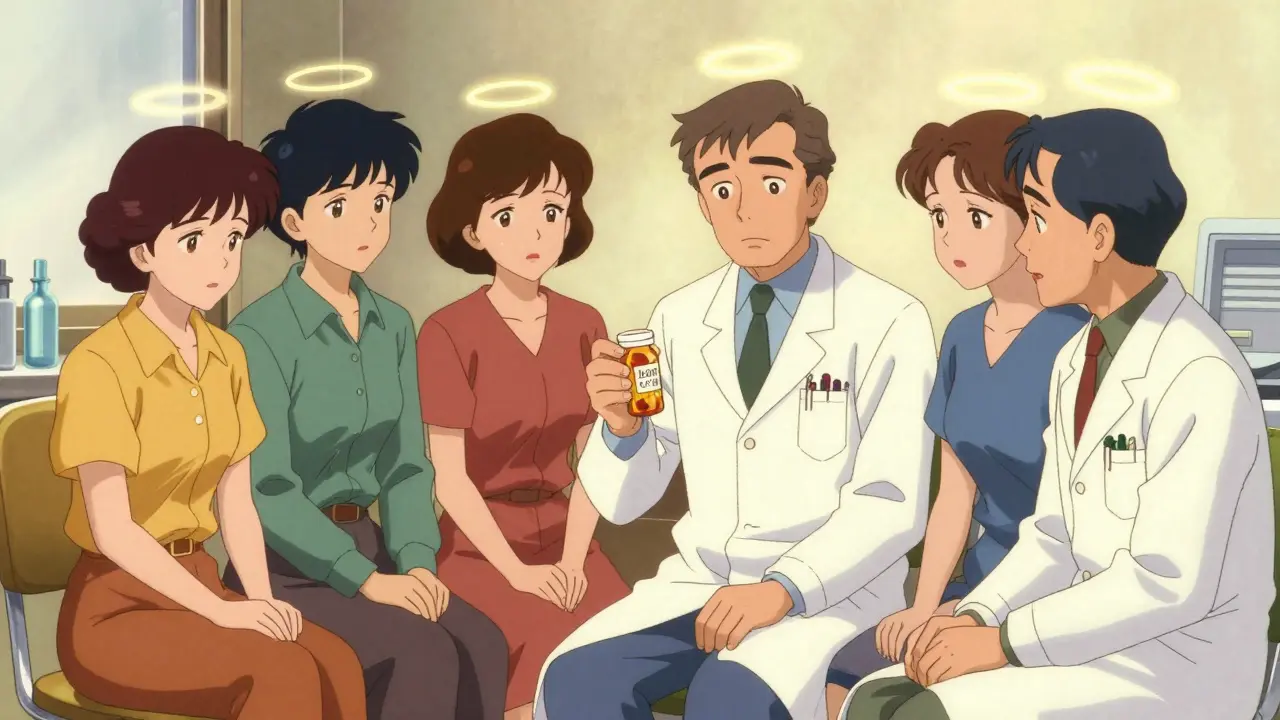
Many people take medications every day to manage chronic conditions-depression, high blood pressure, heart disease, prostate issues-but few realize that some of these drugs can quietly sabotage their sex lives. Sexual side effects from common medications aren’t rare or unusual. They’re widespread, often ignored, and sometimes the reason people stop taking life-saving drugs. If you’ve noticed a drop in desire, trouble getting or keeping an erection, delayed or absent orgasm, or reduced pleasure during sex, it might not be you-it could be your medicine.
Antidepressants Are the Biggest Culprit
When it comes to sexual side effects, antidepressants lead the list. About 40% of people taking these drugs experience some form of sexual dysfunction, according to decades of clinical research. For those on SSRIs-like sertraline (Zoloft), fluoxetine (Prozac), and paroxetine (Paxil)-the numbers jump even higher. Studies show 25% to 73% of users report sexual problems, with paroxetine causing issues in up to 65% of cases.These drugs work by boosting serotonin in the brain, which helps lift mood. But serotonin also shuts down sexual response pathways. The result? Lower libido, difficulty reaching orgasm, or even complete anorgasmia. Clomipramine, a tricyclic antidepressant, has one of the worst records: in one study, 93% of patients reported total or partial inability to orgasm.
But not all antidepressants are the same. Bupropion (Wellbutrin) and mirtazapine (Remeron) are known for having much lower rates of sexual side effects. In fact, some patients switch to these specifically to protect their sex lives. If you’re struggling with sexual dysfunction and your depression is stable, talking to your doctor about switching meds might be one of the best decisions you make.
High Blood Pressure Medications Can Kill Desire
Heart medications don’t just protect your heart-they can also hurt your sex life. Thiazide diuretics like hydrochlorothiazide (Microzide) are the most common cause of erectile dysfunction among blood pressure drugs. Beta blockers like atenolol and propranolol also reduce blood flow and dampen arousal. About 10% of heart failure patients link their sexual problems directly to these medications.Women aren’t spared. Up to 41% of women on antihypertensives report decreased sexual desire, and 34% say they feel less pleasure during sex. Alpha-blockers like clonidine and prazosin are especially bad for libido in women.
Here’s the good news: not all blood pressure meds are created equal. Angiotensin II receptor blockers like valsartan have actually been shown to improve sexual desire and fantasies in women compared to beta blockers. If you’re on a blood pressure drug and noticing changes in your sex life, ask your doctor if switching to an ARB could help-without sacrificing blood pressure control.
Prostate Medications and Hormone Disruptors
Men taking 5-alpha reductase inhibitors like finasteride (Propecia) or dutasteride (Avodart) for hair loss or enlarged prostates often face sexual side effects. About 5.9% to 15.8% report lower libido, 5.1% to 9% have erectile dysfunction, and up to 21.4% experience ejaculation problems. These drugs work by lowering DHT, a hormone tied to both hair growth and sexual function.For men with prostate cancer, antiandrogens like bicalutamide are a different story. Nearly all patients on these drugs lose libido, struggle with erections, and may develop breast tissue (gynecomastia). These effects are expected and often accepted as part of cancer treatment-but they still hurt emotionally. That’s why counseling before starting treatment is critical. Knowing what’s coming helps men prepare mentally and emotionally.
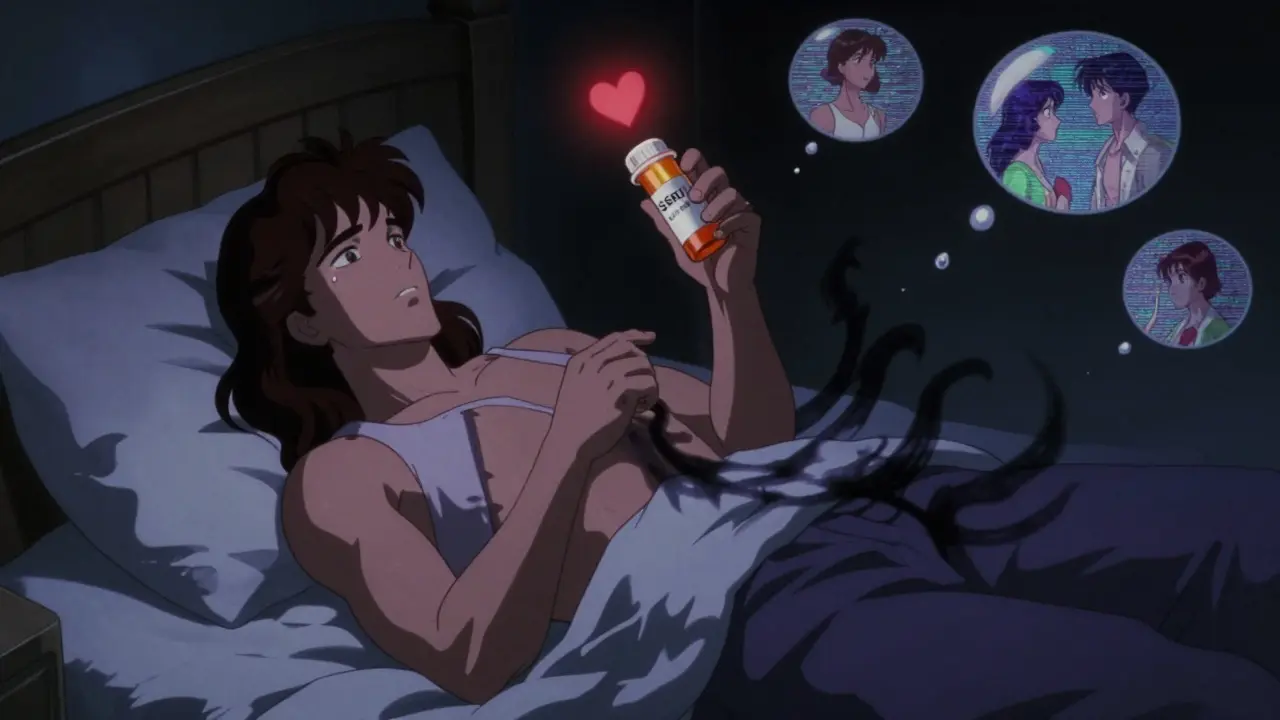
Other Surprising Offenders
You might not expect these common drugs to affect your sex life-but they do.- Gabapentin and pregabalin (used for nerve pain and seizures) can lower testosterone levels by increasing sex hormone-binding globulin. Studies link them to erectile dysfunction and reduced sexual desire.
- Opioids like oxycodone and hydrocodone disrupt the hypothalamic-pituitary-gonadal axis, leading to low testosterone and erectile dysfunction. Even short-term use can cause problems.
- Proton pump inhibitors (PPIs) like omeprazole (Prilosec) and H2 blockers like ranitidine have been tied to decreased libido and erectile issues in some patients, though the exact mechanism is still unclear.
- Digoxin and spironolactone (used for heart failure and fluid retention) are also known to interfere with sexual function.
And yes, even some medications for acid reflux and anxiety can have unintended sexual consequences. The list keeps growing as more research comes out.
What You Can Do: Practical Steps to Regain Control
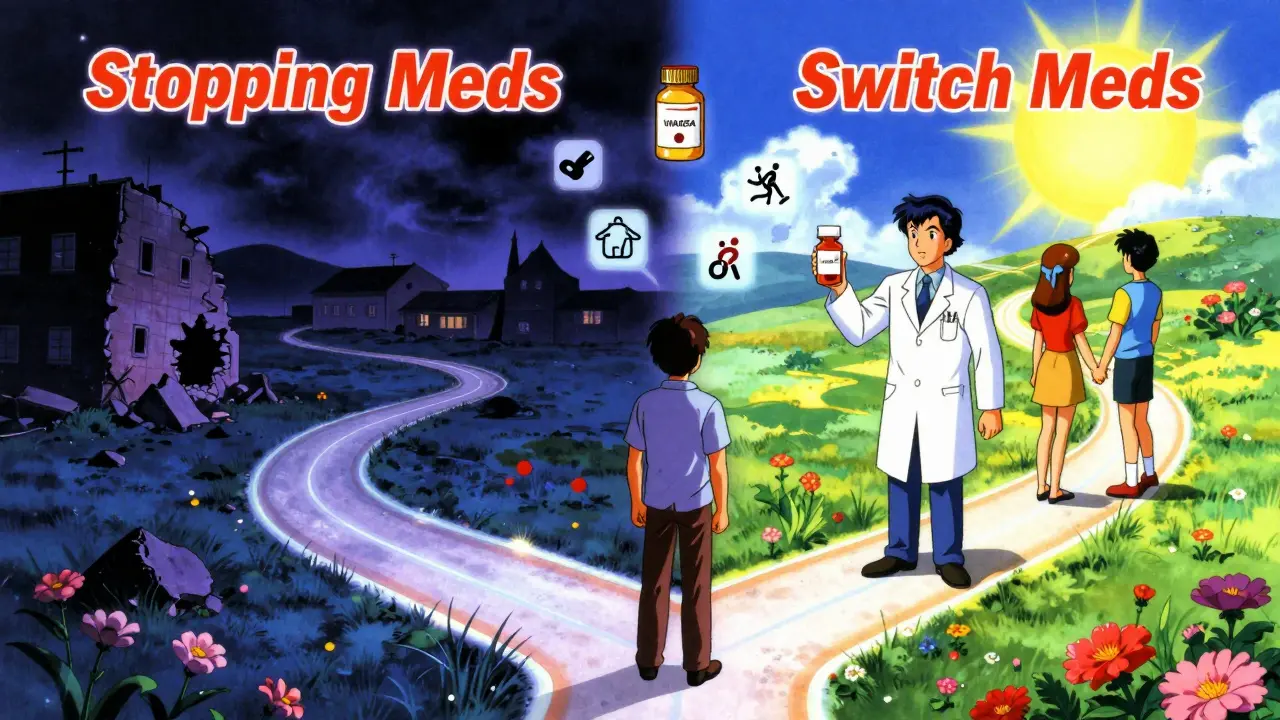
If you’re experiencing sexual side effects, don’t suffer in silence. Here’s what actually works:- Don’t quit cold turkey. Stopping antidepressants or blood pressure meds suddenly can cause dangerous withdrawal or rebound effects. Always talk to your doctor first.
- Ask about switching. If you’re on paroxetine, ask about sertraline or bupropion. If you’re on a beta blocker, ask about valsartan. There are often safer alternatives.
- Try a "drug holiday." For some SSRIs, taking a short break on weekends (under medical supervision) can help restore sexual function without triggering depression relapse.
- Time your doses. Some patients find taking their SSRI after sex reduces interference with arousal and orgasm.
- Consider add-on treatments. Sildenafil (Viagra) works for 74% to 95% of men with SSRI-induced erectile dysfunction. Tadalafil (Cialis) is another option. These aren’t just "quick fixes"-they’re proven tools to restore quality of life.
- Move your body. Regular exercise improves blood flow, boosts testosterone, and reduces stress-all of which help sexual function. Even 30 minutes of walking daily can make a difference.
Some people also benefit from therapy. Sexual dysfunction often carries shame and embarrassment. Talking to a counselor who specializes in sexual health can help you separate the physical side effects from emotional guilt.
Why This Matters More Than You Think
Sexual side effects aren’t just about pleasure. They’re about dignity, relationships, and mental health. When people stop taking their meds because of these side effects, they risk worsening their original condition. Depression can return. Blood pressure can spike. Prostate cancer can progress.Doctors aren’t always trained to ask about sex. Patients often feel too embarrassed to bring it up. That’s why you need to be the one to start the conversation. Bring up sexual side effects just like you would mention dizziness or nausea. It’s a legitimate medical concern.
And it’s getting more attention. The FDA now requires drug manufacturers to report sexual side effects in clinical trials. The American Urological Association recommends routine screening for sexual dysfunction in patients on long-term antidepressants, antihypertensives, or prostate meds. Progress is being made-but it’s still up to you to speak up.
What’s Next? Better Drugs Are Coming
Pharmaceutical companies are starting to design antidepressants that don’t wreck sexual function. Newer serotonin modulators and dual-action drugs are being tested to keep mood stable while avoiding the serotonin overload that kills libido.Research is also uncovering genetic factors that make some people more prone to these side effects. In the future, blood tests might tell your doctor whether you’re likely to have sexual problems with a certain drug-before you even start taking it.
For now, knowledge is power. Knowing which drugs cause what, how common the problems are, and what options exist gives you control. You don’t have to choose between mental health and sexual health. There’s almost always a better path.
Can antidepressants cause permanent sexual side effects?
In most cases, sexual side effects from antidepressants go away after stopping the medication. However, a small number of people report persistent issues-sometimes called Post-SSRI Sexual Dysfunction (PSSD)-that last for months or even years after discontinuation. This is rare, but real. If you notice ongoing problems after stopping an SSRI, talk to a specialist. There’s no proven cure yet, but some patients find relief with hormone therapy, counseling, or time.
Do all SSRIs cause sexual side effects?
No. While most SSRIs carry a high risk, the degree varies. Paroxetine has the highest rate at around 65%, followed by fluvoxamine and sertraline. Fluoxetine tends to be slightly lower, and escitalopram (Lexapro) may have a slightly better profile, though still significant. Bupropion and mirtazapine aren’t SSRIs and have much lower rates, making them better choices if sexual health is a priority.
Can blood pressure meds cause low libido in women?
Yes. Women on antihypertensives report decreased desire in up to 41% of cases and reduced pleasure in 34%. Beta blockers and diuretics are the biggest offenders. Alpha-blockers like clonidine are especially linked to low libido. Switching to an angiotensin II receptor blocker like valsartan may improve sexual desire and fantasies without raising blood pressure.
Is it safe to take Viagra with antidepressants?
Yes, for most people. Sildenafil (Viagra) and tadalafil (Cialis) are commonly prescribed to treat SSRI-induced erectile dysfunction. Studies show they work in 74-95% of cases. However, if you’re also on nitrates for heart disease, never combine them with ED meds-it can cause a dangerous drop in blood pressure. Always check with your doctor before combining medications.
How long do sexual side effects last after stopping a drug?
For most people, sexual function returns within days to weeks after stopping the medication. With SSRIs, it often takes 2-8 weeks. For opioids or hormone-altering drugs, recovery may take longer-up to several months-as hormone levels normalize. If problems persist beyond 3 months, consult a specialist. Persistent issues may require targeted treatment, even if the drug is long gone.


Danielle Stewart
17 December, 2025 21:01 PMI was on sertraline for three years and didn’t say a word about the zero libido until my partner left. When I finally told my doctor, she acted like it was common knowledge. It’s not. We need more open dialogue-this isn’t just about sex, it’s about feeling human again.
Switching to bupropion was the best decision I ever made. My mood stayed stable, and suddenly, I remembered what it felt like to want intimacy. No shame in prioritizing your pleasure. You deserve both mental peace and physical connection.
Sajith Shams
18 December, 2025 18:16 PMYou people are overreacting. The data is clear: 40% of SSRI users report sexual side effects. That means 60% don’t. You’re not special. If you can’t handle a little serotonin-induced anorgasmia, maybe you shouldn’t be on antidepressants at all. The alternative? Uncontrolled depression, suicide, hospitalization. Pick your poison.
Also, Viagra isn’t a lifestyle product. It’s a medical tool. Stop treating it like a party trick.
Glen Arreglo
20 December, 2025 02:53 AMI’m a 58-year-old guy on lisinopril for hypertension and finasteride for hair loss. I lost my sex drive completely by age 52. Didn’t say anything for years-felt like a failure.
Then I switched to valsartan and stopped the finasteride. Took 3 months, but my libido came back slowly. Not 100%, but enough to feel like myself again. My wife cried when we had sex without needing a script. Don’t give up. Ask for alternatives. Your doctor doesn’t know everything.
Also, exercise helped more than I expected. Walking 30 minutes a day changed everything. Not magic, just biology.
shivam seo
21 December, 2025 04:44 AMTypical American medical nonsense. You take a pill to fix one thing and then need three more pills to fix the side effects. Meanwhile, in India, we just eat turmeric, yoga, and chill. No drugs needed. You people are addicted to chemicals.
Also, Viagra? Please. That’s a scam invented by Big Pharma to make men feel like they’re still 25. Grow up. Your dick isn’t the center of your identity.
benchidelle rivera
22 December, 2025 13:49 PMThis article is dangerously incomplete. It mentions PSSD but doesn’t emphasize how rare it is. That’s irresponsible. We cannot normalize the idea that antidepressants cause permanent damage. The vast majority of people recover fully.
Also, the suggestion to take drug holidays is medically unsound. Untreated depression kills. Don’t gamble with your life for the sake of a temporary libido boost. If you’re having side effects, consult a psychiatrist-not a Reddit thread.
And for the love of God, stop treating sexual dysfunction like a fashion statement. It’s a medical issue. Treat it with seriousness, not memes.
Matt Davies
24 December, 2025 08:23 AMMan, this hit me right in the feels. I was on paroxetine for five years. My sex life? Dead. Like, tomb-dead. I thought I was broken. Turns out, my meds were the ghost in the machine.
Switched to mirtazapine. Didn’t even need Viagra. My wife said I ‘came back to life.’ No hyperbole. I started kissing her again. Hugged her without thinking about my next pill. That’s not just sex-that’s soul repair.
Doctors don’t ask because they’re rushed. But you? You’re the CEO of your body. Ask. Push. Demand. Your libido isn’t a luxury. It’s part of your humanity.
Ashley Bliss
24 December, 2025 18:33 PMLet’s be real: our entire culture is built on selling you the illusion that you can have it all-perfect mental health, perfect body, perfect sex life. But biology doesn’t care about your Instagram aesthetic.
Antidepressants aren’t evil. They’re just chemical tools. If you want to be emotionally stable, you might have to sacrifice some pleasure. That’s the price of survival.
And let’s not pretend Viagra is a cure. It’s a band-aid on a bullet wound. The real problem? We’ve turned intimacy into a performance. We’re all so busy trying to ‘perform’ that we forgot how to feel.
Maybe the answer isn’t switching drugs… maybe it’s learning to be okay with less.
Dev Sawner
25 December, 2025 20:50 PMAccording to the 2021 meta-analysis published in the Journal of Clinical Psychopharmacology, SSRIs induce sexual dysfunction in 42.7% of patients, with paroxetine being the most potent inhibitor of orgasmic function (OR 3.12, 95% CI 2.45–3.98).
Furthermore, the pharmacokinetic half-life of fluoxetine (2–4 days) contributes to prolonged serotonergic activity, increasing cumulative risk compared to shorter-acting agents.
Switching to bupropion is not universally applicable due to its noradrenergic-dopaminergic profile, which may exacerbate anxiety in certain subtypes. Valsartan’s effect on libido is mediated via AT1 receptor blockade and improved endothelial function, not hormonal modulation.
Do not self-prescribe drug holidays. This is a Class IV recommendation at best.
Moses Odumbe
26 December, 2025 18:57 PMbro i was on prozac for 4 years and thought i was just a boring person 😭
switched to wellbutrin and suddenly i wanted to kiss my girlfriend again like it was 2017 🥹
also i started taking viagra on weekends and it felt like my body remembered how to be alive again 🤍
ps: if your doc says "it's normal" they're lazy. ask for a referral to a psychopharmacologist. they exist. they're cool. they get it.
Meenakshi Jaiswal
27 December, 2025 22:40 PMAs a nurse who’s worked in psych for 12 years, I’ve seen this over and over. Patients don’t tell us because they’re ashamed. Or they think we’ll judge them.
But here’s the truth: we’ve seen it all. We’ve had men cry because they couldn’t get hard during their wedding night. We’ve had women say they stopped having sex with their husbands because they felt like robots.
If you’re struggling, please talk to someone. Not just your doctor-maybe a therapist, a support group, even a friend. You’re not alone. And yes, there are options. Always.
Don’t let stigma steal your joy.
bhushan telavane
29 December, 2025 20:30 PMIn India, we don’t talk about this stuff. My uncle took blood pressure pills and stopped having sex. Family said, "He’s old now." But he was 48. I found this article and showed it to him. He cried. Said no one ever told him it was the medicine.
Now he’s on valsartan. His libido came back. He dances with my aunt again.
Maybe we need more of this talk. Not just in the West. In every village, every home.
Medicine should heal the whole person. Not just the heart. Not just the mind. The whole thing.
Mahammad Muradov
30 December, 2025 08:20 AMIt’s not the medication. It’s weakness. Modern men are obsessed with performance, pleasure, and ego. Real strength is enduring discomfort for the sake of survival. If your depression is under control, then your libido is a trivial concern.
Stop treating your body like a luxury car that needs premium fuel. You’re not entitled to sexual satisfaction. You’re entitled to live. And if that means sacrificing pleasure, so be it.