
When you take a medication, you expect it to help. But sometimes, it causes harm. Not all side effects are the same. Some happen because you took too much. Others happen for no obvious reason-even at the lowest dose. Understanding the difference between dose-related and non-dose-related side effects isn’t just for doctors. It’s critical for anyone on long-term medication, managing chronic illness, or caring for an elderly relative.
What Are Dose-Related Side Effects?
Dose-related side effects, also called Type A reactions, are predictable. They happen because the drug’s normal action gets turned up too high. Think of it like turning the volume on a speaker too loud-the sound doesn’t change, it just becomes painful. These reactions make up about 70-80% of all adverse drug reactions.Examples are common. If you’re on warfarin and your INR jumps to 8.2, you’re at risk of bleeding-not because the drug is “bad,” but because the dose is too high for your body. Insulin can cause low blood sugar. Blood pressure pills can drop your pressure too far. These aren’t surprises. They’re extensions of the drug’s intended effect.
Drugs with narrow therapeutic windows are especially risky. Digoxin, for instance, works well between 0.5 and 0.9 ng/mL. Above 2.0 ng/mL, it becomes toxic. Lithium is similar-therapeutic at 0.6-1.0 mmol/L, toxic above 1.2. Even small changes in kidney function can push these levels over the edge. That’s why older adults, or people with kidney disease, need lower doses.
Drug interactions make this worse. If you’re on simvastatin and start taking clarithromycin, your statin levels can spike 5 to 10 times. That’s not a rare reaction-it’s a classic Type A scenario. The fix? Adjust the dose. Monitor blood levels. Avoid the interaction.
What Are Non-Dose-Related Side Effects?
Non-dose-related side effects, or Type B reactions, are the opposite. They’re unpredictable, rare, and often severe. You might take one pill and develop a life-threatening rash. Or your liver shuts down after a single dose. No matter how small the dose, the reaction happens.These aren’t caused by too much drug. They’re caused by your body’s unusual response. Most are immune-driven. Anaphylaxis to penicillin is a classic example-1 in 10,000 people react violently, even to a tiny amount. Stevens-Johnson syndrome from lamotrigine or allopurinol can start with a mild rash and spiral into skin sloughing and organ failure.
What makes Type B reactions so dangerous is that they often appear after prior exposure. Your body gets sensitized. The next time you take the drug-even at the same dose-it reacts like a bomb. That’s why some people have no reaction the first time, then collapse on the second dose.
Genetics play a huge role. If you carry the HLA-B*57:01 gene, taking abacavir (an HIV drug) carries a 50% risk of a severe allergic reaction. Test for it first, and you can prevent it entirely. That’s why genetic screening is now standard before prescribing certain drugs in many countries.
Why the Difference Matters in Real Life
The distinction isn’t academic. It changes what doctors do.If it’s a dose-related reaction, you adjust the dose. You check blood levels. You watch for signs of toxicity. You might switch to a different drug in the same class, but only if the mechanism is similar.
If it’s non-dose-related, you stop the drug-forever. No exceptions. You avoid all drugs in the same chemical family. You carry an epinephrine auto-injector. You tell every new doctor. Because the next time, it could be worse.
One patient I read about developed Stevens-Johnson syndrome after her first dose of lamotrigine, even though her doctor followed every dosing guideline. That’s Type B. No amount of caution would have prevented it. She now carries an alert bracelet. She can’t take any anticonvulsants again.
On the flip side, a 78-year-old man on warfarin developed a dangerous INR after starting amiodarone. His doctor didn’t stop the warfarin-he lowered the dose, monitored weekly, and kept him safe. That’s Type A. Manageable. Predictable.

Who’s Most at Risk?
Dose-related reactions hit older adults hardest. Why? Kidneys slow down. Liver metabolism drops. Body fat increases. Water content decreases. All of this changes how drugs move through the body. A dose that was safe at 50 becomes dangerous at 75. That’s why 67% of emergency visits for drug reactions in people over 65 involve anticoagulants, insulin, or diabetes pills-all classic Type A offenders.Non-dose-related reactions can strike anyone, but certain groups are more vulnerable. People with autoimmune conditions, those with specific HLA genes, or those with a history of allergies are at higher risk. Asian populations have a much higher chance of severe skin reactions from carbamazepine if they carry HLA-B*15:02. That’s why testing is required before prescribing it in countries like Thailand and China.
Children and pregnant women are also at higher risk for Type B reactions because their immune systems are more reactive. A rash from amoxicillin in a child isn’t always a simple allergy-it could be a sign of something deeper.
How Are These Reactions Managed?
For Type A reactions, the tools are well-established:- Therapeutic drug monitoring: Checking blood levels of drugs like vancomycin, phenytoin, or digoxin
- Dose adjustments based on kidney or liver function
- Drug interaction checkers built into electronic prescribing systems
- Regular lab tests (INR, creatinine, liver enzymes)
For Type B reactions, prevention is everything:
- Genetic screening before prescribing (e.g., HLA-B*57:01 for abacavir, HLA-B*15:02 for carbamazepine)
- Skin testing for penicillin allergy (though it’s only 50-70% accurate)
- Graded challenges for low-risk allergy histories
- Black box warnings on drug labels
Some drugs now come with mandatory risk management programs. The FDA requires REMS (Risk Evaluation and Mitigation Strategies) for 71 drugs with serious Type B risks. That means pharmacies can’t dispense them without special training or patient education.
What’s Changing in Pharmacology?
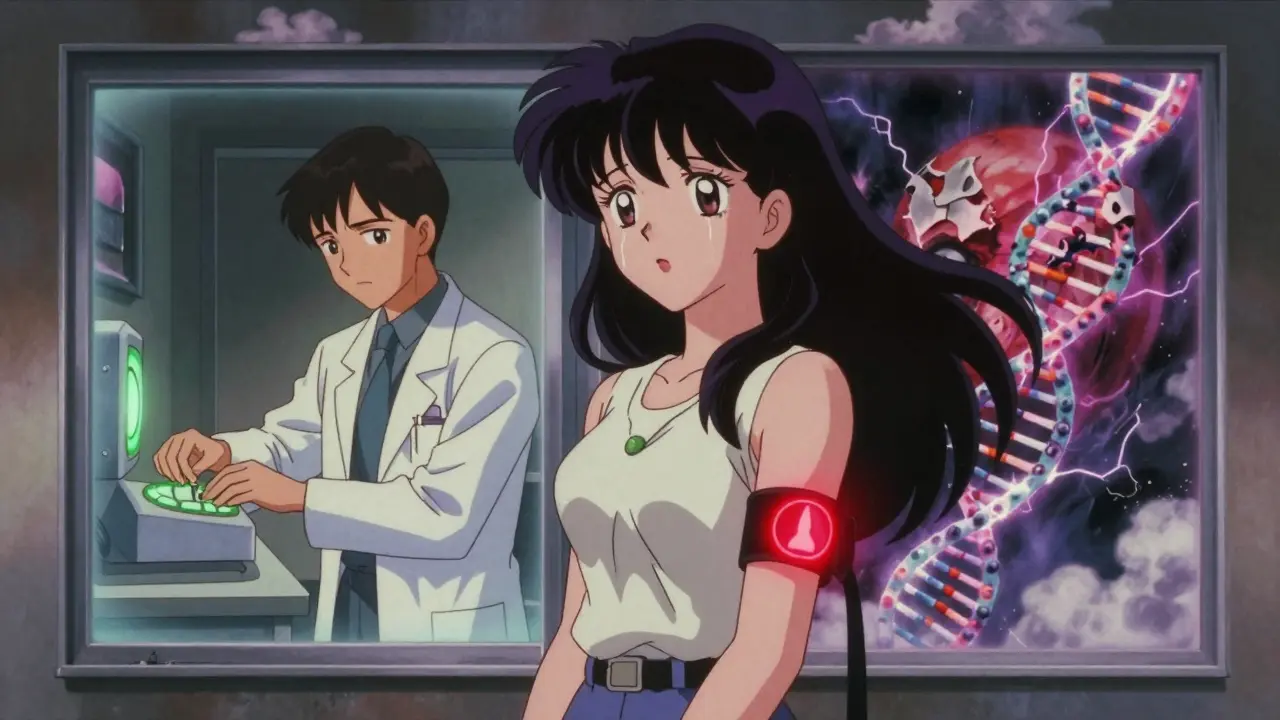
The field is moving toward personalization. Pharmacogenomics-the study of how genes affect drug response-is growing fast. The global market is projected to hit $17.9 billion by 2030. The FDA now lists pharmacogenomic information on 311 drug labels, with 28 requiring genetic testing before use.Researchers are also using AI to predict reactions. Machine learning models can predict Type A reactions with 82% accuracy by analyzing lab values, age, and other meds. But for Type B? Only 63%. Why? Because they’re still largely random. Your genes, your immune history, your unknown triggers-it’s harder to model.
Still, progress is real. In 2024, the FDA released draft guidance supporting software that helps doctors calculate individualized doses based on genetics, weight, and organ function. That’s the future: not one-size-fits-all dosing, but precision dosing tailored to you.
What Should You Do?
If you’re on medication:- Know which side effects are expected-and which are red flags.
- Keep a list of all your drugs, including supplements.
- Ask your pharmacist: “Is this a dose-related side effect or something I should stop immediately?”
- If you’ve had a severe rash, swelling, or breathing trouble after a drug, get tested for allergies or genetic risks.
- Carry a medical alert card or bracelet if you’ve had a Type B reaction.
Don’t assume all side effects mean you’re “sensitive” or “allergic.” Some are just too much of a good thing. Others are your body’s way of saying, “This drug doesn’t belong here.”
Understanding the difference saves lives. It prevents unnecessary hospitalizations. It keeps you on the right medication-not the wrong one.
Are all side effects dose-related?
No. About 70-80% of side effects are dose-related (Type A), meaning they get worse as the dose increases. The other 15-20% are non-dose-related (Type B), meaning they can happen at any dose-even the smallest-and are often immune-driven or genetic. These are unpredictable and can be life-threatening.
Can you have a non-dose-related reaction on the first dose?
Yes, but only if you’ve been sensitized before. For example, if you had a mild rash from amoxicillin as a child, your immune system may remember it. The next time-even decades later-you take it, you could have anaphylaxis. Some Type B reactions, like Stevens-Johnson syndrome, can occur on the first dose if the drug triggers an immediate immune cascade. It’s rare, but it happens.
Is a Type B reaction always permanent?
Yes. Once you’ve had a true Type B reaction-like anaphylaxis, toxic epidermal necrolysis, or drug-induced liver injury-you must avoid that drug and often all similar ones for life. Re-exposure can be fatal. Unlike Type A reactions, where you can reduce the dose, Type B reactions require complete avoidance.
Why do some people react badly to drugs while others don’t?
It comes down to genetics, immune history, and metabolism. Some people have gene variants that make them process drugs too slowly (like CYP2C9 or CYP2D6), increasing risk of Type A reactions. Others carry HLA genes (like HLA-B*57:01) that make their immune system attack certain drugs, causing Type B reactions. Even small differences in liver enzymes or gut bacteria can change how a drug affects you.
Can you test for risk of Type B reactions before taking a drug?
Yes, for some. Genetic tests are standard before prescribing abacavir (for HIV), carbamazepine (for seizures), and allopurinol (for gout). Testing for HLA-B*57:01 before abacavir reduces severe reactions from 5-8% to less than 1%. Skin tests can help identify penicillin allergy, though they’re not perfect. For most other drugs, no test exists-so awareness and reporting reactions are key.
Do Type A reactions cause more deaths than Type B?
No. Type A reactions are more common, but Type B reactions are far deadlier. While Type A reactions cause most hospital visits, they have a death rate under 1%. Type B reactions are rare but have a death rate of 5-10%. That’s why they’re responsible for 70-80% of serious adverse events and most drug withdrawals from the market.


Beth Templeton
6 January, 2026 22:10 PMSo let me get this straight - we’re paying billions for AI to predict what our bodies already scream at us? 🤦♀️
Brian Anaz
7 January, 2026 04:39 AMThis is why America needs better doctors. Not more tests. More common sense. You take too much, you bleed. You take something you're allergic to, you die. Simple.
Venkataramanan Viswanathan
7 January, 2026 06:29 AMIn India, we have long understood that one size does not fit all. Our elders have used herbal remedies for centuries precisely because they were adaptable. Modern pharmacology is finally catching up - albeit slowly.
Vinayak Naik
7 January, 2026 09:53 AMDose-related? Yeah, that’s like drinking 10 energy drinks and wondering why your heart’s doing the cha-cha. Non-dose-related? That’s when your body goes full horror movie and says ‘I’m not even mad, I’m just disappointed.’
Kelly Beck
7 January, 2026 15:52 PMThis is actually SO empowering!! 🌟 Knowing the difference means you’re not just a passive patient - you’re an active partner in your health. If you’ve ever felt lost in the medical system, this is your flashlight. You got this!! 💪❤️
Molly McLane
9 January, 2026 13:44 PMI’ve seen this with my mom. She was on warfarin for years, then started a new antibiotic. INR spiked. They lowered the dose, kept monitoring. She’s fine. But when her cousin had a rash from lamotrigine? Gone forever. No second chances. This post? Lifesaving.
Joann Absi
10 January, 2026 12:16 PMThe system is broken. We treat bodies like machines, then act shocked when they explode. Type B reactions? That’s your immune system saying, ‘I didn’t sign up for this.’ And yet we keep pushing pills like they’re candy. Wake up, people.
Katie Schoen
11 January, 2026 01:55 AMI used to think ‘allergic’ meant hives. Then my friend went into anaphylaxis on her first dose of penicillin. Zero history. Zero warning. Now she carries two EpiPens. And yeah - I’m checking every med I take. This isn’t fear. It’s wisdom.
Tiffany Adjei - Opong
13 January, 2026 00:02 AMActually, Type A reactions kill more people overall. More common = more deaths. You’re romanticizing the rare ones. Also, ‘genetic testing’ sounds cool until you’re paying $1200 for a test your insurance won’t cover.
Lily Lilyy
14 January, 2026 01:34 AMIt is imperative that individuals be educated regarding the fundamental distinctions between pharmacological responses. The implications for public health are profound. One must remain vigilant, informed, and proactive in one’s medical journey.
Mukesh Pareek
15 January, 2026 16:31 PMThe pharmacogenomic landscape remains grossly underutilized in clinical practice. The HLA-B*57:01 screening paradigm exemplifies a paradigmatic shift from empirical to evidence-based prescribing. Failure to implement such protocols constitutes a systemic dereliction of duty.
Ashley S
17 January, 2026 04:32 AMThey say 'know your body' like it's some magical thing. I had a rash from amoxicillin at 7. Now I'm 32 and they still won't give me penicillin. Meanwhile, my cousin takes 12 pills a day and says 'it's fine.' Guess who's the crazy one?