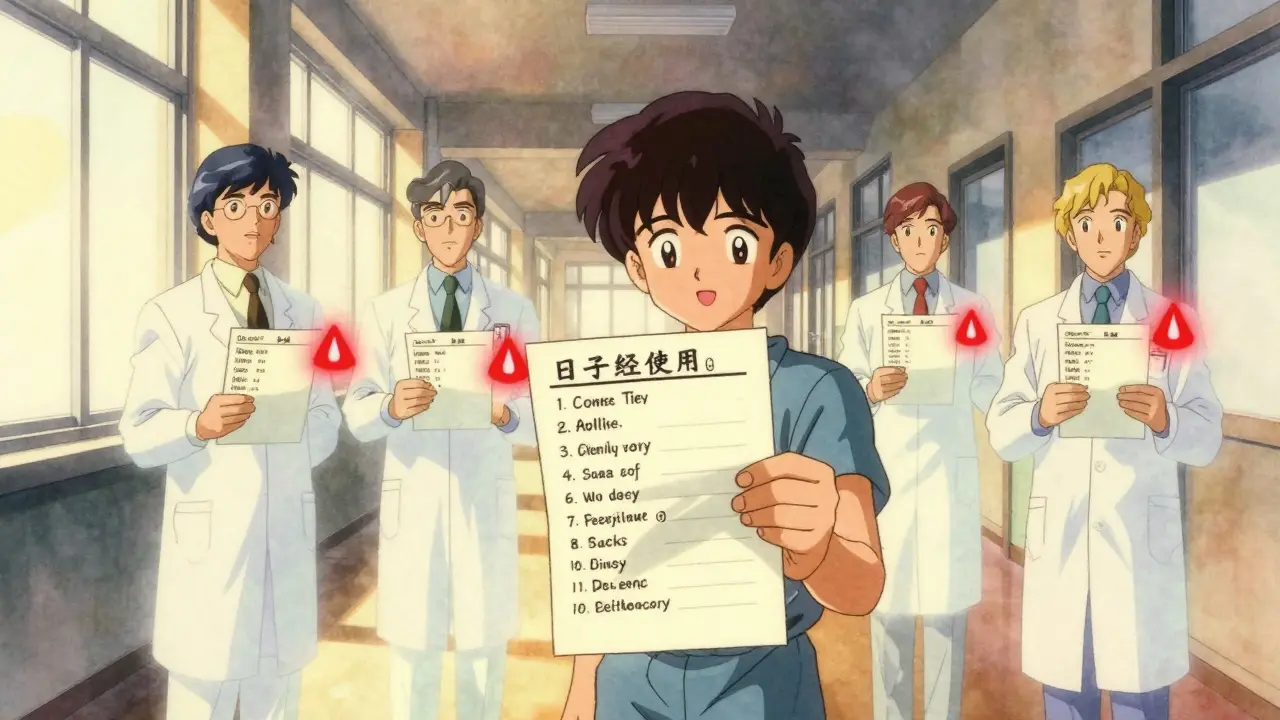
When you see more than one doctor, pharmacist, or specialist, keeping track of your medications becomes one of the most important - and most overlooked - parts of your health. It’s not just about remembering when to take your pills. It’s about making sure every provider knows what the others have prescribed. A single missed conversation between providers can lead to dangerous drug interactions, unnecessary side effects, or even hospital visits.
Why Medication Communication Breaks Down
You might think your doctors talk to each other. But in reality, they often don’t. A 2022 study from the National Institutes of Health found that 68% of patients seeing multiple providers experienced at least one medication-related communication error over a year. That means nearly seven in ten people are at risk simply because their care team isn’t sharing information. Specialists frequently prescribe new medications without checking what the primary care doctor or pharmacist already ordered. One patient in a 2023 Reddit thread described how three different specialists each added a painkiller - none knew the others had prescribed similar drugs. The result? A trip to the ER for dangerous interactions. Even when electronic health records (EHRs) are used, they rarely talk to each other. A 2023 CMS report found that 43% of providers struggle to access a full medication history when patients move between hospitals, clinics, or specialists. If your cardiologist can’t see what your rheumatologist prescribed, they can’t avoid a harmful mix.The Four Essentials of a Medication List
The simplest tool you can use to fix this is a clear, updated list of everything you take. But not just any list. It needs four key pieces of information for every medication:- Name - Use the brand or generic name clearly (e.g., “Lisinopril 10 mg” not just “blood pressure pill”)
- Dosage - How much you take each time (e.g., “5 mg,” “1 tablet”)
- Frequency - How often (e.g., “once daily,” “every 6 hours as needed”)
- Purpose - Why you’re taking it (e.g., “for high blood pressure,” “for anxiety”)
Who Should Be on Your Care Team
You’re not just dealing with doctors. Your care team includes pharmacists, nurses, and even your family. Pharmacists are the hidden heroes of medication safety. Unlike doctors who focus on diagnosis, pharmacists are trained to spot drug interactions, duplicate prescriptions, and dosing errors. Asteroid Health’s 2023 study showed that patients who worked with a clinical pharmacist had 32% higher medication adherence and 63% more confidence in their regimen. Many independent pharmacies now offer Medication Therapy Management (MTM) services - free consultations where a pharmacist reviews all your meds, checks for conflicts, and even calls your doctors to clarify prescriptions. By 2025, 78% of independent pharmacies in the U.S. will offer this, up from 42% in 2022. Your primary care provider should be your main point of contact. But too often, specialists make changes without telling them. The NIH study found that 57% of patients said specialists changed their meds without consulting their PCP. That’s why you need to be the one who connects the dots.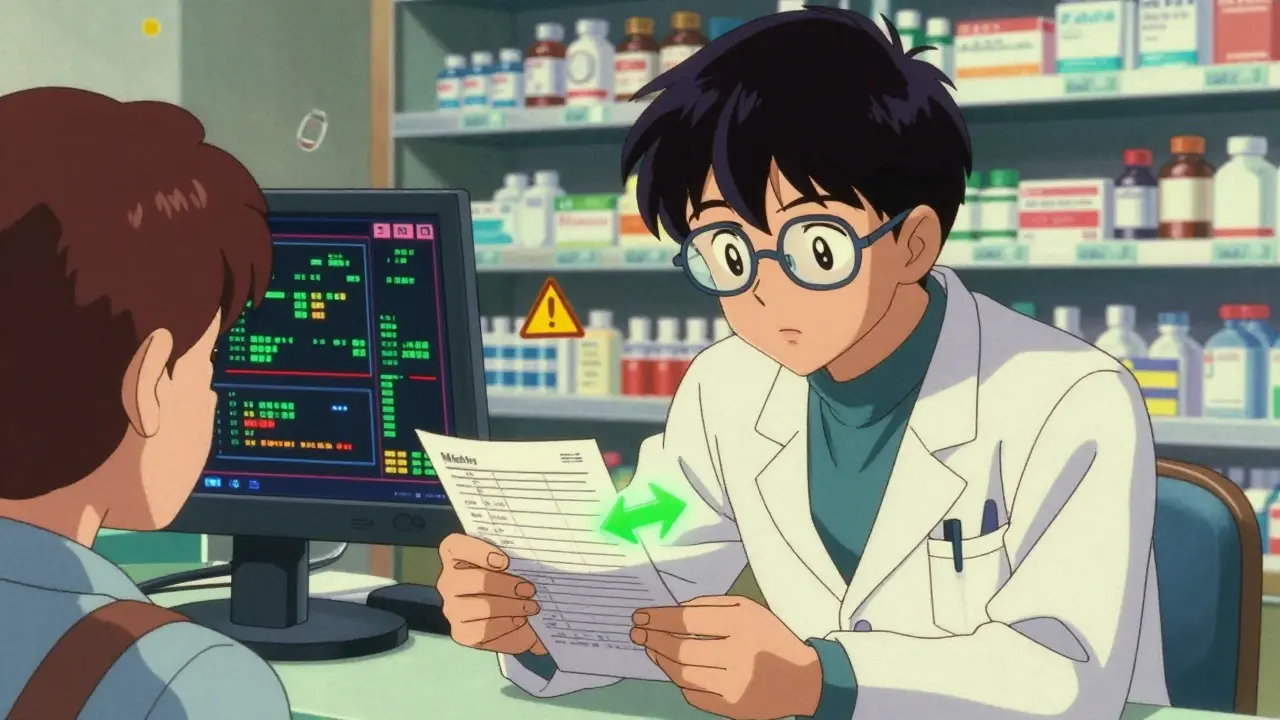
How to Talk to Your Providers - Without Being Pushy
You don’t need to argue. You just need to ask the right questions. At every visit, say:- “Can we go over my full list of medications together?”
- “Is this new prescription meant to replace something I’m already taking?”
- “Who should I contact if I have side effects - you, my pharmacist, or my primary doctor?”
- “Can you let my other providers know about this change?”
Track Your Body’s Response
Medications don’t just affect your blood pressure or blood sugar. They change how you sleep, feel, think, and even your mood. Keep a simple health journal. For one week, write down:- Any new side effects (dizziness, nausea, fatigue, confusion)
- Changes in sleep or appetite
- Mood swings or anxiety
- When you missed a dose - and why
When You’re Seeing Four or More Providers
The more providers you have, the higher the risk. The same NIH study showed patients with three or more providers were 3.2 times more likely to have conflicting prescriptions. Specialists often don’t know what others prescribed - and they assume someone else is handling it. In these cases, designate one person as your medication coordinator. That’s usually your primary care doctor. But if they’re overwhelmed, ask your pharmacist. Many now offer care coordination as part of their service. Ask your pharmacist: “Can you be my medication manager? I see four doctors - I need someone to check for overlaps and make sure everything still makes sense.” Also, ask if your care team uses an Accountable Care Organization (ACO). These are groups of providers who are paid to keep patients healthy - not just to treat them. CMS data shows ACO patients had 27% fewer hospital readmissions due to medication errors. If you’re on Medicare, you’re likely in one. Find out who coordinates your care.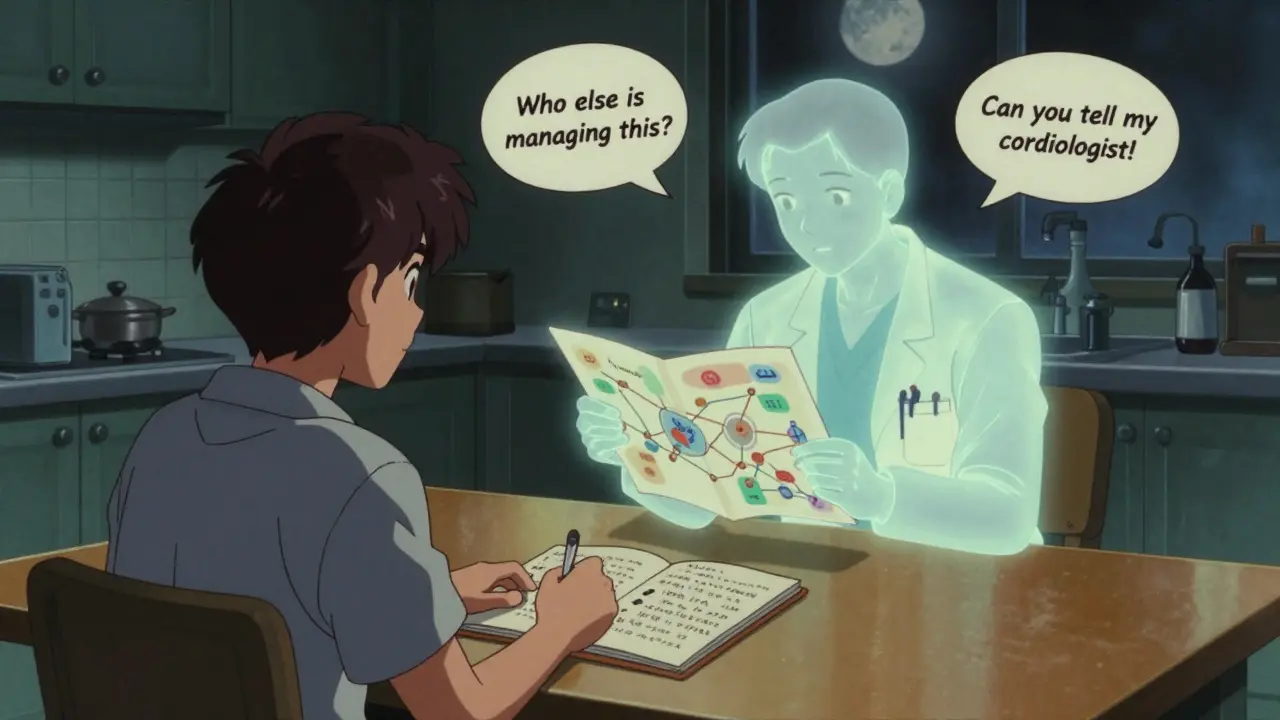
What’s Changing - And What’s Working
The system is slowly improving. The 21st Century Cures Act of 2016 required EHRs to share data, but adoption is slow. Only 38% of providers can reliably access full medication histories across systems. But new tools are emerging. Mayo Clinic’s AI-powered reconciliation tool now identifies medication discrepancies in 47 seconds - down from 15 minutes. That’s a game-changer. CMS is also pushing change. As of January 2024, practices in the Primary Care First model must implement structured medication reconciliation at every transition - hospital to home, specialist to PCP, etc. The bottom line? You can’t wait for the system to fix itself. You’re the only one who sees the full picture.What to Do Right Now
Here’s your action plan:- Write down your complete medication list with name, dosage, frequency, and purpose.
- Bring it to your next appointment - and ask your provider to verify it.
- Ask your pharmacist if they offer Medication Therapy Management (MTM). If yes, schedule a review.
- Start a health journal. Track side effects for one week.
- Ask each provider: “Who else is managing my medications? Can you send a summary to my primary doctor?”
Medication errors cause 1.5 million injuries in the U.S. every year - and cost $3.5 billion. Most of them are preventable. You don’t need to be a medical expert. You just need to be the one who asks the questions, keeps the list, and speaks up.
What should I do if my doctors don’t talk to each other?
You become the bridge. Bring your updated medication list to every appointment and ask each provider: “Can you please share this with my other doctors?” If they refuse, ask for a written summary to send yourself. Many clinics have patient portals where you can request care summaries. Pharmacists can also help by calling providers on your behalf - especially if you’re enrolled in Medication Therapy Management.
Can my pharmacist really help with communication between doctors?
Yes - and more than you think. Pharmacists are trained to spot drug interactions and duplications. Many offer free Medication Therapy Management (MTM) services, where they review all your meds, call your doctors to clarify prescriptions, and even send summaries to your primary care provider. A 2023 study showed patients using MTM had 32% higher adherence and 63% more confidence in their regimen. If your pharmacy doesn’t offer it, ask them to start.
How often should I update my medication list?
Update it every time you start, stop, or change a medication - even if it’s temporary. Also review it every three months, or before any doctor’s visit. Many patients think “nothing changed,” but doses get adjusted, generics switch, or supplements are added. A 2022 study found that 42% of medication errors happened because the list was outdated.
What if I’m on Medicare and seeing multiple specialists?
You’re likely in an Accountable Care Organization (ACO), which is paid to coordinate care. Ask your primary doctor or Medicare plan: “Who is my care coordinator?” ACOs often have nurses or pharmacists assigned to help manage medications across specialists. These programs have reduced hospital readmissions by 27% due to medication errors. Don’t wait for them to reach out - call and ask for help.
Is it safe to use apps to track my medications?
Apps can help with reminders, but they don’t replace a physical list you bring to appointments. Many apps don’t share data with providers, and not all doctors use them. Use apps as a backup - but always carry a printed, updated list. The most effective tool is still a paper list you can hand to your doctor while they’re looking at your chart.





James Hilton
28 December, 2025 17:55 PMSo let me get this straight - we’re asking patients to be full-time pharmacists, data entry clerks, and emotional support humans just so the system doesn’t kill us? 🙃 I’ve got 7 meds and a cat that judges me harder than my doctors do. At least my cat remembers if I skip a pill.
Mimi Bos
28 December, 2025 19:18 PMi was just at the drs today and i forgot to bring my list again lol. i think i wrote it on a napkin last week but now its in the laundry? oops. i just told them everything and they nodded like they understood. i hope they did. 🤷♀️
Payton Daily
29 December, 2025 12:47 PMThis whole thing is a symptom of a society that treats the human body like a car with 14 different mechanics trying to fix it at once. You don’t just throw parts at a problem and hope it runs - yet that’s exactly what medicine does. We’re not machines. We’re messy, emotional, biological chaos wrapped in skin. And now they want us to be our own project managers? That’s not empowerment - that’s exploitation dressed up as self-care. The system broke. We didn’t.
And don’t even get me started on EHRs. They’re like ancient Roman scrolls written in invisible ink. If your doctor can’t see your meds, it’s not your fault. It’s the failure of a civilization that outsourced compassion to software.
Also, pharmacists are the real MVPs. They’re the only ones who still care if you’re alive or not after they hand you that little white bag. Respect.
And yes, I wrote this in one breath. I’m tired.
Bradly Draper
30 December, 2025 09:02 AMI used to forget my meds all the time. Then I started keeping a little notebook in my pocket. Now I write down every change, even if it’s just a new supplement. My grandma taught me that. She said, ‘If you don’t write it down, your body will forget you cared.’ She was right. I’ve had three ER trips in my life - two because of meds. I don’t want a third.
Bring the list. Say the questions. Don’t be shy. Your life matters more than their 10-minute visit.
Gran Badshah
30 December, 2025 10:34 AMwhy do americans make everything so complicated? in india we just take what doctor says and dont ask questions. if you have 10 pills you take 10 pills. no list no journal no nothing. if you feel bad you go back to doctor. simple. why you need paper? why you need to talk to pharmacist? just trust your doctor. you overthink everything here.
Ellen-Cathryn Nash
30 December, 2025 15:25 PMIt’s not just about lists or apps - it’s about the moral decay of healthcare. We’ve turned healing into a transaction. Patients are treated like inconveniences with a side of paperwork. And now we’re blaming them for not being perfect administrative assistants? What happened to the Hippocratic Oath? Where’s the dignity? Where’s the care?
I’m not saying you’re wrong - I’m saying the system is evil. And we’re all complicit for letting it continue. You’re not a coordinator. You’re a hostage.
And yes, I cried after reading this. Not because I’m emotional - because I’m furious.
Samantha Hobbs
31 December, 2025 09:37 AMOMG I did this last week and my PCP was SO impressed. I printed it on neon green paper and put it in a little folder with my insurance card. She said, ‘I wish every patient did this.’ I just smiled and said, ‘I’m not most patients.’
Also I started a journal and wrote ‘felt like a zombie after the new pill’ - turns out it was the new anxiety med. She changed it the next day. I’m basically a superhero now.
Nicole Beasley
1 January, 2026 15:40 PMMy pharmacist gave me a sticker that says ‘I AM MY OWN MEDICATION COORDINATOR’ 🎉 I put it on my fridge next to my ‘I survived another doctor’s appointment’ one 😅 I also use the Medisafe app for reminders but I still carry the paper list - because no one trusts a phone in a white coat. 📋❤️
sonam gupta
2 January, 2026 17:19 PMyou people are too soft. in india we dont have time for lists and journals. if you are sick you take medicine. if you die you die. if you live you live. no one cares about your medication list. doctors are busy. you are not special. stop making everything a drama. just take your pills and shut up
Julius Hader
4 January, 2026 03:14 AMLook - I used to be one of those people who thought, ‘My doctor knows everything.’ Then I got prescribed a drug that interacted with my blood pressure med. I didn’t know. My doctor didn’t know. My pharmacist didn’t know - because no one talked.
Now I bring my list. I ask the questions. I send emails to all my providers. It’s not hard. It’s not dramatic. It’s just basic human responsibility.
And if your doctor rolls their eyes? That’s their problem. Not yours. You’re not being pushy - you’re being alive.
Vu L
5 January, 2026 05:02 AMYeah sure - ‘bring your list’ - like that’s gonna fix the fact that 90% of doctors don’t read charts anyway. I’ve had three different doctors prescribe me the same thing. One even wrote ‘as needed’ when it was clearly a daily med. The system is broken. Your list doesn’t matter. Your voice doesn’t matter. What matters is that the insurance company doesn’t want to pay for a real coordination system.
So go ahead. Bring your neon green folder. It’s not gonna change anything. But hey - at least you’ll feel like you’re doing something. 😏