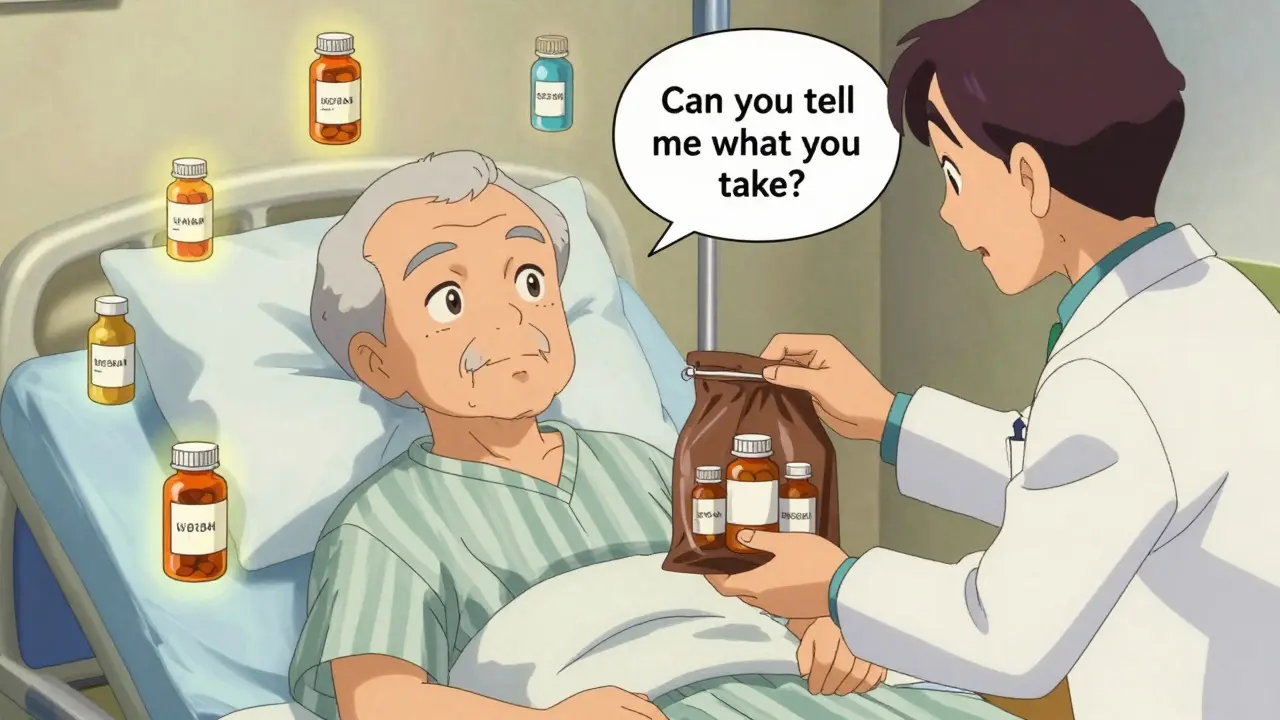
When seniors leave the hospital after a stay, their home should be a place of healing - not a new risk zone for dangerous mistakes. Every year, medication errors spike during this fragile time. One in five older adults experiences a medication mistake within three weeks of leaving the hospital, according to research from the Journal of General Internal Medicine. Many of these errors are avoidable - and they often happen because no one took the time to make sure the patient truly understood what they were taking, why, and how.
Why Medication Errors Happen After Hospital Discharge
It’s not about bad doctors or careless nurses. It’s about broken systems. Hospitals treat acute problems - a fall, an infection, a heart flare-up. But when it’s time to go home, the focus shifts too quickly. A patient might leave with a stack of new prescriptions, changes to old ones, and no clear explanation. They might be confused, tired, or overwhelmed. Their family might not be there to help. And if they’re taking five, ten, or even fifteen medications, the chance of mixing them up, doubling up, or skipping doses skyrockets.
Studies show that up to 76% of discharge summaries still contain serious medication errors - even when staff say they “reconciled” the list. That’s because reconciliation isn’t just writing down what’s on paper. It’s about making sure what’s written matches what the patient is actually taking, what the doctor meant to prescribe, and what the patient can safely use at home.
The Five Steps to Safe Medication Transition
Safe transitions don’t happen by accident. They’re built on five clear steps, backed by years of research from the Agency for Healthcare Research and Quality (AHRQ) and The Joint Commission.
- Verification: Get the full picture. Ask the patient: “What medicines are you taking right now?” Don’t trust the hospital’s old list. Have them bring in all bottles - pills, patches, eye drops, supplements. Even garlic pills or fish oil can interact dangerously with blood thinners like warfarin.
- Clarification: Why is each medicine here? Is the dose right? Does it still make sense? For example, a patient might have been started on a new blood pressure pill in the hospital, but if their kidneys aren’t working well, that same dose could be toxic at home. Pharmacists are trained to catch these mismatches.
- Reconciliation: Compare admission, hospital, and discharge lists. If they don’t match, fix it before you leave. This isn’t a checkbox. It’s a conversation.
- Communication: The discharge list must go to the primary care doctor, the pharmacist, and the home health nurse. No one should be guessing. Electronic records help, but only 35% of hospitals can send data directly to outpatient providers. So don’t rely on tech alone.
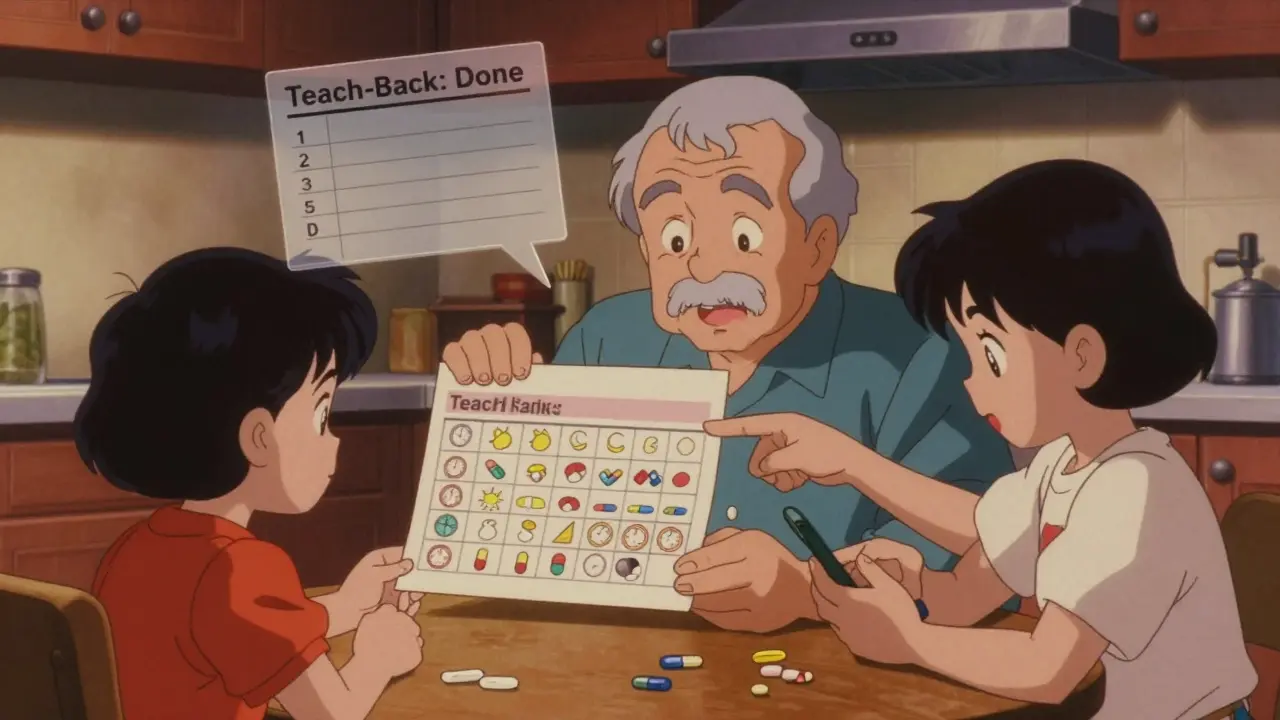
- Education: Use the Teach-Back method. Don’t just hand out a pamphlet. Ask the patient: “Can you tell me in your own words how and when you take each pill?” If they can’t explain it, you haven’t taught it yet.
Who Needs Extra Help?
Not everyone needs the same level of support. But certain people are at much higher risk:
- Those taking five or more medications (polypharmacy)
- People with kidney or liver problems
- Those with memory issues or dementia
- Patients on high-risk drugs like insulin, warfarin, opioids, or blood thinners
- People on Medicaid or with limited family support
For these patients, a pharmacist-led review is not optional - it’s lifesaving. Research from the University of Tennessee’s SafeMed model found that when pharmacists were part of the discharge team, medication errors dropped by 67%. That’s not a small win. That’s preventing falls, ER visits, and even death.
What Works in Real Life
Some hospitals have cracked the code. Here’s what they do differently:
- Pharmacist on the team: They meet patients before discharge. They review every pill. They answer questions. They call the home health nurse the day after.
- Teach-Back every time: “Show me how you’ll take this insulin.” “Tell me what this pill is for.” If the patient gets it right, they leave with confidence. If not, they get more help.
- Brown bag review: Ask the patient to bring all their meds to their first follow-up. It’s simple. It’s effective. It catches hidden pills, expired drugs, and over-the-counter mistakes.
- Follow-up within 7 days: A phone call, a home visit, or a video chat. The goal isn’t to check on the wound - it’s to check on the pills. Did they run out? Did they stop one because they felt better? Did they take it with grapefruit juice?
- Visual schedules: Apps or printed charts with pictures of pills, times, and icons. One 2023 study showed these reduced errors by 41% in seniors.
One hospital in Memphis cut medication errors by 30% just by adding a pharmacist to discharge rounds. Another in Mayo Clinic used an AI tool that flagged mismatches in prescriptions - and cut errors by 28%. These aren’t futuristic ideas. They’re proven, practical, and affordable.
The Hidden Cost of Getting It Wrong
Medication errors after discharge don’t just hurt patients - they cost the system billions. In the U.S., hospital readmissions due to medication mistakes cost about $17.4 billion a year. But here’s the flip side: every dollar spent on a pharmacist-led transition program saves $3 to $5 in avoided readmissions. CMS pays hospitals $129 to $162 per patient for follow-up care after discharge - but only if it’s done right. That’s why the best hospitals now treat transition care like surgery: planned, measured, and tracked.
For seniors, the cost isn’t just financial. It’s dignity. It’s independence. It’s not being sent home with a confusing list and told to “figure it out.” It’s knowing exactly what to take, why, and when - and having someone check in to make sure they’re safe.

What Families Can Do
You don’t need a medical degree to help. Here’s how:
- Ask for a full medication list before discharge - written, not verbal.
- Go with the patient to the discharge meeting. Take notes.
- Ask: “What’s the purpose of each medicine?” and “What happens if they miss a dose?”
- Use the brown bag method: Bring all meds to the first doctor visit.
- Set phone alarms or use a pill box with times labeled.
- Call the pharmacy if something doesn’t make sense. Pharmacists are there to help.
Don’t assume the hospital did everything right. Double-check. Ask questions. Push for clarity. You’re not being difficult - you’re being essential.
What’s Changing Now
The rules are shifting. By 2025, all U.S. hospitals must use digital systems that share medication lists with outpatient providers - no more faxed paper lists. Medicare is also tightening its rules: if a hospital’s readmission rate for medication errors stays above 5%, it loses money. That’s forcing change.
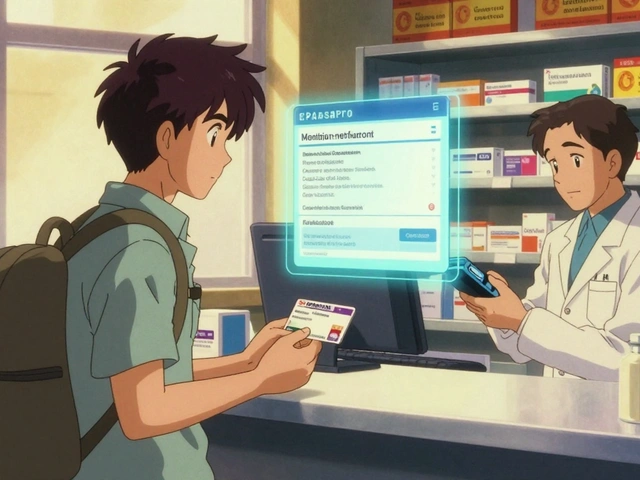
And new tools are emerging: apps that show pill images, voice reminders in multiple languages, and AI that spots dangerous interactions before they happen. But technology alone won’t fix this. Human connection - a pharmacist asking, “Do you understand this?” - still makes the biggest difference.
Final Thought: Safety Is a Conversation, Not a Paperwork
Transitioning from hospital to home isn’t a checklist. It’s a conversation that starts in the hospital and continues for weeks after. It’s about listening, clarifying, and confirming - not just handing out prescriptions. For seniors, getting this right means staying out of the ER, staying in their own home, and keeping their independence. And it starts with one simple question: “Can you tell me what you’re supposed to take today?”


Lisa Scott
4 February, 2026 21:53 PMLet’s be real - hospitals are profit machines. They discharge you with a pill cocktail that would kill a horse and call it ‘care’
Pharmacists? Yeah right. Most are just order-takers for Big Pharma.
They don’t care if you live or die - as long as the script gets filled and the rebate hits.
I’ve seen my grandma on 14 meds after a ‘simple’ fall. Half were for side effects of other meds.
And who pays? You. Me. Taxpayers.
The system is designed to keep you sick and buying.
That ‘67% reduction’? Probably cooked data.
Same with AI tools - they’re just shiny toys to distract from the real issue: corporate greed.
They’ll automate everything and still charge you $400 for a 5-minute ‘consult’.
Don’t believe the hype. This isn’t about safety. It’s about squeezing every dime out of seniors.
And if you’re lucky? You’ll die quietly at home instead of in a hospital bed they can bill for 7 days.
Wake up. This isn’t healthcare. It’s a predatory business model.
And they’re laughing all the way to the bank while you’re choking on your own pills.
Kate Gile
5 February, 2026 18:57 PMI work in home health and this is spot on.
Every single visit starts with a brown bag review - and 90% of the time, there’s something wrong.
Expired meds, double prescriptions, pills taken at the wrong time.
One woman was taking her blood thinner with grapefruit juice because her grandson said it ‘helped the taste’.
We fixed it with a simple chart and a weekly call.
She hasn’t been readmitted in 11 months.
It’s not complicated. It’s about showing up, listening, and making sure they’re not alone.
Pharmacists, nurses, family - we all have a role.
And yes, it takes time.
But saving one life? Worth every minute.
Johanna Pan
5 February, 2026 23:32 PMSo glad to see this topic getting attention. I’m from India and we don’t have the same systems, but I’ve seen how families manage here - and honestly, it’s more personal.
My aunt took 11 pills daily after her stroke.
My cousin made a color-coded chart with pictures - apple for morning, moon for night.
She still uses it. No app. No tech. Just love.
And every Sunday, we sit with her and go over each pill.
It’s not perfect, but it’s human.
Maybe we don’t need fancy AI.
Maybe we just need to stop treating elders like problems to solve - and start treating them like people who’ve lived long enough to deserve clarity.
Simple. Slow. Safe.
Jenna Elliott
7 February, 2026 16:45 PMWhy are we even talking about this? America is crumbling because we let bureaucrats and hippie doctors turn medicine into a therapy session.
You want safety? Give people the pills and tell them to take them.
Stop coddling seniors.
They’re old. They’re confused. Toughen up.
My uncle took 8 meds and died. He didn’t read the labels. So what?
He made his choices.
Now we’re spending billions to babysit people who refuse to take responsibility?
Wake up. This isn’t a humanitarian crisis - it’s a cultural surrender.
Stop treating elders like fragile porcelain.
They’re not kids. They’re adults who made their bed.
Let them lie in it.
Elliot Alejo
8 February, 2026 14:33 PMI’ve been a nurse for 22 years and I’ve seen this play out in every hospital I’ve worked in.
The system is broken, but not because people are evil.
It’s because we’re stretched too thin.
One nurse, 6 patients, 30 meds to reconcile in 10 minutes.
It’s impossible.
But the solution isn’t more bureaucracy.
It’s more staff.
More pharmacists.
More time.
And yes - more money.
Because if we keep treating healthcare like a cost center instead of a public good, we’ll keep losing people.
It’s not rocket science.
It’s just basic decency.
And we can afford it.
We just have to choose to.
anjar maike
9 February, 2026 12:29 PMOMG this is so true 😭 I just got my mom home from hospital and she had 12 new meds and no one explained them properly
She kept asking ‘what’s this for?’ and the nurse just said ‘it’s for your heart’
Then I found out she was also taking a supplement from the market that had the same ingredient as her new pill
We almost had a disaster
Now I use a pill box with photos and set alarms in Hindi and English
And I call the pharmacist every week
They’re so helpful 🙏
Why can’t every hospital do this? It’s not hard!
Sam Salameh
9 February, 2026 17:39 PMLook - I’m a veteran. I’ve been in hospitals. I know how it works.
They discharge you with a list that looks like a phone book.
And then they wonder why you end up back in the ER.
But here’s the thing - it’s not just the hospital’s fault.
Family needs to step up too.
My brother didn’t go to his mom’s discharge meeting.
Thought it was ‘her problem’.
She ended up on the wrong dose of warfarin.
Three weeks later - ICU.
That’s on him.
Not the system.
Not the nurse.
On him.
So if you’re reading this - show up.
Take notes.
Ask questions.
Don’t assume someone else is handling it.
Because if you don’t, who will?
divya shetty
11 February, 2026 17:14 PMThis article is dangerously naive. You speak of ‘pharmacist-led reviews’ and ‘teach-back methods’ as if they are universal solutions. But in a society where 40% of seniors live alone, where Medicaid is underfunded, and where families are scattered across continents - these are luxury ideals. We are not talking about improving care. We are talking about pretending to care while ignoring the root: a system that discards the elderly as disposable. The real solution? Universal healthcare. Paid family leave. Community support networks. Not checklists. Not apps. Not even pharmacists. We need to stop treating the symptoms and start healing the society that created this crisis.