Statin Muscle Symptom Checker
Select the symptoms you are experiencing to understand where they may fall on the spectrum of statin-induced muscle issues. Disclaimer: This is for educational purposes only and is not a medical diagnosis.
Taking a statin to lower your cholesterol is often a lifesaver, but for some, it comes with a frustrating trade-off: muscle pain. If you've started noticing a strange ache in your legs or arms, or a general feeling of weakness that wasn't there before, you aren't alone. About 30% of people using these medications experience some form of muscle-related side effect. The real challenge is that "muscle pain" isn't just one thing; it ranges from a mild nuisance to a rare, serious medical emergency. Understanding where your symptoms fall on this spectrum is the first step toward getting your energy back without risking your heart health.
The Spectrum of Statin-Induced Muscle Issues
Not all muscle pain is created equal. When doctors talk about statin-induced myopathy is a broad term for muscle-related adverse effects caused by HMG-CoA reductase inhibitors, they are actually talking about several different conditions. The most common is myalgia. This is the classic "statin ache"-muscle soreness or cramping without any actual damage to the muscle tissue or spikes in blood enzymes. It's common, affecting up to 29% of users, and usually goes away quickly once the medication is adjusted.
Then there is Myositis, which is more serious. Unlike simple myalgia, myositis involves actual inflammation of the muscle. If you get a blood test, you'll likely see elevated levels of Creatine Kinase (CK), an enzyme that leaks into the blood when muscle cells are damaged. While myalgia is just a feeling, myositis is a physical change in the muscle tissue.
At the extreme end of the scale is Rhabdomyolysis. This is a medical emergency where muscle breakdown is so severe that the proteins (myoglobin) clog the kidneys, potentially leading to kidney failure. It's incredibly rare-affecting only about 0.1% of people-but it's characterized by severe weakness and dark-colored urine that looks like tea or cola.
Finally, there is a very rare autoimmune version called immune-mediated necrotizing myopathy (IMNM). In this case, the statin triggers your own immune system to attack your muscles. The scary part? Even if you stop taking the drug, the attack keeps going. This requires specialized treatment with immunosuppressants, not just a change in medication.
| Condition | Key Symptom | CK Levels (Blood Enzyme) | Incidence | Urgency |
|---|---|---|---|---|
| Myalgia | General ache/soreness | Normal | Common (10-29%) | Low (Consult doctor) |
| Myositis | Pain + Weakness | 10-40x Upper Limit | Uncommon (0.5%) | Moderate (Requires test) |
| Rhabdomyolysis | Severe pain + Dark urine | >40x Upper Limit | Rare (0.01-0.1%) | Critical (ER visit) |
| IMNM (Autoimmune) | Symmetric proximal weakness | Typically >2,000 IU/L | Very Rare | High (Specialist needed) |
Why Do Statins Cause Muscle Pain?
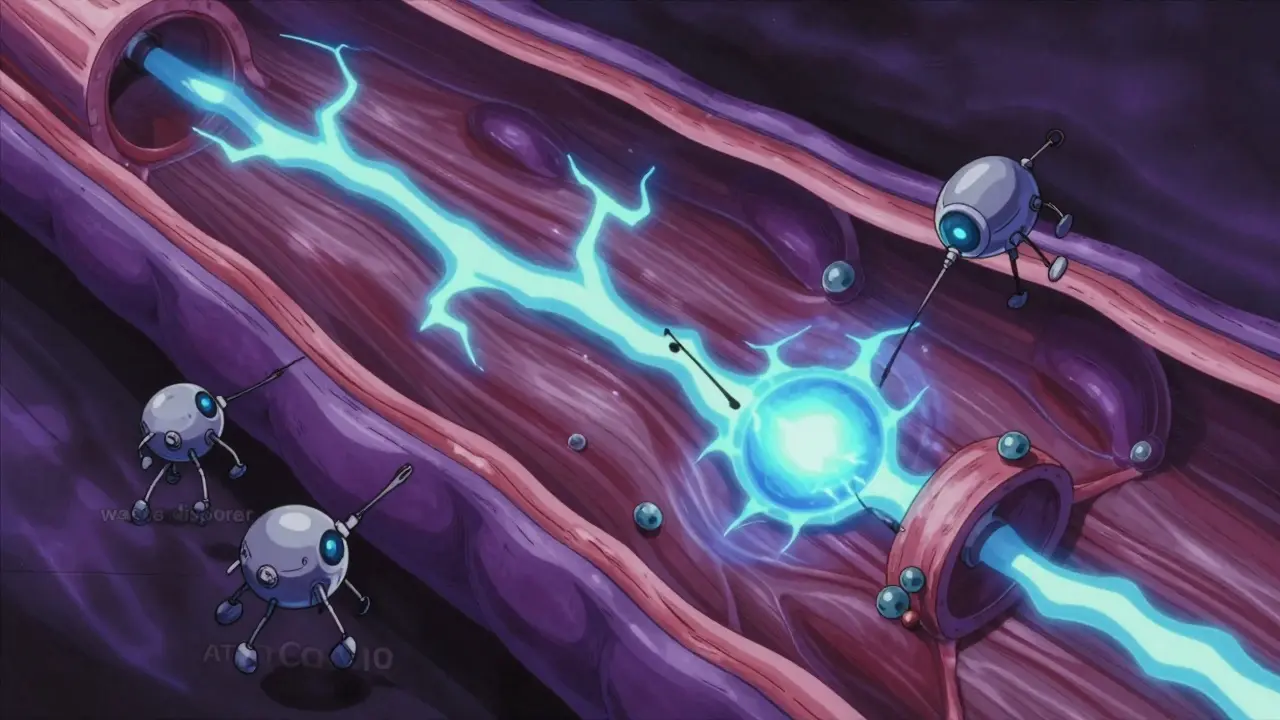
To understand the "why," we have to look at how these drugs work. Statins target an enzyme called HMG-CoA reductase to stop your liver from making cholesterol. However, this process also blocks a pathway that produces other essential molecules your muscles need to survive. One of the biggest culprits is Coenzyme Q10 (CoQ10). This molecule is like a spark plug for your mitochondria-the powerhouses of your cells. When CoQ10 levels drop, your muscles can't produce energy (ATP) efficiently, leading to that heavy, fatigued feeling.
It's not just about energy, though. Some research shows that statins can increase the activity of a "waste disposal" system in your cells called the ubiquitin-proteasome pathway. In some people, this system goes into overdrive, chewing up muscle proteins faster than the body can replace them. This is especially true if you're doing heavy lifting or intense exercise, which puts extra stress on the muscle fibers.
For those with the autoimmune version (IMNM), the problem is genetic and immune-related. A specific gene marker called HLA-DRB1*11:01 is found in about 70% of these cases. In these people, the statin causes the body to produce antibodies that mistakenly target the HMG-CoA reductase enzyme in the muscles, causing the body to literally eat away at its own muscle tissue.
Spotting the Red Flags: When to Worry
If you're feeling a bit stiff, don't panic. Many people mistake general aging or a tough workout for statin side effects. But there are a few specific signs that mean you should call your doctor immediately:
- Symmetric Weakness: If you suddenly find it hard to get out of a chair or lift your arms to brush your hair, this "proximal weakness" is a hallmark of more serious myopathy.
- Urine Color: If your urine looks brown or tea-colored, this is a sign of myoglobinuria-a red alert for rhabdomyolysis.
- Persistence: Normal statin myalgia usually vanishes within a week or two of stopping the drug. If your weakness is getting worse even after you've stopped the medication, you might be dealing with the autoimmune form.
Interestingly, some medications can make this worse. If you're taking Amiodarone (for heart rhythm) or certain antifungals, these can block the enzymes in your liver that break down statins. This effectively jacks up the dose of the statin in your bloodstream by 300% to 500%, making muscle pain much more likely.
How to Manage and Fix the Pain
The good news is that you don't necessarily have to choose between muscle pain and a healthy heart. There are several proven strategies to manage these side effects.
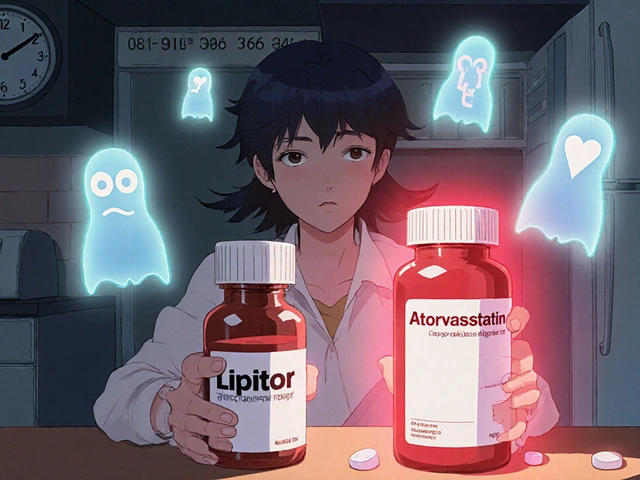
First, try "statin rotation." Not all statins are the same. Some are lipophilic (fat-soluble) and others are hydrophilic (water-soluble). Many people who can't tolerate simvastatin find that they do perfectly fine on Rosuvastatin. In one study, about 73% of people who failed on one statin were successful after switching to another.
Another option is adjusting the dose or frequency. You might not need a pill every day to get the benefit. Some patients thrive on a

Maggie Graziano
17 April, 2026 10:33 AMbig pharma just wants us hooked on pills they hide the real cure
Colleen Tankard
18 April, 2026 04:57 AMWow I never knew about the tea colored urine thing! 😱 definitely keeping an eye on that 👁️✨
Rock Stone
18 April, 2026 23:51 PMJust keep pushing through guys, but always listen to your body first! 🤜🤛
Sophia Rice
19 April, 2026 02:39 AMMy dad had a hard time with these medycations too. He eventualy switched to a lower dose and felt much bettter. Its so important to talk to the docator!
Nathan Berlin
20 April, 2026 02:32 AMtypical western medicine failure 🙄 our ayurvedic traditions in india solved this ages ago without these toxic chemicals 🇮🇳💪
Anmol Garg
20 April, 2026 10:14 AMIt's interesting how we balance the need for longevity with the quality of our daily movement. Sometimes a slower pace and a different approach to health is the most compassionate thing we can do for our own bodies.
Nell O'Leary
22 April, 2026 03:26 AMThe pharmacokinetic profile of HMG-CoA inhibitors definitely varies. The upregulation of the ubiquitin-proteasome pathway is such a fascinating mechanism for muscle atrophy :) 🧬
ira fitriani
22 April, 2026 21:21 PMOH MY GOSH! I had the exact same thing happen with my calves! 😱 It felt like I'd run a marathon in my sleep! 🏃♀️💨 I'm so glad there are options to switch meds! ✨💖
Michael Lewis
23 April, 2026 10:37 AMStop guessing and get your CK levels checked immediately if you feel weakness. Don't wait for it to get worse. Get a blood test and get a plan in place with your doctor today!
Bonnie Piersall
23 April, 2026 13:21 PMListen up folks, you've got to be the captain of your own health ship. If these meds are making you feel like a rusted tin man, it's time to pivot. Use the data from this post, bring it to your provider, and demand a strategy that doesn't leave you hobbling around the house. You deserve to feel vibrant and spry, not like you're dragging a sack of bricks behind you. It is utterly unacceptable to settle for chronic pain when there are alternative statins or non-statin therapies available. Get proactive, get informed, and get your groove back because your heart health shouldn't come at the cost of your mobility. Keep your chin up and your standards high when it comes to your treatment plan. You are worth the extra effort of a medication rotation. Don't let a side effect sideline you from the life you want to live. Be bold in your advocacy for your own wellbeing. The medical system works best when the patient is an active participant. Knowledge is power, and you now have the knowledge to ask the right questions. Let's get after it!