Picture this: You’re a busy primary care physician. You have fifteen minutes with a patient who has hypertension, diabetes, and high cholesterol. They are on four different medications. The brand-name options cost them $400 a month out of pocket. You know the generics work just as well, but explaining the switch, checking for interactions, and getting buy-in eats up your entire slot. You rush through it. The patient leaves confused. Six months later, they are back in the ER because they stopped taking the meds due to side effects or cost.
This scenario is the reality for millions of patients today. But what if you didn’t have to do it all alone? What if a pharmacist was already reviewing their chart, a nurse had educated them on adherence, and a care coordinator had handled the insurance pre-authorizations before they even walked in the door? That is the promise of team-based care, specifically when applied to multidisciplinary approaches to generic prescribing.
For providers, shifting from a solo-practice mindset to a team model isn't just about 'sharing the load.' It is a structural change that directly impacts clinical outcomes, patient satisfaction, and practice revenue. The data shows that when teams collaborate on medication decisions-especially switching to therapeutically equivalent generic drugs-adverse events drop by 17.3%, and healthcare costs per patient can fall by up to $1,800 annually. Yet, many practices struggle to make this transition smoothly. This guide breaks down exactly how multidisciplinary teams handle generic prescribing, why providers resist it, and how to build a system that actually works.
The Core Problem: Why Solo Prescribing Fails Patients
Let’s be honest about the current state of prescribing. Most medical training focuses on the physician as the sole decision-maker. You diagnose, you prescribe, you follow up. This model worked when treatment protocols were simpler and drug formularies were smaller. Today, it is broken.
The Institute of Medicine identified fragmented care as a critical barrier to quality back in 2001. In the context of generic prescribing, fragmentation leads to three specific failures:
- Cognitive Overload: Physicians cannot possibly memorize the latest formulary changes, generic availability updates, and interaction profiles for every new drug. When you are overwhelmed, you default to brand names or familiar prescriptions, ignoring cheaper, equally effective generics.
- Patient Misalignment: A doctor might prescribe a generic, but without proper counseling, the patient doesn't understand why the pill looks different or why it's cheaper. They assume it's 'lesser' quality and stop taking it.
- Missed Interactions: In complex cases involving polypharmacy (taking five or more drugs), a quick chart review often misses subtle interactions that a dedicated medication expert would catch.
Research from ThoroughCare in 2022 highlights that team-based care reduces duplicative testing by 22.8%. Why? Because the team coordinates. One person doesn't order labs that another already did. Similarly, one person doesn't prescribe a drug that conflicts with another's plan. For generic prescribing, this coordination means ensuring the chosen generic is not only available but also appropriate for the patient's specific metabolic profile and financial situation.
Redefining Roles: Who Does What in Medication Management?
The biggest hurdle for providers is fear of losing control. "Will the pharmacist override me?" "Will the nurse confuse the patient?" Effective team-based care solves this by defining clear, non-overlapping roles. It’s not about diluting authority; it’s about leveraging expertise.
| Provider Role | Primary Responsibility in Generic Prescribing | Impact on Patient Outcome |
|---|---|---|
| Physician / NP / PA | Medical oversight, complex decision-making, final approval of therapeutic switches. | Ensures clinical safety and maintains the therapeutic relationship. |
| Clinical Pharmacist | Comprehensive medication reviews, identifying generic alternatives, managing Collaborative Practice Agreements (CPAs). | Reduces medication errors by 67% and identifies cost-saving generic substitutions. |
| Nurse / Care Coordinator | Patient education, monitoring adherence, facilitating communication between specialist and primary care. | Improves adherence rates by 28% through consistent follow-up and 'warm handoffs.' |
| Patient | Active participant in goal-setting, reporting side effects, confirming ability to afford prescribed generics. | Increases ownership of health outcomes and reduces preventable hospitalizations. |
Notice the shift here. The physician moves from being the 'prescriber of record' for every single adjustment to being the 'medical director' of the patient's overall plan. The pharmacist becomes the engine for generic substitution. According to Dr. Barbara G. Wells of the American Pharmacists Association, pharmacists integrated into care teams reduce medication errors significantly, with generic substitution counseling being a key driver. The nurse ensures the patient understands *why* they are switching to a generic, addressing the psychological barrier of 'brand loyalty.'
The Mechanism: How Collaborative Practice Agreements Enable Generics
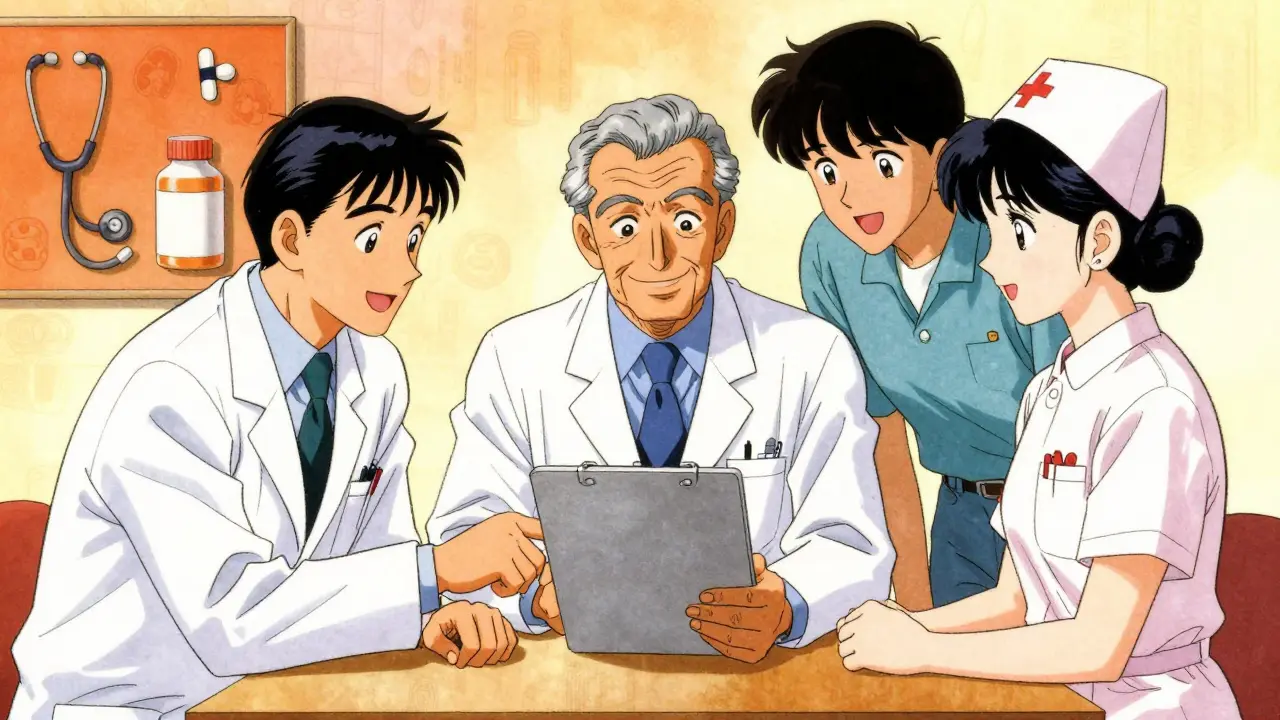
You can't have a team without rules. In traditional settings, a pharmacist recommending a generic switch requires a new prescription from the doctor. This creates friction. The solution is the Collaborative Practice Agreement (CPA), which formalizes relationships between pharmacists and prescribers, allowing delegation of specific medication management tasks.
Under a CPA, the physician establishes protocols. For example: "If a patient is stable on Brand Drug X, and Generic Drug Y is available on our formulary with no known allergies, the pharmacist may initiate the switch." The pharmacist executes the switch, documents it, and notifies the physician. The physician reviews the batch of changes weekly rather than case-by-case.
The CDC’s 2022 resources emphasize that CPAs increase team efficiency dramatically. For generic prescribing, this is crucial. Formularies change constantly. A pharmacist monitoring these changes in real-time can proactively adjust prescriptions during routine visits, freeing the physician to focus on the diagnosis. This structure relies on mutual trust-a concept highlighted by the National Academy of Medicine. Without trust, the physician micromanages, and the team collapses. With trust, the system scales.
Overcoming Provider Resistance: The Real Barriers
Even with clear benefits, adoption is slow. Why? Because human nature resists change, especially when it feels like a loss of autonomy. Here are the most common objections from providers and how to address them:
"I don't have time to manage a team."
This is a setup problem, not a time problem. Implementation requires an initial investment. The VA Health Services Research report notes setup costs averaging $85,000-$120,000 per practice, including technology integration and staff training. However, PureView Health Center’s 2023 analysis shows savings of $1,200-$1,800 per patient annually. If you see 2,000 chronic disease patients, that’s $2.4 million to $3.6 million in annual savings. The ROI is undeniable, but it takes 3-6 months to optimize workflows. During this period, administrative time may increase temporarily. Plan for it.
"Pharmacists will mess up my patients."
Dr. Richard Baron cautioned against over-reliance on non-physicians, citing a 5.2% error rate in some studies. This is a valid concern if oversight is absent. The mitigation strategy is rigorous documentation and defined scopes. CPAs must explicitly state what the pharmacist *cannot* do. Regular audits of medication changes provide feedback loops. If the error rate stays below acceptable thresholds (typically <2%), the system is working. Remember, the alternative-solo prescribing under fatigue-has higher error rates.
"Our EHR doesn't support team communication."
Technology is often the bottleneck. Many Electronic Health Records (EHRs) are designed for billing, not collaboration. Look for systems that allow shared task lists, secure messaging within the chart, and automated alerts for generic availability. The AMA’s 2023 implementation guide stresses that EHR configuration should happen in months 3-4 of onboarding. Don't skip this step. If your team can't talk inside the chart, they won't talk at all.
Implementation Roadmap: From Chaos to Coordination
If you are ready to move forward, don't try to boil the ocean. Start small. The AMA recommends a 6-month phased approach:
- Months 1-2: Define Roles and Protocols. Identify which conditions benefit most from team-based generic prescribing (e.g., hypertension, hyperlipidemia). Draft the CPAs. Get legal sign-off.
- Months 3-4: Configure Technology. Set up EHR templates for medication reviews. Create dashboards for tracking generic utilization rates. Ensure pharmacists and nurses have appropriate access levels.
- Month 5: Train the Team. Conduct 16-24 hours of joint training. Focus on communication norms. Run simulations where the pharmacist proposes a generic switch and the physician responds. Build trust through practice.
- Month 6: Pilot Launch. Select a small cohort of patients (e.g., those with three or more chronic conditions). Implement daily 15-minute huddles to discuss complex cases. Monitor metrics closely.
Key metric to track: Generic Utilization Rate. If this number goes up while adverse event rates stay flat or drop, you are succeeding. Another critical metric is Patient Adherence. Use pharmacy refill data to verify that patients are actually picking up the generic prescriptions.
The Future: AI and Virtual Teams
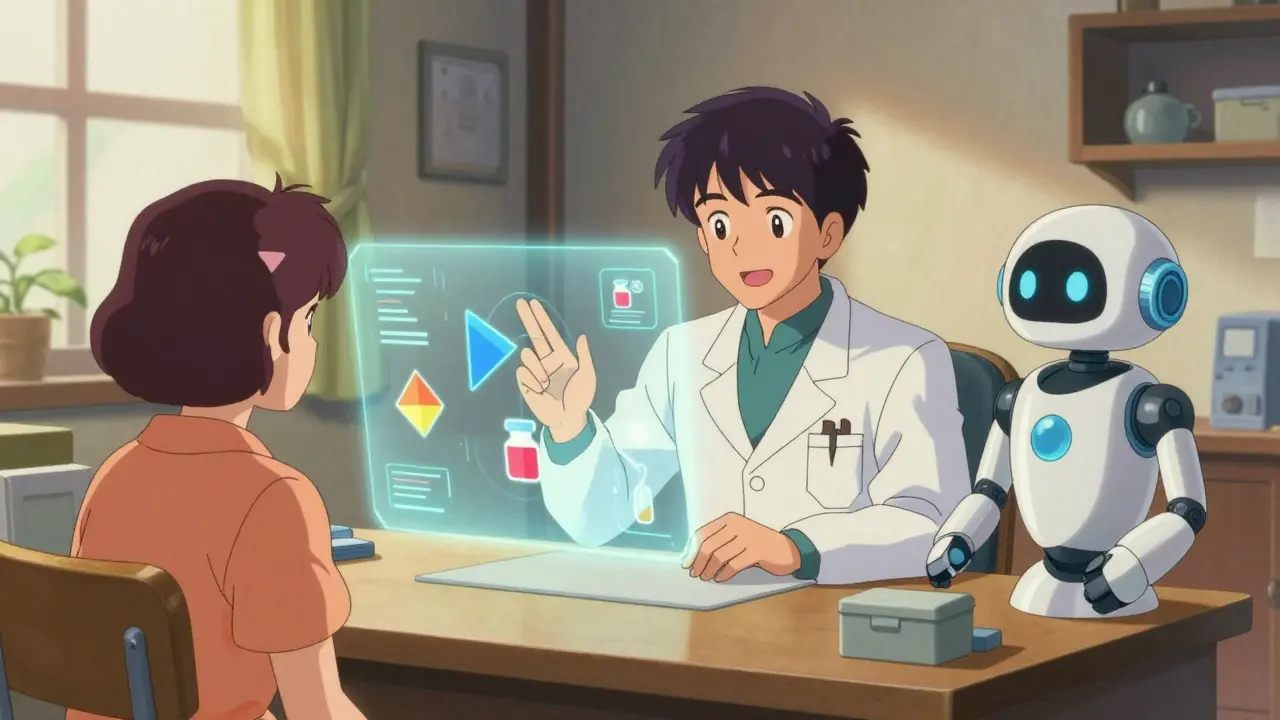
Team-based care is evolving. We are moving beyond physical clinics. Telepharmacy services grew by 214% between 2020 and 2023, according to the American Telemedicine Association. This allows rural practices to access clinical pharmacists remotely for generic substitution advice.
Furthermore, Artificial Intelligence is entering the mix. Pilot programs at Mayo Clinic show that AI-assisted tools can recommend appropriate generic substitutions, increasing utilization by 22% while reducing adverse drug events by 9.3%. Imagine a future where your EHR flags a brand-name prescription, suggests three therapeutically equivalent generics based on the patient’s formulary and allergy history, and automatically drafts a note for the pharmacist to review. The team remains essential, but AI handles the data crunching.
However, technology cannot replace the human element. As Dr. Mitchell noted, shared goals and mutual respect are foundational. AI can suggest a generic, but only a compassionate nurse can explain to an anxious patient why the new pill is safe. Only a trusted physician can reassure a long-term patient that their care standard hasn't dropped.
Conclusion: A Necessity, Not a Luxury
Team-based care for generic prescribing is no longer an experimental concept. With Medicare Part D expanding MTM eligibility and CMS requiring comprehensive medication management, the regulatory pressure is mounting. More importantly, the economic pressure is real. Practices that fail to optimize medication costs through team-based strategies will find themselves squeezed by rising drug prices and stagnant reimbursement rates.
By embracing multidisciplinary approaches, providers can reclaim their time, improve patient outcomes, and deliver sustainable care. It requires humility to share decision-making, discipline to maintain clear roles, and patience to navigate the initial implementation curve. But the reward is a practice that works better, costs less, and truly serves its patients.
What is the role of a pharmacist in team-based generic prescribing?
The pharmacist acts as the medication expert, conducting comprehensive reviews to identify opportunities for generic substitution. They monitor for drug interactions, assess formulary coverage, and counsel patients on adherence. Under Collaborative Practice Agreements (CPAs), they can initiate switches to therapeutically equivalent generics without waiting for a new physician order, streamlining the process and reducing costs.
How does team-based care reduce medication errors?
Team-based care introduces multiple checkpoints. While the physician diagnoses, the pharmacist verifies the appropriateness of the medication choice and checks for interactions. Nurses monitor for side effects and adherence issues. Studies show this collaborative approach can reduce medication errors by up to 67% compared to solo prescribing, as each member catches potential mistakes the others might miss.
What are Collaborative Practice Agreements (CPAs)?
CPAs are formal written agreements between physicians and pharmacists (or other providers) that define the scope of delegated tasks. In the context of generic prescribing, a CPA allows a pharmacist to modify, initiate, or discontinue medications based on established protocols. This eliminates the need for a separate physician visit for simple therapeutic switches, improving efficiency and patient access.
Is team-based care suitable for all types of patients?
Team-based care is most effective for patients with chronic conditions requiring multiple medications, such as diabetes, hypertension, or heart failure. These patients benefit most from coordinated medication management and generic optimization. For acute, episodic care (like a simple infection), the overhead of a full team may not be necessary, though basic coordination remains beneficial.
How much does it cost to implement team-based care?
Initial setup costs typically range from $85,000 to $120,000 per practice, covering staff hiring, training, and EHR integration. However, these costs are often offset within a year through reduced hospital readmissions, decreased duplicate testing, and lower medication costs via generic substitution. Practices report savings of $1,200-$1,800 per high-risk patient annually.