
Getting a vaccine when your immune system is dampened by medication isn't as simple as walking into a pharmacy. For people dealing with vaccines in immunosuppressed patients, the core problem is a tug-of-war between the need for protection and the reality that some drugs can make a vaccine nearly useless if the timing is off. If you're on a medication that suppresses your immune response, you might be wondering if the shot will even work or if you should wait until your next treatment cycle. While the goal is always protection, the strategy requires a careful balance of timing to ensure your body actually builds the antibodies it needs.
| Medication/Scenario | Recommended Timing | Key Goal |
|---|---|---|
| Starting New Therapy | ≥ 14 days before first dose | Establish baseline immunity |
| B-cell Therapy (e.g., Rituximab) | 4-5 months post-infusion; 2-4 weeks pre-next dose | Wait for lymphocyte recovery |
| High-dose Prednisone (>20mg) | Wait until dose is tapered down | Avoid peak steroid suppression |
| Organ Transplant | ≥ 2 weeks pre or ≥ 3 months post | Avoid pulse immunosuppression window |
The Challenge of the "Dampened" Immune Response
When you are Immunocompromised is a state where the immune system's ability to fight infectious diseases is compromised, often due to medical treatments like chemotherapy or immunosuppressants, your body doesn't react to vaccines the same way a healthy person's does. Basically, the drugs doing the job of keeping your autoimmune disease or cancer in check also stop your immune system from "learning" from the vaccine. This can slash vaccine efficacy by anywhere from 30% to 80%.
For example, data from the CDC Centers for Disease Control and Prevention, the national public health agency of the United States showed that people with solid organ transplants had 56% lower antibody levels after two mRNA doses compared to the general public. It's not that the vaccines are "broken," but that the biological machinery needed to create antibodies is temporarily offline.
Timing Your Shots with B-Cell Therapies
One of the trickiest areas involves Rituximab a monoclonal antibody used to treat certain autoimmune diseases and cancers by depleting B-cells and other B-cell depleting therapies. Since these drugs wipe out the very cells responsible for making antibodies, timing is everything. If you get a shot while your B-cells are gone, the vaccine is essentially a wasted effort.
Generally, the sweet spot is to get vaccinated about 4 to 5 months after your last infusion and at least 2 to 4 weeks before your next one. Some specialists at Memorial Sloan Kettering even suggest waiting 9 to 12 months for the best possible response, though that's often impractical in the real world. The reality is that we're often compromising between "perfect science" and "practical safety." If there's a massive spike in community transmission (over 100 cases per 100,000 people), the IDSA Infectious Diseases Society of America, a professional organization focused on improving the care of patients with infectious diseases suggests it's better to get the shot immediately than to wait for the perfect window.
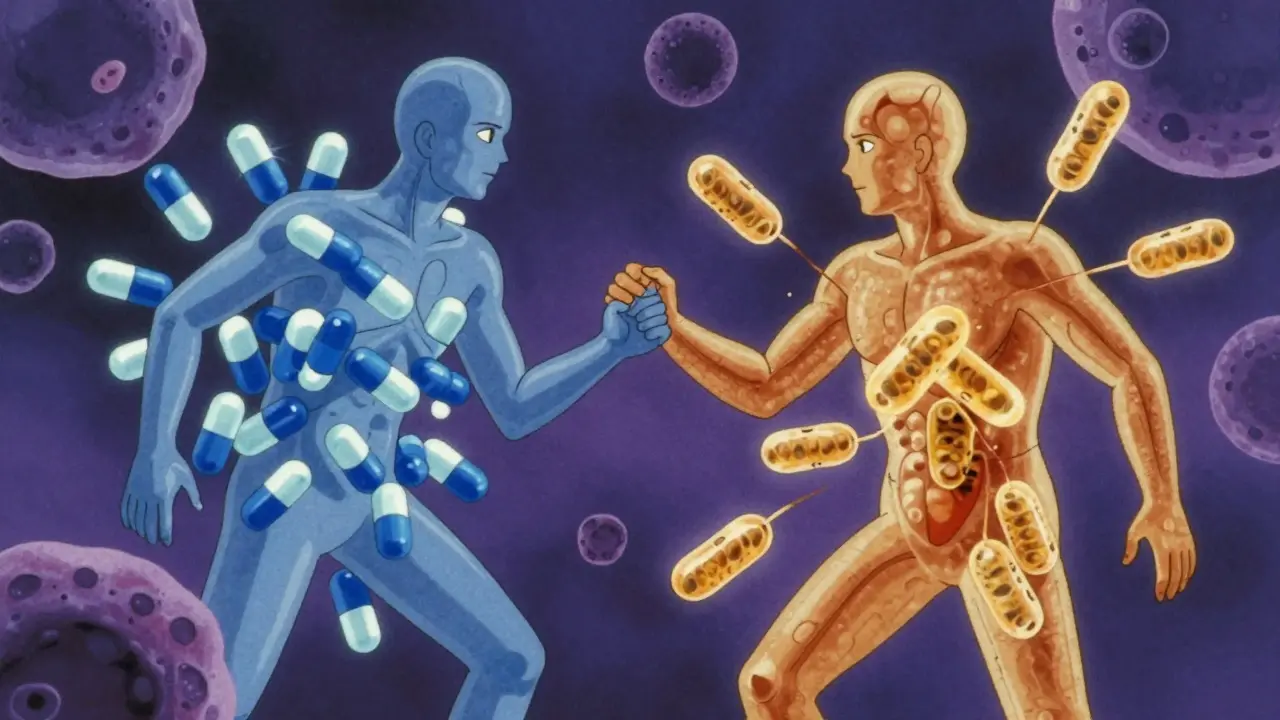
Handling Steroids and Common Autoimmune Meds
If you're taking Prednisone a corticosteroid used to reduce inflammation and suppress the immune system at doses higher than 20mg daily, you'll likely need to hold off on most non-influenza vaccines until your dose is tapered down. High-dose steroids act like a blanket over your immune system, preventing it from responding to the vaccine's signals.
For those on Methotrexate a disease-modifying antirheumatic drug used for rheumatoid arthritis and psoriasis, the approach is a bit more flexible. The American College of Rheumatology suggests holding the medication for two weeks after getting a flu shot. This small window allows your immune system to focus on the vaccine without the drug immediately suppressing the response.
Special Considerations for Transplant Patients
For people who have undergone an organ transplant, the timing is even more volatile. The goal is to avoid "pulse immunosuppression"-those periods of intense drug delivery used to prevent organ rejection. According to 2024 IDSA guidelines, the best time to vaccinate is either two weeks before the transplant or at least three months after.
The danger here isn't just low efficacy, but the logistical nightmare of fragmented care. A study in the American Journal of Transplantation found that nearly half of transplant centers struggle with timing because the transplant team and the primary care doctor aren't on the same page. If you're in this boat, you have to be your own advocate and ensure both teams are coordinating your calendar.

The Future: Moving Beyond "Fixed Windows"
Right now, doctors rely on "fixed time intervals"-meaning they tell you to wait X months based on a general average. But you aren't an average; you're an individual. Some people's B-cells bounce back in three months, while others take a year. This is why the NIH is currently running a trial to use CD19+ B-cell counts a specific marker used to measure the number of B-lymphocytes in the blood as a biomarker.
Imagine a world where your doctor does a quick blood test, sees that your lymphocyte levels have recovered, and says, "Now is the perfect time for your shot," rather than guessing based on a calendar. Until then, the best approach is shared clinical decision-making-talking through your specific disease activity, travel plans, and risk factors with your provider.
Can I get a live vaccine while on immunosuppressants?
Generally, live vaccines (like the MMR or yellow fever vaccine) are avoided or strictly timed in immunocompromised patients because they can potentially cause the infection they are meant to prevent. Always consult your specialist before receiving any live vaccine.
What happens if I get a vaccine and then start chemotherapy?
If you get vaccinated at least 14 days before starting therapy, you've likely given your body enough time to mount an initial response. If you start therapy immediately after, the efficacy may be reduced, and your doctor might recommend a booster dose once your treatment cycle allows.
Do I need more doses of the COVID-19 vaccine than others?
Yes. Because immunity wanes faster in immunosuppressed populations, the 2024 IDSA guidelines and CDC updates suggest that people in this group may need additional doses to maintain protection, even if the general public only needs one annual shot.
Will a vaccine work if my antibody levels are low?
Not necessarily. While antibodies are the primary measure of success, the CDC has noted that T-cell responses can still persist even when antibody levels are low. This means you might still have some level of protection against severe disease even if a blood test doesn't show high antibody titers.
Should I wait until my B-cells fully recover to vaccinate?
Ideally, yes. However, if the community transmission of a virus is very high, the risk of catching the disease may outweigh the benefit of waiting for a "perfect" immune response. Your doctor will help you weigh the risk of infection against the risk of a less effective vaccine.
Next Steps and Troubleshooting
If you are currently managing an autoimmune disease or recovering from a transplant, don't leave your vaccination to chance. Start by asking your specialist for a "vaccination window"-a specific set of dates on your calendar where your medication levels are lowest or your cell counts are highest.
If you've missed your window, don't panic. Talk to your provider about the possibility of a booster shot or "accelerated" dosing schedules. If you are coordinating between a rheumatologist and a GP, bring a printed list of your current medications and their dosages to every appointment to ensure no one is prescribing a shot that conflicts with your treatment.





Brady Davis
11 April, 2026 20:13 PMOh great, so we just have to play a game of 'guess the window' with our immune systems. Pure magic.
Danielle Kelley
13 April, 2026 03:06 AMThis is just more propaganda to get us to take more doses! They admit the efficacy is slashed by 80% and then tell us to just keep taking more and more of it. Wake up people, they're just experimenting on the vulnerable to see how many shots it takes to break us completely!
dwight koyner
13 April, 2026 04:06 AMIt's very important to remember that while the antibody levels might be low, T-cell responses provide a significant layer of protection. Many people feel discouraged when they see low titers on a lab report, but that doesn't mean the vaccine was a total waste. The goal is often preventing severe hospitalization rather than absolute sterilizing immunity, especially when you're on heavy immunosuppressants.
Ruth Swansburg
13 April, 2026 18:26 PMYou are doing great by staying informed! Keep pushing for the best care!
Alexander Idle
15 April, 2026 03:44 AMThe sheer audacity of expecting a patient to manage three different specialists' schedules is honestly peak healthcare. I'm practically exhausted just thinking about the administrative nightmare of coordinating a simple flu shot. It's a total circus and we're all just clowns in the waiting room.
Sarabjeet Singh
15 April, 2026 16:44 PMJust follow your doctor's lead and take it one step at a time. It's all about patience.
charles mcbride
16 April, 2026 21:15 PMThis is actually really promising stuff. The idea of using B-cell counts as a biomarker instead of just guessing based on a calendar is a total game changer. It means we can stop relying on averages and actually get personalized medicine that fits our own bodies. I'm really hopeful that these NIH trials move quickly because it would take a massive amount of anxiety away from the community. Imagine knowing for a fact that your body is ready to respond. It transforms the whole process from a gamble into a calculated move. We've come a long way in how we understand the immune system, and this is just the next logical step. It's great to see science moving toward individualization. I bet we'll see this become standard practice in a few years. Just keep hanging in there everyone, better systems are on the horizon. It's all about progress and getting better results for everyone involved. Truly exciting times for medical tech.