
Cumulative Drug Toxicity Calculator
Calculate Your Cumulative Exposure
Enter your medication details to determine if you're approaching dangerous levels of cumulative toxicity.
Most people think side effects happen right away. You take a new pill, feel dizzy, and assume it’s the drug’s fault. But what if the problem isn’t the first dose - it’s the 50th? That’s the quiet danger of cumulative drug toxicity: side effects that creep up slowly, like rust on a pipe, until something breaks.
It’s not rare. Nearly 7 out of 10 adverse reactions in older adults aren’t from one bad dose. They’re from years of taking the same meds - antibiotics, heart drugs, painkillers - with no one checking how much has built up in the body. And it’s not just seniors. Anyone on long-term treatment is at risk.
How Your Body Stores Toxins You Can’t Feel
Cumulative toxicity happens when your body absorbs a drug faster than it can get rid of it. Think of it like filling a bathtub with the drain half-closed. Even if the water flows in slowly, it eventually overflows. That’s what happens with certain medications. They don’t vanish after one use. They stick around.
Drugs that are fat-soluble - like vitamin A, D, E, K, or medications like amiodarone and doxycycline - settle into fatty tissue. Others, like lithium or digoxin, cling to organs. The liver and kidneys are supposed to flush them out, but if those organs are worn down by age, disease, or other drugs, they slow down. That’s when levels climb. A 2023 study showed patients with reduced kidney function can hold onto drugs 30-50% longer than healthy people. That extra 50%? It’s not harmless. It’s toxic.
It’s Not About One Dose - It’s About Total Dose
Here’s the scary part: you can take the right dose every day and still overdose - over time. A patient might be on 100 mg of a drug daily. Feels fine. No side effects. Then, after two years, they develop lung scarring, nerve damage, or liver failure. The doctor checks the daily dose. It’s normal. So why now?
The answer? Total exposure. That patient took 73,000 mg over two years. That’s cumulative dose. And for some drugs, the body can’t handle more than 600,000 mg total before damage kicks in. Amiodarone, a heart rhythm drug, is a classic example. One study found patients who hit 600 grams total developed pulmonary fibrosis - a fatal lung condition - even when daily levels looked fine. No one was tracking the total.
It’s the same with cancer drugs. In one study, patients on targeted therapies had a 25% chance of serious side effects in their first treatment cycle. By the sixth cycle? That jumped to over 50%. The drugs didn’t get stronger. The body just got fuller.
Why You Don’t Notice Until It’s Too Late
Acute toxicity - like an allergic reaction or overdose - hits fast. Nausea. Rash. Trouble breathing. You know something’s wrong. Cumulative toxicity? It whispers.
Early signs are vague: fatigue, mild nausea, a slight tremor, dry skin. Doctors often blame aging, stress, or depression. Patients think, “I’ve taken this for years - it must be fine.” But over months, these tiny signals pile up. By the time a patient loses their balance, can’t see clearly, or has abnormal liver enzymes, the damage is often irreversible.
One nurse on a healthcare forum described a patient who’d been on lithium for 12 years. No problems. Then, suddenly, he couldn’t walk. His lithium level? Normal. But his total lifetime dose? More than double what was considered safe. The body had stored it like a slow-burning fuse.
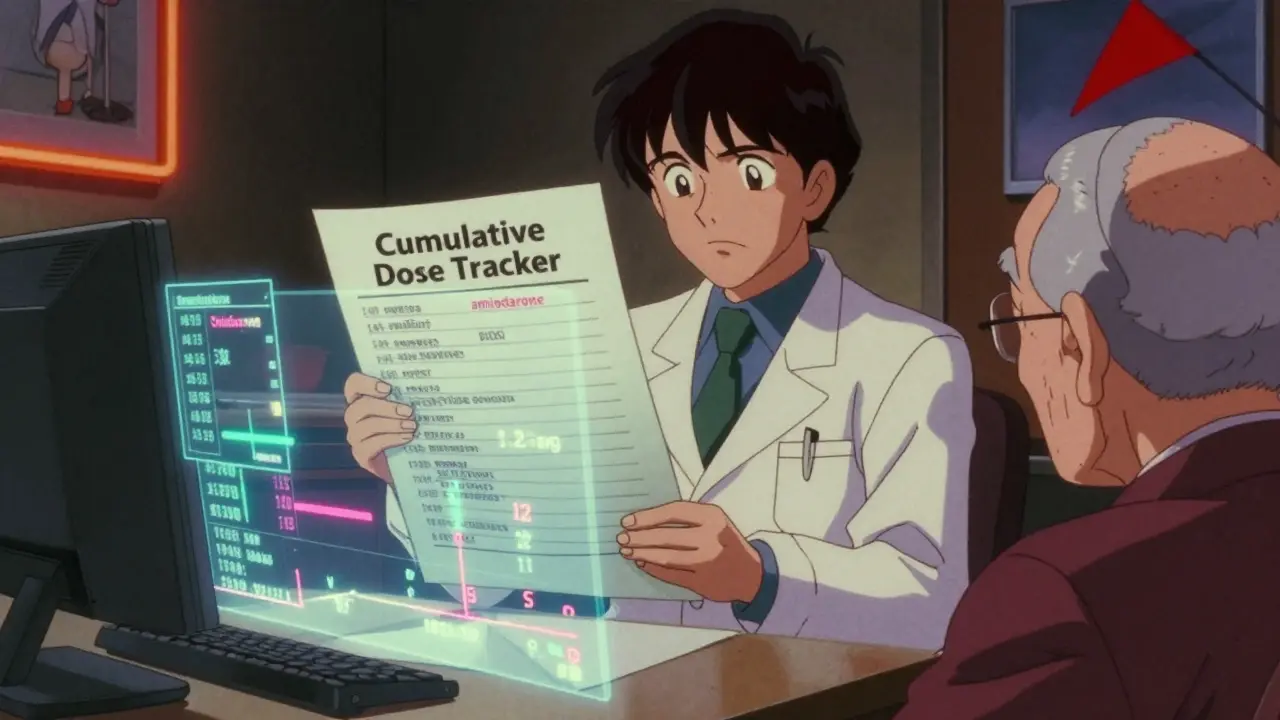
Which Medications Carry the Highest Risk?
Not all drugs build up. But some are notorious. Here are the top offenders:
- Anthracyclines (like doxorubicin): Used in chemotherapy. Lifetime limit: 450 mg/m². Beyond that, heart damage becomes likely. 17 clinical trials with over 8,500 patients helped set this limit.
- Amiodarone: For irregular heartbeat. Can cause lung, liver, and thyroid damage. Toxicity often appears after 6-12 months.
- Lithium: For bipolar disorder. Accumulates in kidneys and brain. Toxicity can cause tremors, confusion, or seizures - even with “normal” blood levels.
- Digoxin: For heart failure. Narrow safety margin. Small changes in kidney function can push levels into danger.
- Methotrexate: For autoimmune diseases. Builds up in liver and bone marrow. Can cause severe fatigue, infections, or liver scarring.
- Aminoglycosides (like gentamicin): Antibiotics. Can permanently damage hearing and kidneys after repeated doses.
The American Geriatrics Society Beers Criteria lists 34 medications with high cumulative risk for seniors. Many are still prescribed without dose limits.
How Doctors Miss It - And How They Can Stop
Most clinics don’t track total drug exposure. They track daily doses. That’s like checking your gas tank every day but never looking at the odometer. You might think you’re fine - until you run out of fuel 200 miles from home.
But some places are fixing this. A rheumatology practice in Minnesota started tracking methotrexate cumulative doses. Within a year, hospital admissions for toxicity dropped 37%. How? They used a simple spreadsheet linked to the electronic health record. Each refill added to the total. When a patient neared 10 grams, the system flagged them for a check-up.
Therapeutic drug monitoring (TDM) helps. Blood tests for lithium, digoxin, and vancomycin are routine. But for drugs like amiodarone? Rare. And even when tested, levels don’t always reflect tissue buildup. A patient might have normal blood levels but high liver concentration. That’s invisible to standard tests.
Pharmacists are stepping in. A 2023 study found pharmacist-led monitoring cut hospitalizations for drug toxicity by 29% across 45 health systems. They’re the ones asking: “How long have you been on this? How many pills total?”
The Cost of Ignoring It
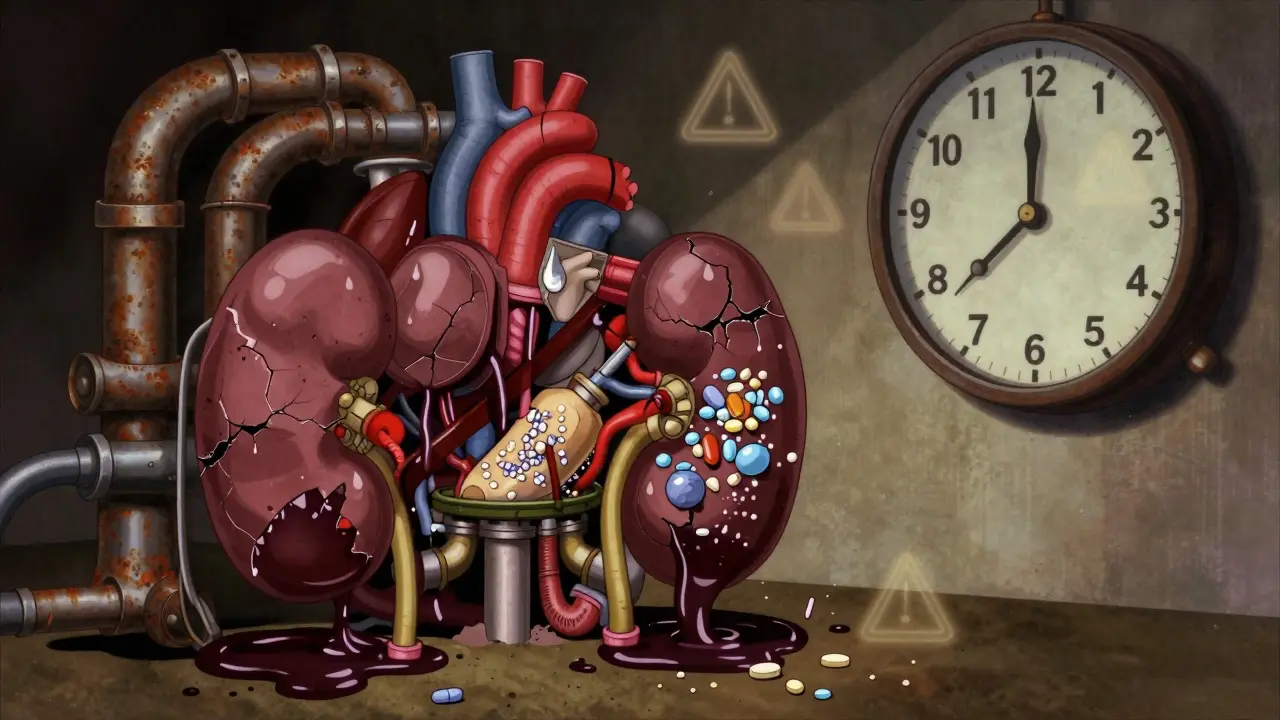
This isn’t just a medical issue - it’s a financial one. In the U.S., cumulative toxicity causes 15% of cancer treatments to be stopped early. It leads to 22% of dose reductions. That costs $1.2 billion a year just in oncology.
And it’s getting worse. The global market for drug monitoring is growing fast - from $2.87 billion in 2022 to an expected $4.73 billion by 2028. Why? Because drugmakers now have to prove they’ve studied cumulative effects before approval. The FDA now requires cumulative dose warnings on 78% of new cancer drugs - up from 52% in 2017. The European Medicines Agency made it mandatory in January 2024.
But technology hasn’t kept up. Only 38% of electronic health records can auto-calculate cumulative doses. Most still rely on doctors doing math by hand - or worse, not doing it at all.
What You Can Do - Even If You’re Not a Doctor
You don’t need a medical degree to protect yourself. Here’s how:
- Know your meds. Write down every drug you take - prescription, over-the-counter, supplements. Include doses and start dates.
- Ask your pharmacist. Say: “Is this drug known to build up? Is there a lifetime limit?” They’re trained to know.
- Track your total. For high-risk drugs (like methotrexate or amiodarone), keep a simple log. Add up doses monthly. If you’re over 50 or have kidney/liver issues, this is critical.
- Push for monitoring. If you’re on a long-term drug, ask if a blood test for cumulative levels is available - even if your doctor says it’s not routine.
- Speak up about symptoms. If you feel off after years on a drug - fatigue, tingling, nausea - don’t assume it’s aging. Say: “Could this be from the drug building up?”
One patient, 68, had been on digoxin for 10 years. She started feeling dizzy. Her doctor said, “It’s just old age.” She asked for a blood test. Her level was triple the safe range. She’d been on the same dose for a decade - but her kidneys had slowed down. A simple test saved her from heart failure.
The Future: AI, Tracking, and Better Safety
Change is coming. Memorial Sloan Kettering is testing AI models that predict your personal risk of toxicity by analyzing 27 factors - kidney function, age, genetics, other meds. Early results? 82% accurate. That’s huge.
And it’s not just about drugs. The CDC now tracks cumulative antibiotic use to fight resistance. The FDA’s Sentinel system watches 190 million patient records for hidden toxicity patterns. It’s not perfect - but it’s a start.
What’s clear? Cumulative toxicity isn’t a rare oddity. It’s a silent epidemic in long-term medicine. And it’s preventable - if we stop treating every dose as a fresh start.
Can cumulative drug toxicity be reversed?
Sometimes, yes - but not always. If caught early, stopping the drug and supporting organ function (like hydration or dialysis) can help the body clear the buildup. But if damage has already occurred - like lung scarring from amiodarone or nerve damage from chemotherapy - it’s often permanent. Early detection is everything.
Are over-the-counter drugs safe from cumulative toxicity?
No. Many OTC meds can build up. Long-term use of NSAIDs (like ibuprofen) can damage kidneys. High-dose vitamin A causes liver toxicity. Even antacids with aluminum can accumulate in people with kidney disease. Always check labels and talk to a pharmacist if you take OTC drugs daily for more than a few months.
Why don’t doctors always check for cumulative dose?
Many systems don’t track it. Electronic records often show daily doses but not totals. Time is tight - doctors may not have 10 minutes to calculate 10 years of pills. Also, some drugs lack clear safety thresholds. Until guidelines are updated and tech catches up, it’s often overlooked - even though it’s a leading cause of preventable harm.
Does age make cumulative toxicity worse?
Yes. As we age, kidneys and liver slow down. Blood flow decreases. Fat increases. All of this means drugs stay longer and build up faster. That’s why the Beers Criteria lists 34 high-risk drugs for seniors. But younger people with liver or kidney disease are also at high risk - age isn’t the only factor.
Can supplements cause cumulative toxicity?
Absolutely. Fat-soluble vitamins - especially A, D, E, and K - are stored in the body. Taking 10,000 IU of vitamin D daily for years can cause calcium buildup in blood vessels and kidneys. Herbal supplements like kava or comfrey can damage the liver over time. Supplements aren’t regulated like drugs - so they can be just as dangerous with long-term use.




Joanna Reyes
26 February, 2026 04:52 AMCumulative toxicity is one of those silent killers that no one talks about until it's too late. I work in geriatric care, and I've seen patients on the same dose of amiodarone for a decade, thinking they're fine-until one day, they can't breathe. No one checks total exposure. No one tracks it. It's like driving with a broken odometer and assuming you haven't burned through your fuel tank. The system is designed for acute care, not chronic accumulation. We need automated tracking in EHRs, not just for cancer drugs but for every long-term medication. Lithium, digoxin, methotrexate-they all deserve a running total, not just a daily snapshot. And pharmacists? They're the unsung heroes here. They're the ones asking, 'How long have you been on this?' while doctors are rushing to the next chart.
It's not just about age. I had a 42-year-old patient with lupus on methotrexate for eight years. Her liver enzymes started creeping up. She had no symptoms. No one connected the dots until she almost needed a transplant. That’s the problem: we treat doses like they’re independent events, not a cumulative sum. We need a standardized 'total dose dashboard' in every EMR. It’s not rocket science. It’s basic arithmetic. Why aren’t we doing it?
Nerina Devi
27 February, 2026 00:18 AMThis is so important, especially in countries like India where access to regular monitoring is limited. Many patients take medications for years without blood tests because they can’t afford them. The idea of cumulative toxicity isn’t just medical-it’s a social justice issue. A patient on digoxin for heart failure in rural India may never get a serum level check. They just keep taking the pill because it 'worked before.' We need community pharmacists to step up, to keep simple logs, to educate. No one should die because a system didn’t track a number.
Dinesh Dawn
27 February, 2026 21:59 PMI’ve been on lithium for 15 years. I didn’t know about cumulative toxicity until I read this. My doctor never mentioned it. I just got blood tests every six months, checked the number, and went on my way. But now I’m wondering-what’s my total? How much has built up? I’m gonna start tracking my doses. I’m gonna ask my pharmacist. I didn’t even know this was a thing. Thanks for shining a light on it.
Vanessa Drummond
28 February, 2026 11:32 AMOh my god. I’ve been taking 800mg of ibuprofen daily for my arthritis for five years. I thought it was fine because I didn’t have stomach pain. But now I’m reading this and I’m terrified. My kidneys are probably screaming. I’m gonna stop today. No more 'just one more pill.' This is scary. I need to talk to my doctor. Like, now.
Nick Hamby
28 February, 2026 15:10 PMThere is a profound philosophical shift required here: from treating medication as discrete, momentary interventions to recognizing it as a continuous, accumulating process. The medical paradigm remains rooted in the acute model-'take this now, feel better.' But the body does not operate in discrete moments. It remembers. It accumulates. It holds. The liver, the kidneys, the fat tissue-they are not passive conduits; they are archives. And we, as a medical culture, have failed to read the archive. The solution is not merely technological-it is epistemological. We must reframe our understanding of dosage from 'per administration' to 'lifetime burden.' Until we do, we will continue to treat symptoms while ignoring the slow, silent tide of toxicity beneath them.
kirti juneja
2 March, 2026 15:04 PMY’all, this is wild. I’m a nurse in Mumbai and I’ve seen it firsthand-grandmas on 10 different meds, no one ever adding it up. One lady took 100+ pills of calcium supplements for 'strong bones' for 7 years. Guess what? Her kidneys turned to stone. We didn’t catch it until she collapsed. We need to stop treating supplements like harmless candy. Vitamin D? Aminoglycosides? NSAIDs? They’re not 'just OTC.' They’re silent builders of disaster. Let’s get some public health posters: 'Your body keeps score.' Simple. Bold. Needed.
Haley Gumm
4 March, 2026 09:55 AMLet’s be real-this is why so many people end up on dialysis or with liver failure. We’re not just ignoring cumulative toxicity; we’re actively incentivizing it. Pharma companies don’t want to track lifetime doses because it limits sales. Doctors don’t want to calculate it because it takes time. Patients don’t know to ask because no one ever told them. It’s a perfect storm of neglect. And guess who pays? The patients. The system is designed to fail us. We’re not patients-we’re data points with expiration dates.
Gabrielle Conroy
5 March, 2026 05:37 AMYES!! This is SO IMPORTANT!! 😭 I’m a pharmacist and I literally just started a cumulative dose tracker in our clinic last month. We used a simple Google Sheet linked to the EHR. Within 3 weeks, we caught 3 patients nearing toxic thresholds-two on amiodarone, one on methotrexate. One guy had taken 820 grams total. He had NO symptoms. No one had ever added it up. We called his cardiologist, he got an ultrasound, and they found early lung fibrosis. He’s off the drug now. This isn’t theoretical. It’s happening RIGHT NOW. PLEASE, if you’re on long-term meds-ask your pharmacist for a total dose review. You have no idea how many people are walking around with silent damage. Let’s change this. 💪❤️
Spenser Bickett
6 March, 2026 15:31 PMlmao so now we’re gonna track every pill like it’s a f*cking minecraft inventory? next they’ll make us log how many breaths we take. 'oh no, i’ve taken 10,000 ibuprofen’s, my kidneys are gonna revolt.' chill out. most people are fine. if you’re worried, stop taking meds. duh. also, vitamin d? that’s what you’re scared of? go drink milk and chill. #overthinking #medicinemindset