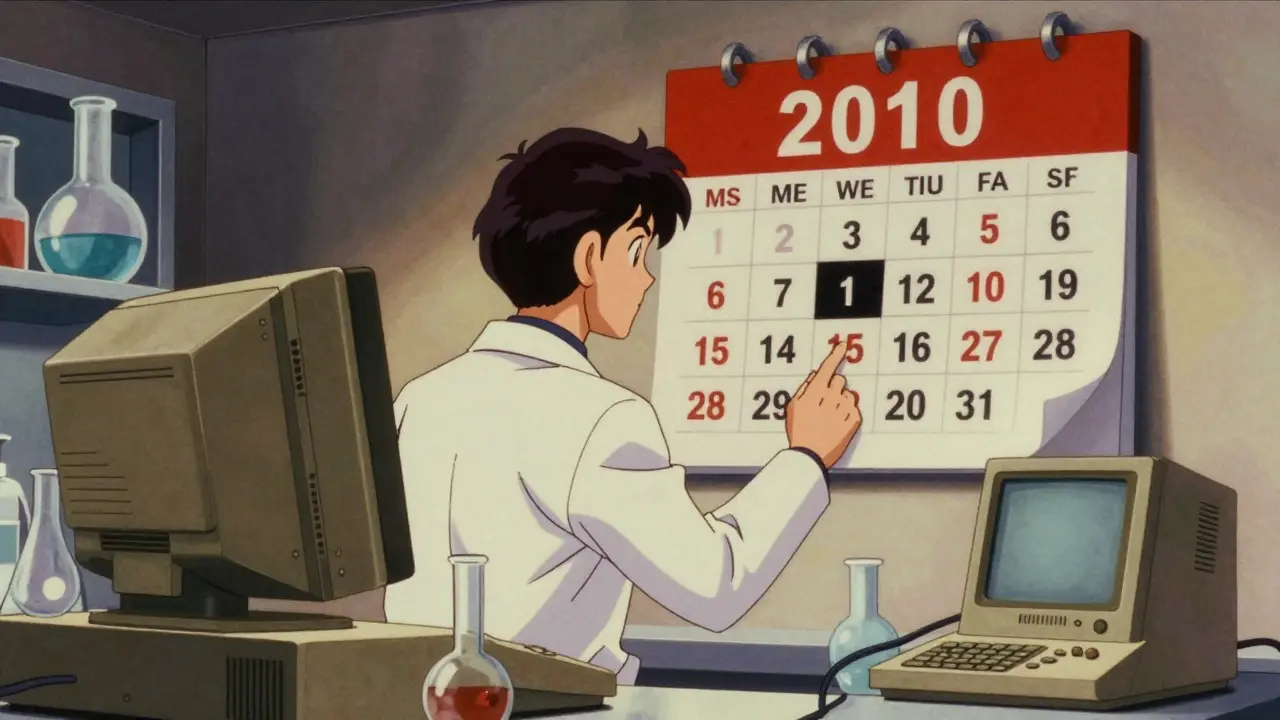
You might assume that when a pharmaceutical company files for a patent, they get twenty years of exclusive rights to sell their drug. On paper, that is exactly what the law says. In reality, by the time that drug actually hits the pharmacy shelf, those twenty years are already half gone. This gap between the legal promise and the commercial reality is known as effective patent life. It is the reason why drug prices stay high for so long, why generic competition arrives later than expected, and why the pharmaceutical industry operates on such a tightrope.
The Math Behind the Myth
To understand effective patent life, you first have to look at how the clock starts ticking. Under U.S. law, specifically 35 U.S.C. § 154(a)(2), a patent term is precisely twenty years from the earliest effective filing date. That sounds straightforward. The problem is that the filing date happens at the very beginning of the process, not the end.
Imagine you invent a new medicine in 2010. You file for a patent immediately. Your twenty-year protection runs until 2030. However, you cannot just start selling it. You must go through pre-clinical testing, followed by three phases of clinical trials involving thousands of patients. Then, you submit everything to the Food and Drug Administration (FDA) for review. This entire journey typically takes five to ten years.
If your drug takes eight years to get approved, your "nominal" patent expires in 2030, but your drug only launched in 2018. You have only twelve years left to make money before generics can legally enter the market. Industry data from Drug Patent Watch suggests that the average effective patent life is actually closer to 13.35 years post-approval. For many complex biologics, it can be even shorter, sometimes leaving innovators with only seven to ten years of exclusivity.
The Hatch-Waxman Compromise
This discrepancy created a crisis in the 1980s. If companies couldn't recoup their massive research costs-estimated at around $2.6 billion per drug-they would stop innovating. But if patents lasted too long, patients would never benefit from cheaper generic drugs. The solution was the Drug Price Competition and Patent Term Restoration Act of 1984, commonly known as the Hatch-Waxman Act.
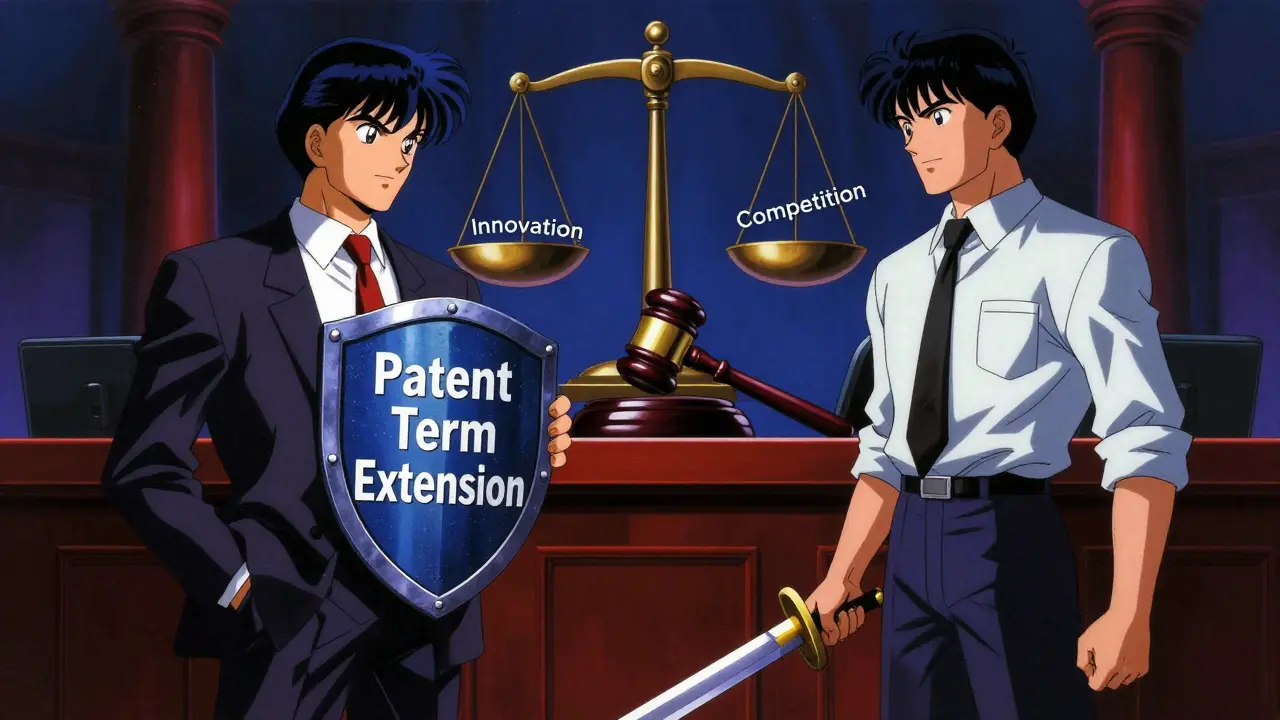
The Hatch-Waxman Act tried to balance these two needs. It allowed for Patent Term Extension (PTE). This mechanism lets companies add back some of the time lost during FDA review. Here is how it works:
- Maximum Extension: A patent can be extended by up to five years.
- The Hard Cap: No matter what, the total period of market exclusivity after FDA approval cannot exceed fourteen years.
- Eligibility: The extension applies only to the active ingredient that has not been previously approved.
The goal was clear: give innovators enough time to recover their investment, but ensure generics arrive soon after. Congress anticipated that most breakthrough innovations would receive no more than fourteen years of protection. However, the system has evolved in ways that lawmakers didn't fully anticipate.
Beyond the Core Patent: The Evergreening Strategy
Here is where things get tricky. The core patent covers the main chemical molecule. But pharmaceutical companies don't rely on just one patent. They build what experts call patent thickets. These are clusters of secondary patents that protect variations of the original drug.
Consider a blockbuster drug like Lipitor or Humira. While the primary patent on the molecule might expire, the company may hold dozens of other patents covering:
- New delivery mechanisms (like a patch instead of a pill).
- Extended-release formulations.
- Fixed-dose combinations (mixing the drug with another medication).
- Specific uses or indications discovered after launch.
A study by the R Street Institute analyzed 432 new drugs approved between 1985 and 2005. They found that secondary patents were extremely common, providing an average of six to seven additional years of protection beyond the core patent. Higher-selling drugs were 37% more likely to obtain these secondary patents. This strategy, often referred to as evergreening, allows companies to maintain monopolies well past the expiration of the original patent term.
In fact, Yale Law and Policy Review noted that 91% of drugs that obtain patent term extensions continue their market dominance long after those extensions expire, thanks to this web of secondary protections.
Regulatory Exclusivities: The Hidden Shield
Even if all patents expired tomorrow, a drug might still be protected. This is due to regulatory exclusivity. Unlike patents, which are intellectual property rights granted by the United States Patent and Trademark Office (USPTO), regulatory exclusivities are periods during which the FDA simply will not approve a generic version of the drug, regardless of patent status.
These exclusivities operate independently and can stack with patents. Common types include:
| Type of Exclusivity | Duration | Purpose |
|---|---|---|
| New Chemical Entity (NCE) | 5 years | Prevents generic submission for new molecules. |
| Orphan Drug | 7 years | Incentivizes treatment for rare diseases. |
| New Clinical Investigation | 3 years | Rewards new clinical studies for existing drugs. |
| Pediatric Exclusivity | 6 months | Added to existing patents/exclusivity for child safety data. |
The key difference here is timing. Patents can expire at any time based on the filing date. Regulatory exclusivities are tied strictly to the FDA approval date. This means a drug could have its patent expire, but still enjoy three to five years of exclusivity because the FDA is barred from approving a generic copy.
The 30-Month Stay: Delaying the Inevitable
When a generic manufacturer wants to bring a competing drug to market, they file an Abbreviated New Drug Application (ANDA). If the brand-name company sues the generic maker, claiming infringement, the FDA pauses the approval process. This is known as the 30-month stay.
Under the Hatch-Waxman framework, if the patent holder sues within 45 days of receiving notice from the generic company, the FDA cannot grant final approval for 30 months. This gives the brand company time to litigate. Even if the brand company eventually loses the lawsuit, they have successfully delayed generic entry by two and a half years. During this time, they continue to collect monopoly profits. This tactic is a significant factor in extending the effective life of a drug's market dominance.
Global Variations in Patent Life
The U.S. system is unique, but other countries face similar challenges. International agreements like the Agreement on Trade-Related Aspects of Intellectual Property Rights (TRIPS) standardized the nominal patent term to twenty years globally. However, the mechanisms for compensating for regulatory delays vary.
- Canada: Uses a Certificate of Supplementary Protection (CSP). This offers a maximum of 24 months of additional protection after the patent expires, specifically for new medicinal ingredients.
- Japan: Offers a Patent Term Extension (PTE) of up to five years, similar to the U.S., to compensate for regulatory delays.
- European Union: Utilizes Supplementary Protection Certificates (SPCs), which can extend protection for up to five years beyond the patent term, plus an additional six months for pediatric data.
These differences mean that a drug might lose exclusivity in the U.S. while still being protected in Europe, or vice versa. Pharmaceutical companies must manage these timelines simultaneously, creating a complex global strategy.
The Economic Impact: The Patent Cliff
All of this complexity leads to a phenomenon known as the Patent Cliff. This is the point where the last enforceable intellectual property right expires, and generic competition floods the market. The financial impact is staggering.
When generics enter the market, prices typically drop by 80% to 90% within the first year. For a blockbuster drug generating billions in annual sales, this loss of revenue is catastrophic. Analysts at EY project that global sales of drugs facing patent expiration will reach $250 billion annually. Companies must constantly innovate to replace lost revenue, driving the cycle of research, development, and patenting forward.
However, this pressure also drives aggressive lifecycle management. Companies invest heavily in finding new uses for old drugs, reformulating them, or acquiring smaller biotech firms with promising pipelines. The goal is always the same: extend the effective patent life as much as legally possible.
Why Effective Patent Life Matters to You
Understanding effective patent life isn't just for lawyers and executives. It affects healthcare costs, insurance formularies, and patient access to medications. When effective patent life is extended through secondary patents or regulatory loopholes, patients pay higher prices for longer. Managed care organizations struggle to plan budgets when generic availability is uncertain.
Conversely, if effective patent life is too short, companies may hesitate to invest in high-risk areas like antibiotics or rare disease treatments, knowing they won't have enough time to recoup costs. The current system is a delicate balance, often criticized for favoring big pharma over public health, yet essential for driving medical innovation.
What is the difference between nominal patent term and effective patent life?
The nominal patent term is the full 20 years from the filing date. Effective patent life is the actual time a drug has market exclusivity after FDA approval. Because development and regulatory review take 5-10 years, effective patent life is usually only 7-13 years.
How does the Hatch-Waxman Act affect drug pricing?
The Hatch-Waxman Act balances innovation and competition. It allows patent term extensions to help companies recoup R&D costs, but sets a 14-year cap on post-approval exclusivity. This aims to ensure generics arrive sooner to lower prices, though secondary patents often delay this.
What is evergreening in pharmaceuticals?
Evergreening is a strategy where companies file secondary patents for minor changes to a drug, such as new formulations or delivery methods. This extends market exclusivity beyond the expiration of the core patent, delaying generic competition.
Can a drug be protected after its patent expires?
Yes, through regulatory exclusivity. The FDA may be barred from approving generic versions for 3 to 5 years depending on the type of exclusivity (e.g., New Chemical Entity or Orphan Drug), even if the underlying patent has expired.
What is the 30-month stay?
The 30-month stay is a provision that pauses FDA approval of a generic drug if the brand-name company sues for patent infringement. This delays generic entry by up to 30 months while litigation proceeds.

Kevin S
11 May, 2026 03:27 AMThis is such a crucial read for anyone trying to understand why their meds cost so much 💊. The part about the 13-year average really hits home because it explains so much of the frustration we feel at the pharmacy counter 🏥. It’s wild that companies spend years just getting approval and then have barely any time left to make their money back 📉. I think more people need to see this breakdown of the Hatch-Waxman act because it’s not just evil corporations, it’s a complex system 🤷♂️. Thanks for sharing this info! 👏
Amelia Vaughan
11 May, 2026 21:12 PMIt is pathetic how they use these loopholes. They steal from us.
Jake Williams
12 May, 2026 23:48 PMYou are missing the point entirely. It's not stealing, it's capitalism working as intended. Without that protection, who do you think would invest billions in R&D? You want cheap drugs? Go to China. In America, we pay for innovation. If you can't afford it, that's on you, not the patent laws. The system works fine if you aren't too lazy to understand basic economics.
Nilesh Mandani
13 May, 2026 12:25 PMThe concept of effective patent life reveals a deep philosophical tension between individual reward and collective good. We must ask ourselves: is the current balance truly ethical when lives are at stake? The math is clear, but the morality is murky. Perhaps we need a new model entirely, one that decouples profit from cure. Until then, we watch the cliff approach with bated breath.
Madison Jones
13 May, 2026 13:54 PMOh my gosh!! This article is SO important!!! I had no idea that regulatory exclusivity could stack like that!!! It makes total sense now why generics don't show up immediately!!! The table about NCE vs Orphan drug was super helpful!!! We need to talk about this more!!! Everyone should read this!!!
Sarah Grenberg
15 May, 2026 08:12 AMI find the section on evergreening particularly troubling yet fascinating. It demonstrates a level of strategic foresight by pharmaceutical firms that borders on artistry. However, one must consider the human cost of such precision. Are we optimizing for shareholder value or patient health? The answer seems increasingly skewed toward the former. Let us reflect on what this means for our future healthcare landscape.
Brian Lee
16 May, 2026 12:23 PMgood post man. i think the 30 month stay is crazy. why should patients wait that long just because big pharma wants to sue? it feels like they are gaming the system on purpose. maybe congress should look into fixing this loophole soon. it would help everyone out.
Guy Birtwhistle
17 May, 2026 20:18 PMLet's be real here. The 'crisis' mentioned in the 80s was manufactured. Companies knew exactly what they were doing. They lobbied hard for Hatch-Waxman because they needed a safety net. Now they use secondary patents to extend monopolies indefinitely. It's not innovation; it's litigation strategy. Stop pretending it's balanced.
Kenny Pines
19 May, 2026 11:18 AMWow, another day, another way Big Pharma tricks us 🙄. But hey, at least we have emojis to cope with the rising prices 😂. The patent cliff is coming, folks, better stock up on your savings account 💸.