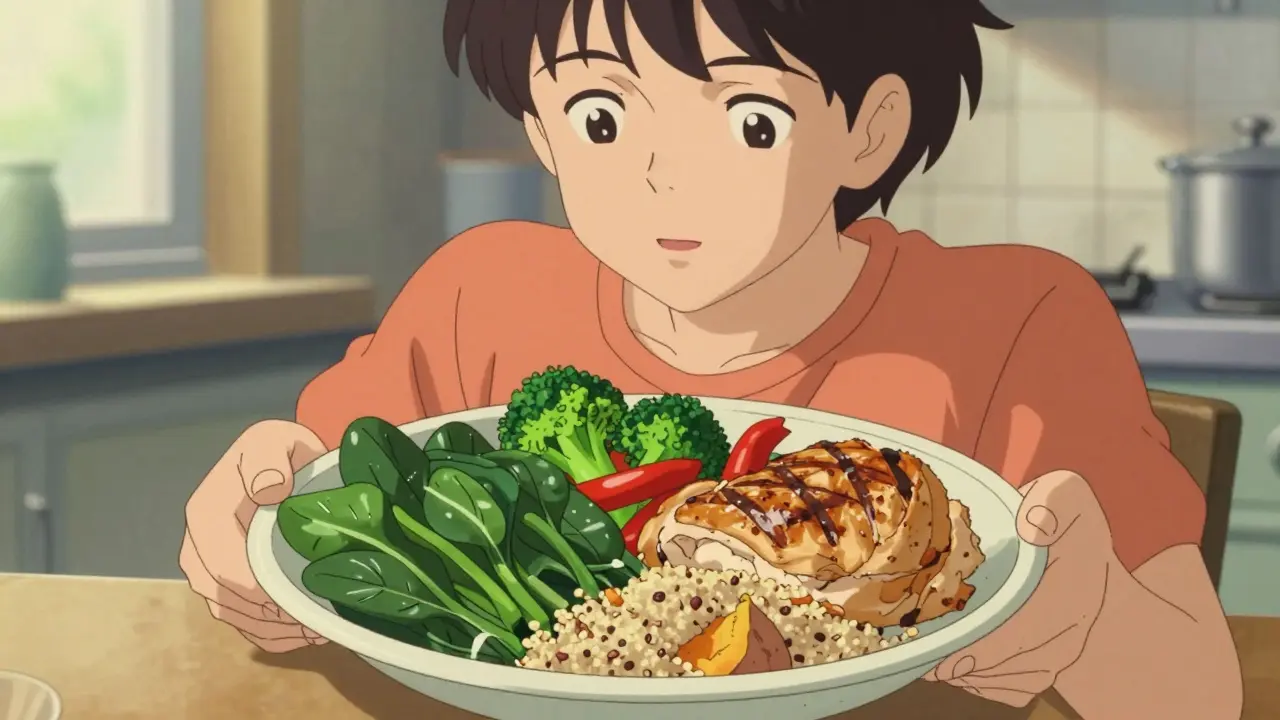
Why Meal Planning Matters for Diabetes
If you have diabetes, what you eat doesn’t just fill your stomach-it directly affects your blood sugar. Eating randomly or grabbing whatever’s convenient can send glucose levels soaring or crashing. The goal isn’t to cut out all carbs or live on salads forever. It’s about balance, timing, and choosing foods that keep your body steady.
The American Diabetes Association says the easiest way to do this is with the Plate Method. No counting calories. No weighing food. Just use a regular 9-inch plate and divide it visually. Half the plate gets non-starchy vegetables-things like spinach, broccoli, peppers, and zucchini. One-quarter gets lean protein-chicken, fish, tofu, or eggs. The last quarter gets healthy carbs-brown rice, quinoa, sweet potato, or fruit. That’s it.
This method works because it slows digestion. Fiber from veggies and protein from meat or beans keep sugar from rushing into your bloodstream. You stay full longer, avoid energy crashes, and your insulin doesn’t have to work overtime.
Foods to Eat: Build Your Plate Right
Start with vegetables. Not the kind in cans or fries. Go for fresh, frozen, or steamed non-starchy veggies. Broccoli, kale, cucumbers, mushrooms, green beans, and cauliflower are all great. Aim for 2.5 to 3 cups a day. These are low in carbs but high in fiber, vitamins, and antioxidants that help reduce inflammation linked to diabetes complications.
For protein, pick lean sources. Skinless chicken breast, turkey, fish (especially salmon, mackerel, and sardines), eggs, tofu, and legumes like black beans and lentils. Fish twice a week gives you omega-3s, which support heart health-a big concern for people with diabetes. Avoid fried chicken or breaded fish. Stick to baking, grilling, or steaming.
Carbs aren’t the enemy. It’s the kind and amount that matter. Choose whole grains: quinoa, barley, oats, whole-wheat bread, and brown rice. Starchy vegetables like sweet potatoes and corn are okay in controlled portions. One serving of fruit (like an apple or a cup of berries) fits in that quarter section. Low-fat dairy like plain yogurt or milk is fine too, but watch out for added sugar. Some "non-fat" yogurts have more sugar than a candy bar.
Healthy fats are important. Avocado, nuts (almonds, walnuts), seeds (chia, flax), and olive oil help slow sugar absorption and keep you satisfied. A small handful of nuts as a snack can prevent mid-morning crashes.
Foods to Avoid: The Hidden Triggers
Some foods are just too risky. White bread, white rice, regular pasta, and pastries made with refined flour spike blood sugar fast. They’re stripped of fiber and nutrients, so your body processes them like sugar.
Sugary drinks are the worst offenders. Soda, sweetened tea, fruit juice-even "100% natural" juice-can raise glucose faster than candy. One 12-ounce can of soda has about 40 grams of sugar. That’s more than most people should eat in a whole day. Swap it for water, unsweetened tea, or sparkling water with lemon.
Processed meats like bacon, sausage, deli ham, and hot dogs are loaded with sodium and preservatives. Studies link them to higher insulin resistance and heart disease risk. Skip the packaged lunch meats. Choose fresh, unprocessed cuts instead.
Watch out for "diet" or "low-fat" snacks. Many replace fat with sugar or artificial sweeteners. Check labels. If sugar is one of the first three ingredients, it’s not a healthy choice. Same goes for flavored yogurts, granola bars, and breakfast cereals. Plain Greek yogurt with a sprinkle of cinnamon and berries is better than any pre-sweetened version.
Don’t forget about sauces and condiments. Ketchup, BBQ sauce, and salad dressings often hide sugar. A single tablespoon can have 4 grams of sugar. Make your own or choose brands labeled "no added sugar."

Meal Timing and Structure
When you eat matters as much as what you eat. Eating at irregular times confuses your body’s insulin response. The ADA recommends eating every 4 to 5 hours, with meals spaced out evenly. Skipping meals can cause low blood sugar later, especially if you’re on insulin or certain pills.
Try to eat breakfast within an hour of waking. Have a balanced lunch around midday. Dinner should be at least 2 to 3 hours before bed. This gives your body time to process food and lower glucose naturally overnight.
If you’re active or take insulin, snacks might be necessary. A small apple with a tablespoon of peanut butter, a hard-boiled egg, or a few almonds can prevent dips in energy. For kids with Type 2 diabetes, three small meals and three snacks a day help support growth while keeping sugar stable.
Real Meals That Work
Here’s what a day of eating might look like using the Plate Method:
- Breakfast: Scrambled eggs with spinach and mushrooms, one slice of whole-wheat toast, half a grapefruit.
- Snack: A small pear and 10 almonds.
- Lunch: Grilled chicken salad with mixed greens, cherry tomatoes, cucumbers, olive oil and vinegar dressing, ½ cup quinoa.
- Snack: Plain Greek yogurt with a sprinkle of chia seeds.
- Dinner: Baked salmon, roasted Brussels sprouts, ½ cup sweet potato mash.
Or try this: Southwest-style turkey meatloaf with mashed red potatoes and a side salad with orange slices and onions. The turkey is lean protein, the salad is non-starchy veggies, and the potatoes are your carb portion. It’s simple, tasty, and balanced.
The Diabetes Food Hub has free meal plans and recipes you can save and organize online. You can drag and drop meals into a weekly plan. No cost. No signup needed for basic access.

Dealing with Real-Life Challenges
Planning meals sounds easy until you’re at a family dinner, a work lunch, or a busy weeknight. Eating out doesn’t mean giving up. Ask for grilled instead of fried. Request veggies instead of fries. Split an entrée with someone or take half home. Skip the bread basket. Drink water instead of soda.
Cultural foods don’t have to be off-limits. If you love beans and rice, use brown rice and limit the portion. If you eat maize porridge, pair it with a big side of greens and a lean protein. It’s about balance, not elimination.
Food insecurity is real. About 23% of adults with diabetes in the U.S. struggle to afford healthy food. Frozen vegetables, canned beans (rinsed to remove salt), eggs, and oats are affordable, shelf-stable options. Planning ahead and buying in bulk helps stretch your budget.
What Works Long-Term
Studies show that sticking with a structured meal plan for six months or longer can lower HbA1c (your 3-month average blood sugar) by 0.3% to 2%. That’s the difference between needing more medication and possibly reducing it.
The Diabetes Remission Clinical Trial (DiRECT) found that people who followed a structured meal plan and lost weight were able to put Type 2 diabetes into remission. It wasn’t about extreme diets-it was about consistent, realistic choices.
Technology is helping too. Apps now sync with glucose monitors to show how your meals affect your numbers. You can see right away that white rice spiked your sugar but quinoa didn’t. That feedback loop makes learning personal and powerful.
Final Thoughts
You don’t need to be perfect. You just need to be consistent. One meal at a time. One plate at a time. The goal isn’t to deprive yourself-it’s to feel better, have more energy, and reduce your risk of nerve damage, vision loss, or heart problems.
Start small. Swap one white carb for a whole grain. Drink water instead of juice. Add a handful of spinach to your eggs. These tiny changes add up. Over time, they become habits. And habits, not willpower, are what keep blood sugar steady for life.





Alex LaVey
3 February, 2026 16:19 PMLove this breakdown. I grew up eating rice with every meal, and switching to brown rice was the first real change that helped my numbers. Not perfect, but better. My grandma still calls me "health crazy," but she eats my quinoa bowls now too. 😊
rahulkumar maurya
3 February, 2026 22:24 PMHow quaint. The Plate Method? As if diabetes is a problem of spatial awareness. Real management requires carb counting, glycemic index analysis, and insulin-to-carb ratios-not childish pie charts. You're teaching people to wing it with a 9-inch plate? Pathetic.
Demetria Morris
4 February, 2026 14:59 PMI used to eat sugar-free yogurt thinking it was healthy. Then I checked the label-32g of sugar. I cried. Not because I was sad. Because I’d been lied to for years. This post? It’s the truth I needed.
Susheel Sharma
5 February, 2026 10:55 AMUgh. Another feel-good, oversimplified guide. 🤮 Let’s be real-most people don’t have the discipline to follow this. They’ll eat the sweet potato mash… then grab a donut at 3pm. And blame their meds. Lazy. Sad. And statistically predictable.
Roshan Gudhe
5 February, 2026 12:28 PMIt’s not about control. It’s about harmony. The body isn’t a machine to be calibrated-it’s a rhythm to be listened to. The Plate Method works because it mirrors nature’s balance: greens, protein, earth. No numbers needed. Just awareness. And patience. 🌱
Rachel Kipps
5 February, 2026 15:07 PMi just wanted to say thank you for the part about frozen veggies. i live alone and dont always have time to cook fresh. frozen broccoli is my hero. also, the greek yogurt tip saved me. i was eating so much sugar without realizing it. 😅
Prajwal Manjunath Shanthappa
7 February, 2026 07:11 AMLet’s be honest-this article is dangerously naive. You mention "cultural foods" like they’re optional snacks, not lifelines. My family’s dal and roti aren’t "portions to adjust"-they’re heritage. And now you’re telling us to swap them for quinoa? Who are you to decide what we eat?!
Wendy Lamb
8 February, 2026 00:17 AMSwap white rice for brown. One change. That’s it. Start there. You don’t need a whole plan. Just one swap. Do it for a week. See how you feel.
Katherine Urbahn
8 February, 2026 09:20 AMAnyone who suggests "no added sugar" labels are trustworthy is either delusional or misinformed. The FDA allows "natural flavors" and "fruit concentrate"-both are sugar in disguise. If you can’t pronounce it, don’t eat it. Period.
Jhoantan Moreira
8 February, 2026 18:07 PMI’m from the UK, but my mum’s from India. We used to have parathas with butter and sugar every Sunday. Now? We make them with whole wheat, a tiny bit of ghee, and serve them with yogurt and cucumber. Still delicious. Still ours. 🙏
Coy Huffman
10 February, 2026 06:56 AMthe part about sauces got me. i had no idea ketchup had sugar in it. like… how? i’ve been putting it on eggs since i was 12. i’m gonna try making my own. maybe add some smoked paprika. 🤔
Amit Jain
11 February, 2026 13:50 PMMy cousin has diabetes. I made him this meal: boiled eggs, spinach curry, and one small chapati. He said it didn’t spike him. That’s all you need. Simple. Real. No apps. Just food.