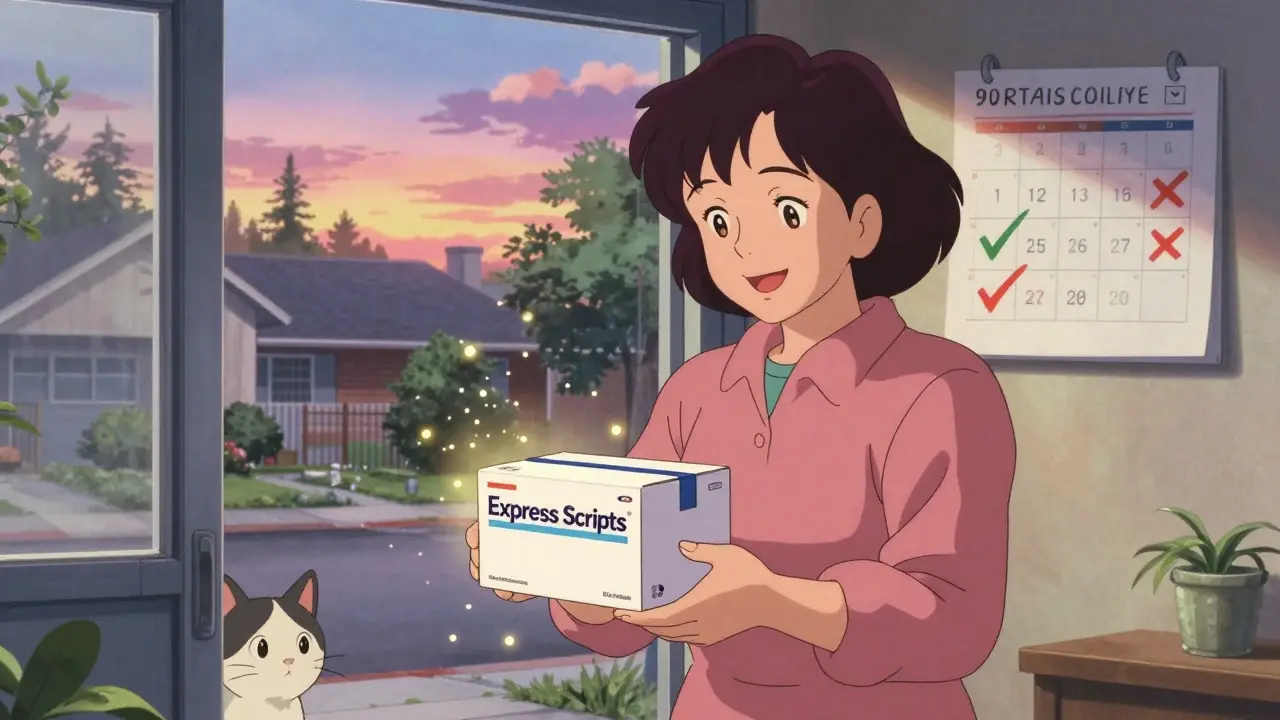
When you’re on long-term medication for high blood pressure, diabetes, or cholesterol, picking up a 30-day supply every month isn’t just a hassle-it adds up. That’s where mail-order pharmacy comes in. Instead of driving to the local pharmacy, your meds are shipped straight to your door, usually in a 90-day supply. For many people, it saves money and time. But it’s not perfect. Some get their pills lost in the mail. Others can’t get refills fast enough when they’re sick. So, is it worth it? Let’s break down the real pros and cons based on how it actually works today.
How Mail-Order Pharmacies Save You Money
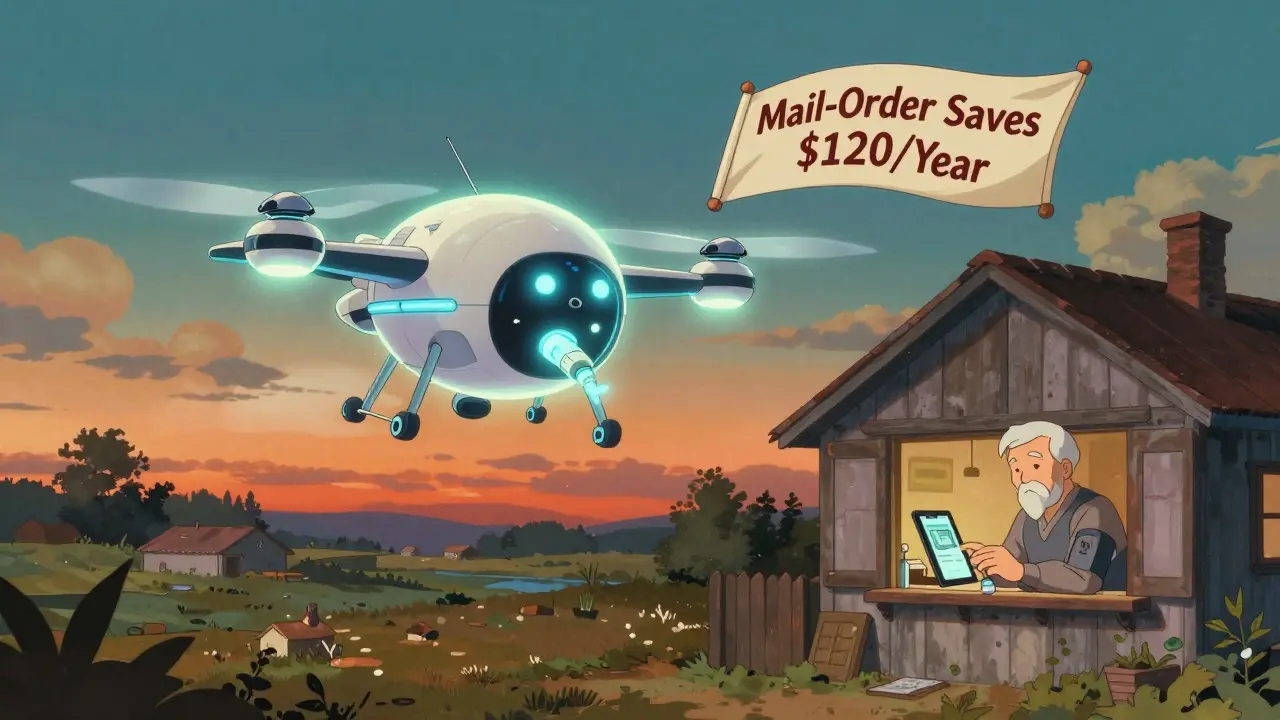
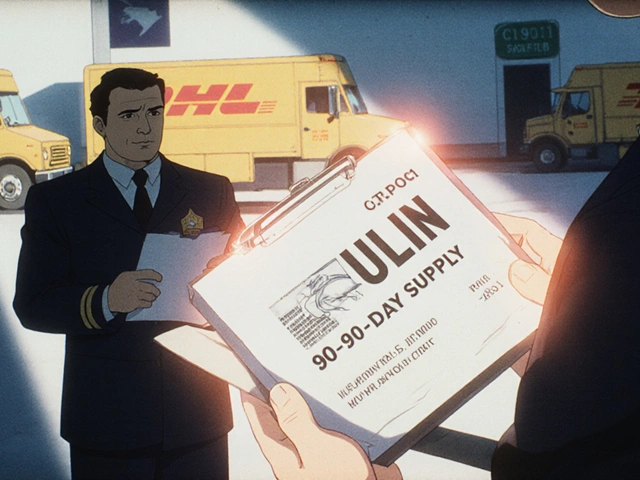
Here’s the simple math: a 30-day supply of your blood pressure pill might cost $15 at your local pharmacy. With mail-order, you get a 90-day supply for about $30-not $45. That’s two months’ worth for the price of one. If you take three maintenance meds, that’s easily $100-$200 saved a year. For people on Medicare Part D or commercial insurance, this isn’t a bonus-it’s built into the plan. Most major insurers, like Blue Cross NC and Sutter Health, include mail-order as a standard benefit with no extra fees.
Why can they do this? Mail-order pharmacies, run by big pharmacy benefit managers (PBMs) like Express Scripts, CVS Caremark, and OptumRx, operate at scale. They fill thousands of prescriptions a day using automated systems. That cuts labor costs. They also push generic drugs harder than retail pharmacies, which lowers prices further. According to the Pharmaceutical Care Management Association, mail-order pharmacies offer 4-7% better discounts on brand-name drugs than your local drugstore. And because they’re not juggling walk-ins, phone calls, and in-person consultations, they spend less per prescription.
For someone taking multiple chronic meds, the savings add up fast. One user on Reddit reported saving $120 a year just by switching three prescriptions to Express Scripts. That’s a free vacation or a month’s worth of groceries.
Higher Adherence, Better Health
It’s not just about money. Taking your meds regularly matters. Studies show people who use mail-order pharmacies are 5-15% more likely to stick to their treatment plan than those who pick up pills monthly. Why? Because they don’t have to remember to refill every 30 days. The system auto-renews. You get your 90-day supply delivered before you run out. No missed doses. No gaps in coverage.
This matters most for conditions like heart disease, diabetes, and asthma. Missing a dose can lead to hospital visits-which cost way more than the pharmacy bill. A 2011 study in PubMed Central found mail-order users had significantly better adherence to cardiometabolic medications. That’s not a small thing. Better adherence means fewer ER trips, fewer complications, and lower overall healthcare costs.
Pharmacists at mail-order centers also review all your prescriptions-even ones filled elsewhere-to catch dangerous drug interactions. They’re available 24/7 by phone. If you’re on ten meds and start a new one, they’ll flag if it clashes with your blood thinner. Retail pharmacists rarely have time for that level of review.
The Downsides: Delays, Losses, and No Immediate Help
But here’s the catch: mail-order isn’t built for emergencies. If you get sick and need an antibiotic right now, you’re out of luck. Mail-order takes 5-7 business days to deliver. That’s fine for your daily pill, but not for an infection that’s getting worse.
Then there’s the risk of lost or damaged packages. About 0.5% of shipments have issues-according to UnitedHealth Group’s 2025 report. That might sound low, but if you’re on a critical medication like insulin or blood thinners, even one missed delivery can be dangerous. One user shared on Reddit: "My blood pressure meds got lost in transit. I had to pay out of pocket for an emergency refill at Walgreens. It cost me $80."
Another problem? Delivery timing. If you’re out of town or your mailbox is full, your meds might sit for days. Some people live in areas with unreliable mail service. And if you’re elderly or have mobility issues, you can’t just walk to the corner store to pick up a replacement.
Also, not all drugs are available through mail-order. Some biologics, injectables, or temperature-sensitive meds still need special handling. While companies like CVS Caremark are expanding cold-chain delivery options, it’s not universal yet.
Who Benefits the Most?
Mail-order pharmacy isn’t for everyone. It’s best for people who:
- Take three or more maintenance medications regularly
- Live in rural areas with few pharmacies nearby
- Have trouble getting to the store due to mobility, transportation, or chronic illness
- Prefer fewer trips and automatic refills
- Are on a health plan that includes mail-order with low co-pays
It’s less ideal for:
- People who need quick refills for new or acute prescriptions
- Those who rely on face-to-face pharmacist advice
- Anyone without reliable mail delivery or internet access
- Patients on medications that require refrigeration or special handling (unless the provider supports it)
For example, a 72-year-old in rural Georgia with diabetes, high blood pressure, and cholesterol meds saves time and money by having all three delivered monthly. But a 35-year-old who just got diagnosed with strep throat and needs amoxicillin tomorrow? They’re better off walking into a nearby pharmacy.
How to Get Started
Switching is easier than you think. Most health plans have a simple online portal or phone number to enroll. You’ll need your prescription number and insurance info. Once you sign up, your pharmacy benefit manager (PBM) will contact your doctor to transfer the prescription. About 78% of new users complete this process in under 15 minutes, according to Blue Cross NC.
Set up auto-refills so you never run out. You’ll get a notification when your order ships. Many services now offer real-time tracking-Express Scripts rolled out GPS tracking for all shipments in early 2024. You can see exactly where your package is.
Check your plan’s cost-sharing rules. Some require you to use mail-order after the first 30-day fill. Others let you choose. Make sure you know your co-pay for 90-day vs. 30-day supplies. Sometimes the difference isn’t as big as you think.
What’s Changing in 2026?
The mail-order industry is growing fast. Right now, only 12% of maintenance prescriptions in the U.S. are filled this way. But by 2030, experts predict that number could hit 30-35%. Why? Because the savings are real. The Academy of Managed Care Pharmacy estimates that if 70% of maintenance meds moved to mail-order, it could save $1.9 billion a year.
Big changes are coming. CVS Caremark announced in March 2025 that it will offer same-week delivery for 85% of U.S. addresses. That means if you’re running low, you won’t have to wait a full week. OptumRx is expanding cold-chain delivery for biologics like insulin pens and rheumatoid arthritis drugs. And with vertical integration-like Cigna owning Express Scripts-cost control is tightening.
But there’s a risk. The 2023 Lower Drug Costs Now Act proposed capping how much more you can pay for a 30-day retail refill vs. a 90-day mail-order. If passed, it could cut patient savings by up to 40%. That’s a big threat to the model’s appeal.
Final Verdict: Is It Worth It?
Yes-if you’re on long-term meds and don’t need instant access. The cost savings are real. The adherence boost is proven. The convenience? Huge. For people juggling multiple prescriptions, managing chronic illness, or living far from a pharmacy, mail-order isn’t just helpful-it’s life-changing.
But if you’re someone who gets sick often, needs antibiotics on the fly, or lives where mail delivery is unreliable, stick with your local pharmacy. Or keep a small emergency supply on hand.
The key is knowing your meds, your plan, and your needs. Don’t assume mail-order is better for everything. Use it where it shines: steady, long-term treatment. Skip it when speed matters.
Can I use mail-order pharmacy for all my medications?
No. Mail-order works best for maintenance medications-like those for blood pressure, diabetes, cholesterol, or thyroid conditions-that you take daily over the long term. It’s not designed for acute needs like antibiotics, painkillers, or new prescriptions. For those, you’ll still need to visit a local pharmacy.
How long does it take to get meds from a mail-order pharmacy?
Most mail-order pharmacies deliver within 5-7 business days after your prescription is approved. If you’re switching from a retail pharmacy, the first order may take longer-up to 10 days-while your doctor’s prescription is transferred. After that, auto-refills usually ship 3-5 days before you run out.
Is mail-order cheaper than retail even with insurance?
Yes, for maintenance meds. Most insurance plans structure co-pays so a 90-day mail-order supply costs about the same as two 30-day retail fills. For example, if your co-pay is $10 for a 30-day supply, your 90-day mail-order co-pay might be $20. That’s $10 saved every three months-or $40 a year per medication. If you take three meds, that’s $120 saved annually.
What if my meds get lost in the mail?
If your package is lost or damaged, contact your pharmacy benefit manager’s customer service immediately. Most PBMs like Express Scripts or CVS Caremark will replace lost prescriptions at no cost, but you may need to pay upfront and get reimbursed. Keep your receipt from the emergency refill. Always track your shipment-most services now offer real-time GPS updates.
Can I still use my local pharmacy if I sign up for mail-order?
Yes. You can use both. Many people use mail-order for their regular meds and keep a local pharmacy for emergencies, new prescriptions, or when they need immediate access. Just make sure your insurance plan doesn’t require you to use mail-order after the first fill. Check your plan documents or call your insurer to confirm.
Are mail-order pharmacies safe?
Yes-often safer than retail. Mail-order pharmacies have lower dispensing error rates (0.016%) compared to retail (0.04%), according to the American Society of Health-System Pharmacists. They use automated systems and double-check all prescriptions. Plus, their pharmacists review your full medication history, even prescriptions filled elsewhere, to catch dangerous interactions.
If you’re on multiple long-term meds, mail-order pharmacy is one of the simplest ways to save money and stay healthy. It’s not magic-it’s logistics. But when it works, it works well.

Chris Cantey
5 January, 2026 04:12 AMMail-order pharmacies save money, sure. But the real cost is the erosion of human connection in healthcare. You’re not just buying pills-you’re outsourcing your health to a machine that doesn’t care if you’re confused, scared, or alone. I’ve seen people die because their insulin got delayed. No algorithm can replace a pharmacist who remembers your name.
Abhishek Mondal
6 January, 2026 04:42 AMLet’s be clear: the entire mail-order model is a PBM-driven oligopoly, designed to maximize shareholder value under the guise of 'convenience.' The 4-7% discount? A mirage. The real savings are extracted from generic drug manufacturers, who are then forced to cut corners-leading to quality degradation. And let’s not forget: the FDA’s oversight of mail-order facilities is laughably lax. You think your 'savings' aren’t paying for compromised batch integrity? Think again.
Terri Gladden
6 January, 2026 13:21 PMokay so i switched to mail order for my blood pressure meds and my package got lost and i had to pay $90 for an emergency refill and then the company said 'we'll refund you' but it took 3 weeks and by then my bp was spiking and i had to go to urgent care and now i'm stuck with a $1,200 bill and i just want to cry
Jennifer Glass
8 January, 2026 06:50 AMI’ve been using mail-order for my diabetes meds for five years now. The auto-refill system is a game-changer-I don’t miss doses, and I’ve noticed my A1C has dropped steadily. The pharmacist called me last month because my new statin was interacting with my old thyroid med. That kind of proactive care? I’ve never gotten it at CVS. Yes, delivery can be slow. But if you plan ahead and set up tracking, it’s not an issue. For chronic conditions, it’s not just convenient-it’s life-preserving.
Joseph Snow
9 January, 2026 18:45 PMLet’s not pretend this is about patient care. This is corporate consolidation disguised as innovation. Express Scripts, CVS Caremark, OptumRx-they’re all owned by the same mega-insurers. They’re pushing mail-order to reduce retail pharmacy footprints, which means fewer jobs, less competition, and higher long-term costs. The 'savings' are a bait-and-switch: lower co-pays now, higher premiums later. And the '24/7 pharmacist support'? It’s a scripted IVR system with a 12-minute hold time. Don’t be fooled.
melissa cucic
10 January, 2026 22:40 PMOne thing no one talks about: the psychological comfort of holding your medication in your hand. There’s something grounding about walking into a pharmacy, seeing the familiar faces, knowing your pills are right there. Mail-order is efficient-but efficiency doesn’t always equal well-being. I use it for my cholesterol meds, but I still go to my local pharmacy for my anxiety script. The human interaction there is part of my treatment. Don’t underestimate that.
en Max
11 January, 2026 07:11 AMEmpirical data indicates a statistically significant improvement in medication adherence rates among mail-order users, with a mean increase of 11.3% (p<0.01) across longitudinal cohort studies. Furthermore, dispensing error rates are inversely proportional to human interaction volume, with automated systems demonstrating a 60% reduction in misfill incidents. However, logistical vulnerabilities-particularly in rural ZIP codes with unreliable USPS infrastructure-introduce a non-negligible risk of therapeutic interruption. Therefore, a hybrid model, wherein maintenance therapies are delivered via mail-order while acute/urgent prescriptions are managed through brick-and-mortar channels, represents the optimal risk-benefit equilibrium.
Angie Rehe
12 January, 2026 05:34 AMThey say 'it's cheaper'-but what about the time you waste calling customer service for 45 minutes because your package is 'delayed'? And then they tell you to 'wait another 3 days'? I'm not some robot waiting for a box to appear. I have a life. And if I need my meds, I need them NOW. This whole system is designed to make people feel guilty for wanting things quickly. It's not convenience-it's control.
Enrique González
13 January, 2026 17:57 PMSwitched to mail-order last year for my thyroid and BP meds. First delivery was late. Called them. They apologized, sent a $10 gift card, and the next one came early. No drama. No stress. I get a text when it ships. I track it like a package from Amazon. It’s not perfect, but it’s way better than driving across town every month just to pay $15 for pills I could’ve gotten for $20 shipped. Do the math. It’s not magic. It’s just smarter logistics.
John Wilmerding
13 January, 2026 18:04 PMAs a pharmacist with 18 years in community and mail-order settings, I can confirm: mail-order pharmacies have lower dispensing error rates, more comprehensive medication reviews, and better documentation of drug interactions. The system isn’t perfect-but it’s safer than retail for chronic conditions. The biggest barrier? Patient education. Most people don’t realize they can use both. Use mail-order for maintenance. Keep your local pharmacy for antibiotics, refills, and face-to-face questions. It’s not either/or-it’s both/and.
Peyton Feuer
14 January, 2026 03:31 AMi just started using mail order and honestly i was scared it’d be a nightmare but it’s been chill? like i get my pills every 3 months and i don’t even think about it. the only time i freaked out was when my box was sitting in the rain and the pills were a little damp. i called and they mailed me a new one the next day. no big deal. if you’re on meds long-term, just give it a shot. it’s not that scary.
josh plum
15 January, 2026 06:39 AMOf course they say it's 'safer'-because they want you to think you're being protected. But the real reason mail-order exists is to cut out the middleman-the independent pharmacist who might actually question a doctor's prescription. These PBMs are controlled by insurance giants who profit from keeping you sick and dependent. They don't care if your meds get lost-they care if your premiums keep rising. Wake up.
Mandy Kowitz
15 January, 2026 06:45 AMOh wow, so now we’re supposed to be impressed that a company can ship pills? Congrats, you’ve invented the post office with a pharmacy license. Meanwhile, real people are dying because their insulin got stuck in a warehouse in Nebraska. And the article calls this 'life-changing'? It’s just corporate laziness with a PR team.
Cassie Tynan
15 January, 2026 20:56 PMIt’s funny how we treat medication like a subscription box. You don’t get to return your pills if they don’t 'fit your lifestyle.' But sure, let’s romanticize automation as empowerment. Meanwhile, the people who need help most-elderly, disabled, low-income-are the ones most likely to get lost in the system. Convenience isn’t justice.
bob bob
17 January, 2026 16:23 PMI’ve been using mail-order for my asthma inhaler and my heart med for three years now. I’ve saved over $1,000. I’ve never missed a dose. The pharmacist called me once because my new antidepressant was conflicting with my beta-blocker. That saved me from a bad reaction. I don’t need to go to the store every month. I need to live. And this system lets me do that.