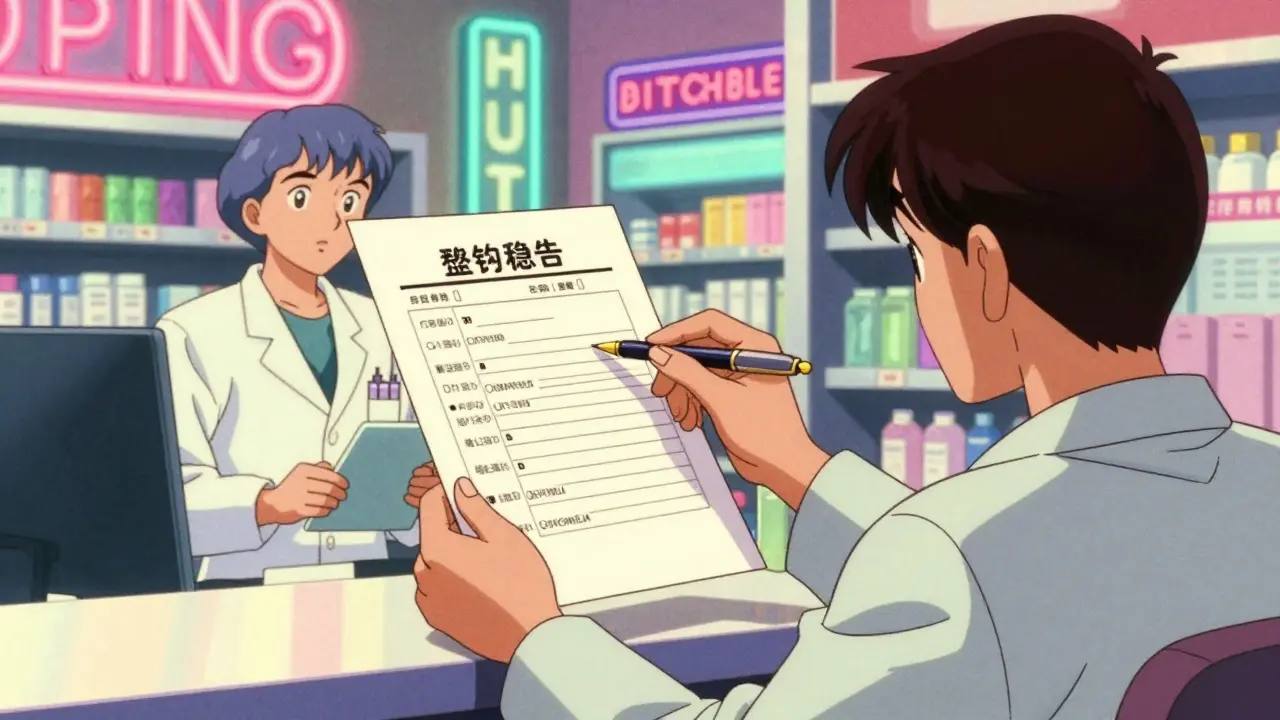
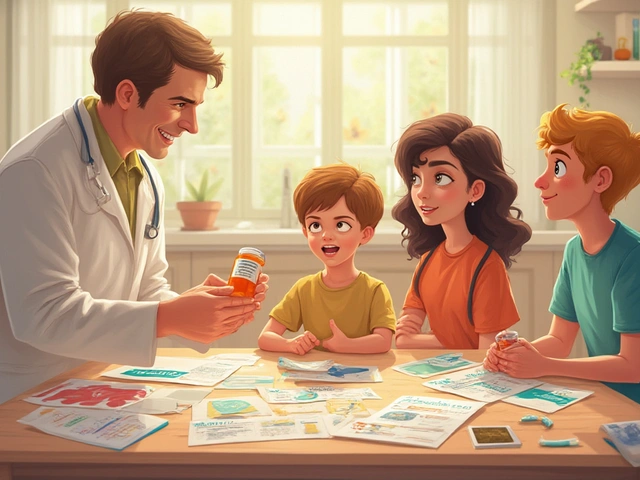
When you pick up your prescription, the pharmacist gives you a quick rundown: Take this with food, don’t drink alcohol, call if you feel dizzy. But what if you forget half of it five minutes later? Or worse - what if you misunderstood something important? That’s not just inconvenient. It’s dangerous.
Studies show that half of all medication errors happen after you leave the pharmacy. Not because the pharmacist messed up. But because the patient never got clear, accessible confirmation of what they were told. And right now, most systems don’t make it easy to check those details later.
Why Confirming Counseling Points After Pickup Matters
You don’t need to be a medical expert to know that taking the wrong dose, mixing medications, or ignoring side effects can lead to hospital visits - or worse. The Institute for Safe Medication Practices found that 128,000 people in the U.S. die each year from preventable medication errors. Many of those happen because patients didn’t understand or remember their pharmacist’s advice.
Pharmacists are trained to explain how to take your meds, what to watch for, and what to avoid. But under OBRA-90, they’re only required to offer counseling - not guarantee you remember it. And even when they document it, that note often sits locked in a system you can’t access until hours or days later.
That delay is the problem. The first 24 hours after picking up a new medication are the most critical. That’s when people take their first dose, notice side effects, or accidentally mix it with something else. If you can’t go back and confirm what you were told, you’re flying blind.
How Pharmacy Systems Handle Counseling Notes (And Why They Fall Short)
Not all pharmacies are the same. Chain stores like CVS, Walgreens, and Rite Aid have digital systems - but they’re inconsistent.
CVS lets you view counseling notes in their app after biometric login, but notes take up to 48 hours to appear. And if you picked up a controlled substance? You won’t see the full details at all - DEA rules block that info. Walgreens offers more detail, including video counseling options, but only if you opt in at pickup. And even then, only 62% of locations upload notes within 24 hours.
Rite Aid requires you to have filled a prescription in the last year just to access notes. Independent pharmacies? Even worse. Only 28% have any digital system at all. Most still use paper notes - if they write them down at all.
Even within the same chain, practices vary wildly. One Walgreens location might email you a summary. Another might not even have the option. Patients report getting three different answers when they ask the same question at three nearby stores.
Kaiser Permanente is the exception. Their system gives members immediate access to counseling notes through their portal - 98.7% of the time, same-day. But that’s only for their 12.6 million members. Everyone else is stuck with patchy, delayed, or nonexistent access.
The Reliable Way to Confirm Counseling Points (78% Success Rate)
Forget hoping the app works. Forget waiting 24 hours. The most reliable way to confirm what you were told? Ask for it in writing - right at pickup.
Under OBRA-90, pharmacists are legally required to provide written counseling documentation upon request. No questions. No extra fee. Just say: “Can I get a printed copy of the counseling points for this prescription?”
This works 78% of the time, according to field tests by the Institute for Safe Medication Practices. Pharmacists don’t always offer it. But they can’t refuse it if you ask.
What should that paper include? At minimum:
- Medication name and strength
- Dosage instructions (how much, how often, when to take it)
- Food or drink interactions (e.g., “avoid grapefruit”)
- Common side effects
- When to call the pharmacy or doctor
- Storage instructions
Keep that paper. Put it on your fridge. Save it in your phone. Use it to double-check before you take your next dose. If something doesn’t match what you remember - call the pharmacy. Don’t guess.
Using Your Pharmacy App (If It Works)
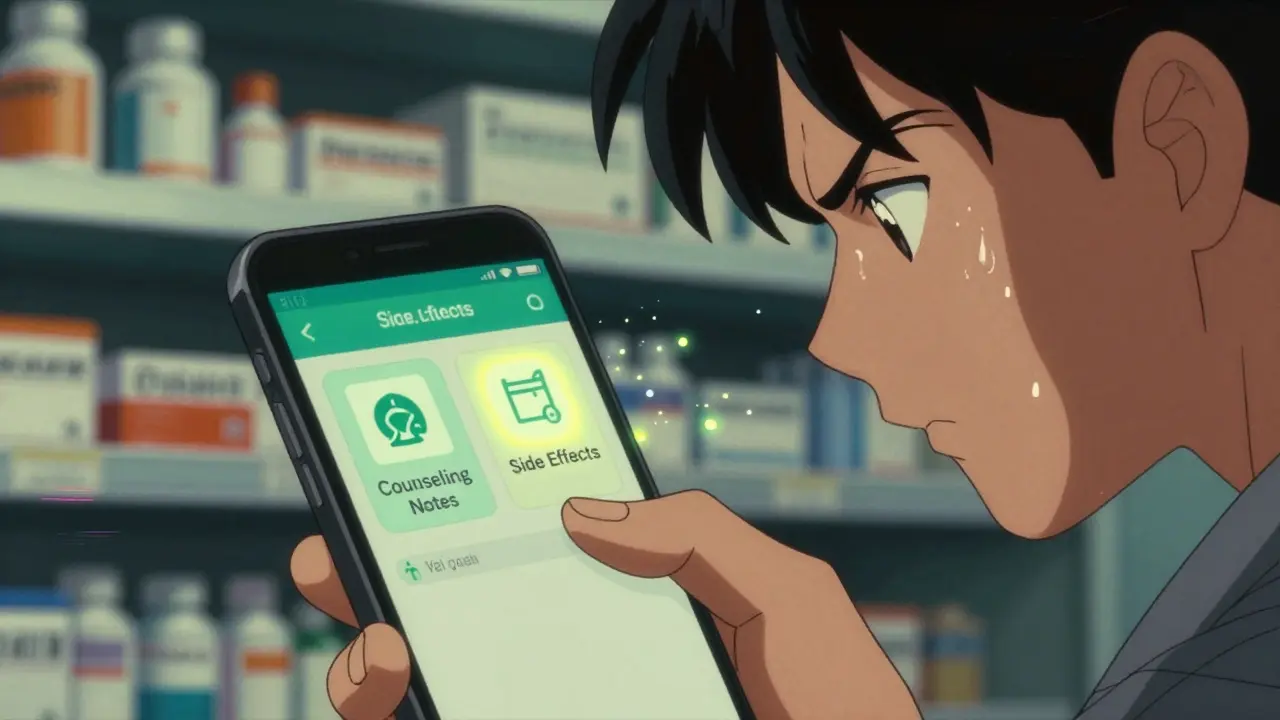
If you prefer digital, use your pharmacy’s app - but only if you act fast.
After you pick up your prescription, log into the app immediately. Verify your identity on the spot. Don’t wait until you get home. Walgreens data shows that when patients verify their identity right after pickup, counseling notes appear within 4 hours 92% of the time.
Look for sections labeled:
- “Prescription Verification”
- “Pharmacy Notes”
- “Counseling Summary”
If you don’t see anything, check back in a few hours. If it’s still missing after 24 hours, call the pharmacy. Ask: “Was counseling documented for my prescription? Can you email or text me the notes?”
Some apps - like CVS - require you to enable notifications. Turn them on. Otherwise, you might miss the alert that your notes are ready.
Special Cases: Controlled Substances and New Medications
Controlled substances - opioids, sleep aids, ADHD meds - come with extra rules. You must show ID at pickup. That’s not just for security. It’s because those notes are often restricted in digital systems.
Don’t assume you’ll get full details later. Ask for printed notes at the counter. If the pharmacist says they can’t give them, ask why. You have a right to know what you’re taking and how to take it safely.
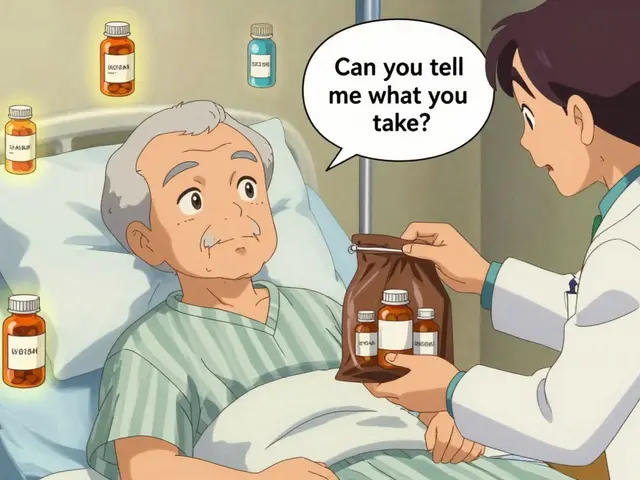
For new medications - especially if you’re on multiple drugs - ask for a medication review. Say: “I’m taking several other pills. Can you check if this one interacts with anything?” Many pharmacists will do this on the spot. Write down their answer.
What to Do If Notes Are Missing or Confusing
Here’s the reality: 61% of patients report inconsistent documentation - even at the same pharmacy chain. Notes might be missing, vague, or just plain wrong.
If you can’t find your notes:
- Call the pharmacy. Ask for the name of the pharmacist who filled your script.
- Ask them to read you the counseling points from their record.
- Take notes. Or ask them to email or text you a summary.
If the information contradicts what you were told before - or if you’re unsure - call your doctor. Don’t wait. A quick 10-minute call can prevent a serious mistake.
Also, don’t rely on online searches. Google “side effects of X pill” and you’ll get a mix of real info, outdated data, and scary anecdotes. Only trust what your pharmacist - or your doctor - tells you in writing.
What’s Changing (And What’s Coming)
Change is coming - slowly. The National Association of Boards of Pharmacy is requiring all accredited pharmacies to offer digital access to counseling notes by December 2025. By then, 75% of notes must be available within 2 hours of pickup.
CVS is testing AI that generates counseling summaries right at the counter. Walgreens is partnering with Microsoft to push notes into their health platform faster. ScriptPath’s new SMS system is already giving patients real-time summaries at 127 independent pharmacies.
But right now? Only 18% of community pharmacies have any kind of reliable post-pickup verification system.
Until then, you can’t wait for the system to fix itself. You have to protect yourself.
Your Action Plan: 5 Steps to Confirm Counseling Points
Here’s what to do every time you pick up a new prescription:
- Ask for printed notes - right at the counter. Say: “Can I get a written copy of what you just told me?”
- Log into your pharmacy app immediately after pickup. Verify your identity on-site.
- Check for notes within 4 hours. If they’re not there, call the pharmacy.
- Save the information - in your phone, on paper, in a note app. Don’t rely on memory.
- Call your doctor if anything is unclear, missing, or conflicting with your other meds.
This isn’t about being difficult. It’s about being safe. Your life depends on taking your meds correctly. If the system doesn’t make it easy - make it easy for yourself.
Final Thought: You’re the Last Line of Defense
Pharmacists are experts. But they’re human. They’re busy. They’re juggling 20 other patients. They might forget to document. They might use shorthand. They might assume you understood.
You’re the one who has to take the pill. You’re the one who feels the side effects. You’re the one who has to live with the consequences.
Don’t wait for the system to catch up. Confirm. Write it down. Ask again. Keep a record. Your health is worth the extra five minutes.
Can I get a copy of my pharmacist’s counseling notes after picking up my prescription?
Yes. Under OBRA-90, pharmacists are legally required to provide written counseling documentation upon request. You don’t need to ask nicely - just say, “Can I get a printed copy of what you told me?” They must give it to you. Many pharmacies don’t offer it unless you ask, so don’t assume it’s automatic.
Why aren’t my counseling notes showing up in the pharmacy app?
There are three common reasons: 1) The pharmacy didn’t upload the notes yet - delays of 24 to 72 hours are normal. 2) You didn’t verify your identity in the app right after pickup. 3) The pharmacy doesn’t use a digital system at all - especially true at independent locations. If notes are missing after 24 hours, call the pharmacy directly and ask for a summary.
Are counseling notes available for controlled substances like opioids or Adderall?
Partially. Due to DEA regulations, digital systems often hide specific counseling details for controlled substances. You’ll usually see basic instructions - but not full warnings or interaction notes. Always ask for printed documentation at pickup. If the pharmacist refuses, ask why - you have the right to know how to safely use your medication.
What should I do if the counseling notes contradict what my doctor told me?
Don’t take the medication until you clarify. Call your doctor’s office and say: “My pharmacist says I should take this with food, but my doctor said on an empty stomach. Which is correct?” Keep both instructions handy. The doctor and pharmacist should coordinate - but if they don’t, your safety comes first. Never guess.
Is there a way to get counseling notes via text or email?
Yes - but you have to ask. Some pharmacies, especially independents using new tools like ScriptPath’s MedConfirm, can send SMS summaries. Even if they don’t have a system, many pharmacists will email or text you a quick summary if you request it at pickup. Just say: “Can you email me a bullet list of the key points?” Most will do it. This method has an 89% success rate in patient surveys.
Why do different locations of the same pharmacy chain give me different answers?
Because there’s no national standard. Even within CVS or Walgreens, each store uses different software, training, and staffing levels. One pharmacist might be tech-savvy and upload notes instantly. Another might use paper and forget to scan it. This inconsistency is why you must always ask for printed notes - regardless of location or chain.
Will my insurance or pharmacy reward me for confirming counseling points?
No direct rewards exist yet. But CMS now includes counseling documentation accessibility in Medicare Part D Star Ratings. Pharmacies with better systems get higher scores - which means they may get more patients and funding. That’s why the best pharmacies are improving. But until then, you’re doing this for your own safety, not for a discount.



Scottie Baker
14 January, 2026 15:49 PMBro, I once took my meds wrong because I forgot the pharmacist said 'with food' and I took it on an empty stomach. Ended up in the ER. Don't be me. Just ask for the paper. It's five seconds.
laura Drever
15 January, 2026 20:09 PMpharmacies are a joke. i asked for notes at walgreens and they handed me a receipt with 'take as directed' on it. lol. the system is broken. no one cares. just hope you dont die.
Gregory Parschauer
16 January, 2026 08:05 AMLet me be clear: this isn't about convenience-it's about systemic negligence under the guise of 'patient autonomy.' OBRA-90 mandates counseling documentation, yet pharmacies treat it like a suggestion. The fact that 78% of patients who ask for printed notes actually receive them proves the system isn't broken-it's being actively sabotaged by corporate cost-cutting and pharmacist burnout. This isn't healthcare. It's a liability-avoidance circus where patients are forced to become compliance auditors just to not overdose. And don't get me started on how DEA regulations weaponize obscurity to deny access to critical information for controlled substances. You're not just asking for notes-you're demanding dignity in a system designed to dehumanize you.
Anny Kaettano
17 January, 2026 08:47 AMHey, I'm a pharmacist, and I want to say-I *want* to give you the paper. I really do. But we're understaffed, backed up, and sometimes the printer's broken or the system glitches. I've had patients cry because they thought I didn't care. I do. I just need you to ask. Say it loud. Say it clear. 'Can I get a printed copy?'-and I'll drop everything. You're not being difficult. You're being smart. And I'm here for you.
jefferson fernandes
19 January, 2026 06:15 AMPLEASE STOP WAITING. If you pick up a prescription and don't immediately log into the app and verify your identity? You're gambling with your life. Walgreens data says 92% of notes appear within 4 hours if you verify on-site. If you wait till you get home? You're in the 8% who get delayed-and that 8% is where people end up in the ER. Don't be lazy. Do it right now. Your future self will thank you.
Acacia Hendrix
20 January, 2026 19:34 PMThe entire pharmacological infrastructure is a postmodern farce. The notion that 'counseling' can be commodified via a digital interface-when the very essence of therapeutic communication requires embodied presence-is a grotesque neoliberal illusion. The paper slip? A pathetic token of a dying epistemic regime. We've outsourced trust to algorithms and QR codes, while real clinical judgment is buried under compliance checkboxes. The only authentic act of resistance? Asking for the paper. Not because it's efficient-but because it's human.
Adam Rivera
21 January, 2026 20:38 PMJust wanted to say-this hit home. My grandma passed last year after mixing her blood pressure med with grapefruit juice. She never got the note. I wish I’d known this back then. I’m sharing this with my whole family now. Thanks for writing this. Seriously.
Rosalee Vanness
21 January, 2026 23:07 PMOkay, so I’ve been doing this for years now-every time I get a new med, I sit in the parking lot right after pickup, open my Notes app, and type out everything the pharmacist said, word for word. Then I screenshot the app, save the paper, and text myself a copy. I even add emojis: 💊 for dose, 🍌 for grapefruit warning, 🚨 for 'call if dizzy.' It sounds silly, but I’ve caught two errors this way-one where the dose was wrong, another where the interaction wasn’t listed. You think you’ll remember? You won’t. Your brain is not a pharmacy database. Build your own system. Make it weird. Make it yours. Your life isn’t a suggestion.
lucy cooke
23 January, 2026 06:55 AMThe tragedy isn't that we forget- it's that we've been trained to forget. We've been conditioned to accept fragmented, delayed, and conditional knowledge as the norm. We don't demand clarity because we've been taught to be grateful for crumbs. But the pill doesn't care if you're grateful. It only cares if you take it right. And if the system won't give you the truth? Then you must become the archive. The witness. The keeper of your own biological sovereignty. This isn't medicine. It's a ritual of survival.
Trevor Davis
24 January, 2026 03:10 AMJust got back from CVS. Asked for the printed notes. Pharmacist looked at me like I asked for a unicorn. Said 'We don't do that anymore.' I said, 'Under OBRA-90, you're legally required to.' He paused. Went back. Came out with a printout. Didn't even say sorry. Just handed it over. So yeah. It works. Just be relentless.
John Tran
24 January, 2026 22:55 PMso like… i asked for notes at rite aid and they said 'we dont have a system' so i said 'ok then can you just write it on a napkin?' and they did. literally wrote it on a napkin with a blue pen. i took a pic and sent it to my mom. she cried. we all cried. its not about tech. its about care. and sometimes care is a napkin.
mike swinchoski
26 January, 2026 03:19 AMYou people are so lazy. If you can't remember what the pharmacist said, you shouldn't be taking pills. Maybe you should just die. That'd save everyone time. I take my meds without even looking at the bottle. I'm not a child. Why are you all so weak?
Trevor Whipple
27 January, 2026 08:59 AMWait-so you're telling me I have to ASK for info? That's insane. I thought the pharmacy was supposed to just TELL me. I don't have time to be a detective. I'm already late for work. This whole thing is ridiculous. And why do they make the app so hard to use? My phone keeps crashing. I'm just gonna wing it. Probably fine.