You might think you know your medications inside and out. After all, you take them every day. But what if half of what you believe about your pills is wrong? In fact, widespread misconceptions about pharmaceutical use are not just harmless habits-they are dangerous traps that lead to preventable hospital visits and even deaths. The Medication Safety is the practice of preventing adverse drug events through accurate knowledge and proper usage protocols. When patients rely on myths rather than medical facts, the consequences can be severe. Understanding the truth behind these common beliefs is the first step toward protecting your health.
The Hidden Dangers of Over-the-Counter Medications
One of the most persistent myths is that over-the-counter (OTC) medications are completely safe because you don’t need a prescription. A 2023 survey by Coal Grove Pharmacy found that 72% of patients believed this to be true. This assumption is incredibly risky. The Food and Drug Administration (FDA) is the U.S. federal agency responsible for protecting public health by ensuring the safety of drugs and medical devices. According to the FDA, acetaminophen overdose alone accounts for approximately 56,000 emergency room visits and 500 deaths annually in the United States. It only takes 4 grams-roughly eight extra-strength tablets-to exceed the maximum daily dose of 3,000mg recommended since 2011. Many people unknowingly consume multiple products containing acetaminophen, such as cold remedies and pain relievers, pushing their intake into toxic territory.
This myth extends to other OTC drugs as well. Taking more ibuprofen than recommended does not make it work better; it makes you sicker. A 2017 study published in JAMA Internal Medicine showed that exceeding 1,200mg of ibuprofen in 24 hours increases the risk of gastrointestinal bleeding by 4.5 times. The belief that "more is better" affects 58% of patients, according to Gulf Care Pharmacy’s research. Remember, the recommended dose is not a suggestion-it is a careful calculation based on years of clinical testing.
| Medication | Myth | Fact / Risk |
|---|---|---|
| Acetaminophen | Safe because it's OTC | Overdose causes liver failure; max 3,000mg/day |
| Ibuprofen | More pills = faster relief | High doses increase GI bleeding risk by 4.5x |
| Antihistamines | No side effects | Can cause drowsiness and interact with other drugs |
Stopping Antibiotics Early: Fueling Resistance
Another dangerous habit is stopping medication once you feel better. This is particularly critical when it comes to antibiotics. The Centers for Disease Control and Prevention (CDC) is a national public health institute in the US focused on disease control and prevention. CDC data reveals that 30% of antibiotic courses are prematurely discontinued. Why does this matter? Because stopping early allows the strongest bacteria to survive and multiply, leading to antibiotic-resistant strains. These resistant bacteria are responsible for 35,000 deaths annually in the US. The myth that "antibiotics work for viral infections" also persists, affecting 64% of adults. This misconception contributes to 47 million unnecessary antibiotic prescriptions each year, further accelerating the crisis of antimicrobial resistance.
Pharmacist Marcia Wyman, PharmD, BCPS at Cleveland Clinic, emphasizes that completing the full course ensures all pathogens are eliminated. Ignoring this guideline doesn't just affect you; it impacts public health by creating superbugs that are harder to treat for everyone. Always finish the entire prescription unless your doctor explicitly tells you otherwise.
Natural Does Not Mean Safe
There is a pervasive belief that natural or herbal products are always safe. A 2022 report from the National Center for Complementary and Integrative Health found that 65% of supplement users hold this view. However, "natural" does not mean "harmless." Herbal supplements can have potent pharmacological effects and interact dangerously with prescription medications. For example, St. John's Wort, a popular herb for mood support, reduces the effectiveness of oral contraceptives by 15-33%, according to University of Washington research. This interaction can lead to unintended pregnancies.
Similarly, ginkgo biloba, often taken for memory enhancement, increases bleeding risk by 50% when combined with warfarin, a common blood thinner. A 2019 meta-analysis in Thrombosis Research highlighted this significant danger. If you take any supplements, you must disclose them to your healthcare provider. They are not separate from your medical regimen; they are part of it.
The Lethal Combination of Alcohol and Prescription Drugs
Many adults believe that mixing alcohol with prescription medications is safe if consumed responsibly. This myth affects 41% of adults but carries severe risks. The combination of opioids and alcohol, for instance, increases the risk of respiratory depression by 800%, as documented in a 2020 study in Addiction Biology. Respiratory depression means your breathing slows down so much that your brain and organs don't get enough oxygen, which can be fatal.
Even non-opioid medications can become dangerous when mixed with alcohol. Sedatives, anxiety medications, and certain painkillers amplify the depressant effects of alcohol. The University of Puget Sound’s Substance Abuse Prevention department notes that combining alcohol with opiates like Vicodin increases respiratory impairment risk by 70%. When in doubt, check the label or ask your pharmacist. If the bottle says "avoid alcohol," take it seriously.
Generic vs. Brand Name: What You Need to Know
A common concern among patients is whether generic medications are inferior to brand-name versions. The American Pharmacists Association clarifies that generic medications contain identical active ingredients to their brand-name counterparts. The FDA requires generics to demonstrate bioequivalence within an 80-125% range, meaning they perform similarly in the body. Despite this, many patients still hesitate to switch to generics due to perceived quality differences. This hesitation can lead to higher out-of-pocket costs without any clinical benefit. Generic drugs undergo the same rigorous testing and safety standards as brand-name drugs. Choosing generics is a smart, cost-effective way to maintain medication adherence without compromising safety.
Actionable Steps for Safer Medication Management
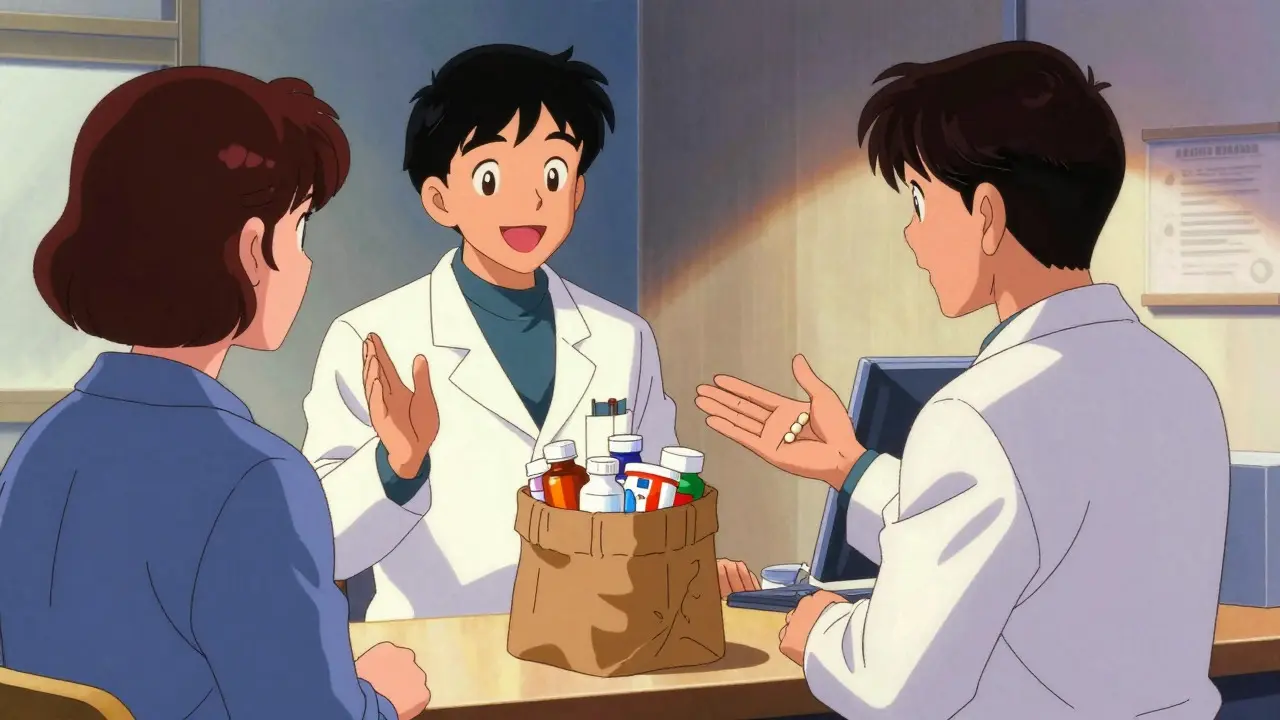
To protect yourself from these myths, implement practical strategies into your routine. First, conduct a "brown bag review." Bring all your medications-prescription, OTC, and supplements-to your next doctor’s appointment. Place them in a brown paper bag and hand it to your provider. This simple step has been shown to reduce medication discrepancies by 63%, according to a 2021 Journal of the American Pharmacists Association study.
Second, use the "Teach-Back Method." After your pharmacist or doctor explains your regimen, repeat it back to them in your own words. This technique increased patient understanding from 42% to 89% in a 2020 Patient Education and Counseling study involving 1,200 participants. It ensures you truly understand how, when, and why to take your meds.
Third, consider medication synchronization. Programs that align all prescription refills to one weekly date improved medication adherence from 52% to 81% among Medicare patients in ExactCare Pharmacy’s 2022 report. Consistency helps prevent missed doses and accidental double-dosing.
- Brown Bag Review: Bring all meds to appointments.
- Teach-Back Method: Repeat instructions to confirm understanding.
- Sync Refills: Align refill dates to simplify management.
- Check Interactions: Use apps or ask pharmacists about new additions.
The Economic and Public Health Impact
The cost of medication errors is staggering. The Agency for Healthcare Research and Quality estimates that preventable adverse drug events cost the US healthcare system $42 billion annually. Medication-related hospitalizations account for 6.5% of all hospital costs. Beyond the financial burden, there is a human toll. The Institute of Medicine reported that medication errors contribute to approximately 7,000 deaths per year. By debunking myths and adopting safer practices, patients can significantly reduce these numbers. Your awareness directly contributes to a healthier population and a more efficient healthcare system.
Is it safe to take multiple over-the-counter cold medicines?
Not necessarily. Many OTC cold medicines contain the same active ingredients, such as acetaminophen. Combining them can easily exceed the safe daily limit, leading to liver damage. Always check the "Drug Facts" label on each product to avoid duplicating ingredients.
Do I really need to finish my entire course of antibiotics?
Yes. Stopping early allows surviving bacteria to develop resistance, making future infections harder to treat. Even if you feel better, complete the full prescribed duration to ensure all pathogens are eliminated.
Are herbal supplements regulated like prescription drugs?
No, supplements are not held to the same strict pre-market approval standards as prescription drugs. They can vary in potency and may interact dangerously with medications. Always consult your healthcare provider before starting any new supplement.
What should I do if I miss a dose of my medication?
Generally, take the missed dose as soon as you remember, unless it is close to the time for your next dose. Never double up to make up for a missed dose. Check the package insert or call your pharmacist for specific guidance tailored to your medication.
How can I tell if a generic drug is equivalent to a brand name?
Look for the FDA-approved designation. Generics must meet the same quality, strength, purity, and stability standards as brand-name drugs. They contain the same active ingredient and work the same way in the body, though inactive ingredients may differ slightly.