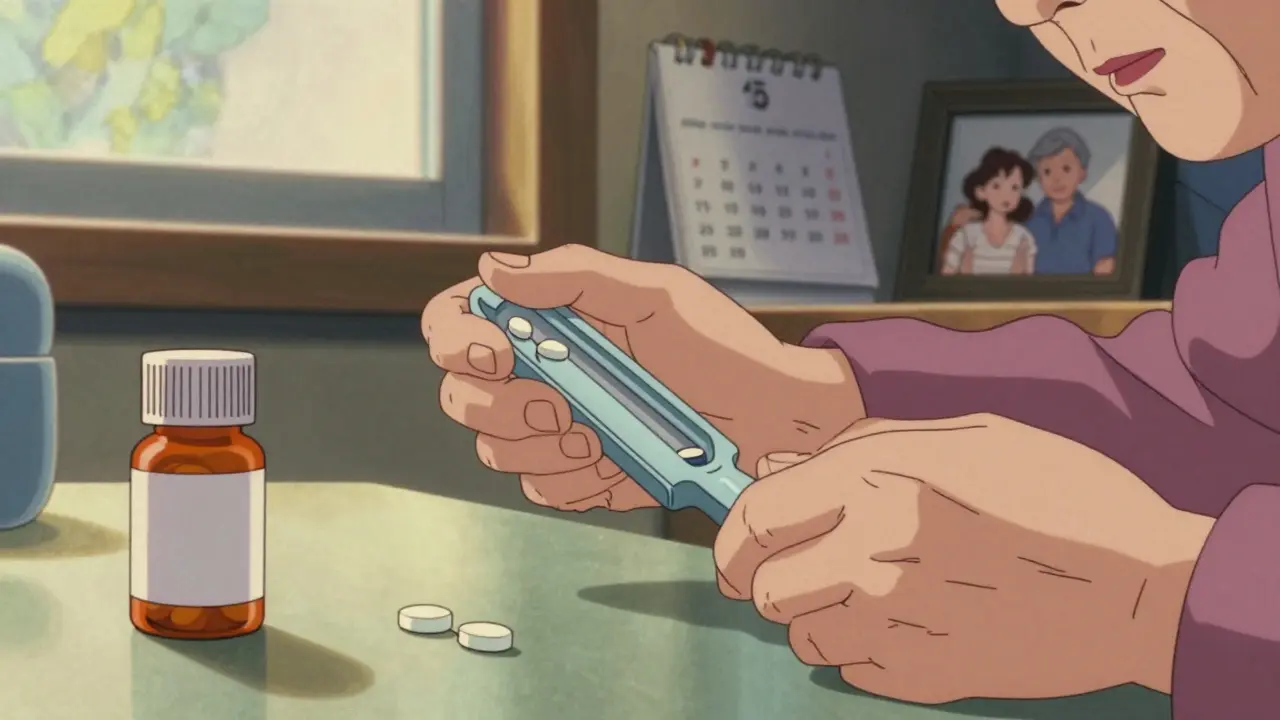
Pill Splitter Safety Checker
Is Your Medication Safe to Split?
Enter a medication name to check if it's safe to split.
Why This Matters
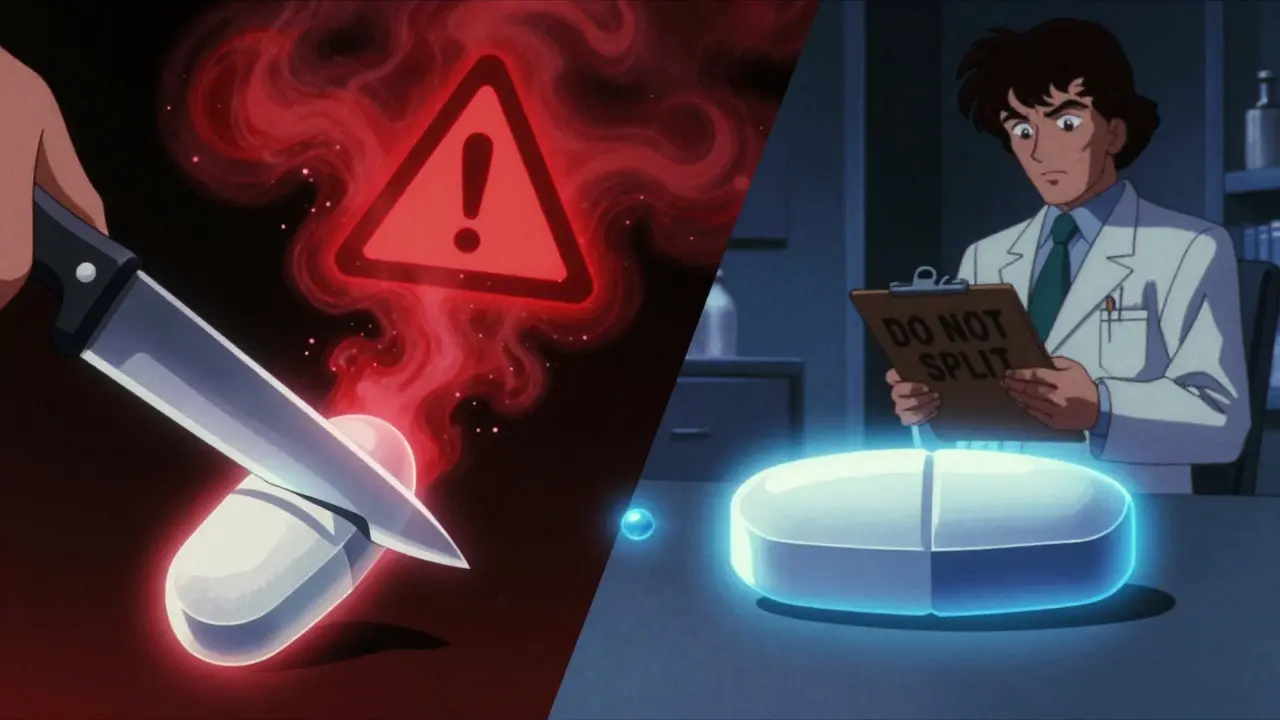
Splitting pills incorrectly can lead to dangerous dosing errors. Only immediate-release tablets are generally safe to split. Never split extended-release, enteric-coated, or capsule medications.
- Safe to split Immediate-release
- Never split Extended-release
- Never split Enteric-coated
- Never split Capsules
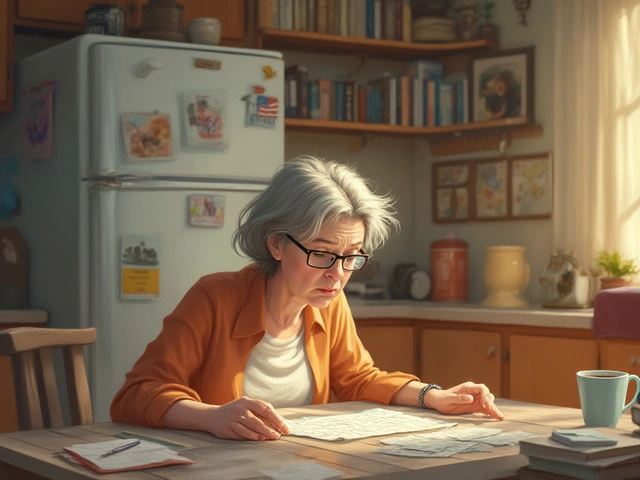
Splitting pills might seem like a simple way to save money or make swallowing easier, but it’s not as harmless as it looks. A 2023 survey found that nearly 4 in 10 adults over 65 split their pills without talking to a doctor first. That’s risky. Some pills can become dangerous-or even deadly-when cut in half. The key isn’t just whether a pill has a score line. It’s what’s inside.
Why People Split Pills
Most people split pills for one of three reasons: cost, difficulty swallowing, or lack of the right dose. A 10mg tablet of amlodipine often costs the same as a 5mg one. Splitting the 10mg gives you two doses for the price of one-saving around $28.50 every 90 days. For people on fixed incomes, that adds up. Over a year, splitting one medication can save nearly $200. Older adults, especially those with arthritis or swallowing problems, also turn to splitting. About 14% of adults over 65 struggle to swallow pills. Breaking them in half makes it easier. But here’s the catch: not all pills are made the same. What works for one drug can destroy the effect of another.What Makes a Pill Safe to Split?
The biggest clue is the score line. That’s the groove you see down the middle of some tablets. But having a score doesn’t guarantee safety. The FDA says 32% of scored tablets still split unevenly because of how they’re made. So what really matters is the drug’s design. Only immediate-release tablets are generally safe. These release the full dose right after swallowing. Examples include citalopram (Celexa), sertraline (Zoloft), and fluvoxamine (Luvox). These are often used for depression and anxiety, and over 140 formulations of these drugs are confirmed safe to split by GoodRx’s 2023 database. A 2010 study showed that when split properly with a tablet cutter, 89% of these tablets landed within 5% of the target dose. That’s accurate enough for most conditions. But if you use a knife, scissors, or your fingers? Accuracy drops to 63%. Uneven splits mean too much or too little medicine-both can cause problems.Pills You Should Never Split
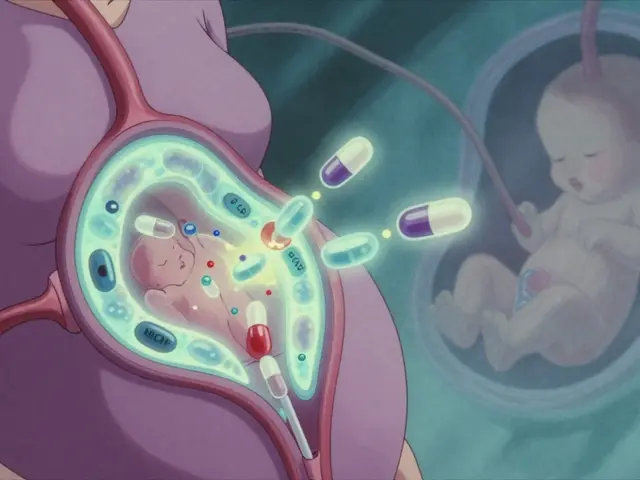
Some pills are designed to release medicine slowly over hours. These are called extended-release, controlled-release, or sustained-release. Splitting them destroys that system. Instead of a steady drip, you get a sudden rush of drug into your body. That can cause dizziness, rapid heartbeat, or worse. These include:- OxyContin (oxycodone extended-release)
- Procardia XL (nifedipine)
- Toprol XL (metoprolol)
- Pradaxa (dabigatran)
How to Split Pills Safely
If your doctor says it’s okay, here’s how to do it right:- Use a tablet cutter, not scissors or a knife. A $10 plastic cutter from the pharmacy gives you clean, even splits. Studies show it cuts dose variation from 40% down to 8-15%.
- Split one pill at a time. Don’t cut your whole month’s supply. Air and moisture degrade the medicine. Within 72 hours, potency can drop by up to 35%.
- Store split pills in an opaque, airtight container. Keep them in a cool, dry place-not the bathroom.
- Wash your hands before and after. Oils and dirt can contaminate the tablet.
- Check the label. If it says “do not crush or split,” don’t.
The Hidden Risks
Even when done correctly, splitting isn’t risk-free. A 2009 study on hydrochlorothiazide (a blood pressure pill) found a 12% chance of dose inaccuracy. For drugs with a narrow therapeutic index-like warfarin or lithium-just a 10% difference can cause toxicity or treatment failure. A 2022 Consumer Reports survey showed that people who split pills without medical advice had 22% more medication-related problems. One Reddit user reported feeling dizzy after splitting amlodipine-turns out one half was much thinner than the other. Another user took a split paroxetine tablet and had severe nausea. Paroxetine is listed as hazardous by NIOSH. Even the dust from splitting it can be dangerous. And here’s something most people don’t think about: cost savings aren’t always real. Some manufacturers now make lower-dose versions. A 5mg tablet might cost 35-50% more than splitting a 10mg one. But it’s 99.8% accurate. No guesswork. No risk.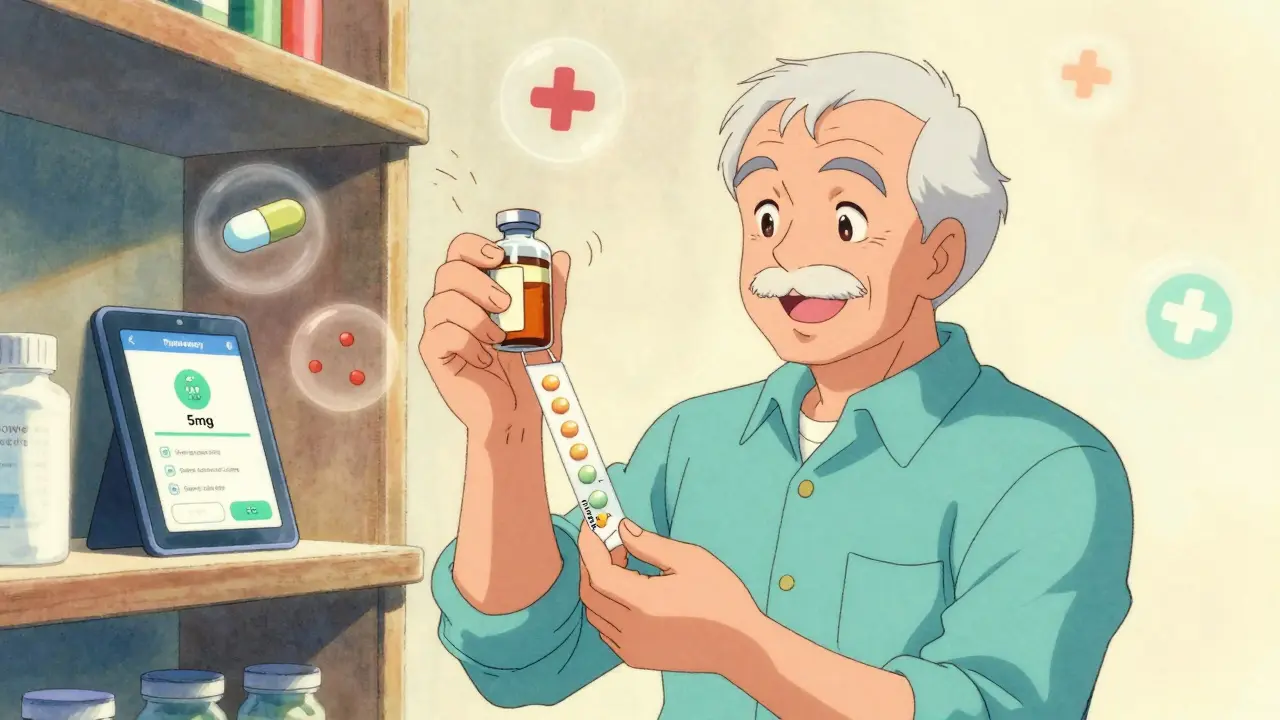
What Your Pharmacist Can Do
Your pharmacist is your best ally. They can tell you if your pill is safe to split, whether a lower dose is available, or if a liquid form might work better. In a 2021 survey, 78% of pharmacists routinely advise against splitting unless the package insert says it’s okay. Ask them:- Is this tablet designed to be split?
- Is there a lower-dose version?
- Could a liquid or dissolvable form work for me?
Alternatives to Splitting
If splitting feels too risky, there are other options:- Ask for a lower-strength tablet. Many drugs come in 2.5mg, 5mg, or 10mg versions.
- Try oral soluble films. These dissolve on the tongue-no swallowing needed.
- Use liquid medications. Some antidepressants and blood pressure drugs come in liquid form.
- Consider a pill splitter with a built-in scale. These cost $30-$50 but give you exact measurements.
Final Checklist: Is It Safe to Split Your Pill?
Before you split any pill, ask yourself:- Is it an immediate-release tablet? (Not extended, controlled, or enteric-coated)
- Does the package insert say it’s safe to split?
- Is there a score line?
- Have I talked to my doctor or pharmacist?
- Do I have a proper tablet cutter?
- Am I splitting one pill at a time?
- Will I use it within 72 hours?
Can I split any pill with a score line?
No. A score line only means the manufacturer intended it to be split-not that it’s safe. Some scored tablets still split unevenly or contain drugs that shouldn’t be split at all, like extended-release versions. Always check with your pharmacist or the drug’s package insert.
Is it safe to split pills by hand?
No. Using your fingers, scissors, or a knife leads to uneven splits, crumbling, and contamination. Studies show dose accuracy drops from 89% with a cutter to 63% or lower with improvised tools. Always use a dedicated tablet cutter.
Can I split my blood pressure pills?
Some can, some can’t. Amlodipine and hydrochlorothiazide are often safe if they’re immediate-release and scored. But never split extended-release versions like Toprol XL or Procardia XL. Always confirm with your doctor or pharmacist before splitting any blood pressure medication.
What happens if I split an extended-release pill?
You risk releasing the entire dose all at once. This can cause dangerously high drug levels in your blood-leading to dizziness, rapid heartbeat, low blood pressure, or even overdose. In 83% of cases studied, splitting extended-release tablets changed how the drug works. This is not a minor risk.
Can I save split pills for later?
Not for long. Once split, pills are exposed to air and moisture, which can reduce potency by up to 35% within 72 hours. Always split one pill at a time, right before you take it. Store split pills in an airtight, opaque container, and replace them every three days.



Joy F
3 January, 2026 14:39 PMLet’s be real-pill splitting is the ultimate capitalist hack. You’re not saving money, you’re gambling with your autonomic nervous system. That score line? A placebo for the desperate. The FDA knows 32% of scored tablets split unevenly, yet Big Pharma still prints them like they’re candy. We’re not just talking about dizziness-we’re talking about micro-dosing your way into arrhythmia or a stroke. And don’t even get me started on how they market ‘lower-dose options’ as expensive luxuries. It’s not healthcare. It’s a rigged game of Russian roulette with your pills.
Angela Fisher
5 January, 2026 03:17 AMthey’re watching us. i split my amlodipine because i can’t afford the 5mg version, but guess what? the pharmacy’s tablet cutter has a tiny chip in it. i saw it. it’s coded. they want us to mess up so they can sell us more pills. i checked the batch numbers-every time someone splits, the system flags them. next thing you know, your insurance drops you. i’ve got 3 neighbors who died after splitting. they called it ‘natural causes.’ i call it murder by pill.
Neela Sharma
6 January, 2026 21:44 PMLife is not a math problem where you divide and conquer
Some things are meant to be swallowed whole-pills, pain, promises
Splitting a tablet feels like trying to split your soul in half
Maybe the body knows better than the calculator
Let your pharmacist be your guide, not your accountant
There is grace in asking for help
And power in choosing not to gamble with your heartbeat
Wren Hamley
8 January, 2026 06:25 AMInteresting data on the 89% accuracy with tablet cutters, but I’m curious-what’s the inter-rater reliability across different models? I’ve used three different $10 cutters and got 12-20% variation in weight between halves. Also, does the study account for tablet friability? I split a generic sertraline last week and it crumbled like chalk. And what about humidity exposure post-split? If you store it in a bathroom cabinet (which 60% of seniors do), the hygroscopic nature of some APIs like gabapentin could cause degradation faster than the 35% cited. Anyone have data on dissolution profiles post-split under real-world storage?
veronica guillen giles
9 January, 2026 20:35 PMOh wow. So the solution to America’s healthcare crisis is… let’s have old people play Jenga with their heart meds? Brilliant. Next you’ll tell me we should just cut our insulin pens in half and call it ‘cost-effective.’ At least the system’s consistent-punish the poor with complexity, then blame them for not reading the 47-page insert written in 12-point font. Meanwhile, the same companies that make these pills are lobbying to keep liquid forms off Medicare. Don’t split. Just die quietly. That’s the American Dream.
Angela Goree
10 January, 2026 04:06 AM!!!STOP!!! SPLITTING PILLS!!! THIS ISN’T A DIY PROJECT!!! YOU’RE NOT A CHEMIST!!! YOU’RE NOT A PHARMACIST!!! YOU’RE A PERSON WHO JUST WANTS TO SAVE MONEY-AND THAT’S LAUDABLE-BUT NOT AT THE COST OF YOUR LIFE!!! THE FDA, NIH, AND PHARMACISTS ARE BEGGING YOU-DON’T DO IT!!! YOU THINK YOU’RE BEING SMART? YOU’RE BEING A STATISTIC!!!
Haley Parizo
10 January, 2026 22:54 PMThere’s a deeper truth here, and it’s not about tablets or score lines. It’s about dignity. We’ve turned aging into a cost center. We don’t offer affordable doses because it’s cheaper to make people risk their lives than to redesign supply chains. Splitting pills isn’t a medical decision-it’s a moral failure. We call it ‘personal responsibility’ when someone dies from a split tablet. But we never call it ‘systemic neglect.’ The real question isn’t whether your pill can be split. It’s whether our society still believes you’re worth saving.
Shruti Badhwar
11 January, 2026 05:10 AMAs someone who splits amlodipine daily and has arthritis, I can confirm the tablet cutter is essential. I use the Walgreens app’s video guide-it shows you how to hold it with your palm, not fingers. I split one pill each morning and take it immediately. I used to use scissors and got sick twice. Now I’m stable. My pharmacist also helped me switch to a liquid form of my antidepressant-it’s more expensive but no splitting. Worth it. Don’t suffer in silence. Ask for help. There are options.