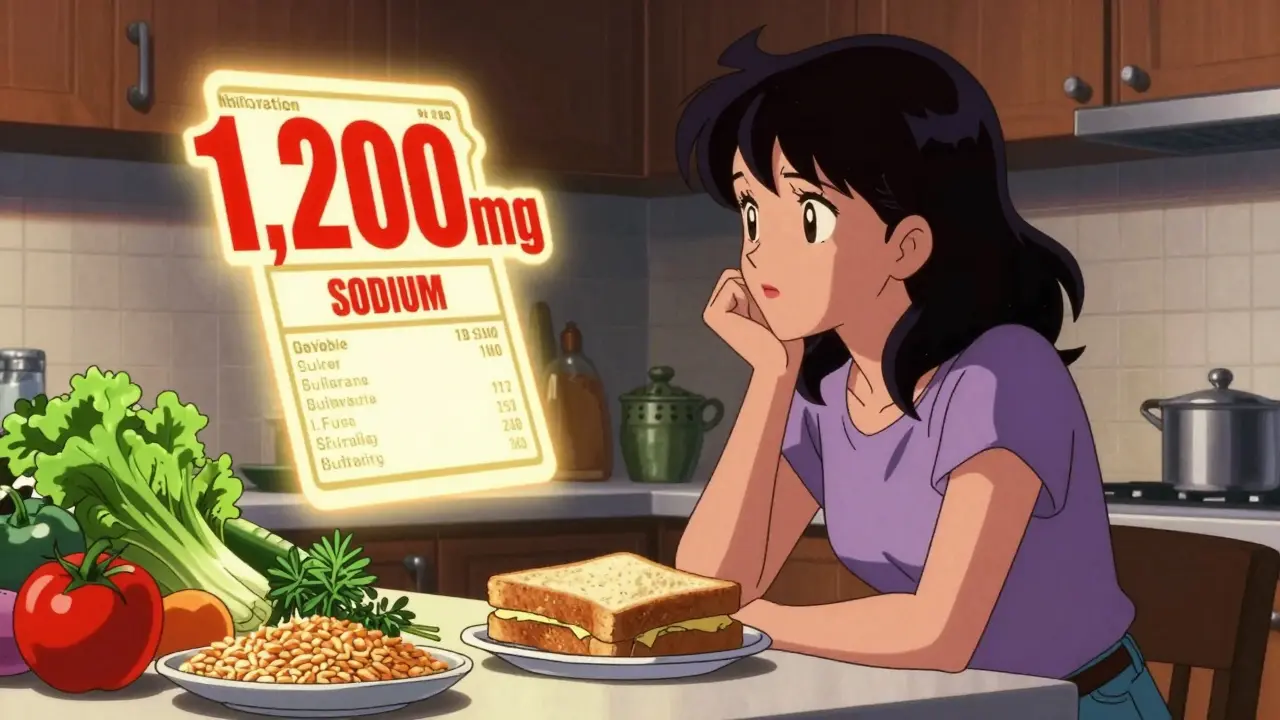
Most people don’t realize how much sodium they’re eating-not because they’re dumping salt on their food, but because it’s hiding in everything they buy. A single sandwich can have more sodium than you’re supposed to eat all day. A bowl of soup. A jar of pasta sauce. Even bread. That’s the real problem: sodium isn’t just in the salt shaker. It’s in the system.
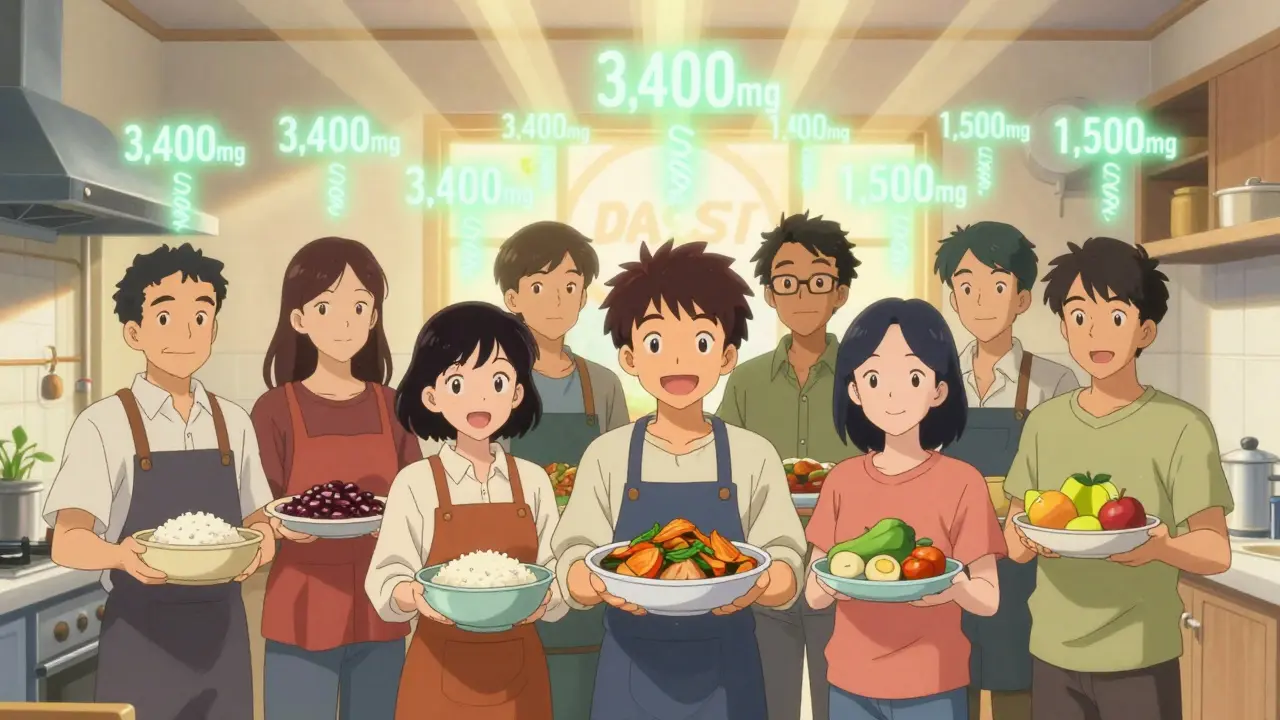
High sodium intake directly raises blood pressure. It’s not a guess. It’s not a theory. It’s been proven over and over. The World Health Organization says adults should eat no more than 2,000 mg of sodium a day. The American Heart Association says 1,500 mg is ideal. Yet the average person in the U.S. eats over 3,400 mg. In South Africa, it’s not much different. And when your blood pressure climbs, your heart works harder. Your arteries stiffen. Your kidneys struggle. Over time, that’s how you end up with heart disease, stroke, or kidney failure.
How Sodium Actually Raises Blood Pressure
Your body needs some sodium. It helps nerves fire, muscles contract, and fluids balance. But when you eat too much, your kidneys can’t flush it out fast enough. So your body holds onto water to dilute the extra salt. More water in your blood vessels means more pressure. That’s it. Simple physics. Your heart has to pump harder. Your arteries get squeezed. This isn’t just about feeling bloated-it’s about long-term damage.
Studies show that even people without high blood pressure can be salt-sensitive. About half of those with hypertension are. That means their blood pressure drops noticeably when they cut back. The CARDIA-SSBP study from late 2023 found that just one week of eating less sodium lowered systolic blood pressure by an average of 8 mm Hg. That’s as much as some medications do. And 73% of participants saw a drop. For some, it was 15 mm Hg or more.
But it’s not just about volume. High sodium makes your blood vessels stiffer. It reduces nitric oxide, the molecule that keeps arteries relaxed. It also messes with your nervous system, making your body stay in “fight or flight” mode. All of this adds up. And it happens quietly. No pain. No warning. Just slow, silent strain.
Where Your Sodium Really Comes From
Here’s the uncomfortable truth: you’re not adding most of the sodium. It’s already there. The CDC says 70-75% of sodium in the average diet comes from processed and restaurant food. That means your salt shaker? It’s not the villain. The packaged chicken, the canned beans, the instant noodles, the deli meats, the pizza, the burger buns-they are.
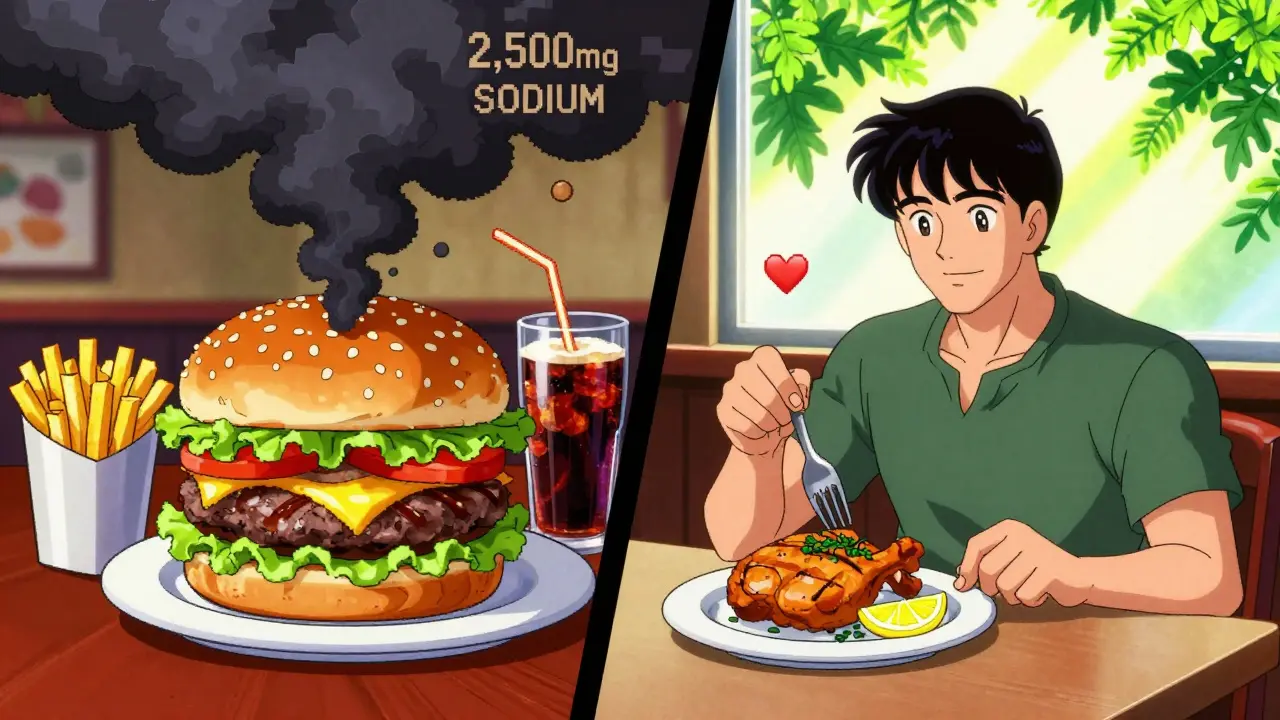
Look at this: a typical fast-food burger with fries and a soda can hit 2,500 mg of sodium. That’s more than your daily limit. A single serving of store-bought tomato sauce? 600 mg. A cup of chicken noodle soup? 900 mg. Even “healthy” options like granola bars or low-fat yogurt often have added salt to make up for lost flavor.
When you eat out, it’s worse. Restaurants use salt to enhance taste, preserve food, and keep customers coming back. A salad with croutons, cheese, and bottled dressing can easily have 1,200 mg of sodium. Grilled chicken? Great. But if it’s marinated in a store-bought sauce? That’s another 500 mg.
What Actually Works to Cut Sodium
Going cold turkey on salt doesn’t work. Your taste buds need time. But small, smart changes do. Here’s what works based on real studies and real people.
- Read labels. Not just the front. The back. The FDA now requires sodium content to be bolded on nutrition labels. Look for “sodium” in milligrams. Aim for under 140 mg per serving. Anything over 400 mg? That’s high. Skip it.
- Switch to fresh. Whole. Unpackaged. Fresh vegetables, fruits, lean meats, eggs, beans, rice, oats-these have almost no sodium. A home-cooked meal can have 400-600 mg. A packaged version? 1,000+.
- Use herbs, citrus, vinegar, and spices. Lemon juice, garlic, black pepper, cumin, smoked paprika, chili flakes, fresh basil-they add flavor without salt. Try a squeeze of lime on fish. A splash of balsamic on roasted veggies. A dash of cayenne in scrambled eggs. Your taste buds will adapt in 2-4 weeks.
- Try potassium-rich foods. Potassium helps your body flush out sodium. Bananas, sweet potatoes, spinach, beans, yogurt, and avocados are great. Aim for 3,500-5,000 mg a day. The PREMIER trial showed that pairing low sodium with high potassium cut blood pressure twice as much as sodium reduction alone.
- Follow the DASH diet. It’s not a fad. It’s science. The DASH (Dietary Approaches to Stop Hypertension) plan focuses on vegetables, fruits, whole grains, lean protein, and low-fat dairy. Studies show it lowers systolic blood pressure by 8-14 mm Hg. Combine it with sodium reduction? You get even better results.
- When eating out, ask for it plain. Request sauces and dressings on the side. Choose grilled over fried. Skip the cheese and croutons. Order water instead of soda. You can cut 300-500 mg per meal just by asking.
- Reduce salt slowly. Cut your home cooking salt by 10% each month. Your taste buds adjust. What once tasted bland now tastes normal. You’ll start noticing how salty processed food really is.
What About Salt Substitutes?
Many people turn to salt substitutes like Mrs. Dash or potassium chloride blends. They can help. Some reduce sodium intake by 300-500 mg per meal. But they’re not magic. Potassium chloride can be dangerous if you have kidney disease or take certain blood pressure meds like ACE inhibitors. Always check with your doctor before using them.
And don’t fall for “sea salt” or “Himalayan salt.” They still contain sodium. They’re not healthier. Just more expensive.
It’s Not Just About the Number
Some experts warn that going too low-under 1,500 mg daily-might not help everyone. A few people, especially those with advanced heart or kidney disease, might actually feel worse. The relationship between sodium and health isn’t a straight line. It’s a curve. Too much is bad. Too little might be risky for some. But for most people, especially those with high blood pressure, the problem is clear: they’re eating way too much.
The goal isn’t perfection. It’s progress. Even cutting 1,000 mg a day can lower systolic blood pressure by 5-7 mm Hg. That’s enough to reduce stroke risk by 8% and heart disease by 6% over ten years, according to the American Heart Association.
Real-Life Changes That Stick
People who succeed don’t go on a “low-sodium diet.” They change their habits.
One woman from Johannesburg started cooking meals on Sundays-rice, beans, grilled chicken, roasted veggies. She froze portions. Weeknights? Just heat and eat. No takeout. No instant noodles. Her blood pressure dropped 12 mm Hg in six weeks.
A man from Cape Town stopped buying pre-made sauces. He started making his own with tomato paste, garlic, vinegar, and herbs. His daily sodium intake dropped from 3,800 mg to 1,900 mg. His doctor was stunned.
On Reddit’s r/HighBloodPressure, users say the same thing: “It took three weeks to get used to food without salt. Now I can’t eat anything salty anymore.”
Cost is a concern. Fresh food can cost $1.25 more per meal than processed. But when you cook in bulk, it balances out. And you’re not just saving money-you’re saving your heart.
What’s Next?
Public health efforts are moving too. The FDA is asking food companies to cut sodium by 20% over the next two years. The UK cut population sodium intake by 15% between 2003 and 2011-and stroke deaths fell by 40%. That’s what happens when policy meets action.
But you don’t have to wait for food companies to change. You can start today. Pick one thing: swap your bread. Ditch the soup. Cook one meal from scratch. Read one label. That’s enough to begin.
Your body doesn’t need salt. It needs balance. And you’re closer to that balance than you think.
How much sodium should I eat if I have high blood pressure?
The American Heart Association recommends no more than 1,500 mg of sodium per day for people with high blood pressure. Even cutting down to 2,300 mg-a common upper limit-can help. But most people eat over 3,400 mg. Start by reducing your intake by 1,000 mg a day. That alone can lower your blood pressure by 5-7 mm Hg.
Can I still eat out if I’m cutting sodium?
Yes, but you need to be smart. Ask for sauces and dressings on the side. Choose grilled, steamed, or baked options over fried. Avoid soups, sandwiches, and anything with “croutons,” “cheese,” or “marinated.” A salad with packaged dressing can have 1,200 mg of sodium. A plain grilled chicken salad with olive oil and vinegar? Around 300 mg. Small changes make a big difference.
Do I need to stop using salt entirely?
No. You don’t need to eliminate salt completely. Your body needs a little sodium to function. The goal is to reduce excess. Focus on cutting processed foods first. Then, use salt sparingly at home. Over time, your taste buds will adjust, and you’ll find that you don’t even miss it.
Are salt substitutes safe?
Potassium-based salt substitutes can help reduce sodium, but they’re not safe for everyone. If you have kidney disease, diabetes, or take certain blood pressure medications (like ACE inhibitors or potassium-sparing diuretics), extra potassium can be dangerous. Always talk to your doctor before using them. For most people, flavoring food with herbs, lemon, and spices is safer and just as effective.
How long does it take to see results from cutting sodium?
You can see changes in as little as one week. The CARDIA-SSBP study found that after just seven days of low-sodium eating, participants saw an average 8 mm Hg drop in systolic blood pressure. Taste changes take longer-usually 2 to 4 weeks. But once your taste buds adjust, salty foods start to taste overwhelming. That’s when the habit sticks.
Is it true that some people don’t respond to sodium reduction?
Yes. About 25% of people are not salt-sensitive-their blood pressure doesn’t drop much when they cut sodium. But that doesn’t mean they shouldn’t reduce intake. High sodium still harms blood vessels, kidneys, and the heart over time. Even if your pressure doesn’t change, you’re still protecting your body. And for the other 75%, the benefits are clear and immediate.
Can I still eat bread if I’m cutting sodium?
Yes, but choose carefully. A single slice of regular white bread can have 230 mg of sodium. Look for brands labeled “low sodium” or “no salt added.” Some artisanal or whole grain breads have less than 100 mg per slice. Check the label. If you eat two slices a day, you’re already at 460 mg. That’s more than half your daily limit before you even cook a meal.


Aisling Maguire
28 February, 2026 21:25 PMSo true. I used to eat canned soup like it was water until I checked the label. One bowl had more sodium than my entire day’s limit. Now I make my own broth with veggie scraps and a pinch of salt. Taste? Better. Blood pressure? Down 10 points in three weeks. No meds needed.
Angel Wolfe
2 March, 2026 17:02 PMThey’re lying about sodium. Big Pharma and the FDA want you scared so you’ll take pills. Salt is natural. The real killer is sugar and soybean oil. They just blame salt because it’s easy to regulate. Read the real studies. The ones they don’t show you.
Sophia Rafiq
3 March, 2026 16:03 PMBeen doing the DASH diet for 6 months. Honestly the biggest win was swapping out bread. One loaf of regular white = 1200mg sodium before you even cook. Found a local bakery that does no-salt sourdough. Game changer. Also started adding lemon zest to everything. Tastes like a vacation.
Eimear Gilroy
4 March, 2026 19:43 PMDoes anyone else notice how weird it is that we’ve been told salt is evil for decades but never got clear guidance on what ‘too much’ actually looks like in real food? I mean, I knew the number but had no idea how fast it adds up. Like, I thought I was being careful until I tracked a week. Ended up at 4200mg. I was shocked.
Ajay Krishna
5 March, 2026 12:16 PMAs someone from India where we use tons of spices, this resonates. We don’t need salt to flavor food-we have cumin, curry leaves, tamarind, asafoetida. My mom still cooks with rock salt, but we’ve cut back by switching to home-cooked meals. My BP dropped from 145/92 to 120/78 in four months. No meds. Just food, patience, and a little love.
Justin Ransburg
5 March, 2026 23:17 PMThis is one of the most practical, science-backed posts I’ve read in months. Thank you. The point about taste buds adjusting in 2–4 weeks is critical. Most people quit too soon because food tastes bland. It’s not that salt is necessary-it’s that your brain got lazy. Rewire it. You’ll thank yourself later.
Miranda Anderson
7 March, 2026 02:03 AMI used to think I was healthy because I didn’t add salt. Then I realized I was eating three servings of store-bought pasta sauce a week, two bags of frozen meals, and a sandwich every lunch. All of it had hidden sodium. When I started cooking everything from scratch, I didn’t even realize how salty everything else tasted. Now I can’t eat restaurant food without feeling like my mouth is full of sand. It’s weirdly satisfying.
Gigi Valdez
8 March, 2026 18:25 PMWhile the data on sodium reduction is strong, it’s important to note that individual responses vary. Some people are salt-resistant, and aggressive sodium restriction may not benefit them. The goal should be balance-not elimination. Focus on whole foods, avoid ultra-processed items, and monitor your own response over time. One size does not fit all.
Sneha Mahapatra
10 March, 2026 07:34 AMIt’s not just about sodium… it’s about connection. When I started cooking meals from scratch, I stopped eating alone. I’d call my sister, we’d chat while chopping veggies. I stopped buying microwave meals because I didn’t want to eat them alone. My blood pressure dropped. My loneliness did too. Food isn’t just chemistry. It’s care.
bill cook
10 March, 2026 23:25 PMWait so if I eat a bag of chips and a frozen pizza and then say I’m cutting back, does that mean I’m doing better? Like if I go from 5000mg to 4000mg, is that progress or just delusion? I’m confused. I need a flowchart. Or a therapist. Or both.
Byron Duvall
11 March, 2026 00:27 AMThey’re all lying. The salt shaker isn’t the problem. The problem is that the government and food companies want you dependent on drugs. They don’t want you to know that potassium and magnesium reverse hypertension. They want you buying pills, not sweet potatoes. Look up the NIH studies on magnesium. They buried it.
Katherine Farmer
11 March, 2026 05:59 AMIt’s amusing how casually people treat sodium as if it’s a personal choice. The truth is, the food industry has engineered our diets to be addictive. Your ‘home-cooked meal’ is still 3x over the WHO limit if you use store-bought broth. This isn’t about willpower. It’s about systemic manipulation. We need regulation, not Pinterest recipes.
Full Scale Webmaster
12 March, 2026 01:27 AMI’ve been reading this whole thing and I’m just sitting here wondering-how many of these people who say ‘I cut my sodium and my BP dropped’ are also on meds? How many of them started eating better, exercising, sleeping more, and then just credited the salt? It’s all correlation. You can’t isolate one variable in a human life. This feels like a viral trend dressed up as science.
Brandie Bradshaw
13 March, 2026 00:00 AMFor the love of everything holy, stop calling sea salt ‘healthier.’ It’s still sodium chloride. The trace minerals? A teaspoon of it has less than a gram of magnesium or calcium. You’re paying $20 for a salt shaker with a pretty color. If you want potassium, eat a banana. Not a fancy rock. Stop marketing pseudoscience as wellness.