
If you're taking a calcium channel blocker for high blood pressure, and you love your morning glass of grapefruit juice, you might be putting yourself at risk - even if you take your pill hours later. This isn't a myth. It's a well-documented, potentially life-threatening interaction that affects millions of people worldwide. The problem isn't just grapefruit. It's also Seville oranges, tangelos, and some pomelos. And the effects? They last for days.
Why Grapefruit Changes How Your Medication Works
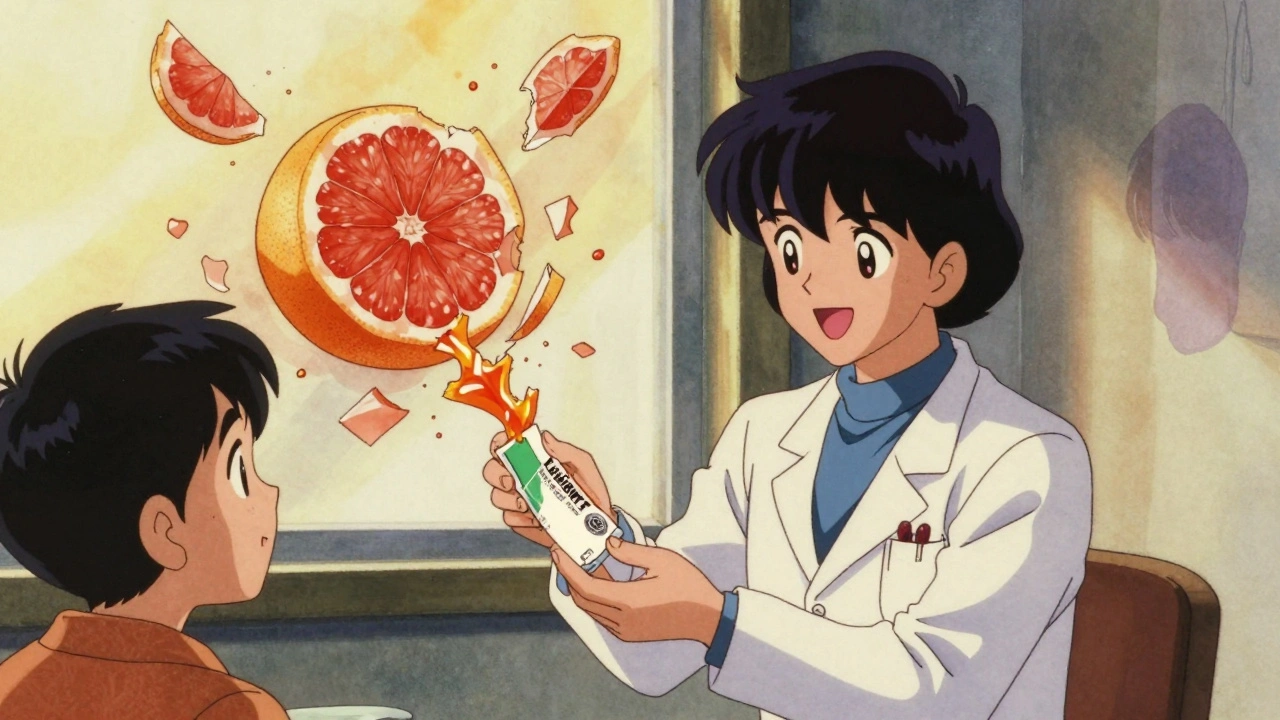
Calcium channel blockers like felodipine, nicardipine, and nimodipine work by relaxing blood vessels to lower blood pressure. But here’s the catch: your body needs an enzyme called CYP3A4 to break them down before they enter your bloodstream. This enzyme lives mostly in your gut, not your liver. Grapefruit contains chemicals called furanocoumarins - specifically bergamottin and 6',7'-dihydroxybergamottin - that shut down this enzyme like flipping a switch.That sounds good, right? Less breakdown means more drug gets into your system. But that’s exactly the problem. Instead of your normal 10 mg dose being slowly absorbed, your body ends up absorbing 3 to 5 times more. One 200ml glass of grapefruit juice is enough to cause this effect. And it doesn’t matter if you drink it at breakfast and take your pill at dinner. The enzyme doesn’t bounce back quickly. Once it’s blocked, it stays blocked for up to 72 hours. That means even if you skip grapefruit one day, the damage from the day before is still active.
Which Calcium Channel Blockers Are Most at Risk?
Not all calcium channel blockers react the same way. The danger is highest with the dihydropyridine (DHP) group:- Felodipine: The most affected. Studies show bioavailability can spike by up to 500%. A normal dose can become dangerously high.
- Nicardipine and Nimodipine: Both show significant increases in blood levels when taken with grapefruit.
- Amlodipine: Also interacts, but the effect is smaller - about 1.5 to 2 times increase. Still, it’s enough to cause problems, especially in older adults.
Non-dihydropyridines like verapamil and diltiazem have less consistent interactions, but experts still advise caution. The bottom line? If your prescription says “calcium channel blocker,” assume grapefruit is risky unless proven otherwise.
What Happens When the Interaction Goes Wrong?
Too much calcium channel blocker in your system doesn’t just mean better blood pressure control. It means your blood pressure can crash - fast. Symptoms include:- Sudden dizziness or lightheadedness
- Severe flushing or warmth in the face
- Swelling in the ankles or feet (peripheral edema)
- Heart racing (reflex tachycardia)
- Fainting or passing out
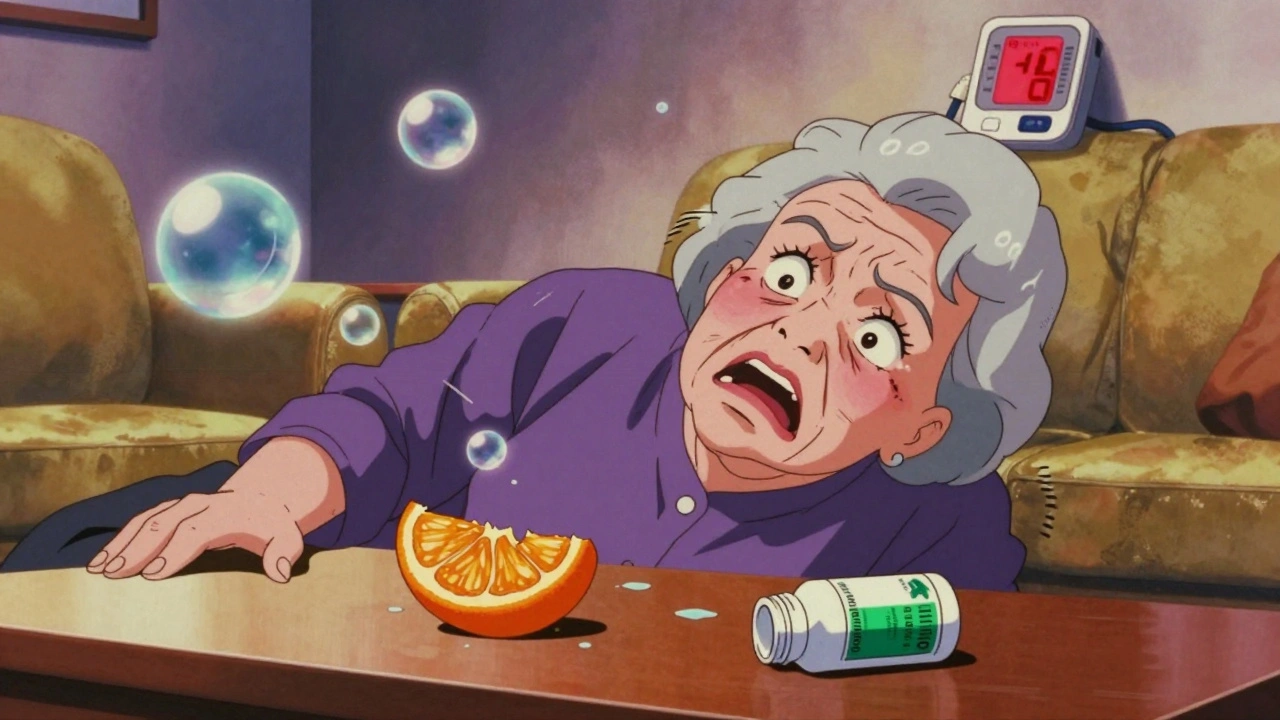
These aren’t rare side effects. They’re emergency room events. In the U.S. alone, about 15,000 people visit the ER each year because of grapefruit-drug interactions. Elderly patients are especially vulnerable. One nurse practitioner described a case where an elderly woman couldn’t stand after taking her usual dose with grapefruit juice - the effective dose had jumped from 60 mg to nearly 140 mg over four days. That’s not a typo. That’s irreversible enzyme damage adding up over time.
What About Other Citrus Fruits?
You might think, “I don’t drink grapefruit juice - I drink orange juice.” But not all citrus is safe.- Seville oranges (used in marmalade): Just as dangerous as grapefruit. Same furanocoumarins.
- Tangelos (a grapefruit-orange hybrid): Also risky.
- Pomelos: Contain similar compounds. Avoid.
- Sweet oranges (like Valencia or Navel): Generally safe. They have negligible furanocoumarins.
- Orange marmalade: If it’s made with Seville oranges, skip it. If it’s made with sweet oranges, it’s usually fine.
Here’s a simple rule: if it tastes bitter or sour, be careful. Grapefruit’s bitterness comes from those dangerous compounds. Sweet oranges? Not so much.
What Should You Do Instead?
If you’re on a calcium channel blocker and you love citrus, you have options.Option 1: Switch medications. Amlodipine is the safest bet among CCBs, but even it carries some risk. Better yet, consider switching to a class of blood pressure meds that don’t interact with grapefruit at all:
- ACE inhibitors like lisinopril
- ARBs like valsartan
- Thiazide diuretics like hydrochlorothiazide
- Some beta blockers like metoprolol
Ask your doctor if one of these alternatives makes sense for you. Many patients find they feel better on these drugs - no juice restrictions, no risk of crashing blood pressure.
Option 2: Cut grapefruit out completely. Even if you think you’re being careful - drinking juice only on weekends, or only once a week - the enzyme stays blocked for three full days. That means if you drink grapefruit juice on Friday, your body is still processing your CCB as if it’s been tripled on Monday.
Why Do So Many People Still Get This Wrong?
You’d think this would be common knowledge by now. But a 2022 survey found that only 37% of primary care doctors routinely ask patients if they eat grapefruit before prescribing calcium channel blockers. And 68% of patients had no idea their morning juice could be dangerous.It’s not their fault. Doctors are busy. Pharmacists don’t always warn patients. And the drug labels? Many still don’t make the warning clear enough. The FDA requires black box warnings for felodipine and nimodipine - the strongest possible alert - but many other CCBs don’t carry them, even though the risk is similar.
And here’s the kicker: there’s no easy test to know if you’re affected. No blood test. No warning sign before it’s too late. The only safe approach is to assume you’re at risk - and avoid grapefruit entirely.
The Future: Safer Medications on the Horizon
Researchers are working on solutions. Two new extended-release versions of amlodipine are in Phase III clinical trials as of 2025. Early results show a 70% reduction in grapefruit interaction. That’s promising. But these drugs aren’t available yet. And even when they are, they won’t eliminate the risk - just reduce it.For now, the safest choice is simple: if you’re on a calcium channel blocker, don’t drink grapefruit juice. Don’t eat Seville oranges. Don’t take chances with your blood pressure. Your body doesn’t know how to adjust for this. Your doctor can’t predict how your enzymes will react. And no amount of “I’ve been doing it for years” makes it safe.
It’s not about giving up your favorite drink. It’s about protecting your heart. And sometimes, the simplest change - skipping one glass of juice - can mean the difference between staying healthy and ending up in the hospital.




Ronan Lansbury
13 December, 2025 18:03 PMOf course the FDA doesn't warn you properly. They're in bed with Big Pharma and the citrus conglomerates. You think they want you to know that grapefruit juice is a natural CYP3A4 inhibitor? Nah. They'd rather you keep buying expensive pills and overpriced juice. The real danger? The fact that your doctor doesn't even know this. They're trained on corporate-funded guidelines. I've been tracking this since 2019 - it's a silent epidemic. And they call it 'adverse drug reaction' like it's your fault.
sharon soila
13 December, 2025 21:05 PMYou are not alone. Many people don't realize how much their body is quietly struggling. This isn't just about juice - it's about listening to your body, trusting science, and making small changes that protect your future. You deserve to feel safe in your own skin. Start today. Swap the juice for water with lemon. It's not a sacrifice. It's a gift to yourself.
Rawlson King
14 December, 2025 18:35 PMAnyone who drinks grapefruit juice while on medication is either ignorant or reckless. There's no middle ground. This isn't complicated. It's not a debate. It's biochemistry. If you can't follow basic medical advice, don't be surprised when your blood pressure crashes. Your body isn't a lab experiment - it's a fragile system. Stop being careless.
Richard Ayres
16 December, 2025 15:04 PMThis is one of the most under-discussed yet critical drug interactions in modern medicine. The science is clear, the evidence is overwhelming, and yet, awareness remains shockingly low. What's concerning is not just the physiological risk, but the systemic failure in patient education. Pharmacists often don't flag it, primary care providers don't screen for it, and drug labels are inconsistent. We need standardized, mandatory patient counseling for all CCB prescriptions - especially for elderly populations. This isn't just medical advice; it's a public health imperative.
Michael Gardner
17 December, 2025 16:46 PMActually, I've been drinking grapefruit juice with my amlodipine for 8 years and I'm fine. My BP is lower than ever. Maybe the whole thing is overblown? Or maybe some people metabolize it differently? I'm not buying the doomsday narrative. People have been drinking juice with meds for decades - if it were that dangerous, we'd all be dead by now.
Willie Onst
18 December, 2025 16:47 PMHey, I get it - grapefruit juice is delicious. But I switched to orange juice after my doc told me this. Honestly? I didn't miss it. And now I sleep better, no more dizziness in the morning. Sometimes the best health wins are the quiet ones. No drama, no fanfare. Just a glass of sweet juice and a steady heartbeat. You don't have to give up flavor - just swap the bitter for the sweet. Your heart will thank you.
Jennifer Taylor
20 December, 2025 07:11 AMWait - so if I drank grapefruit juice on Tuesday and took my pill on Thursday, I'm basically overdosing? And they say this lasts THREE DAYS?!? I’ve been doing this for years. I think my husband is trying to kill me. I just found out my neighbor’s husband died from this. I’m not even kidding. I’m going to throw out every piece of citrus in my house. I’m crying. I need a support group. This is a conspiracy. Why didn’t anyone tell me? I feel violated. I’m so angry. I need to post this everywhere. I’m telling my entire family. I’m never trusting a doctor again. I’m going to start a petition. I need to talk to someone. I’m scared.
Shelby Ume
20 December, 2025 10:40 AMThank you for writing this with such clarity. I'm a nurse practitioner, and I see this every day - elderly patients who’ve been on felodipine for 15 years, still drinking their morning grapefruit juice because their last doctor never mentioned it. I’ve had patients come in with systolic pressures in the 70s, confused, trembling, thinking they’re having a stroke. It’s heartbreaking. I wish every prescription came with a printed one-page warning. But since they don’t, I make sure to hand-write it in the patient’s own words and give them a copy. Knowledge isn’t power - it’s protection. Please share this. Someone’s life depends on it.