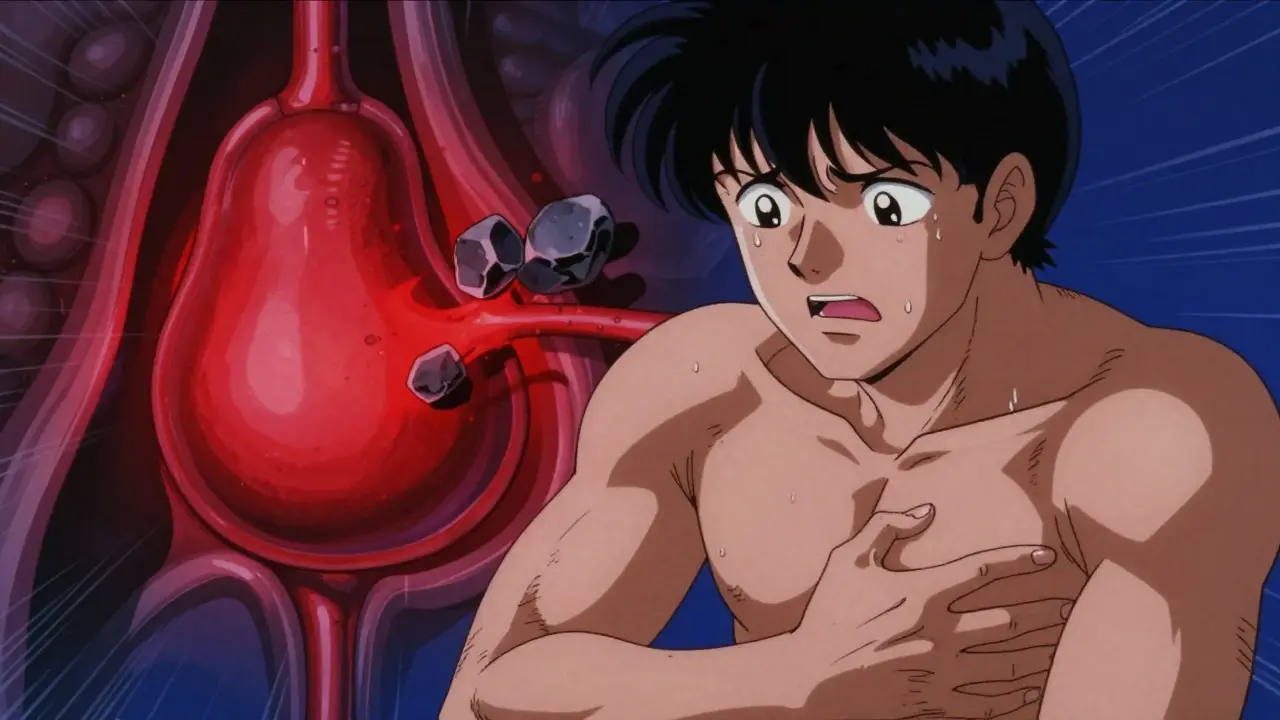
Imagine a pain so sharp it feels like someone is squeezing your abdomen with an iron fist. You can’t sit still. You can’t breathe deeply. It hits you out of nowhere, often after a heavy meal, and refuses to let go for hours. This isn’t just indigestion. This is biliary colic, the hallmark symptom of gallstones blocking the cystic duct temporarily. For millions of people, this episode is the first warning sign that their gallbladder is in trouble. If ignored, that temporary blockage can turn into a medical emergency known as acute cholecystitis.
Gallstones are not a rare curiosity; they are a widespread health issue affecting approximately 10-15% of adults in developed countries. While most people live with these stones silently, about 20% will eventually experience symptoms. The difference between a manageable discomfort and a life-threatening infection lies in understanding what happens inside your body when a stone gets stuck. Knowing the signs, the risks, and the surgical options can mean the difference between a quick recovery and a prolonged hospital stay.
Understanding the Pain: What Is Biliary Colic?
To understand why gallstone pain is so distinctive, you need to look at the anatomy. Your liver produces bile, a fluid that helps digest fats. This bile is stored in the gallbladder, a small pear-shaped organ tucked under your liver. When you eat, especially fatty foods, the gallbladder contracts to squeeze bile into the digestive tract through a tube called the cystic duct.
Biliary colic occurs when a gallstone slips into this narrow duct and blocks the flow. The gallbladder keeps contracting against the obstruction, causing intense pressure and pain. This pain typically strikes in the right upper quadrant of your abdomen or the center of your stomach (epigastrium). It may radiate to your back or right shoulder blade. Unlike heartburn, this pain doesn’t come and go in waves; it builds steadily, peaks within an hour, and stays constant until the stone moves or falls back into the gallbladder.
The duration is key. A typical episode lasts anywhere from one to five hours. If the pain subsides before then, it was likely biliary colic. If it persists longer, the situation has escalated. According to guidelines from the American Academy of Family Physicians (AAFP), more than 90% of patients who experience their first bout of biliary colic will have another attack within ten years. In fact, two-thirds face recurrence within just two years. Waiting it out is rarely a viable long-term strategy.
From Colic to Crisis: Acute Cholecystitis
When a stone remains lodged in the cystic duct for too long, the story changes from discomfort to danger. The trapped bile causes the gallbladder wall to become inflamed and infected. This condition is called acute cholecystitis, a serious inflammation of the gallbladder requiring immediate medical attention.
The symptoms of cholecystitis mimic biliary colic but are more severe and persistent. The pain lasts longer than six hours and is often accompanied by fever, chills, and nausea. You might notice tenderness when pressing on your upper right abdomen. Without treatment, the gallbladder can develop pus, perforate, or lead to sepsis-a life-threatening response to infection.
Statistics highlight the urgency. The National Health Service (NHS) reports that untreated symptomatic gallstones lead to emergency hospitalization in 20-30% of cases within five years of initial diagnosis. About 20% of all biliary colic episodes progress to acute cholecystitis. Another complication, choledocholithiasis, occurs when a stone escapes the gallbladder and blocks the common bile duct, potentially causing jaundice (yellowing of the skin and eyes) or pancreatitis. These complications transform a scheduled outpatient procedure into an urgent, high-risk surgery.
Surgical Options: Laparoscopic vs. Open Cholecystectomy
If you have symptomatic gallstones, medication alone is rarely enough. Ursodeoxycholic acid can dissolve small cholesterol stones, but it takes six to twenty-four months to work and only succeeds in 30-50% of cases. Worse, half of those dissolved stones return within five years. Shock-wave lithotripsy, once popular, has largely fallen out of favor due to high recurrence rates and strict patient selection criteria. For most people, removing the gallbladder-cholecystectomy-is the definitive cure.
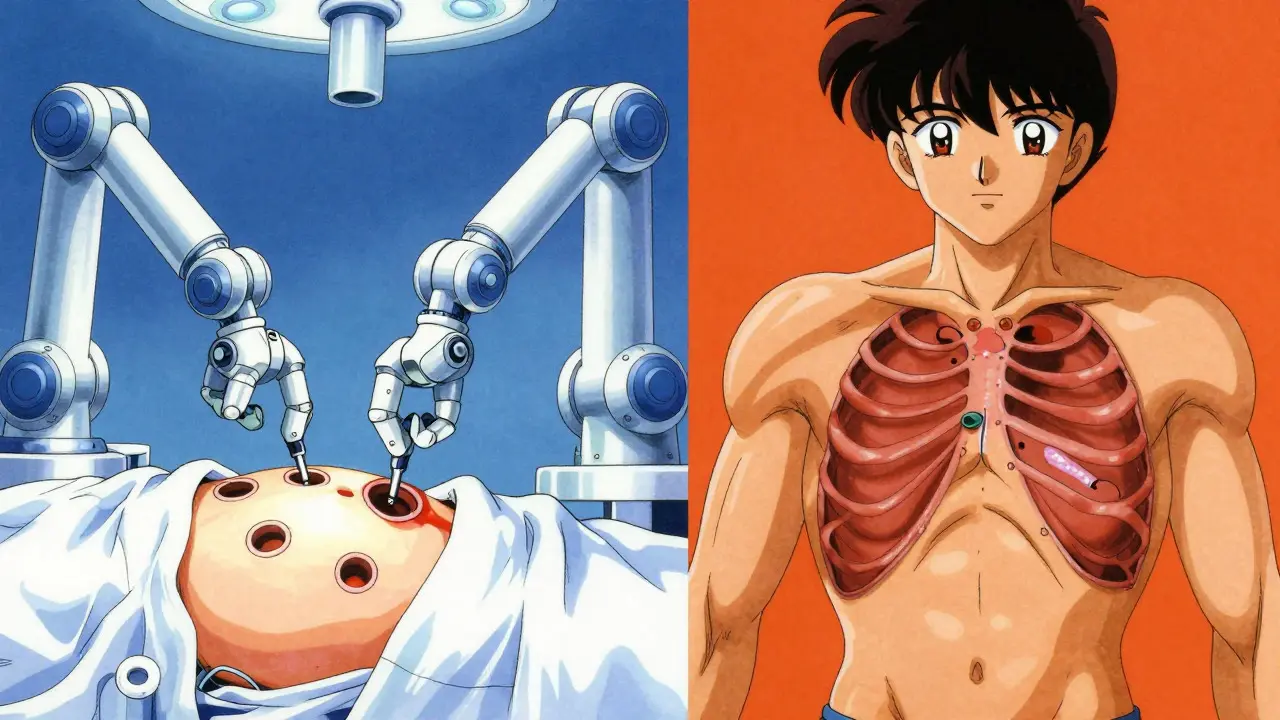
Today, the gold standard is laparoscopic cholecystectomy, a minimally invasive surgery performed through four small incisions. Surgeons use a camera and specialized instruments to detach the gallbladder from the liver and bile ducts. This method accounts for about 90% of procedures in the United States. The benefits are clear: shorter hospital stays (average 1.2 days compared to 4.7 days for open surgery), less postoperative pain, and a faster return to normal activities (median seven days versus thirty).
| Feature | Laparoscopic Surgery | Open Surgery |
|---|---|---|
| Hospital Stay | 1.2 days average | 4.7 days average |
| Recovery Time | Median 7 days | Median 30 days |
| Pain Level | Moderate, manageable with oral meds | Severe, requires stronger pain relief |
| Scarring | Four tiny scars | One large abdominal scar |
| Conversion Rate | 5-10% convert to open if complicated | N/A |
Open cholecystectomy involves a larger incision under the ribs. It is reserved for complex cases where laparoscopic access is difficult due to severe inflammation, scarring from previous surgeries, or anatomical variations. While the recovery is slower, open surgery remains a vital tool when minimally invasive techniques fail or pose too much risk.
Timing Matters: Early vs. Delayed Surgery
One of the biggest debates in gallbladder care is timing. Should you wait until the pain goes away, or get surgery immediately? Recent guidelines strongly favor early intervention. The Society of American Gastrointestinal and Endoscopic Surgeons (SAGES) recommends performing cholecystectomy within 72 hours of diagnosing acute cholecystitis.
Why so soon? Early surgery reduces the conversion rate from laparoscopic to open surgery from 25% down to just 7%. It also shortens the total time you spend in the hospital and lowers the risk of recurrent attacks while waiting. Dr. David Flum, a surgery professor at the University of Washington, notes that laparoscopic cholecystectomy boasts a 95% patient satisfaction rate with a complication rate below 2% in experienced hands. Delaying surgery doesn’t make the problem go away; it makes the next operation harder and riskier.
However, age and health status play a role. For healthy younger patients, the risk is minimal. But for patients over 75 with multiple comorbidities, the calculus changes. Dr. Emily Finlayson from UCSF points out that 30-day mortality rises from 0.1% in healthy individuals to 2.8% in those with three or more chronic conditions. Preoperative optimization, including managing diabetes and weight, becomes critical for older adults to ensure a safe outcome.

Life After Gallbladder Removal
It sounds counterintuitive, but you don’t need a gallbladder to live a normal life. The liver continues to produce bile, which now flows directly into your intestine instead of being stored. Most people adapt quickly. Within two weeks, 82% of patients report significant improvements in their quality of life.
Some adjustments are necessary initially. Without a reservoir to hold bile, large amounts of fat hitting your intestines at once can cause diarrhea. This is common in the first few weeks. Eating smaller, low-fat meals helps your body adjust. By three months, most dietary restrictions fade. Only about 6% of patients experience post-cholecystectomy syndrome, a group of symptoms including persistent pain or digestive issues that may require further investigation.
Consider the case of a 45-year-old woman documented by the Cleveland Clinic. She endured seventeen episodes of biliary colic over eighteen months. After her laparoscopic cholecystectomy, her symptoms resolved completely within ten days. She returned to full activity in two weeks. Her story is typical: painful uncertainty followed by rapid, lasting relief.
Prevention and Risk Factors
You can’t always prevent gallstones, but you can manage your risk. Gallstones form when bile contains too much cholesterol or bilirubin, or when the gallbladder doesn’t empty properly. Four main factors increase your likelihood of developing them:
- Gender: Women are two to three times more likely to develop gallstones than men, partly due to estrogen’s effect on cholesterol levels.
- Weight: Obesity increases cholesterol secretion into bile. Rapid weight loss, however, also raises risk by causing the liver to release extra cholesterol while the gallbladder empties less frequently.
- Diet: High-fat, high-cholesterol, and low-fiber diets contribute to stone formation.
- Ethnicity: Hispanic populations show a 45% higher incidence than non-Hispanic whites, according to national health surveys.
Maintaining a healthy weight through gradual loss and regular exercise is the best defense. Soluble fiber from fruits, vegetables, and whole grains binds to bile acids and removes them from the body, reducing the concentration of cholesterol in the bile.
How do I know if my pain is from gallstones or something else?
Gallstone pain is distinct because it is steady, not cramping, and located in the right upper abdomen or center of the stomach. It often starts after eating fatty foods and lasts 1-5 hours. Heartburn usually burns and moves up the chest. Appendicitis pain typically starts near the belly button and moves to the lower right side. An ultrasound is the definitive test to confirm gallstones.
Can gallstones pass on their own without surgery?
Small stones may pass through the bile ducts without causing major issues, but larger ones often get stuck. While some people live with silent stones, once symptoms start, recurrence is highly likely. Over 90% of people with symptomatic stones will have another attack within ten years. Medication to dissolve stones works slowly and has a high failure rate, making surgery the preferred option for symptomatic cases.
Is laparoscopic surgery safe for elderly patients?
Yes, but risks increase with age and other health conditions. For healthy seniors, the procedure is very safe. However, for those over 75 with multiple chronic illnesses like heart disease or diabetes, the risk of complications rises. Doctors will carefully evaluate your overall health and may optimize your condition for several weeks before scheduling surgery to minimize risks.
What should I eat after gallbladder removal?
Start with a low-fat diet for the first few weeks. Avoid fried foods, creamy sauces, and fatty meats. Focus on lean proteins, fruits, vegetables, and whole grains. As your body adjusts to the continuous flow of bile, you can gradually reintroduce moderate amounts of fat. Most people can return to their normal diet within three months without long-term restrictions.
How long does it take to recover from gallbladder surgery?
For laparoscopic surgery, most people feel significantly better within a week. Light activities can resume in a few days, and full recovery usually takes about two weeks. Open surgery requires a much longer recovery, often taking four to six weeks to return to normal activities. Always follow your surgeon’s specific advice regarding lifting and exercise.