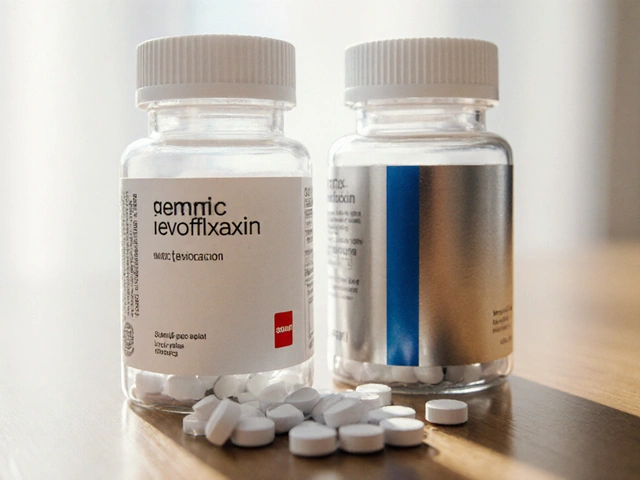
Imagine a patient who has been stable on a specific medication for years suddenly experiences severe side effects after switching to a generic version. As a pharmacist, you are the last line of defense before that medication reaches the patient's hands. You see the prescription, you check the interaction, and you hand over the pills. But what happens when things go wrong? The reality is that while federal law in the United States does not strictly mandate pharmacists to report adverse events, professional standards and ethical obligations paint a different picture.
The responsibility for monitoring and reporting problems with generic drugs falls heavily on your shoulders, even if the legal framework seems ambiguous. This article breaks down exactly where you stand, how to navigate the complex landscape of adverse drug event (ADE) reporting, and why your voice is critical in ensuring public safety.
Understanding the Legal and Professional Landscape
First, let's clear up a common misconception. Under U.S. federal law, specifically the Federal Food, Drug, and Cosmetic Act, there is no strict legal requirement compelling healthcare professionals, including pharmacists, to report adverse events to the U.S. Food and Drug Administration (FDA). However, "not legally required" does not mean "professionally optional."
The American Society of Health-System Pharmacists (ASHP) explicitly states in their 2022 guidelines that medication safety monitoring and adverse event reporting are "fundamental professional responsibilities." When you fail to report a serious issue, you aren't just breaking a rule; you're failing to uphold the standard of care expected by your peers and the patients who trust you. Furthermore, some state boards, like the California State Board of Pharmacy, have implemented stricter regulations that make identifying and documenting adverse reactions a mandatory part of practice.
The core of this responsibility revolves around the concept of therapeutic inequivalence. This occurs when a generic product fails to demonstrate bioequivalence in clinical practice, despite meeting regulatory standards during its approval process. If a patient experiences a different clinical response than expected after switching from a brand-name drug to a generic, you have a duty to document and report it.
What Exactly Should You Report?
You might wonder, "Is every minor headache worth reporting?" Not necessarily, but the threshold for reporting is lower than many think. The FDA requests reports for serious adverse events, which are defined as events that are:
- Fatal
- Life-threatening
- Result in permanent or significant disability
- Require hospitalization or prolong existing hospitalization
- Cause congenital anomalies
- Necessitate intervention to prevent permanent impairment
However, don't stop there. Non-serious but unexpected adverse events also warrant submission. Why? Because these reports help uncover previously unidentified drug effects. For example, if three different patients on the same generic antihypertensive report unusual dizziness that wasn't seen with the brand name, that pattern could signal a manufacturing quality issue or a subtle bioequivalence problem.
The FDA's MedWatch program is the primary channel for these reports. Since a 2015 update, the program explicitly lists therapeutic inequivalence or failure as a reportable issue. This means if you suspect a generic isn't working as well as the reference listed drug, you should flag it.
The Challenge of Attribution: Brand vs. Generic
One of the biggest hurdles pharmacists face is accurately attributing an adverse event to a specific generic manufacturer. Here’s the tricky part: under the Hatch-Waxman Amendments of 1984, generic manufacturers must maintain labeling identical to the reference listed drug (the brand name). This creates a legal quirk where brand manufacturers often receive and report adverse events for products actually dispensed as generics.
This attribution problem was highlighted by the Supreme Court's 2011 decision in PLIVA v. Mensing, which established that generic manufacturers cannot be held liable in state courts for failure to warn due to federal preemption. Consequently, data attribution becomes messy. When you submit a report, it’s crucial to specify whether the patient was taking a brand or generic product, and if generic, include the National Drug Code (NDC) and lot number. Without this detail, the report may get lost in the noise or incorrectly attributed to the brand manufacturer, skewing safety signals.
| Event Type | Definition | Reporting Urgency | Key Data Required |
|---|---|---|---|
| Serious Adverse Event | Fatal, life-threatening, hospitalization, disability, etc. | Within 15 calendar days of initial receipt | Patient ID, Suspect Drug, NDC, Lot Number, Clinical Details |
| Non-Serious Unexpected Event | Unexpected side effect not listed in labeling, not life-threatening | As soon as feasible (no strict deadline) | Same as above, plus context on why it's unexpected |
| Therapeutic Inequivalence | Generic fails to perform comparably to brand in clinical practice | As soon as feasible | Comparison details, previous brand performance, current generic NDC |
How to File a Report: Step-by-Step
Filing a report doesn't have to be a daunting task. The FDA provides the MedWatch Form 3500, which can be completed online or via paper. Here is a practical workflow to integrate into your daily routine:
- Identify the Event: Listen to patient complaints. If a patient says, "This new pill makes me feel worse," dig deeper. Document the specific symptoms, onset time, and severity.
- Gather Product Details: Pull up the dispensing record. Record the National Drug Code (NDC), manufacturer name, and lot number. This is non-negotiable for accurate tracking.
- Determine Seriousness: Use the criteria listed above. If it’s serious, prioritize immediate submission within 15 days.
- Access the Portal: Go to the MedWatch Online Reporting portal. Select "Healthcare Professional" as the reporter type.
- Fill Out the Form: Be specific. Avoid vague statements like "patient had a bad reaction." Instead, write "Patient experienced severe rash and difficulty breathing 2 hours after taking [Drug Name] [Strength]."
- Submit and Document: Save the confirmation number in your pharmacy management system. This proves you fulfilled your professional duty.
The FDA emphasizes that reports should be submitted even if you are not certain the product caused the event. Your role is to report the suspicion; the FDA’s role is to investigate the causality.
Why Pharmacist Reports Matter More Than Ever
You might feel like one report won’t make a difference. The data suggests otherwise. According to a 2022 study published in the Journal of the American Pharmacists Association (JAPhA), only 2.3% of all adverse event reports submitted to the FDA between 2018-2022 originated from pharmacists. Meanwhile, manufacturers submitted 67.1%, and other healthcare professionals submitted 28.4%.
Consider this: pharmacists dispense approximately 5.8 billion prescriptions annually, with 75% being generics. Yet, we contribute less than 3% of adverse event reports. This massive underreporting leaves a blind spot in the safety net. The FDA’s Adverse Event Reporting System (FAERS) database shows that reports mentioning generic drug issues increased by 131% from 2015 to 2022, largely driven by heightened awareness, but pharmacist contributions remain disproportionately low.
Dr. Jerry Phillips, former Associate Director of the FDA’s Division of Medication Error Prevention and Analysis, noted that pharmacist reports of therapeutic inequivalence are "particularly valuable" because they represent real-world evidence that may not have been detected during the abbreviated new drug application (ANDA) review process. Your eyes are on the ground. You see the patterns that algorithms miss.
Overcoming Barriers to Reporting
We know it’s hard. A 2023 survey by Pharmacy Times revealed that 68.4% of community pharmacists cite lack of time as the primary barrier to reporting. Other major challenges include uncertainty about whether an event meets reporting criteria (52.1%) and difficulty determining whether a brand or generic product was involved (41.7%).
To overcome these barriers, consider these strategies:
- Delegate and Train: If you work in a team, assign a staff member to monitor patient feedback logs and prepare draft reports for your review.
- Use Templates: Create internal templates for common adverse events to speed up documentation.
- Leverage Technology: Some pharmacy management systems now integrate with MedWatch. Check if your software offers direct reporting capabilities.
- Focus on Patterns: If you notice multiple patients complaining about the same generic, prioritize those reports. They carry more weight in triggering FDA investigations.
The Institute for Safe Medication Practices (ISMP) includes adverse event reporting as a core component of their Medication Safety Self Assessment. Pharmacies scoring below 75% on reporting practices are flagged for significant safety concerns. Improving your reporting rate isn’t just about compliance; it’s about protecting your license and your reputation.
The Future of Generic Drug Monitoring
The landscape is evolving. The FDA’s Office of Generic Drugs has established a Therapeutic Equivalence Working Group since 2019 to analyze pharmacist-submitted reports. In their 2022 Annual Report, they documented 147 generic drug products subjected to additional review based on pharmacist reports, resulting in 12 product-specific communications to healthcare providers.
This means your reports are directly influencing policy and product recalls. With the implementation of the FDASMA Section 3506, the FDA has further encouraged pharmacists to report therapeutic inequivalence concerns. Deputy Commissioner Dr. Janet Woodcock stated that "pharmacist observations of potential therapeutic inequivalence are critical to our ongoing assessment of generic drug performance in real-world settings."
As we move forward, the gap between observation and reporting must close. By understanding your responsibilities and leveraging the tools available, you play a pivotal role in safeguarding public health.
Is it legally mandatory for pharmacists to report adverse events?
Under U.S. federal law, there is no strict legal mandate requiring pharmacists to report adverse events. However, professional organizations like ASHP consider it a fundamental responsibility, and some state boards (e.g., California) have made it mandatory. Failing to report can still lead to professional liability or disciplinary action depending on local regulations.
What is therapeutic inequivalence?
Therapeutic inequivalence occurs when a generic drug fails to perform comparably to its brand-name counterpart in clinical practice, despite meeting bioequivalence standards during regulatory approval. It may manifest as reduced efficacy or increased side effects.
How do I distinguish between a brand and generic adverse event?
Always check the dispensing record for the National Drug Code (NDC) and manufacturer name. Generic drugs will have a different NDC and manufacturer than the brand-name reference listed drug. Include these details in your MedWatch report to ensure accurate attribution.
What information is required for a MedWatch report?
A valid MedWatch report requires four key elements: an identifiable patient, a suspect drug (with NDC and lot number), a specific adverse event description, and an identifiable reporter. Vague statements without clinical details are insufficient.
Why are pharmacist reports so important compared to manufacturer reports?
Pharmacists provide real-world evidence of how drugs perform outside controlled trials. While manufacturers report based on post-marketing surveillance, pharmacists observe actual patient outcomes, including patterns of therapeutic inequivalence that may not be detected during the ANDA review process.



Lori Wildrick
16 May, 2026 17:25 PMI really appreciate this guide because it helps clarify things that are often so confusing for us in community settings. We want to do the right thing but sometimes feel overwhelmed by the process. Thank you for sharing this helpful information with everyone! 😊
Emma Olliff
17 May, 2026 02:48 AMThis is absolute garbage advice for anyone who actually understands the law. You are essentially admitting that you are a voluntary participant in a bureaucratic nightmare designed to make you liable for things outside your control. The fact that you think 'professional standards' override federal preemption is laughable. If I were a pharmacist, I would be suing my employer for making me fill out these forms instead of counting pills. This entire industry is built on the backs of underpaid professionals who are too scared to speak up against corporate negligence. Wake up and smell the coffee, or rather, the expired inventory.
Diana Wiechecka
18 May, 2026 18:13 PMInteresting point about the attribution issue! 🤔 I never realized that brand manufacturers get credit for generic issues. That seems like a huge loophole. Thanks for explaining!
Kathryn Byrd
20 May, 2026 17:17 PMThe section on therapeutic inequivalence is particularly relevant given recent discussions in our local pharmacy association meetings. It appears that many practitioners are unaware of the specific criteria for reporting non-serious events. This oversight could potentially compromise patient safety data integrity over time.
Tanya KLIMCHUK Klimchuk
21 May, 2026 15:23 PMListen to me closely because I am going to say this once: stop making excuses about lack of time. If you cannot take five minutes to report a serious adverse event, you should not be handling medications. The system works if you put in the effort. Use the templates mentioned in step three. Delegate if you have staff. But do not come here complaining that you are too busy to protect public health when you could be spending less time scrolling through social media. Get your act together.
Anthony Red
22 May, 2026 07:27 AMHey folks, just wanted to chime in from the community side. We definitely see more complaints about generics lately, especially with certain antihypertensives. It’s tough to track without better software integration, but we’re trying our best to document everything. Good read!
Javier Arauz
23 May, 2026 16:10 PMThis is why we need to stop importing drugs from foreign countries. Our own FDA regulations are strict enough but when you bring in cheap generics from overseas, you get problems. Support American manufacturing and maybe we wouldn't have these issues. It's simple economics and national security.
Kris Wong
24 May, 2026 13:10 PMDon't fall for the trap 🚩 The FDA is collecting all this data to sell to pharmaceutical companies so they can suppress competition. They know exactly which generics are failing but they keep them on the market to keep profits high. Look at the dates on those reports. It's all coordinated. Trust no one. 👁️
Warren Brewer
26 May, 2026 09:13 AMI think this is good info. It helps people understand what to do. Simple steps are better than complex rules. Thanks for writing this.
Mikey Mann
26 May, 2026 19:25 PMThere is a profound philosophical implication here regarding the nature of trust in professional relationships. When we fail to report, we break the social contract between healer and healed. It is not just about legality; it is about morality. We must strive for excellence in our duties because the lives of others depend on our vigilance. Let us be the light in the darkness of bureaucracy. ✨
Mollie Louise
27 May, 2026 23:02 PMI completely agree with the sentiment expressed in the article regarding the importance of detailed documentation. It is absolutely crucial that we provide comprehensive information including the National Drug Code and lot numbers to ensure that the regulatory bodies can effectively trace any potential issues back to their source. Without this level of detail, the entire reporting process becomes somewhat futile and fails to achieve its primary objective of enhancing public safety. Furthermore, I believe that fostering a culture of open communication within pharmacy teams can significantly reduce the burden on individual pharmacists by allowing for shared responsibilities and collaborative problem-solving approaches. We must remain optimistic that our collective efforts will lead to meaningful improvements in drug safety protocols and ultimately benefit our patients who rely on us for their well-being every single day. 🌟
amit kumar
28 May, 2026 03:10 AMVery informative post! 👏 As someone studying pharmacy in India, I find the US regulations quite different from ours. In our country, reporting is also encouraged but the infrastructure varies. Great insights on MedWatch though! 🇮🇳💊