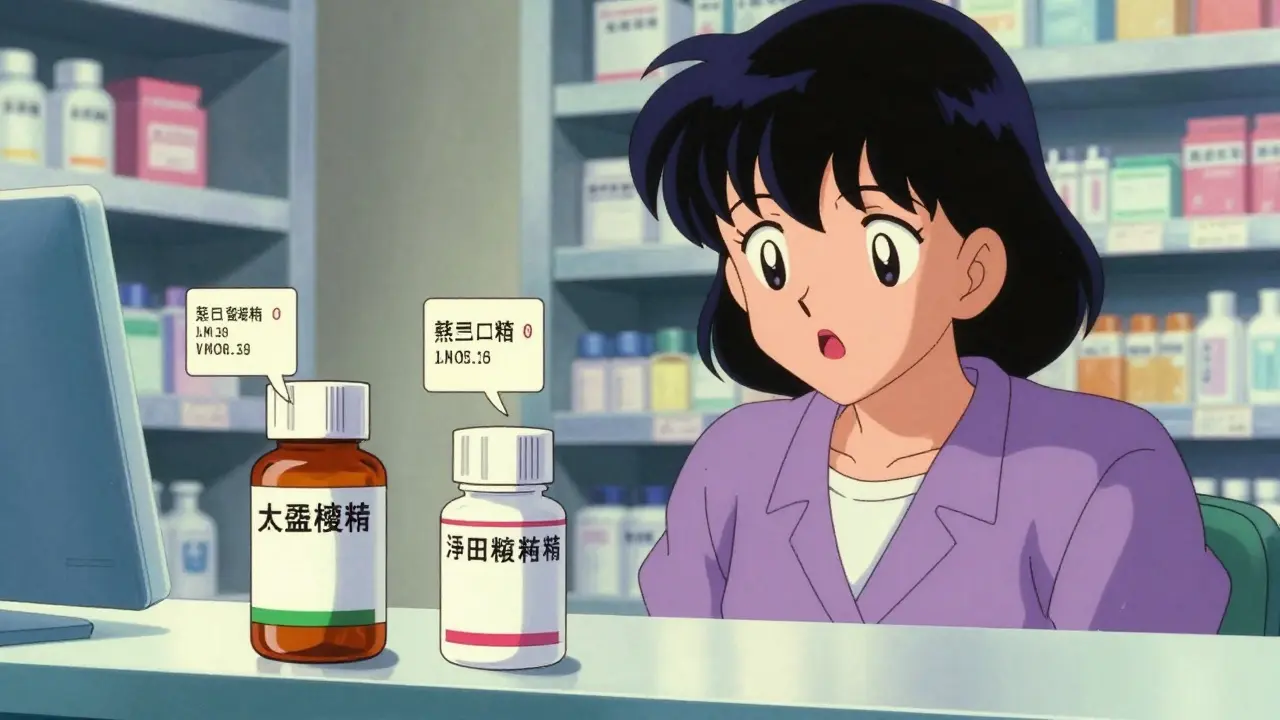
Ever wondered why your pharmacy bill fluctuates so wildly depending on whether you get a brand-name pill or a generic version? It isn't just about a different label on the bottle. There is a massive financial gap-often called the "90/13 paradox"-where generics make up the vast majority of prescriptions but a tiny fraction of the cost. For most people, switching to a generic isn't just a way to save a few bucks; it's the difference between affording a life-saving treatment and skipping doses.
To understand the scale of these savings, we have to look at the actual data. In 2024, generic and biosimilar medicines accounted for 90% of all prescriptions filled in the United States. Yet, they only made up about 12% of total prescription drug spending. Think about that: 9 out of 10 scripts are generics, but they cost a fraction of the total market. This creates a staggering contrast where Americans spent roughly $98 billion on 3.9 billion generic prescriptions, while spending a whopping $700 billion on only 435 million brand-name scripts.
What Actually Makes a Generic Drug "Generic"?
Before we get into the numbers, let's clear up what's actually in the bottle. A Generic Drug is an FDA-approved equivalent of a brand-name medication that contains the same active ingredients, dosage form, strength, route of administration, and intended use.
The reason we have these today is largely thanks to the Hatch-Waxman Act of 1984. Before this law, generic makers had to repeat expensive clinical trials to prove a drug worked. The Act created the Abbreviated New Drug Application (ANDA) process, which allows manufacturers to simply prove "bioequivalence." This means they just have to show the drug delivers the same amount of active ingredient to the bloodstream in the same amount of time as the brand name. This shortcut slashed development costs, which is why your generic version is so much cheaper.
Breaking Down the Cost Gap: Real Numbers
When you stand at the pharmacy counter, the price difference is immediate. In 2024, the average out-of-pocket cost for a generic prescription was just $6.95. Compare that to $28.69 for a brand-name drug. That's nearly a five-fold difference for the exact same medical outcome.
For those without insurance, the gap is even more brutal. Since 2019, the cost of brand-name drugs for uninsured patients jumped by about 50%, reaching an average of $130.18 per prescription. Meanwhile, the cost of generics actually dropped by about 6%, or $2.45, during that same window. It's a rare example of a healthcare cost actually going down while everything else goes up.
| Metric | Generic / Biosimilar | Brand-Name |
|---|---|---|
| % of Prescriptions Filled | 90% | 10% |
| % of Total Spending | 12% - 17.5% | 83% - 88% |
| Avg. Out-of-Pocket Cost | $6.95 | $28.69 |
| Uninsured Cost Trend (since 2019) | Decreased 6% | Increased 50% |
The Rise of Biosimilars: Generics for Complex Drugs
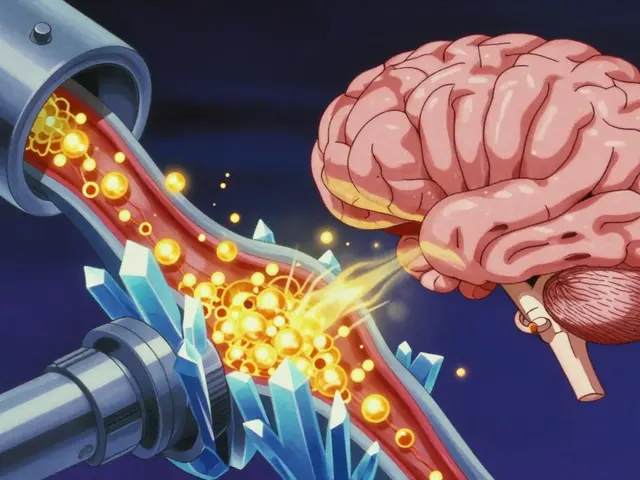
Not all drugs are simple chemicals. Some are biologics-complex proteins grown in living cells. You can't just copy a biologic exactly, so we use Biosimilars. These are highly similar versions of biologic drugs that provide the same clinical result. Because biologics treat severe conditions like cancer and autoimmune diseases, the savings here are massive.
Biosimilars have saved the healthcare system over $56.2 billion since they arrived. In 2024 alone, they contributed $20.2 billion in savings. Oncology (cancer) biosimilars have been a game-changer, cutting the growth rate of cancer drug spending nearly in half since 2019. A great recent example is the drug Stelara. By July 2025, nine biosimilar versions launched, with some prices as much as 90% lower than the original list price. This makes treatments for Crohn's disease and psoriasis accessible to people who previously couldn't afford them.
Why Aren't All Drugs Generic? The "Patent Thicket"
If generics are so much cheaper and just as effective, why do we still pay for brands? The answer is legal maneuvering. Pharmaceutical companies use a tactic called "patent thicketing." Instead of one patent, they file dozens or even hundreds of overlapping patents on the same drug to keep competitors out.
In one extreme case, a single blockbuster drug obtained over 75 patents to push its monopoly expiration from 2016 all the way to 2034. There's also "pay-for-delay," where brand companies pay generic makers to stay off the market. These tactics drive up costs by nearly $12 billion annually, with about $3 billion of that hitting consumers directly in their wallets.
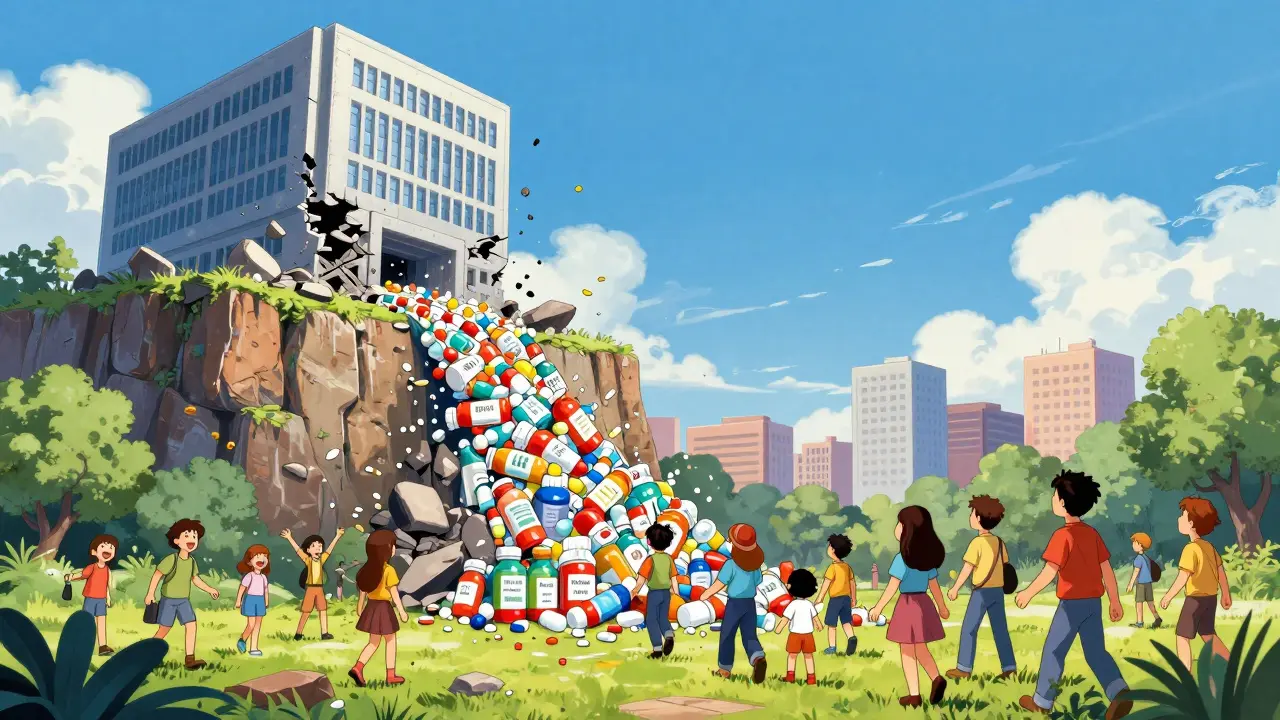
Looking Ahead: The 2025-2026 Patent Cliff
We are currently seeing a "patent cliff," where several massive drugs are losing their protection. This is where the biggest generic drug savings are expected to hit next. Three specific medications are key here:
- Entresto: A heart failure treatment with $5.4 billion in 2023 sales.
- Tradjenta: A diabetes medication that brought in $1.7 billion in 2023.
- Opsumit: A pulmonary hypertension therapy with $1.5 billion in 2023 sales.
When these three alone hit the generic market, it opens up roughly $8.6 billion in potential savings. As more first-generic approvals increase-up 12% year-over-year-the downward pressure on prices continues. The Congressional Budget Office expects that generic and biosimilar competition will keep overall drug spending growth to around 3.2% annually through 2030, which is way lower than the 6.8% growth we'd see if brand monopolies remained untouched.
Practical Tips for Maximizing Your Savings
Navigating the pharmacy can be confusing, but a few simple steps can save you hundreds of dollars a year. First, always ask your pharmacist if a generic equivalent is available. Most health plans, about 87% of commercial plans as of 2025, actually require generic substitution, but it's always good to verify.
Second, if you are on a biologic, ask your doctor about biosimilars. Because they are newer and more complex, some physicians are slower to switch patients than they are with simple pills. Third, check the FDA's "Orange Book" if you're curious about when a brand drug's patent expires. While it's a technical document, it's the gold standard for knowing when a cheaper version is likely to hit the shelves.
Are generic drugs as effective as brand-name drugs?
Yes. The FDA requires generic drugs to be bioequivalent, meaning they deliver the same amount of active ingredient into your bloodstream in the same amount of time. While some patients report slight variability with narrow therapeutic index drugs, this affects less than 1% of prescriptions.
Why is there such a huge price difference if the ingredients are the same?
Brand-name companies spend billions on the initial research, development, and clinical trials. Once the patent expires, generic companies don't have to repeat those trials; they only need to prove the drug is equivalent. This removes the massive R&D overhead, allowing them to sell the drug at a fraction of the cost.
What is the difference between a generic and a biosimilar?
Generics are chemical copies of simple drugs (like a pill). Biosimilars are versions of biologic drugs made from living cells. Because biologics are too complex to copy exactly, biosimilars are "highly similar" rather than identical, but they provide the same clinical result.
Can I switch from a brand-name drug to a generic safely?
For the vast majority of medications, yes. However, you should always consult your healthcare provider first, especially for medications that require precise dosing (narrow therapeutic index drugs), to ensure the transition is smooth and monitored.
What is a "patent thicket"?
A patent thicket is a strategy used by pharmaceutical companies to file many overlapping patents on a single drug. This makes it legally difficult for generic competitors to enter the market, effectively extending the brand's monopoly long after the original patent should have expired.


Eric Mwiti
26 April, 2026 16:00 PMOh sure, because pharma companies are just altruistic entities that happen to love the idea of "patent cliffs" and lower margins. Absolute fantasy.
Carol Yang
28 April, 2026 07:58 AMThis is actually such good news! Saving a few bucks is great, but knowing people can actually afford their meds is the real win here.
Majestic Blue Band
28 April, 2026 07:59 AMYou all believe the FDA just "checks" these drugs and everything is fine, but have you actually looked into who funds the regulatory bodies? It's a revolving door of corporate interests and government puppets who create these "biosimilars" just to keep us dependent on a system that wants to control our very biology through proteins grown in vats, and they probably use the patent thickets not just for money but to hide the actual ingredients that are designed to make us more docile and easier to manage while the elites laugh at us from their bunkers while they sip champagne and watch the healthcare system collapse under the weight of its own greed and manufactured scarcity which is exactly what they want so they can implement a total social credit system tied to your health records and if you don't comply you don't get your "cheap generic" anymore.
Michael Chukwuma
29 April, 2026 23:13 PMI can only imagine the stress of not knowing if you can afford your meds next month.
Nila Sawyer
30 April, 2026 04:35 AMWow, the part about Stelara is just amazing!! 🌟 It's so heartwarming to think that people with Crohn's or psoriasis can finally get their lives back without going bankrupt 💖 We need more of this energy in the world and I really hope every single person who needs a biosimilar can get it easily and quickly because everyone deserves to feel healthy and happy! ✨🌈
Anand Mehra
30 April, 2026 12:01 PMpatent thickets are just late stage capitalism at its finest lol
Vijay AGarwal
2 May, 2026 11:44 AMTHE ABSOLUTE AUDACITY of these companies to file 75 patents on a single drug is a crime against humanity! It is a financial massacre of the middle class! This isn't just business; it is a calculated heist of our healthcare system!
Nikita Shabanov
3 May, 2026 05:53 AMThe Orange Book is a reliable resource for tracking expiration dates, although it requires some patience to navigate correctly.
suresh kumar
5 May, 2026 04:07 AMThe pharma suits are just playing a game of monopoly with real people's lungs and hearts, absolute vultures in fancy ties.
Edwin Perez
5 May, 2026 06:40 AMGeneric drugs are just a way to get us hooked on a cheaper version before they hike the price of the next "breakthrough" treatment. Same scam, different price point.
Hayley Redemption
6 May, 2026 00:12 AMIt's quaint that some people still think the "out-of-pocket" average is a meaningful metric when the PBMs are the ones actually controlling the rebates and the flow of capital.
Kristen O'Neal
6 May, 2026 05:48 AMWe need to push for more transparency in the ANDA process to ensure that those "bioequivalence" standards are actually being upheld without any corporate shortcuts.
Karyn Tindall
6 May, 2026 11:47 AMThe fact that uninsured patients saw a 50% increase in brand costs while generics dropped is absolutely devastating! It is a nightmare for the most vulnerable people in our society!
sachin singh
7 May, 2026 12:22 PMIt is quite fascinating to observe the disparity between the volume of prescriptions and the total expenditure. The 90/13 paradox provides a compelling argument for the expansion of generic options globally.