
Medication Side Effect Timeline & Coping Planner
Personalize Your Experience
Your Personalized Timeline & Progress
Targeted Symptom Management Strategies
Recommended Psychological Approaches
The Two-Week Rule Reminder
Commit to continuing your medication for at least 14 days while implementing these coping techniques. Most acute side effects subside during this window. Giving up too early means missing the therapeutic benefits entirely.
Starting a new medication often feels like walking a tightrope. You know the treatment is necessary for your health, but the list of potential side effects on the prescription label can be terrifying. Nausea, fatigue, sleep disturbances, or worse-what if these symptoms become permanent? This fear is so common that it has its own name in medical psychology: medication anxiety. It’s not just worry; it’s a physiological response that can actually make you feel sicker before you even take the first pill.
You are not alone in this struggle. Research shows that approximately 60% of patients with hypertension report moderate to high levels of distress regarding their medication side effects. But here is the good news: much of this suffering is psychological, not physical. By understanding how your brain processes pain and expectation, you can use specific psychological strategies to reduce side effect severity and stick to your treatment plan. Let’s look at why this happens and exactly what you can do about it.
The Nocebo Effect: Why Expecting Pain Creates Pain
To manage anxiety about medication, you first need to understand the mechanism behind it. In the 1980s, researchers began documenting a phenomenon known as the nocebo effect, pioneered by Dr. Fabrizio Benedetti at the University of Turin. While the placebo effect involves positive expectations leading to improvement, the nocebo effect occurs when negative expectations cause actual physical symptoms.
When you read a scary list of side effects, your brain primes your body to experience them. If you believe an antidepressant will give you nausea, your nervous system may trigger gastrointestinal distress even if the drug hasn’t fully absorbed yet. A 2016 study published in PMC (article 4750803) confirmed that psychosocial variables significantly influence how patients perceive medication effects. Anxious patients often generate anxiety symptoms they mistakenly attribute to the medication itself. Understanding this loop is the first step in breaking it. Your mind is powerful, but it can work against you if left unchecked.
Cognitive Behavioral Therapy (CBT) for Medication Anxiety
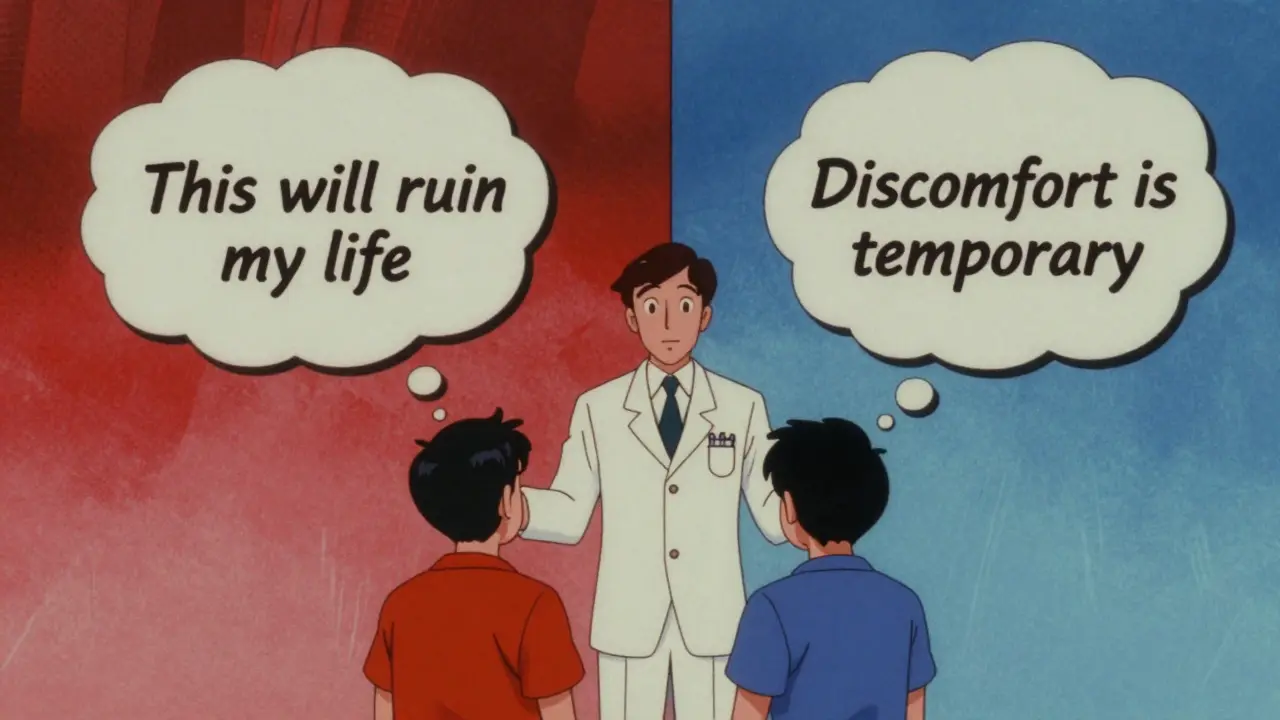
If you want a structured approach to handling these fears, Cognitive Behavioral Therapy (CBT) is the gold standard. CBT helps you identify and challenge the catastrophic thoughts that fuel medication anxiety. For example, instead of thinking, "This pill will ruin my life," you learn to reframe it as, "I might feel some temporary discomfort, but it usually passes within a few weeks."
The evidence supports this method strongly. A 2022 meta-analysis found that integrating CBT with medication management reduced treatment discontinuation rates by 58% compared to medication-only approaches. CBT demonstrates 65-75% efficacy in managing medication anxiety, outperforming supportive therapy, which only reaches 45-55% efficacy. The protocol typically involves 10-12 structured sessions where you learn to track triggers, monitor symptoms objectively, and practice coping skills. It’s not magic; it’s mental training that rewires your response to stress.
Psychoeducation: Knowing the Timeline Reduces Fear
Uncertainty is the enemy of calm. When you don’t know when side effects will end, every hour feels like an eternity. This is where medication psychoeducation comes in. Clinicians provide specific timelines for side effect resolution, turning vague dread into manageable data.
For instance, the Mayo Clinic’s 2023 guidelines specify that 70-80% of antidepressant side effects, such as nausea, dizziness, and fatigue, typically improve within 2-4 weeks of consistent use. Knowing that SSRI-induced nausea usually peaks at day 3-5 and resolves by day 14-21 changes everything. A 2021 study in the *Journal of Clinical Psychopharmacology* showed that this specific type of education improves adherence by 32%. When you have a calendar for your recovery, you stop panicking about every twinge. You start seeing symptoms as temporary hurdles rather than permanent damage.
Practical Symptom Management Techniques
While psychological strategies address the root anxiety, practical steps can mitigate the physical sensations. Combining mindset shifts with actionable habits creates a robust defense against side effects. Here are specific protocols recommended by major health institutions:
- For Nausea: Take your medication with food. Eat smaller, more frequent meals instead of three large ones. Suck on sugarless hard candy and drink cool water. Clinical trials show these simple steps reduce nausea severity by 65%.
- For Sleep Disturbances: Timing matters. The Cleveland Clinic’s 2024 guide notes that taking SSRIs in the morning rather than the evening reduces insomnia incidence from 35% to 15% in 80% of patients. Adjusting the time you take your dose can solve half the problem.
- The Two-Week Rule: Commit to continuing the medication for 14 days while implementing coping techniques. Most acute side effects subside during this window. Giving up too early means missing the therapeutic benefits entirely.
Alternative Therapies: ACT and Mindfulness
If traditional CBT doesn’t resonate with you, other evidence-based therapies offer similar benefits. Acceptance and Commitment Therapy (ACT) focuses on accepting uncomfortable feelings without fighting them. Instead of trying to eliminate anxiety, you learn to carry it lightly while moving toward your values. ACT shows comparable efficacy to CBT (60-70%) but has better long-term maintenance at 6-month follow-ups (72% vs. 65% for CBT).
Another option is Mindfulness-Based Stress Reduction (MBSR). This approach teaches you to observe your bodily sensations without judgment. MBSR protocols show moderate efficacy (50-60%) but require fewer clinical resources. An 8-week standardized program achieves results comparable to six sessions of CBT, according to a 2022 randomized controlled trial. These methods are particularly useful if you prefer self-guided tools or group settings over one-on-one therapy.
| Strategy | Efficacy Rate | Duration Required | Best For |
|---|---|---|---|
| Cognitive Behavioral Therapy (CBT) | 65-75% | 10-12 sessions | Structured support, changing thought patterns |
| Acceptance and Commitment Therapy (ACT) | 60-70% | Variable, often longer term | Long-term maintenance, emotional acceptance |
| Mindfulness-Based Stress Reduction (MBSR) | 50-60% | 8-week program | Self-management, reducing resource needs |
| Supportive Therapy | 45-55% | Variable | Basic reassurance, low-intensity support |

Digital Tools and Future Trends
The landscape of medication management is evolving rapidly. In March 2024, the FDA approved the first digital therapeutic app, SideEffectCope, designed specifically to manage medication anxiety through CBT techniques. Phase 3 trials demonstrated a 53% reduction in treatment discontinuation. This marks a shift toward accessible, tech-driven mental health support.
The market reflects this growing priority. The global market for psychological support in medication management was valued at $1.2 billion in 2023 and is projected to reach $2.8 billion by 2028. Healthcare systems like Kaiser Permanente have integrated standardized "medication anxiety protocols" across dozens of centers, reporting a 27% reduction in early treatment drops. If you’re struggling, ask your provider about digital therapeutics or integrated care models. You don’t have to white-knuckle through side effects anymore.
Common Pitfalls to Avoid
Even with the best intentions, many people fall into traps that worsen their anxiety. One major pitfall is seeking information from unreliable sources. Government resources like NIH pamphlets scored only 3.2/5 for clarity in user reviews, whereas Mayo Clinic’s online resources rated 4.7/5. Stick to reputable medical institutions for psychoeducation.
Another mistake is ignoring genuine adverse effects. Dr. Charles Nemeroff, Chair of Psychiatry at the University of Texas, warns that overemphasizing psychological management can delay necessary medication adjustments. If you experience severe reactions like chest pain or suicidal thoughts, seek immediate medical help. Psychological strategies are for managing expected, mild-to-moderate side effects, not for enduring dangerous conditions. Balance is key.
What is the nocebo effect?
The nocebo effect is a phenomenon where negative expectations about a treatment cause actual physical symptoms or amplify existing ones. It is the opposite of the placebo effect. For example, if you expect a medication to cause headaches, your brain may trigger headache pathways even if the drug does not inherently cause them.
How long do SSRI side effects last?
According to Mayo Clinic guidelines, 70-80% of SSRI side effects, such as nausea, dizziness, and fatigue, improve within 2-4 weeks of consistent use. Nausea typically peaks around days 3-5 and resolves by day 14-21. Patience and adherence during this initial period are crucial for long-term success.
Can CBT really reduce medication side effects?
Yes. Cognitive Behavioral Therapy (CBT) addresses the anxiety and catastrophic thinking that amplify side effect perception. Studies show CBT can reduce treatment discontinuation rates by 58% and has a 65-75% efficacy rate in managing medication anxiety. It works by changing how you interpret and respond to physical sensations.
What should I do if I feel nauseous after taking medication?
Try taking the medication with food, eating smaller more frequent meals, sucking on sugarless hard candy, and drinking cool water. These strategies have been shown to reduce nausea severity by 65% in clinical trials. If nausea persists beyond two weeks, consult your doctor for possible dosage adjustments.
Are there apps to help with medication anxiety?
Yes. In March 2024, the FDA approved SideEffectCope, a digital therapeutic app using CBT techniques to manage medication anxiety. It demonstrated a 53% reduction in treatment discontinuation in phase 3 trials. Ask your healthcare provider about FDA-approved digital therapeutics available in your region.
When should I see a doctor for side effects?
Seek immediate medical attention for severe reactions like chest pain, difficulty breathing, or suicidal thoughts. For mild to moderate side effects, try the "two-week rule": continue the medication while using coping strategies. If symptoms do not improve after 14 days or significantly impact your daily life, consult your doctor for adjustment options.