
When you’re on a cruise, the last thing you want is to run out of your regular medication-or worse, get sick and find the ship’s medical center can’t help. Cruise ship medical centers aren’t hospitals. They’re infirmaries. That means they can handle seasickness, minor cuts, stomach bugs, or a flare-up of high blood pressure. But they cannot refill most prescriptions, especially if it’s something uncommon, specialized, or controlled.
What You Can Expect from a Cruise Ship Medical Center
Most cruise ships have a small medical facility with one or two doctors and a couple of nurses. They’re trained to stabilize emergencies and treat common issues. According to the American College of Emergency Physicians (ACEP), these centers must carry basic medications for conditions like infections, heart problems, allergies, and gastrointestinal upset. You’ll usually find antacids, antibiotics like amoxicillin, antihistamines, pain relievers, and motion sickness pills. But here’s the catch: they don’t stock everything. If you take insulin, a blood thinner like warfarin, or a rare antidepressant, chances are they won’t have it. Even common drugs like levothyroxine or metformin might be out of stock, especially on smaller ships. And if they do have it? You’ll pay a markup-often 200% to 300% more than what you’d pay at home. A single dose of an antibiotic might cost $35 instead of $10.Why Bringing Your Own Medication Is Non-Negotiable
The single most important thing you can do before boarding? Pack your meds. Not just enough for the trip. Pack extra. The World Health Organization and cruise industry guidelines both say: bring enough to cover your entire voyage plus at least three to five extra days. Why? Because cruises get delayed. Ports close. Weather cancels stops. And if you’re stuck at sea with no refills, you’re stuck. Use original bottles. Not pill organizers. Not ziplock bags. The bottles need to have your name, the pharmacy name, and the doctor’s prescription label. Security and medical staff will ask to see them. If your meds are unlabeled, they might be confiscated-even if they’re legal in your country. One Reddit user shared how he got questioned for three hours after trying to use a pill case for his diabetes meds. He ended up paying $120 for a replacement on the ship.Special Cases: Insulin, CPAP, and Narcotics
If you use insulin, bring your doctor’s note. Not just a prescription-actual letterhead from your doctor explaining your condition and dosage. Some cruise lines, like Disney, require this. You’ll also need to keep your insulin cool. Most ships have refrigerators in cabins, but confirm this before you sail. CPAP machine users? Bring your own machine and a backup battery. Also pack distilled water and a long extension cord. Storylines, a residential cruise line, explicitly says passengers need to arrange these in advance. Other lines won’t provide them. Narcotics? Forget it. Even if you take oxycodone for chronic pain, cruise lines won’t refill them. Storylines says they’ll only provide minimal amounts in true emergencies. Royal Caribbean and Carnival don’t carry them at all. If you rely on these, you need to plan your trip around ports where you can refill legally-or adjust your treatment plan before you leave.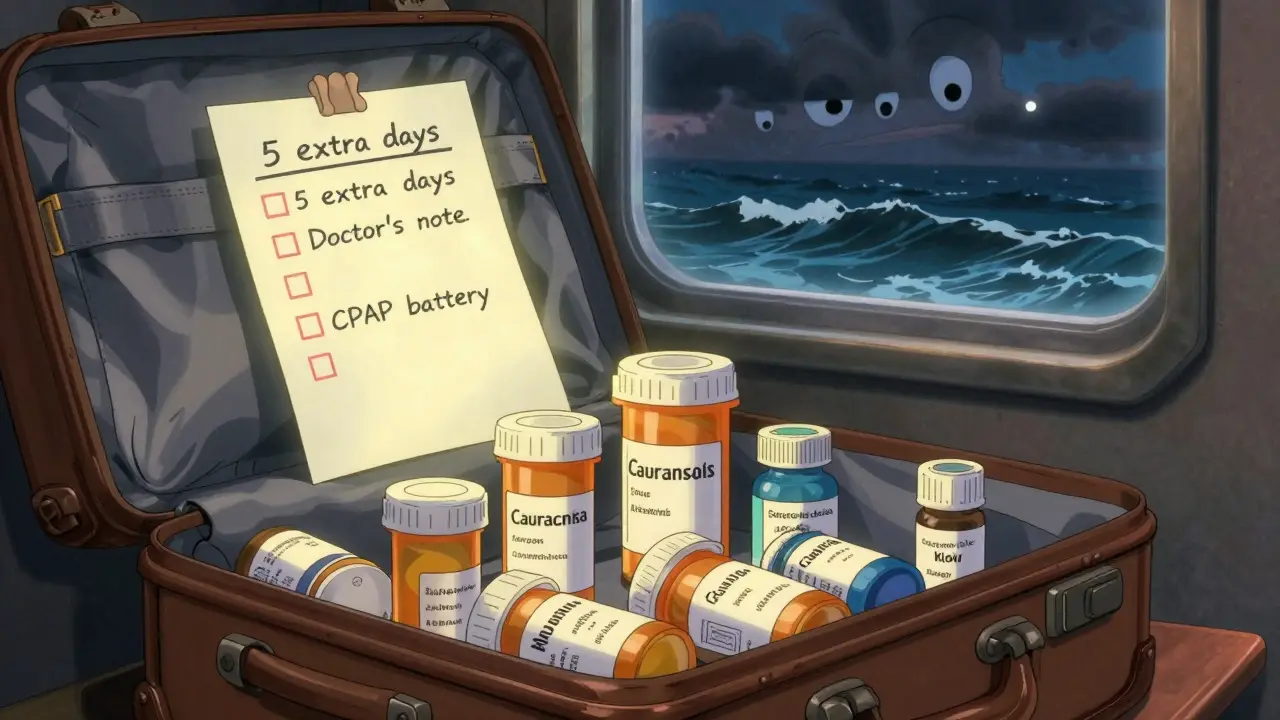
How Different Cruise Lines Compare
Not all cruise lines are the same when it comes to medical services.- Disney Cruise Line: Strictest rules. Requires labeled bottles and doctor’s notes for controlled substances. They carry a basic inventory but won’t refill prescriptions.
- Royal Caribbean, Carnival, Norwegian: Basic infirmary services. Stock common meds. No specialty drugs. High prices. No refills unless it’s an emergency and they have it.
- Storylines: Built for long-term living. Offers compounding pharmacies, can fill specialty prescriptions-but only if you submit them 6 to 12 months in advance. This is the only cruise line that treats medical needs like a clinic, not just an emergency room.
What to Pack: The Checklist
Here’s what to actually bring:- All medications in original containers with labels
- At least 5 extra days’ supply beyond your return date
- Copy of your prescription list (digital and paper)
- Doctor’s note for insulin, narcotics, or controlled substances
- CPAP machine, distilled water, and extension cord (if needed)
- Over-the-counter basics: pain relievers, antacids, anti-diarrheal, motion sickness pills
- Emergency contact info and insurance card (some ships can bill your insurer)
What Happens If You Run Out?
If you run out and the ship doesn’t have your drug, you’re stuck until the next port. And not all ports have pharmacies open on weekends or holidays. One passenger on a 14-day cruise got stuck in a remote Caribbean island after her blood pressure meds ran out. The next port was 2 days away. The ship’s doctor gave her a temporary substitute, but it wasn’t ideal. She spent the rest of the trip dizzy and nauseous. Your best bet? Always have a backup. If you take a daily pill, bring two bottles. If you’re on a long cruise, consider ordering an extra 90-day supply before you leave and mailing it to a friend or family member who can hand it to you at a port stop.Telemedicine Is Changing Things-But Not Enough
Some newer ships, like Royal Caribbean’s 2024 fleet, now offer telemedicine. That means you can video-call a shore-based doctor for advice. But even this has limits. They can’t call in prescriptions to a local pharmacy unless you’re docked. And they won’t override the ship’s inventory. So if your drug isn’t on board, telemedicine won’t magically get it there.The Bottom Line
Cruise ship medical centers are great for treating a bad sunburn or a stomach bug. They’re not a pharmacy. They’re not your doctor’s office. They’re a safety net for emergencies-not a backup for poor planning. If you follow these steps:- Bring all meds in original bottles
- Bring extra supply (5+ days beyond your trip)
- Know what your cruise line can and can’t do
- Prepare for specialty needs ahead of time
Can I get my prescription refilled on a cruise ship?
Most cruise ships cannot refill prescriptions, especially for specialty or controlled medications. They carry a limited inventory for common conditions like seasickness, infections, or high blood pressure, but they won’t have your specific drug unless it’s a standard, widely used medication. Always bring enough for the entire trip plus extra days.
Do I need to bring my medications in original bottles?
Yes. Cruise lines and security require medications to be in their original, labeled containers with your name, the pharmacy name, and the prescribing doctor’s information. Unlabeled pills in pill organizers or ziplock bags may be confiscated, even if they’re legal in your country.
How much extra medication should I bring?
Bring at least three to five extra days’ supply beyond your scheduled return date. Cruises can be delayed due to weather, mechanical issues, or port closures. Running out of medication mid-voyage can lead to serious health risks and expensive on-board purchases.
Are prescription drugs expensive on cruise ships?
Yes. Prices are typically 200% to 300% higher than at home pharmacies. A single antibiotic dose might cost $35 instead of $10. Some ships don’t list prices upfront, so it’s best to assume you’ll pay more and plan accordingly by bringing your own supply.
Can I get insulin or CPAP supplies on a cruise ship?
Insulin is rarely stocked. You must bring your own with a doctor’s note and keep it cool. CPAP machines are not provided. You need to bring your own, plus distilled water and an extension cord. Some cruise lines, like Storylines, require advance notice for these items. Always confirm with your cruise line before departure.
What if I need a narcotic painkiller on the cruise?
Most cruise lines do not carry narcotics like oxycodone or hydrocodone. Even Storylines, which has the most advanced pharmacy, says these are only available in minimal amounts and only for true emergencies. If you rely on these medications, you must plan your trip around ports where you can refill legally-or adjust your treatment before you sail.
Do cruise ships have telemedicine for medication questions?
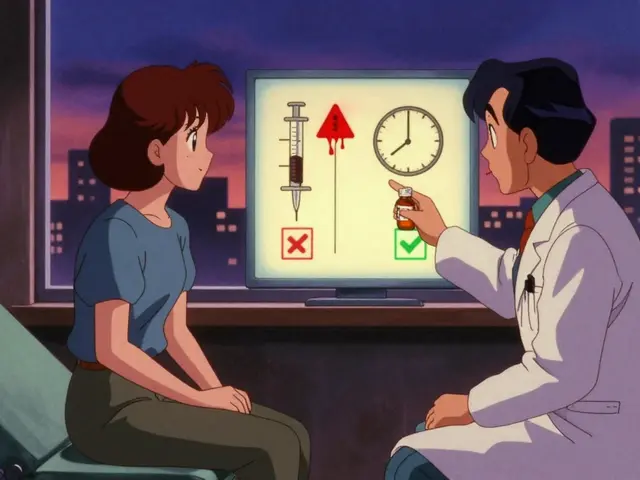
Some newer ships offer telemedicine, allowing you to video-call a shore-based doctor. But they cannot refill prescriptions or send meds to the ship. They can only advise on dosage or suggest alternatives from the ship’s limited inventory. It’s helpful for advice, not for getting new prescriptions.




Ian Long
9 January, 2026 20:27 PMI once forgot my blood pressure meds on a Caribbean cruise. Thought I’d be fine. Ended up in the ship’s infirmary paying $42 for a single pill that costs $3 at CVS. Never again. Bring. Everything.
Patty Walters
10 January, 2026 13:32 PMOMG YES. I had a friend who used a pill organizer for her thyroid meds. Got pulled aside by security for 45 mins. They thought she was smuggling drugs. She cried. Bring the original bottles. Even if they look messy. Even if your suitcase looks like a pharmacy exploded.
Phil Kemling
11 January, 2026 15:59 PMIt’s funny how we treat cruise ships like floating resorts when they’re really just floating prisons with a buffet. The medical center isn’t there to serve you-it’s there to keep you alive long enough to pay for another cocktail. The real luxury isn’t the ocean view. It’s the fact that you remembered to pack your insulin.
tali murah
13 January, 2026 09:01 AMLet me get this straight-people can’t plan ahead for a 7-day vacation? You’re telling me you can’t be bothered to pack your own damn pills? This isn’t a survival guide. This is Basic Human Responsibility 101. If you’re on a cruise and need a narcotic refill, you shouldn’t be on a cruise. You should be in a hospital. Or jail.
Jenci Spradlin
14 January, 2026 13:30 PMPro tip: if you take CPAP, bring 2 extension cords. One breaks. Always. And get the distilled water from the ship’s gift shop? Don’t. It’s $12 a bottle. Buy it at Target before you fly. Trust me, I learned this the hard way in the middle of the Atlantic with a machine that sounds like a dying dragon.
Heather Wilson
16 January, 2026 06:52 AMIt’s not just about bringing meds-it’s about the psychological preparedness. You’re not on vacation. You’re on a floating medical liability zone. If your medication is even remotely complex, you’re not a tourist-you’re a patient with a passport. And if you don’t treat it that way, you deserve what happens next. Dizzy. Nauseous. Alone. On a boat.
Micheal Murdoch
17 January, 2026 21:01 PMHey, I get it-planning ahead feels like work. But think of it this way: you wouldn’t show up to a job interview without shoes. Don’t show up to a cruise without your meds. Bring the extra days. Bring the doctor’s note. Bring the backup bottle. You’re not being paranoid-you’re being smart. And if you help someone else remember this? You’re a hero.
Chris Kauwe
18 January, 2026 10:57 AMThese cruise lines are outsourcing their medical duties to the American healthcare system’s failures. We’ve turned medicine into a commodity, and now they expect you to carry your own pharmacy. This isn’t innovation-it’s corporate abandonment dressed up as convenience. The only thing more American than this is charging $35 for an antibiotic.
RAJAT KD
19 January, 2026 17:32 PMInsulin must be kept cold. Always confirm fridge access. I once saw a man put his insulin in a cooler with beer. He didn’t know it needed to be above freezing. He got sick. Don’t be him.
Pooja Kumari
21 January, 2026 01:20 AMOkay but like… imagine if you’re on a 30-day cruise and your anxiety meds run out? You’re not just stuck-you’re spiraling. Like, imagine being on a boat with 3,000 people and your brain is screaming and you can’t remember your own name because you didn’t pack your SSRIs. I cried for three days. I still have nightmares about that banana smoothie I drank because I thought it would help. It didn’t. Bring your meds. Bring your peace. Bring your sanity.
Jacob Paterson
22 January, 2026 18:36 PMOhhh so now we’re treating cruise ships like pharmacies? Next you’ll want them to refill your Adderall. Newsflash: this isn’t Walgreens with a view. If you’re on a cruise and you need narcotics, you’re not sick-you’re addicted. And if you think a cruise line owes you oxycodone, you’re not a traveler. You’re a liability.
Elisha Muwanga
24 January, 2026 12:49 PMLet me be clear: this entire post is just a glorified PSA for people who can’t manage their own health. The real issue isn’t the cruise ship. It’s the fact that you’re relying on a floating infirmary to manage your chronic condition. If you can’t plan for a week-long trip, maybe you shouldn’t be traveling at all. This isn’t a guide-it’s a warning label.