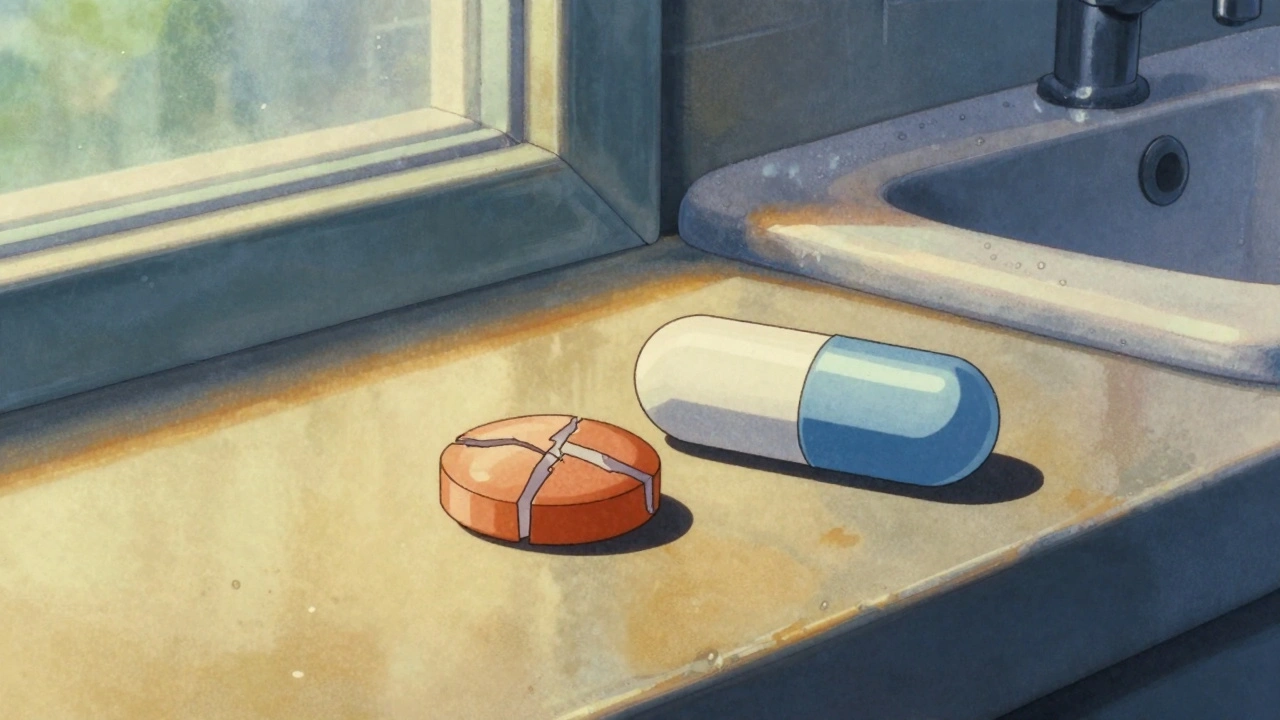
When you pick up a bottle of generic ibuprofen or a pack of insulin, you assume it will work just like the brand-name version. But here’s the truth: generic drugs don’t always degrade the same way. And that difference can affect safety, potency, and how long you can safely use them.
What Shelf Life Really Means
Shelf life isn’t just a date printed on the label. It’s the result of months-or years-of scientific testing that answers one question: Will this product still be safe and effective by the time you use it? The U.S. Food and Drug Administration (FDA) and the European Medicines Agency (EMA) require every drug, whether brand-name or generic, to prove it stays within strict chemical, physical, and microbiological limits until that expiration date.That means the active ingredient must still be at least 90% of the labeled amount. Impurities can’t creep above 0.1%. The pill must still dissolve properly. The liquid can’t grow mold. The inhaler must still deliver the right dose. If any of these fail, the product is no longer approved for use-even if it looks fine.
How Degradation Happens (And Why It’s Not Always Obvious)
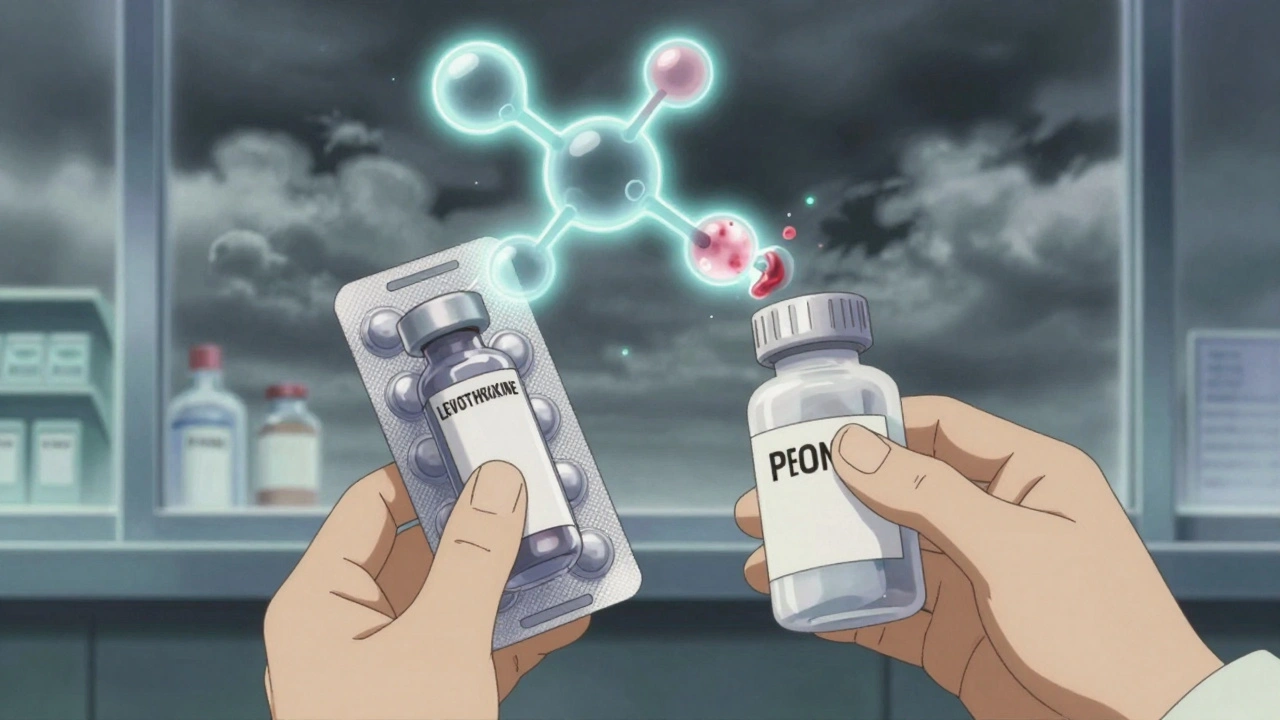
Drugs don’t just expire because they’re old. They break down due to heat, moisture, light, or even interactions with the packaging. A common example is levothyroxine, a thyroid medication. A 2020 FDA study found that 17.3% of generic versions had stability issues not seen in Synthroid, the brand. Why? Moisture. Some generics used packaging that didn’t block humidity well enough. Over time, the active ingredient degraded, and patients got less medicine than prescribed.Physical changes matter too. Nanoparticle drugs, like those used for cystic fibrosis, rely on tiny particles under 200nm to reach deep into the lungs. If those particles clump together-even slightly-because of temperature swings during shipping, they become useless. The drug still looks clear. The bottle hasn’t leaked. But it won’t work.
And then there’s polymorphism. Some drug molecules can rearrange into different crystal structures when exposed to humidity or temperature changes. One form works. Another doesn’t. A quality assurance professional once spent 18 months and $250,000 on a stability study that passed accelerated testing at 40°C-only to find the product crystallized at room temperature after 24 months. The accelerated test missed it entirely.
Testing Isn’t One-Size-Fits-All
Regulators require two types of testing: real-time and accelerated.Real-time testing means storing the product under normal conditions-usually 24-25°C and 60% humidity-for as long as the claimed shelf life. For a 36-month product, that means waiting three years. It’s slow, but it’s the gold standard.
Accelerated testing uses higher stress: 40°C and 75% humidity for six months. The idea is that heat speeds up degradation, so you can predict long-term behavior quickly. But here’s the catch: sometimes, the degradation path at 40°C is completely different than at room temperature. A chemical reaction that happens slowly over years might not even occur under accelerated conditions. Or worse, it might trigger a new, unexpected breakdown pathway.
That’s why experts warn against blindly trusting accelerated results. One FDA scientist put it bluntly: “You can’t heat something to death and assume you’ve seen all the ways it will fail at room temperature.”
Why Generic Drugs Are More Vulnerable
Generic drugs must be bioequivalent to the brand-meaning they deliver the same amount of medicine into the bloodstream. But they don’t have to use the same excipients (inactive ingredients) or manufacturing methods. And that’s where stability problems start.Brand-name companies spend millions optimizing every part of the formulation. Generic manufacturers often choose cheaper fillers, binders, or coatings to cut costs. These choices can make the product more sensitive to moisture, oxygen, or light. A 2021 Texas A&M review noted that generic drugs “may not have been through quite the same process” as the original. That doesn’t mean they’re unsafe-but it does mean their stability profile is less predictable.
And then there’s packaging. Brand-name drugs often use blister packs with aluminum backing and desiccants. Generic versions might use simple plastic bottles. One study showed that generic antibiotics stored in plastic bottles had 30% higher moisture content after six months than those in blister packs. That’s enough to trigger degradation in moisture-sensitive drugs.
The Hidden Costs of Poor Stability
When a drug degrades, it’s not just a loss of potency. It can become toxic. Degradation products can cause allergic reactions, liver damage, or even cancer in extreme cases. The FDA tracks these impurities under ICH Q3B guidelines. Anything above 0.1% must be identified and evaluated for safety.But the biggest risk isn’t always chemical. Microbial growth is the #1 cause of drug recalls in the pharmaceutical industry. Preservatives in eye drops, nasal sprays, or liquid antibiotics can break down over time. If water activity (aw) isn’t properly controlled, bacteria and fungi can grow. A 2022 survey found 41.3% of stability-related recalls were due to this exact issue.
And it’s not just drugs. Food products face similar challenges. A food scientist reported that using advanced water activity and pH monitoring-instead of standard USP methods-extended the shelf life of refrigerated soups by 22%. That’s not just about waste reduction. It’s about safety. Spoiled food doesn’t always smell bad. But it can still harbor dangerous pathogens.
What’s Changing in 2025
Regulators are starting to catch up. The ICH Q12 guideline, effective since late 2023, allows companies to make post-approval changes to manufacturing or packaging without restarting full stability studies-so long as they can prove stability won’t be compromised. It’s a shift toward smarter, science-based regulation.Companies are also using predictive modeling. The IQ Consortium’s Risk-Based Predictive Stability (RBPS) tools helped Amgen and Merck cut shelf-life determination time by 30%. These models use machine learning to analyze how different stress factors interact. They’re not yet widely accepted by regulators-but they’re the future.
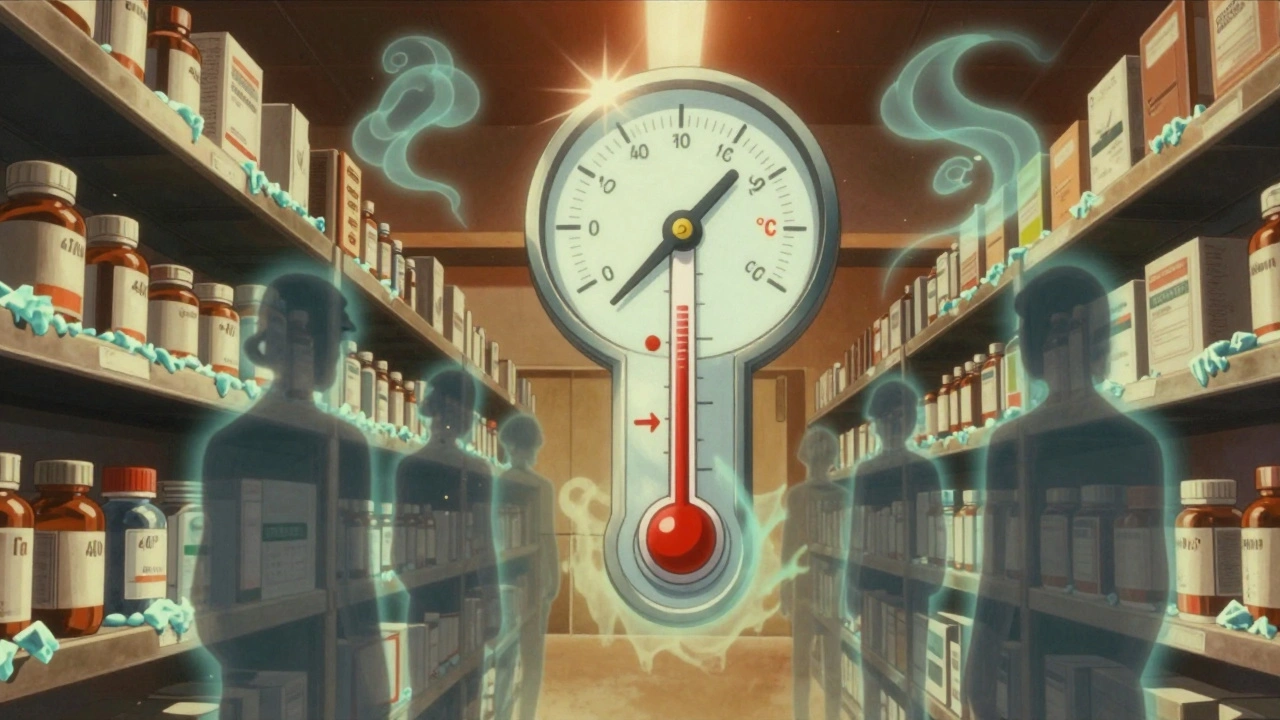
Meanwhile, climate change is making storage harder. A 2022 MIT study projected that by 2050, rising global temperatures could reduce average drug shelf life by nearly five months. Warehouses in major distribution hubs are already exceeding 30°C for more than 87 days a year. That’s outside the acceptable range.
What You Should Do
If you’re a patient: Store your medications as directed. Keep them in a cool, dry place-not the bathroom or the dashboard of your car. Check expiration dates. If a pill is cracked, discolored, or smells odd, don’t take it. Don’t assume “it’s still good” because it’s only a month past the date.If you’re a pharmacist or healthcare provider: Pay attention to storage conditions in your facility. Document temperature logs. If a generic drug looks different from the last batch, investigate. Report any suspected stability issues to the FDA’s MedWatch program.
If you’re a manufacturer: Don’t cut corners on packaging or excipients. Test for polymorphic changes. Monitor water activity. Validate your analytical methods. And never rely on accelerated testing alone.
Why This Matters More Than You Think
Stability testing isn’t just paperwork. It’s the last line of defense between a patient and a harmful product. In low-income countries, nearly 30% of medicines fail stability tests because of poor storage during transport. In the U.S., recalls still happen because someone wrote “room temperature” on a form instead of documenting exact humidity and temperature ranges.Generic drugs make healthcare affordable. But affordability shouldn’t come at the cost of safety. The science of stability is complex, expensive, and often invisible. But when it fails, people get sick. And that’s never an acceptable trade-off.

Gilbert Lacasandile
9 December, 2025 04:06 AMInteresting read. I work in a pharmacy and we’ve had a few batches of generic levothyroxine where the pills looked fine but patients reported no improvement. We started tracking lot numbers and noticed a pattern-plastic bottles vs. blister packs made all the difference. Never thought packaging could be that critical.
Nikhil Pattni
9 December, 2025 17:45 PMMan, I used to think generics were just cheaper versions of the same thing-turns out they’re like buying a knockoff watch that says ‘water resistant’ but falls apart in the rain. I had a cousin who took a generic insulin for six months, thought she was fine, then ended up in the ER with DKA. The bottle looked perfect. No mold, no discoloration. But the active ingredient had degraded to 78%. That’s not ‘close enough’-that’s a death sentence waiting to happen. And yeah, the packaging? Cheap plastic with no desiccant. I’m not even mad, just scared. We need better oversight, not just ‘bioequivalent’ on a label. 🤯
precious amzy
10 December, 2025 00:55 AMOne cannot help but observe the epistemological crisis inherent in the commodification of pharmaceutical integrity. The FDA’s regulatory framework, while ostensibly scientific, operates within a neoliberal paradigm that prioritizes cost-efficiency over ontological certainty. The very notion of ‘shelf life’ becomes a performative fiction when the material substrate of the drug is subject to stochastic degradation pathways unaccounted for by accelerated testing regimes. One must ask: if a pill degrades invisibly, and no patient is harmed-does it still fail?
Lola Bchoudi
10 December, 2025 14:52 PMExactly. Water activity (aw) is the unsung hero of pharmaceutical stability. Most people think ‘moisture = bad,’ but it’s not that simple. It’s about thermodynamic water activity-how tightly bound the water molecules are. If aw > 0.6, you’re in microbial growth territory. If it’s 0.3–0.5, you’re safe. But most generics don’t test for it. They test for ‘appearance.’ That’s like judging a car’s safety by how shiny the paint is.
Richard Eite
12 December, 2025 11:24 AMUSA makes the best drugs. Everything else is garbage. Why are we letting foreign labs make our medicine? They don’t even follow our standards. Stop importing cheap junk. We pay for quality. We deserve quality.
Morgan Tait
13 December, 2025 22:29 PMThey’ve been hiding this for decades. The real reason generics are cheaper? They skip the stability tests that cost millions. Big Pharma and the FDA are in bed together. You think they care if some old lady in Nebraska gets 70% of her thyroid dose? Nah. They’re too busy counting their billions. And don’t get me started on the plastic bottles-those are just one step away from storing your meds in a Ziploc. 😏
Darcie Streeter-Oxland
15 December, 2025 10:02 AMIt is, of course, lamentable that the regulatory apparatus has permitted the proliferation of suboptimal pharmaceutical formulations under the rubric of cost containment. The absence of rigorous, longitudinal stability data for generic agents constitutes a systemic failure of pharmacovigilance. One might reasonably infer that the current paradigm prioritizes fiscal expediency over therapeutic fidelity.
Evelyn Pastrana
16 December, 2025 19:20 PMSo basically, your $4 generic is a gamble. And the house always wins. 🎰
Chris Marel
18 December, 2025 16:56 PMThis is eye-opening. In Nigeria, we often get medicines from different countries. Some expire in 1 year, others in 3. No one checks the storage conditions. I’ve seen people keep insulin in a hot room because the fridge broke. This isn’t just about generics-it’s about access. We need better education and better supply chains. Not just more regulations.
Courtney Black
19 December, 2025 17:47 PMThe tragedy isn’t the degradation-it’s that we’ve normalized it. We’ve turned medicine into a commodity, and in doing so, we’ve made suffering invisible. The patient who doesn’t get better? They’re just ‘non-compliant.’ The pill that lost potency? ‘Expired by a month, no big deal.’ We don’t see the quiet deaths. We don’t measure the lost years. We just keep buying the cheaper bottle.
Arun Kumar Raut
20 December, 2025 07:03 AMGood point. I’m from India, and we make a lot of generics. But I’ve seen factories where they use the same machine for antibiotics and painkillers without cleaning properly. It’s not just packaging-it’s the whole system. We need global standards, not just ‘FDA approved’ stamps on bottles made in places with no inspectors. Let’s fix the root, not just the label.
Tejas Bubane
20 December, 2025 16:58 PMWow, so the whole generic industry is just a scam built on lazy science and plastic bottles. And we’re supposed to be grateful? The FDA is a joke. They approved 90% of these generics based on accelerated tests that are basically guessing. And now people are dying because someone saved $0.02 on a desiccant. Congrats, capitalism. You won.
Carina M
21 December, 2025 08:44 AMIt is an egregious abdication of the fiduciary duty owed to the patient population when regulatory bodies permit the substitution of scientifically unvalidated excipients under the banner of bioequivalence. The reduction of pharmaceutical science to a cost-benefit analysis reflects not merely institutional failure, but a moral collapse. One must question the epistemic legitimacy of a system that equates chemical similarity with therapeutic equivalence.