That plastic bottle sitting in your recycling bin? It might be handing your name, address, and medical history directly to an identity thief. We often toss our empty prescription containers without a second thought, assuming the small print is too insignificant to matter. The reality is starkly different. Prescription labels are gold mines for criminals looking to commit insurance fraud or obtain controlled substances under false identities.
You don't need to be a cybersecurity expert to protect yourself, but you do need to know that peeling the label off by hand usually leaves behind enough residue for someone to reconstruct your data. This guide breaks down exactly how to destroy that personal information effectively, safely, and quickly, so you can recycle with peace of mind.
Why Your Prescription Label Is a Security Risk
It’s not just about privacy; it’s about financial safety. When you throw away a pill bottle, you aren’t just discarding plastic. You’re discarding a document that links your identity to specific health conditions. According to data from the U.S. Department of Justice, there were over 412,000 pharmacy-related identity theft cases reported in 2021 alone. That number keeps climbing.
The Federal Trade Commission (FTC) lists prescription labels as one of the top five sources for identity thieves. In their 2022 Consumer Sentinel Network Data Book, they documented $560 million in healthcare fraud losses. Criminals use this data to apply for loans, open new accounts, or even steal medications. If you’ve ever wondered why your credit score suddenly dropped or why you received bills for medical services you never used, look at what you threw away last month. The connection between identity theft and improper disposal is direct and dangerous.
Can identity thieves really read my data from a recycled bottle?
Yes. Modern scanning technology and smartphone apps can enhance faded text or recover data hidden under adhesive residue. Even if you think you’ve blacked out the info, "ghost imaging" techniques using infrared light can sometimes reveal what lies beneath.
The Problem with Manual Peeling
Your first instinct is probably to peel the label off with your fingernails. While this feels like a solution, it fails on nearly 92% of modern prescription bottles. Most pharmacies use waterproof acrylic adhesives designed to withstand moisture and temperature changes. These same properties make them incredibly resistant to manual removal.
When you peel these labels, two things happen. First, the paper tears, leaving fragments of text stuck to the plastic. Second, and more critically, the adhesive remains. Titan Labs demonstrated in a 2022 video that this permanent adhesive residue often contains the full patient data printed into the glue itself. You might see nothing with the naked eye, but forensic tools can lift that residue and read your name, date of birth, and doctor’s details clearly. Don’t waste time trying to scrub it off with water-it won’t work.
Method 1: Chemical Dissolution for Clean Removal
If you plan to reuse the bottle-for travel pills, craft supplies, or organizing small hardware-chemical dissolution is the most effective method. It removes the label entirely, leaving the plastic pristine and free of any data traces.
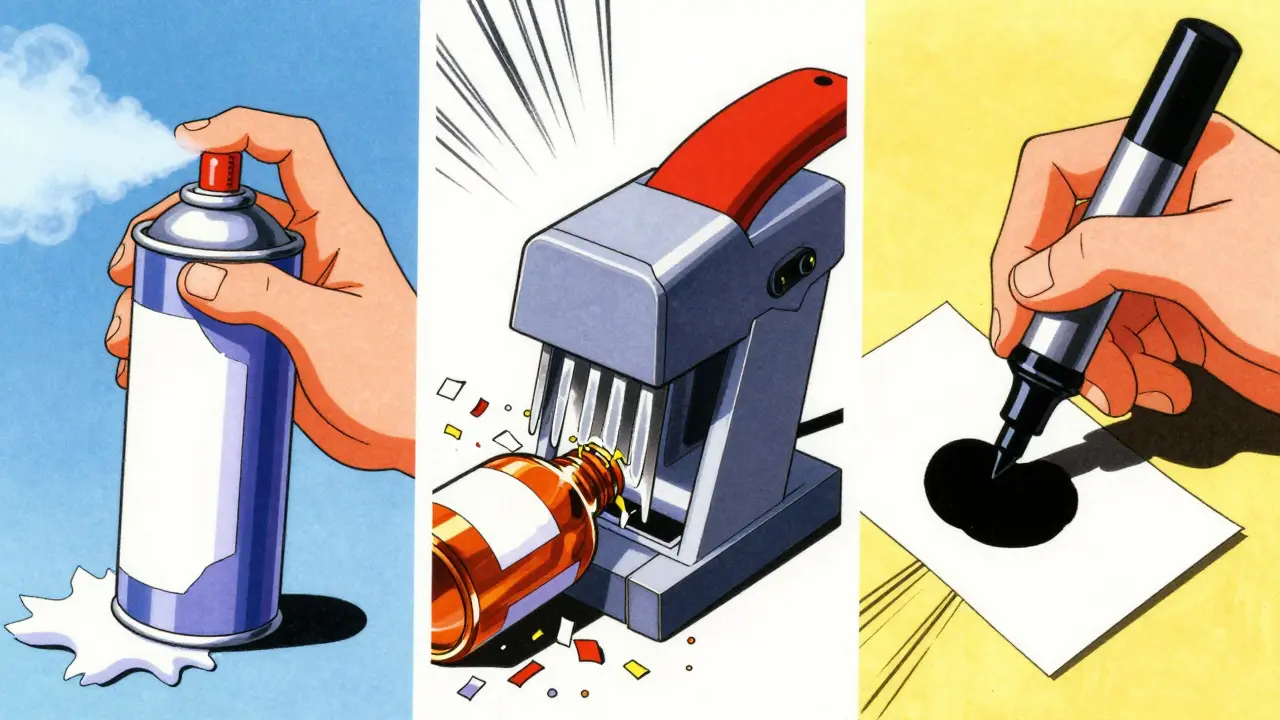
The industry standard for this is Cleanup Solvent-22, manufactured by Titan Labs. This isn’t just household acetone; it’s a proprietary formula designed specifically to break the bond of acrylic adhesives used on polypropylene and high-density polyethylene bottles. Here is how to use it correctly:
- Saturate the label: Apply the solvent generously over the entire surface of the label. Ensure the liquid penetrates under the edges.
- Wait 15-20 seconds: Let the chemical work. Do not rush this step. The solvent needs time to dissolve the adhesive bonds.
- Peel gently: Use a plastic scraper or your fingernail to lift the corner. The label should slide off in one piece without tearing.
- Wipe clean: Wipe away any remaining oily residue with a paper towel.
This process takes about 32 seconds per bottle, compared to nearly two minutes of futile scraping for manual methods. It has a 98.7% success rate across common bottle materials. The downside? Cost and accessibility. At roughly $14.99 per bottle, it’s an investment, and you typically have to order it online rather than finding it in a local store. Also, ensure you work in a well-ventilated area, as the fumes can be strong.
Method 2: Shredding for Total Destruction
If you aren’t planning to reuse the bottle, shredding is the safest option. However, not all shredders are created equal. You need a cross-cut shredder, not a strip-cut one. Strip-cut shredders leave long strips that can be pieced back together like a jigsaw puzzle. Cross-cut shredders chop the label and bottle into tiny confetti-like pieces, making reconstruction virtually impossible.
Before you shred, check your machine’s capacity. Many home shredders jam when processing thick plastic caps or multiple layers of adhesive. To avoid this:
- Remove the cap before shredding the bottle body.
- Shred the label separately if possible, or flatten the bottle to reduce bulk.
- Do not overload the shredder; feed the material slowly.
For those who don’t own a heavy-duty shredder, some pharmacies offer drop-off bins for secure destruction. Check with your local CVS or Walgreens, as many implemented in-pharmacy label-removal stations starting in 2020. This is a convenient way to offload the responsibility entirely.
Method 3: Obscuration with Permanent Marker
When you lack solvents or shredders, obscuring the data with a marker is the fallback option. But you must do it right. Melody Sun, a clinical pharmacist at Children's Hospital of Orange County (CHOC), specifies a strict protocol for this method because simple scribbles often fail.
To properly obscure the label:
- Use a Sharpie Permanent Marker: Regular ink washes off or fades. You need oil-based permanent ink.
- Apply three thick layers: One layer isn’t enough. Go over every single character-name, address, prescription number, doctor’s name-at least three times until the plastic underneath is completely opaque.
- Cover everything: Don’t skip the barcodes or tiny print. Identity thieves can decode partial data.
This takes about 47 seconds per bottle. However, be aware of the limitations. CHOC’s 2023 observational data showed that marker application failed to prevent digital recovery in 63% of cases due to "ghost imaging." Under certain lighting or with specialized phone apps, residual data can still be visible through the ink. If security is your top priority, this method is less reliable than chemical removal or shredding. Always hold the bottle up to a bright light after marking; if you can see any shadow of text, keep writing.
Comparison of Removal Methods
| Method | Success Rate | Time Per Bottle | Cost | Best For |
|---|---|---|---|---|
| Chemical Solvent (e.g., Cleanup Solvent-22) | 98.7% | ~32 seconds | $14.99 (initial purchase) | Reusing bottles cleanly |
| Cross-Cut Shredding | 100% | ~10 seconds | Free (if owned) | Disposing of bottles permanently |
| Permanent Marker Obscuration | 37% (due to ghost imaging risks) | ~47 seconds | $1-$2 (marker) | Quick, low-tech disposal |
| Manual Peeling | 8% (high failure rate) | ~98 seconds | Free | Not recommended |
Timing and Best Practices
Speed matters. The longer a labeled bottle sits in your trash or recycling bin, the higher the risk. Javelin Strategy’s 2021 Identity Fraud Report indicates that delayed processing increases identity theft risk by 40%. Aim to destroy the label within 24 hours of finishing your medication.
Here are some critical best practices to follow regardless of the method you choose:
- Ventilation: If using solvents, always work near an open window or fan. Acetone fumes are flammable and can cause dizziness.
- No Plastic Scrapers: Avoid metal blades or hard plastic scrapers that can scratch the bottle. Scratches can trap microscopic fibers containing data.
- Light Inspection: After any method, hold the bottle up to a bright light source. If you see any shadows of text, repeat the process.
- Separate Caps: Caps often contain no data but can jam shredders. Recycle them separately according to your local guidelines.
Pharmacies are increasingly recognizing this issue. Many now provide disposal kiosks equipped with label-removal tools. If you’re unsure about doing it yourself, ask your pharmacist. They may have a dedicated station where you can drop off empty bottles for secure processing.
What About Home Remedies?
You might find advice online suggesting vinegar soaks or hairdryers. Let’s address those directly. Vinegar soaks have a 78% failure rate according to CHOC testing. The acidity isn’t strong enough to break acrylic adhesives. Hairdryers can soften the glue temporarily, allowing you to peel the label, but they almost always leave behind significant adhesive residue. This residue retains the printed data, making it vulnerable to forensic recovery. Stick to proven methods: chemical solvents, shredding, or thorough marker obscuration. Don’t gamble with your identity for the sake of saving a few dollars on supplies.
Is it illegal to throw away prescription bottles with labels intact?
While HIPAA primarily places data protection responsibilities on healthcare providers, the FTC explicitly states that patients must destroy prescription labels to prevent identity theft. Failing to do so doesn’t necessarily carry legal penalties for individuals, but it does expose you to significant financial and personal risk.
Can I just cut the label off with scissors?
Cutting the label off is better than peeling, but only if you destroy the cut-off piece immediately. If you throw the cut label into the trash, it can still be recovered. Shred the cut label or burn it (safely) to ensure the data is gone. Do not simply discard the cut strip.
Does the type of plastic bottle matter?
Most prescription bottles are made of polypropylene or high-density polyethylene. Both react similarly to chemical solvents like Cleanup Solvent-22. Glass bottles are rare for oral medications but follow the same labeling rules. The material doesn’t change the security risk, only the method of removal.
How much does identity theft from medication labels cost victims?
According to Javelin Strategy’s 2023 report, the average cost per victim is $1,347. This includes time spent resolving the issue, lost wages, and potential financial losses. Preventing this with a simple label removal step is a high-return investment.
Are there eco-friendly ways to remove labels?
Chemical solvents are not biodegradable. If environmental impact is your primary concern, shredding is the most eco-friendly option as it requires no chemicals. Marker obscuration is also low-impact, though less secure. Always dispose of solvent-soaked rags according to local hazardous waste regulations.
Next Steps for Secure Disposal
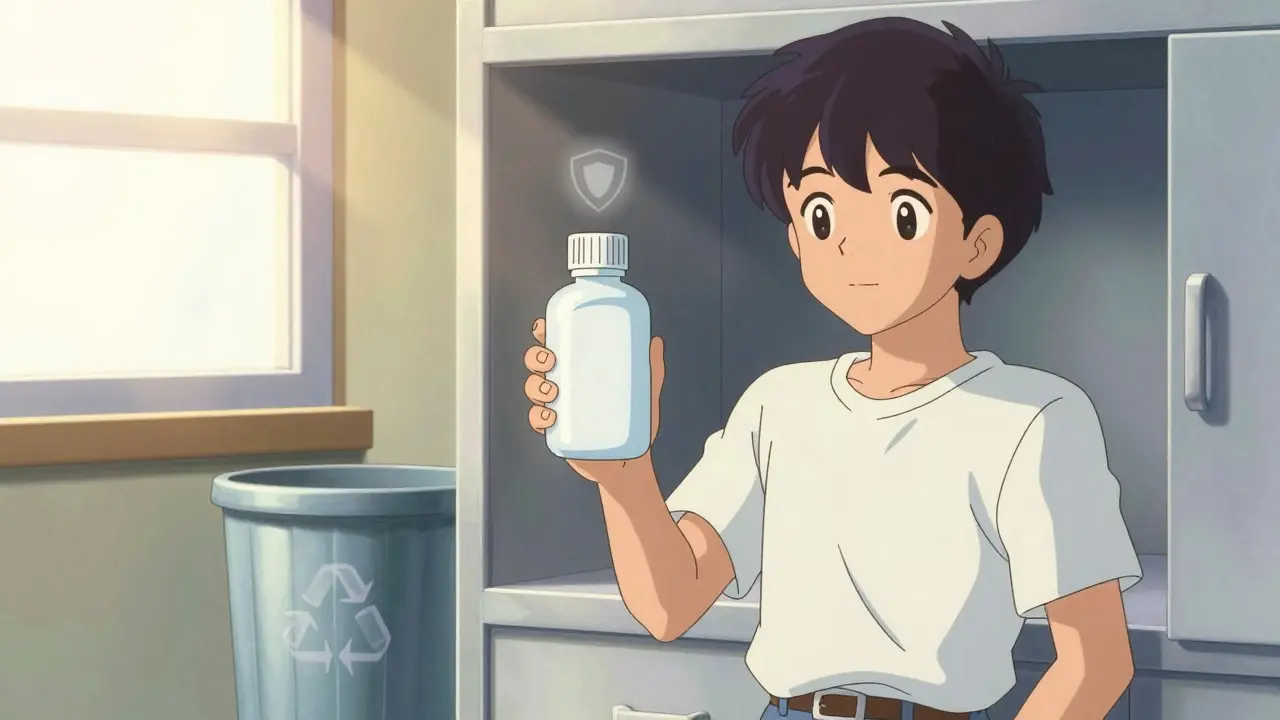
Start today. Look at your medicine cabinet. How many empty bottles are waiting to be tossed? Don’t wait until they pile up. Make label removal part of your routine. As soon as you finish a prescription, take 30 seconds to either shred the bottle, dissolve the label with solvent, or thoroughly mark it out. It’s a small habit that protects your identity, your finances, and your peace of mind. If you’re still unsure, visit your local pharmacy-they likely have resources or disposal bins ready to help you stay safe.