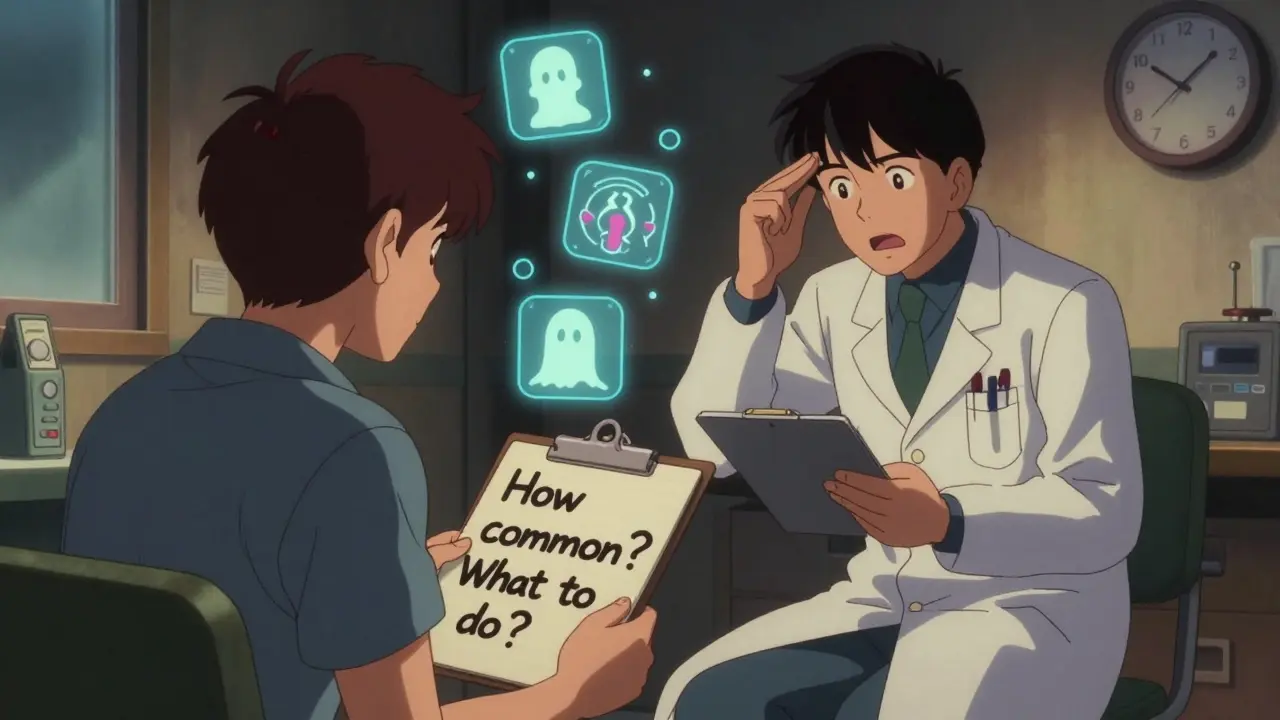
Side Effect Frequency Calculator
How common is this side effect?
Convert vague terms like "common" or "rare" into clear percentages to ask your doctor precise questions.
Your description means:
30 people out of 100
Ask your doctor:
"Out of 100 people taking this medication, how many experience this side effect?"
According to research mentioned in the article, patients who get clear, specific information about side effects are 22% more likely to stick with their treatment. Vague terms like "common" or "rare" create unnecessary anxiety and lead to poor adherence.
Example: When a doctor says "common," it could mean anything from 1% to 50% of patients. Our calculator helps you get concrete numbers so you can:
- Understand actual risk
- Compare treatment options
- Ask specific follow-up questions
- Avoid the nocebo effect (where warnings increase side effect experience)
When you start a new medication, your doctor might say, "Common side effects include headache and dizziness." But what does "common" really mean? Is it one in ten people? One in a hundred? And what if you get a side effect that wasn’t mentioned at all? You’re not alone. Most patients leave the office with more questions than answers about what to expect - and that gap in communication can cost you your health.
Why Side Effect Communication Matters More Than You Think
You take your pills every day because you trust your doctor. But if you don’t understand what might happen, you might stop taking them. In the U.S., half of people with chronic conditions like high blood pressure or diabetes don’t take their meds as prescribed. And in nearly 18% of those cases, it’s because they weren’t properly warned about side effects. That’s not just a personal problem - it’s a systemic one. Poor communication leads to hospital visits, emergency care, and billions in avoidable costs every year. The truth? Doctors aren’t hiding information on purpose. They’re rushed. In a typical 15-minute visit, they have less than two minutes to explain a new prescription. And with dozens of possible side effects listed for each drug, they often default to the safest, vaguest version: "Some people get headaches." But here’s what research shows: patients who get clear, specific information are 22% more likely to stick with their treatment. That’s not magic. It’s science.What Patients Actually Want to Know
Not everyone wants the same level of detail. A 2023 study found three main types of patients:- 49% want to hear about both common and serious side effects
- 26% only want to know about dangerous ones
- 17% only care about common ones, like nausea or fatigue
The Right Way to Ask About Side Effects
You don’t have to wait for your doctor to bring it up. Here’s how to steer the conversation in a way that gets you real answers:- Start with your preference: Say, "How much detail would you recommend I know about side effects? I want to be prepared, but I don’t want to panic." This tells them you’re ready to listen - and helps them tailor the info.
- Ask for frequency: Don’t accept "common" or "rare." Ask: "Out of 10 people taking this, how many typically get this side effect?" If they say "about 1 in 5," you now know it’s likely.
- Ask about severity: "Is this something I can manage at home, or would I need to call you right away?" This separates annoying side effects from dangerous ones.
- Ask for solutions: "If I get nausea, what can I do? Should I take it with food? At night?" Actionable advice beats fear.
- Ask about trade-offs: "What’s the chance this will help me feel better versus how much it might make me feel worse?" This opens up a real conversation about your quality of life.
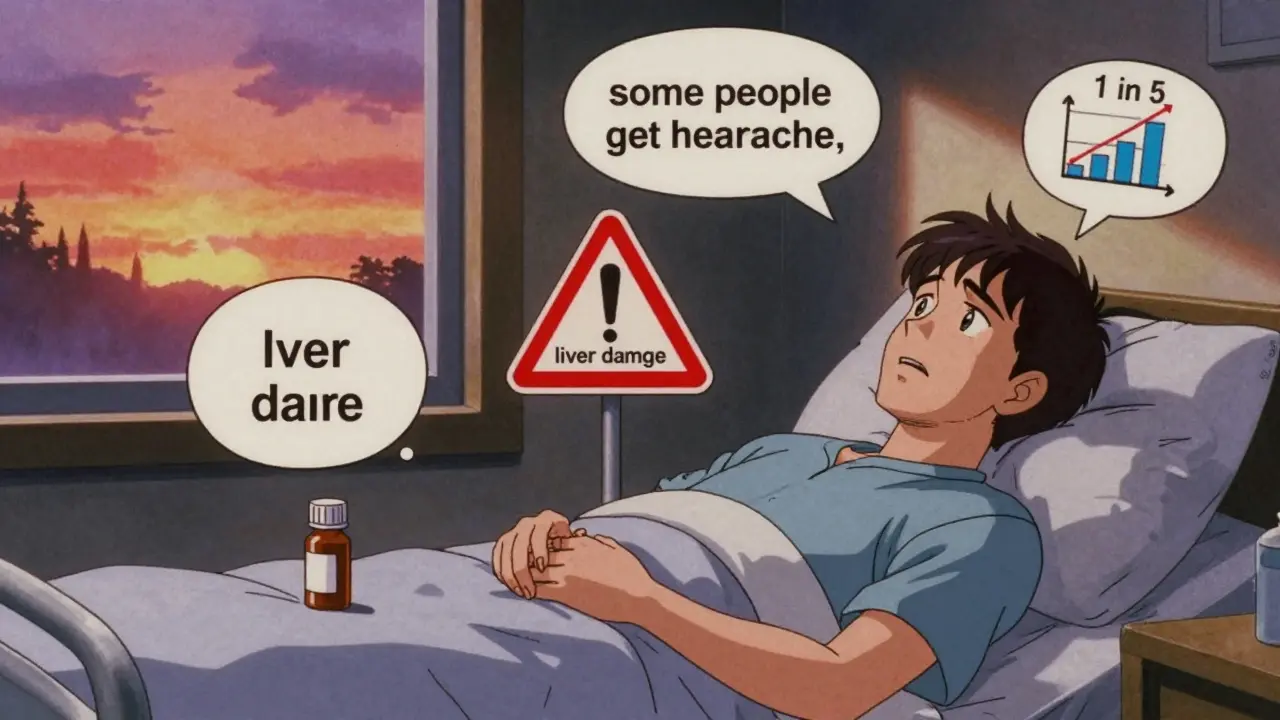
What Doctors Should Be Saying (But Often Aren’t)
Good side effect communication follows a simple three-step model:- Assess: Find out what you want to know.
- Explain: Give numbers, not labels. Say "This happens in 1 out of 4 people," not "some people."
- Plan: Co-create a strategy. "If you get dizziness, sit down for 10 minutes. If it lasts more than two days, call us."
What to Do When You’re Already Having Side Effects
You’ve been on the medication for a week. You’re tired all the time. Your stomach feels off. You didn’t know this would happen - or maybe you did, but you thought it would go away. Don’t stop cold. Don’t wait until your next appointment. Do this:- Write down exactly what you’re feeling - when, how bad, and how often.
- Check if it’s listed as a known side effect. If it’s not, note that too.
- Call your doctor’s office. Say: "I’m experiencing [symptom] since starting [medication]. I’d like to know if this is expected and what I should do."

Technology Can Help - But Only If You Use It
Your doctor’s office might have an electronic health record system with built-in side effect guides. But only 37% of primary care doctors use them regularly. That’s on them - but you can still use tools on your end.- Download a medication tracker app like Medisafe or MyTherapy. They let you log side effects and see patterns over time.
- Use the FDA’s website to look up your drug. They list side effects by frequency and severity - and it’s free.
- Ask if you can get a printed Medication Guide. By law, they must give it to you for certain high-risk drugs.
When to Get a Second Opinion
If your doctor brushes off your concerns - "It’s just a side effect, you’ll get used to it," - and you’re still struggling, it’s time to consider another provider. You deserve a doctor who listens. A 2023 analysis of patient reviews found that doctors who took time to explain side effects got an average rating of 4.7 out of 5. Those who didn’t? 3.2. Trust isn’t built on prescriptions. It’s built on conversations.Final Thought: Your Voice Is Part of the Treatment
Medications don’t work in a vacuum. They work in you - your body, your life, your fears. The best treatment isn’t just the right drug. It’s the right conversation. You don’t need to be an expert. You just need to ask. "How common is this?" "What should I do if it happens?" "Can we adjust this if it’s too much?" These are not burdens. They’re essential. Side effect burden isn’t just about physical discomfort. It’s about feeling heard. And when you’re heard, you’re more likely to stick with the treatment that could change your life.How do I know if a side effect is serious or just annoying?
Serious side effects are those that could harm your health long-term or require emergency care - like chest pain, severe rash, trouble breathing, yellowing skin, or sudden confusion. Annoying side effects are uncomfortable but not dangerous - like mild nausea, dry mouth, or fatigue. Ask your doctor to label each side effect as "common," "serious," or "rare." If you’re unsure, call your clinic. When in doubt, err on the side of caution.
Why do doctors never tell me how often side effects happen?
Many doctors don’t have time, and they’re trained to avoid scaring patients. But vague terms like "common" or "rare" are meaningless without numbers. The FDA now recommends using specific ranges - like "1 in 10" or "less than 1 in 100." You have the right to ask for these numbers. If your doctor can’t give them, ask for the Medication Guide or look it up online.
Should I stop taking my medicine if I get a side effect?
Never stop suddenly unless it’s life-threatening. Some side effects fade after a few days as your body adjusts. Others can be managed - like taking a pill with food to reduce stomach upset. Always call your doctor first. They may adjust the dose, switch the timing, or add another medication to help. Stopping without advice can cause your condition to worsen.
Can side effects get worse over time?
Yes - especially with long-term use. Some side effects appear after months, not days. For example, a blood pressure drug might cause leg swelling after six months. Others, like kidney or liver stress, show up only through blood tests. That’s why regular check-ups matter. Keep a log of new symptoms, even if they seem small. Bring it to your next visit.
What if my doctor doesn’t want to talk about side effects?
If your doctor dismisses your concerns, avoids answering questions, or makes you feel guilty for asking, it’s time to find someone new. Good care means partnership - not just prescriptions. You’re paying for your health. You deserve a doctor who respects your right to understand your treatment. Ask for a referral to another provider or look for clinics that specialize in patient-centered care.





Tony Du bled
23 December, 2025 09:32 AMBeen on blood pressure meds for 5 years. The first time my doctor said 'common side effect: dizziness,' I thought it meant maybe once a month. Turned out it was every damn morning for two weeks. Never asked for numbers. Big mistake.
Art Van Gelder
23 December, 2025 15:25 PMLet’s be real - the whole system is broken. Doctors are treated like assembly line workers. 15 minutes to diagnose diabetes, explain three new meds, address your anxiety about weight gain, and still make you feel like you’re wasting their time. And then we wonder why people stop taking their pills. It’s not laziness. It’s burnout - on both sides. I’ve had doctors hand me a pamphlet and say ‘read this’ like it’s a novel. But what if you’re 70 and your eyesight’s going? What if English isn’t your first language? What if you’re just exhausted from working two jobs and raising kids? The fact that we’ve reduced human health to a checklist is tragic. We need more time, more empathy, more training in communication - not just more apps or more pamphlets. The science is clear: people stick to treatment when they feel seen. Not when they’re handed a PDF.
Kathryn Weymouth
23 December, 2025 23:22 PMI appreciate the emphasis on specificity. ‘Common’ is meaningless without context. In clinical practice, I’ve found that patients respond best when side effects are framed in terms of probability and impact. For example: ‘This headache occurs in about 1 in 4 people, usually in the first week, and typically resolves without intervention.’ This reduces anxiety by replacing ambiguity with predictability. Also, I’ve noticed that patients who are given a clear action plan - like ‘if you get this symptom, take this step’ - report significantly lower levels of distress, even if the symptom persists. It’s not about avoiding fear. It’s about equipping people with agency.
Kiranjit Kaur
24 December, 2025 15:49 PMYES YES YES 🙌 I was on antidepressants and my doctor said ‘some people get nausea’ - so I waited 3 days to tell them I was puking every morning. Thought I was overreacting. Turns out it’s super common. Don’t wait. Speak up. Your body knows. Your doctor needs to hear it. 💪❤️
Sai Keerthan Reddy Proddatoori
24 December, 2025 22:08 PMWestern medicine is all show and no substance. They give you pills like candy and then pretend they care about how you feel. In India, we know the truth - the pharma companies own the doctors. They push these drugs for profit. You think they care if you get dizzy? No. They want your money. Next time you get a prescription, check the drug’s patent date. If it’s expired, they’re selling you the same thing for 10x the price. Wake up.
Johnnie R. Bailey
25 December, 2025 22:59 PMThere’s a quiet revolution happening in primary care - and it’s not in the textbooks. It’s in the clinics where nurses hand you a printed side effect sheet with percentages. Where pharmacists call you three days after a new script. Where doctors actually say ‘I don’t know’ and look it up with you. That’s not luck. That’s design. And it works. I’ve seen patients who were ready to quit their meds turn around after a 10-minute chat with a pharmacist who said, ‘This happens to 1 in 3 people, and here’s what to do.’ That’s the future. Not apps. Not brochures. Human-to-human clarity.
Sam Black
26 December, 2025 03:58 AMBiggest thing I learned after 3 years of chronic pain meds? The side effect you’re scared of? It’s probably not the one that actually messes with you. It’s the quiet one - the fatigue you chalk up to stress, the brain fog you blame on sleep. Keep a log. Not for the doctor. For yourself. You’ll start seeing patterns. And when you walk in with a journal, not just a question - they listen. Really listen.
Nader Bsyouni
27 December, 2025 22:43 PMSo we’re supposed to interrogate our doctors now? Like they’re some kind of customer service rep? What happened to trust? To just taking the damn pill and being grateful? You want numbers? Go read the FDA label. It’s 12 pages of legalese. No one has time for this theater. Medicine isn’t a TED Talk. It’s a science. And sometimes you just have to suffer a little to get better.
Herman Rousseau
28 December, 2025 12:00 PMMy wife had a reaction to a new statin. We called the on-call nurse. She said: ‘If you’re not throwing up or passing out, it’s probably fine. But if it lasts more than 48 hours, come in.’ That’s the gold standard. Not vague warnings. Not fear-mongering. Just clear, simple, actionable steps. That’s what saves lives. Not more meetings. Not more apps. Just one person who knows what they’re talking about and says it plainly.