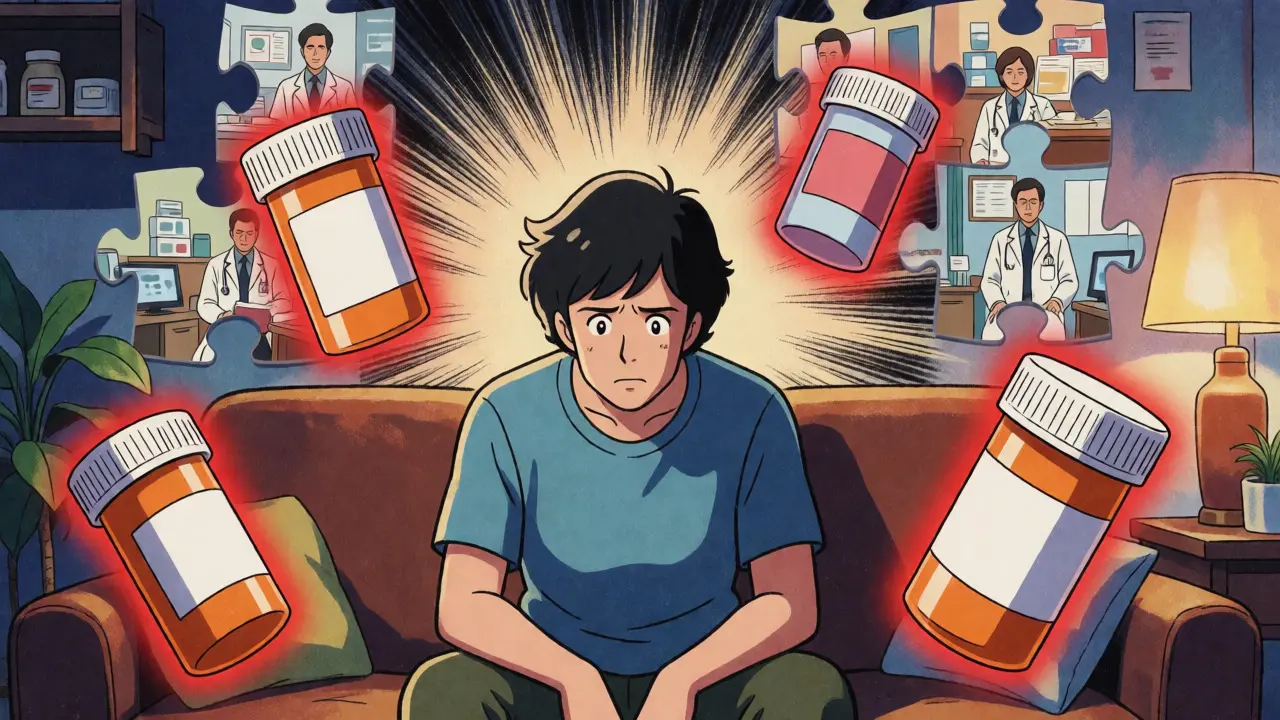
You visit your GP for high blood pressure. A week later, you see a specialist for joint pain. Two weeks after that, you end up in the emergency room with dizziness and nausea. The doctors ask what you're taking, and you struggle to remember if it's one pill or two, morning or night, brand name or generic. This scenario plays out millions of times every year. In fact, incomplete medication information is a primary contributor to the 1.5 million medication errors that affect Americans annually, costing billions in avoidable medical expenses.
Why does this happen? Because our healthcare system is fragmented. You have different providers, different pharmacies, and different records that don't always talk to each other. The solution isn't just better software-it's keeping a complete medication list. This simple act transforms from a bureaucratic chore into a critical safety tool. It empowers you to bridge the gaps between appointments, ensuring that every provider who touches your care knows exactly what is going into your body. Let's break down why this matters, what belongs on the list, and how to maintain it without losing your mind.
Why Your Memory Isn't Enough for Care Coordination
We tend to overestimate our own recall abilities. You might know you take "the blue pill for heart," but do you know the dosage? Do you know if it interacts with the new supplement your friend recommended? When patients transition between care settings-say, from home to hospital, or from a primary doctor to a surgeon-the risk of error spikes. Research indicates that 40-60% of medication histories contain at least one error during these transitions. That’s not a small margin; that’s nearly half of all handoffs being flawed.
The Joint Commission established National Patient Safety Goal 03.05.01 specifically to address this. They recognized that medication reconciliation failures are a leading cause of preventable harm. But here is the catch: hospitals rely on you. If you can't provide an accurate list, they have to guess or dig through old records, which takes time and often leads to mistakes. Dr. David Bates, a renowned researcher at Harvard Medical School, noted in a study published in JAMA Internal Medicine that patients who maintain comprehensive lists reduce their risk of adverse drug events by 43%. Think about that. Doing ten minutes of paperwork could cut your risk of a bad reaction almost in half.
What Actually Belongs on Your Medication List
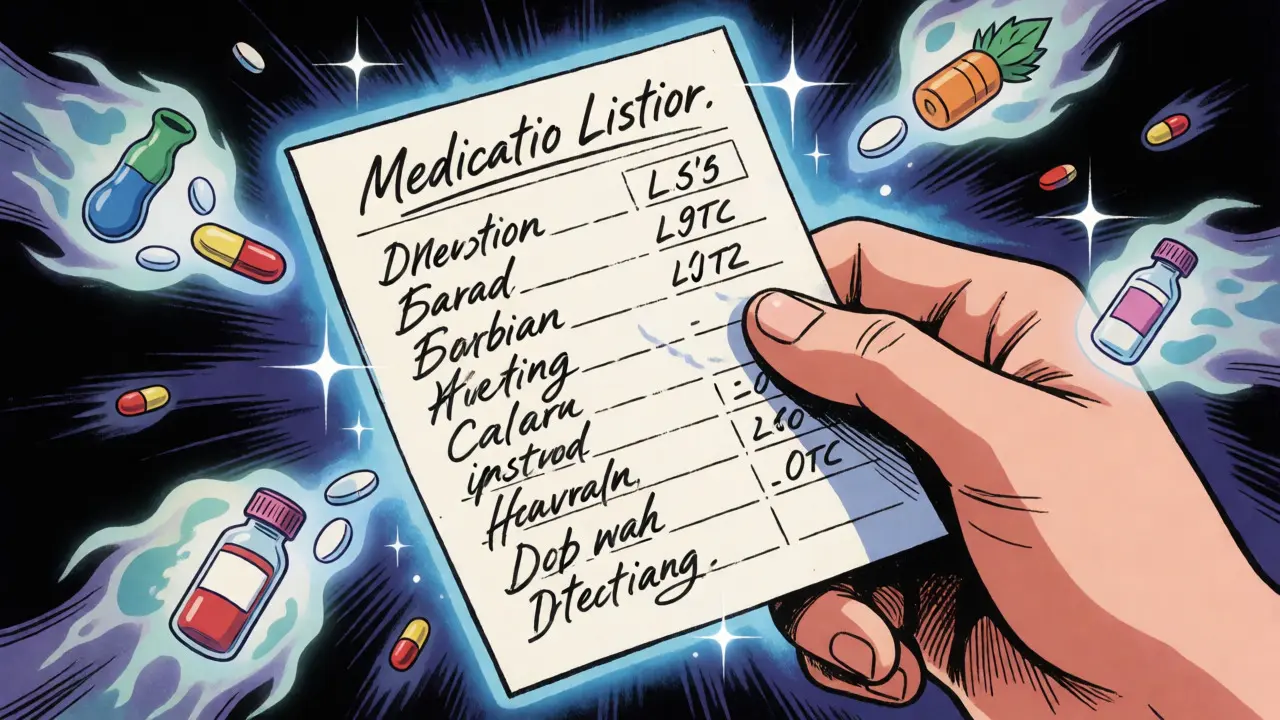
A common mistake is thinking a medication list is just for prescription drugs. It’s not. It needs to be a complete inventory of everything you ingest or apply that has a physiological effect. If you leave something out, you create a blind spot for your doctors. Here is what must be included to make the list useful for care coordination:
- Prescription Medications: Include the generic name (e.g., lisinopril) and the brand name if you use it. Note the strength (e.g., 10 mg), the frequency (once daily), and the time of day.
- Over-the-Counter (OTC) Drugs: Yes, even aspirin, ibuprofen, and antacids count. These can interact significantly with prescriptions. For example, NSAIDs like ibuprofen can interfere with blood pressure meds.
- Vitamins and Supplements: St. John’s Wort, fish oil, and Vitamin K can alter how your body processes drugs. Many people forget these because they don't consider them "medicine," but pharmacists do.
- Herbal Remedies: Similar to supplements, these have active ingredients that aren't regulated as strictly as drugs but still affect your liver enzymes.
- Allergies and Intolerances: Don’t just write "allergic to penicillin." Specify the reaction. Was it a rash? Swelling? Anaphylaxis? This distinction helps doctors choose safe alternatives.
- As-Needed (PRN) Medications: List things like inhalers for asthma or nitroglycerin for chest pain, along with instructions on when to use them.
The FDA’s 'My Medicines' resource emphasizes that specificity saves lives. Vague entries like "heart pills" are dangerous. Be precise. If you take a topical cream or eye drops, include those too. They enter your system, albeit differently, and can still contribute to side effects or interactions.
Building a System That Works for You
Creating the list is step one. Keeping it updated is where most people fail. You need a system that fits your lifestyle. Some people prefer paper cards in their wallet; others swear by apps. There is no right answer, only the right answer for you. However, consistency is key.
If you go digital, apps like GoodRx, Medisafe, or MyTherapy offer robust features. GoodRx reports that 42% of its users utilize their medication list feature. These apps allow you to set reminders, track refills, and share data easily. But technology has limits. A 2024 ECRI Institute report highlighted that only 28% of adults over 75 effectively use digital tools without assistance. If you’re older or less tech-savvy, a simple laminated card in your wallet or a note in your phone’s notes app might be more reliable than an app you forget to open.
For those managing complex regimens (five or more medications), visual aids help. Color-coding your list or using icons for different types of meds can improve adherence by up to 27%, according to clinical guidelines from Advanced Psychiatry Associates. The goal is to make the information accessible at a glance, especially in an emergency.
The Role of Pharmacy Records vs. Personal Lists
You might wonder, "Doesn't my pharmacy already have this info?" Sometimes. But pharmacies are siloed. If you fill prescriptions at CVS for your heart and at Walgreens for your allergies, neither sees the full picture. Moreover, pharmacies often miss OTC purchases unless you buy them there and link them to your account. And they certainly don't know about the herbal tea you drink every morning.
Dr. Michael Cohen, President of the Institute for Safe Medication Practices (ISMP), warns against over-reliance on memory alone. His studies found that 73% of patient-reported lists contained omissions or errors. The best approach is a hybrid model. Use your personal list as the master record, but verify it against your pharmacy’s printout during annual reviews. This double-check catches discrepancies before they become problems.
| Method | Best For | Pros | Cons |
|---|---|---|---|
| Paper Card/Wallet | Elderly, low-tech users, emergencies | No battery needed, instant access, easy to update manually | Can get lost, hard to back up, limited space |
| Digital App (e.g., Medisafe) | Tech-savvy users, complex schedules | Reminders, refill tracking, easy sharing via email | Requires charging, learning curve, privacy concerns |
| Phone Notes/Photo | Simple lists, quick updates | Always with you, searchable text, free | No reminders, manual entry, cluttered interface |
| Pharmacy Printout | Verification, insurance checks | Accurate for filled scripts, includes dates | Misses OTC/supplements, doesn't show unfilled scripts |
How to Communicate During Transitions of Care
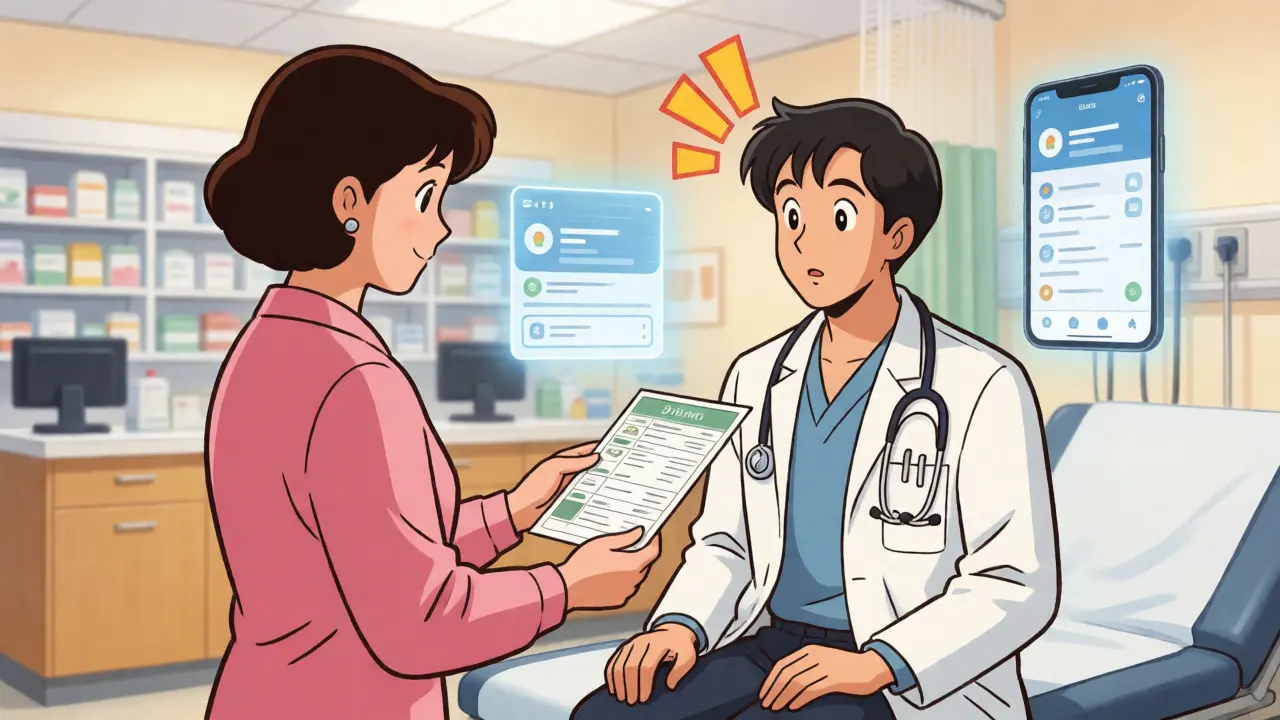
Having the list is useless if you don't use it. Every time you see a new provider, or even your regular doctor, bring the list. Hand it to them. Say, "Here is exactly what I am taking." This small action forces a pause in the rushed appointment flow and prompts the doctor to review it actively.
During hospital admissions, this is critical. The American Hospital Association identified incomplete histories as the leading cause of adverse drug events during admission, accounting for 36.7% of preventable errors. When you arrive at the ER, give your list to the triage nurse immediately. Don't wait until the doctor asks. By then, the initial intake data may already be entered incorrectly.
Also, schedule dedicated medication reviews. Don't tack this onto a visit for something else. A 2023 study in Annals of Family Medicine found that 68% of medication discussions get truncated when crammed into other visits. Ask for a specific slot to reconcile your meds. Bring your list, your bottles, and any questions. This proactive approach reduces medication-related hospital visits by 31%, according to the National Council on Aging.
Common Pitfalls and How to Avoid Them
Even with good intentions, people slip up. Here are the most common traps:
- Forgetting OTCs: 58% of patients forget to mention over-the-counter drugs. Set a reminder to add anything you buy at the drugstore to your list within 24 hours.
- Not Updating After Changes: If a doctor stops a med, cross it off immediately. Don't wait for the next visit. An outdated list is worse than no list because it gives false confidence.
- Ignoring Interactions: Just because you've taken two drugs together for years doesn't mean they are safe forever. As you age or add new meds, interactions change. Review the list annually with a pharmacist.
- Losing the Backup: If you use an app, ensure you can export the data. If you use paper, keep a copy in your car glovebox or bedside drawer. Redundancy saves you when chaos strikes.
Remember, this isn't about becoming a medical expert. It's about being your own advocate. Providers are busy. Systems are imperfect. You are the constant in your healthcare journey. By maintaining a clear, current, and complete medication list, you close the loop on care coordination. You turn a fragmented system into a connected network where safety is everyone's responsibility-but starts with yours.
Do I really need to list vitamins and supplements?
Yes. Vitamins and supplements contain active ingredients that can interact with prescription medications. For example, Vitamin K can reduce the effectiveness of blood thinners like warfarin, and St. John's Wort can interfere with antidepressants and birth control. Listing them ensures your provider has a complete picture of what enters your system.
How often should I update my medication list?
Update it immediately whenever a medication is added, stopped, or changed in dosage. Additionally, perform a full review at least once a year, or more frequently if you have multiple chronic conditions or see several specialists. This ensures the list remains accurate and reflects your current health status.
Is a digital app better than a paper list?
Neither is inherently better; it depends on your habits. Digital apps offer reminders and easy sharing but require charging and tech literacy. Paper lists are accessible anytime, anywhere, without batteries. Choose the format you are most likely to keep updated. Some people use both-a digital master list and a printed card for emergencies.
What details are most important to include for each medication?
Include the generic and brand names, dosage strength (e.g., 50 mg), frequency (e.g., twice daily), time of administration (e.g., with breakfast), reason for taking it (indication), and the prescriber's name. Also note any allergies associated with the drug.
Can my pharmacy just look up my medications instead?
Pharmacies can help, but they often only see prescriptions filled at their location. They may miss over-the-counter drugs, supplements, or medications filled at other pharmacies. A personal list bridges these gaps and provides context about why you take certain meds, which pharmacy records usually lack.