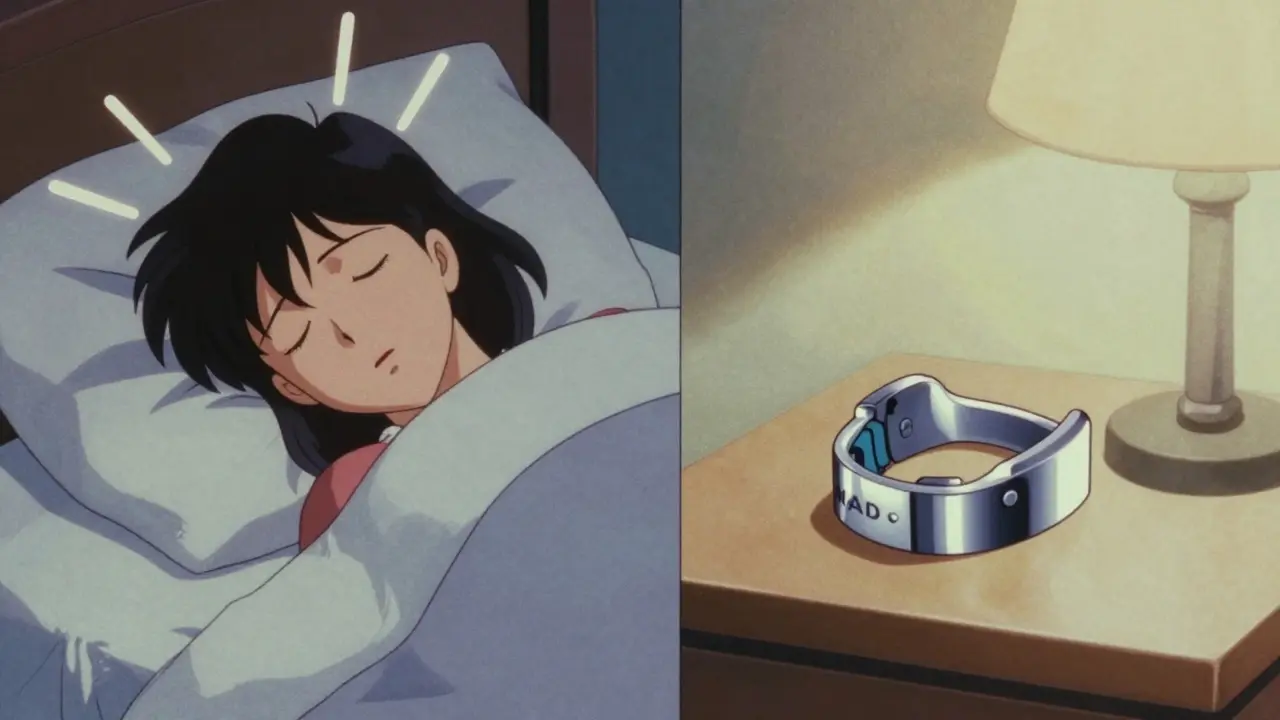
How Mandibular Advancement Devices Actually Work
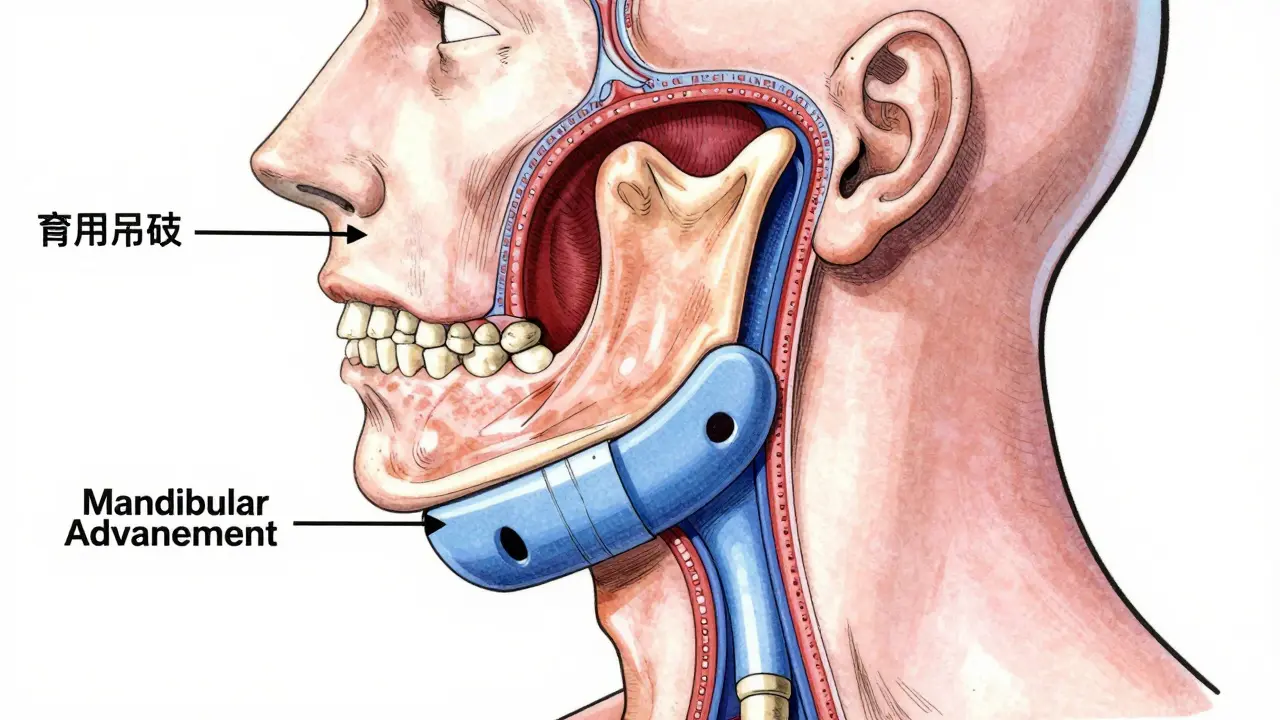
At the heart of this therapy is the Mandibular Advancement Device (or MAD), a custom-fitted oral appliance that pushes the mandible (lower jaw) forward to prevent the tongue and soft tissues from collapsing into the throat. Think of it as a gentle mechanical nudge. When you sleep, your muscles relax, and in many snorers, the lower jaw slides back, narrowing the airway. This causes the tissue to vibrate-which is exactly what that snoring sound is. A MAD prevents this collapse by maintaining a specific amount of protrusion. Research shows that the "dose" of advancement matters. A landmark study by Dr. Nobuyoshi Kato found that moving the jaw forward by 2mm, 4mm, or 6mm significantly lowered the apnea-hypopnea index (AHI). In simpler terms: the more you move the jaw forward (within a comfortable limit), the more open the airway becomes, and the quieter the night gets. Most clinical goals target a protrusion of about 70-80% of your maximum possible jaw movement to hit that sweet spot of effectiveness and comfort.Custom-Made vs. Over-the-Counter Options
Not all mouthguards are created equal. If you search online, you'll find cheap "boil-and-bite" versions for $100, but these are worlds apart from the professional versions prescribed by a sleep dentist.| Feature | Custom Prescription (e.g., SomnoDent) | Over-the-Counter (e.g., Zyppah) |
|---|---|---|
| Materials | Medical-grade acrylic & titanium | Thermoplastic polymers |
| Fit | Precision-scanned to your teeth | Generic / Self-molded |
| Adjustability | Titratable (increments of 0.5-1.0mm) | Fixed advancement |
| Efficacy | Up to 72.3% snoring reduction | Approx. 48.6% snoring reduction |
| Average Cost | $1,800 - $2,500 | $99 - $150 |
Is This Better Than CPAP?
For years, Continuous Positive Airway Pressure (or CPAP) has been the gold standard. It uses a mask and a pump to blast air into the throat. It's incredibly effective, but let's be honest: wearing a mask and being tethered to a machine isn't exactly a romantic or relaxing way to sleep. When we look at the numbers, CPAP is more powerful, achieving 85-95% cessation of snoring. However, MADs have a huge advantage in adherence. Data from the SAVE trial suggests that about 76% of people stick with an oral appliance after a year, compared to only 45% for CPAP. Why the gap? Portability. A MAD weighs about 25-40g and fits in a pocket. There are no humming motors, no leaking masks, and no electricity required. For someone with mild-to-moderate snoring or those who travel frequently, the slight trade-off in absolute power is worth the massive jump in comfort.The Potential Downsides: What to Expect
It isn't all sunshine and quiet nights. Because you are physically moving your jaw, there are side effects. The most common complaint is excessive salivation during the first week-your brain thinks the device is food, and your mouth starts producing extra spit. More seriously, there is the risk of dental changes. About 25% of long-term users may experience a shift in how their teeth meet (occlusal changes). This is why professional supervision is non-negotiable. A dental sleep specialist monitors your bite every six months to ensure the device isn't doing permanent damage to your teeth or your Temporomandibular Joint (or TMJ), the hinge that connects your jaw to your skull. Additionally, these devices aren't for everyone. If you have severe periodontal disease or missing too many teeth (usually requiring at least 6-8 natural teeth per arch for a secure grip), a MAD might not stay in place. Those with a "Mallampati class IV" airway-meaning the throat is very crowded-often find that the device can't push the jaw far enough to overcome the anatomical collapse, leading to higher failure rates.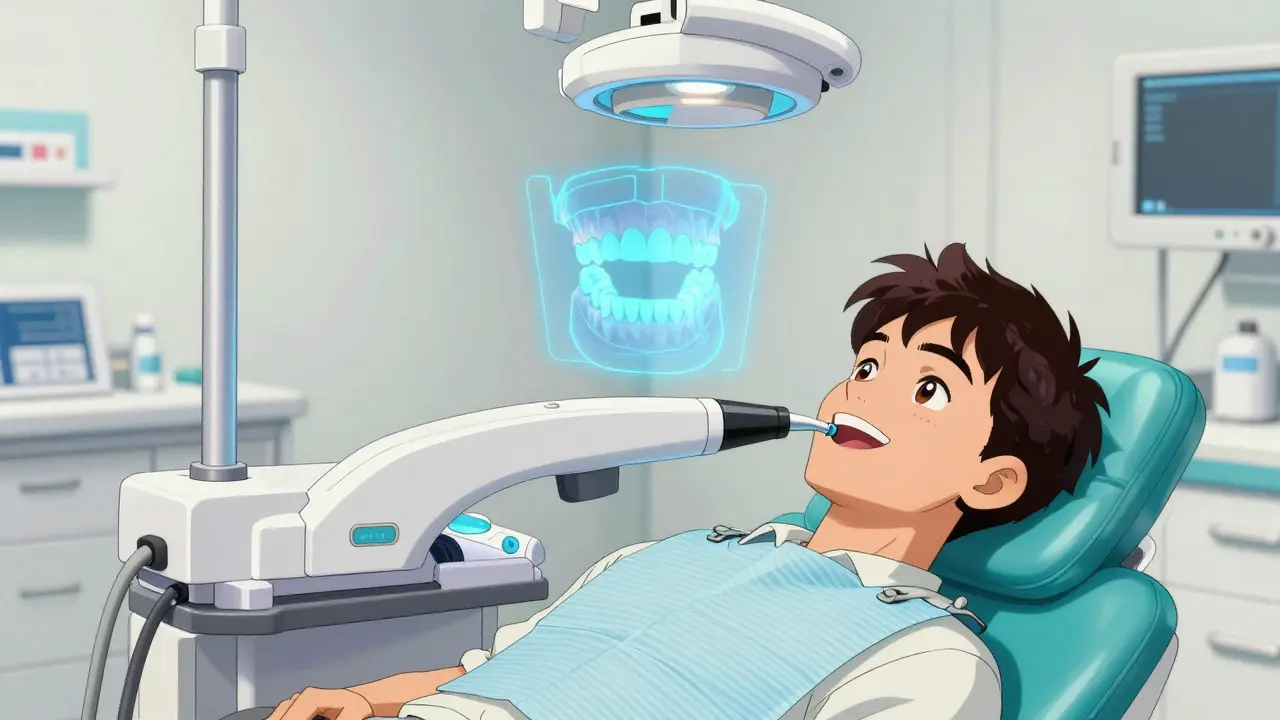
Getting Started: The Path to a Quiet Bedroom
If you're considering this route, don't just buy a random kit online. The process should follow a specific medical protocol to ensure you aren't masking a more serious condition.- Screening: Start with a sleep study (polysomnography) or a home sleep test. You need to know if you have primary snoring or full-blown obstructive sleep apnea (OSA).
- Dental Evaluation: A specialist checks your TMJ health and the strength of your gums.
- Impressions: Digital scanning is the way to go here. It's significantly more accurate than the goopy trays you use at the dentist and leads to a better fit.
- Titration: Once the device arrives, you'll likely increase the advancement by 1mm every 3-5 days. This is the "break-in" period.
- Maintenance: Clean the device nightly to avoid bacterial buildup. If it's a thermoplastic model, some specialists suggest dipping it in warm water to keep it supple during adjustments.
The Future of Sleep Appliances
We are moving away from "dumb" plastic guards toward smart tech. Recent FDA clearances include devices like the SomnoDent EVO 3, which has built-in sensors that track snoring in real-time and send the data to a smartphone app. We're even seeing the rise of AI-driven titration, where an algorithm suggests exactly how many millimeters to move the jaw based on your specific sleep architecture. While some critics, like those at Harvard Health, suggest these devices only work half the time for the general population, that's usually because they include people with severe anatomy that a mouthguard simply can't fix. For the right candidate-someone with mild-to-moderate obstruction-it's often the most life-changing non-surgical tool available.How long does it take for an oral appliance to start working?
You will notice a reduction in snoring from the first night you wear it. However, the "optimal" result usually comes after a 4-6 week titration period. This is when your dentist gradually adjusts the jaw forward to find the point where snoring stops but you can still sleep comfortably.
Will a mandibular advancement device change the shape of my face?
It won't change your bone structure or facial appearance, but it can change your "bite" (occlusion). Because the lower teeth are pushed forward, they may not fit perfectly into the upper teeth when the device is removed. This is why regular check-ups are vital to monitor and correct any shifts.
Can I use a MAD if I have crowns or bridges?
Yes, as long as the crowns are stable and the dental work is well-integrated. The key is having enough healthy tooth structure for the device to grip. Your sleep dentist will evaluate your specific dental work during the initial consultation.
Is it normal to have jaw pain in the morning?
Mild soreness is common during the first 10-14 days of use. To ease this, many specialists recommend wearing the device for an hour or two during the day to acclimate. If the pain is sharp or persists beyond a month, your titration may be too aggressive and needs adjustment.
What happens if I stop wearing the device?
Unlike surgical options, a MAD is a mechanical solution, not a permanent cure. If you stop wearing it, your airway will return to its original state, and snoring typically returns within 48 hours.




Valorie Darling
18 April, 2026 18:17 PMtried one of those cheap boil and bite ones from amazon and it was a total disaster lol
dallia alaba
19 April, 2026 15:24 PMThe difference in efficacy between titration-based custom devices and OTC ones is huge because the airway collapse varies so much between people. It's really about finding that specific millimeter of advancement that opens the pharyngeal space without triggering TMJ inflammation.
Aaron McGrath
21 April, 2026 05:03 AMListen up! If you're still rocking a CPAP mask like some kind of scuba diver in your bedroom, you're missing out on the mobility game! OAT is the ultimate biohack for sleep hygiene. Get that mandible shifted and crush your morning productivity! Stop letting a machine dictate your sleep architecture and take control of your airway dynamics right now!
Mike Beattie
21 April, 2026 12:04 PMThe clinical data on the AHI reduction is interesting, but let's not ignore the potential for retrograde tooth movement. If you don't have a practitioner who understands the biomechanics of the temporomandibular joint, you're basically gambling with your occlusion. Most of these 'sleep dentists' are just general practitioners with a certification, not actual specialists in craniofacial dynamics.
Brigid Prosser
23 April, 2026 03:43 AMHonestly, the 'morning jaw ache' is such a vibe killer at first, but you just gotta push through it. It's like breaking in a new pair of boots. Once you hit that sweet spot of advancement, the quality of sleep is just magic. Total game changer for any couple trying to avoid the 'divorce by snoring' route!
caesar simpkins
24 April, 2026 17:21 PMIt's wild how much a tiny piece of plastic can actually change your whole life. I remember the first time I used one and I actually woke up feeling refreshed instead of like I'd been hit by a truck. The portability is the real winner here, especially for anyone who travels for work.
Charlotte Boychuk
26 April, 2026 10:42 AMThe drooling part is honestly a bit of a comedy show for the first few nights. I felt like a leaky faucet! But hey, if a little extra spit is the price for actually getting a full eight hours of shut-eye without waking up the whole neighborhood, I'll take that trade any day of the week.
Lucy Kuo
26 April, 2026 20:31 PMIt is truly a marvel of modern dental engineering to provide such a non-invasive alternative to surgical intervention. The sheer elegance of repositioning the mandible to ensure a clear respiratory passage is quite poignant. I find the transition from the cumbersome CPAP apparatus to a discreet oral device to be an absolutely transformative experience for one's nightly repose.
Aman Tomar
27 April, 2026 02:15 AMI have read about the Mallampati scale and it is quite fascinatting how the physical anatomy of the throte can make or break these devices. It is a shame that some people simply cannot use them due to their anatomy, but it highlights why a proper medical screening is so crucial before spending money on a device.
Grace Grace
29 April, 2026 01:28 AMOmg I totaly agree with the part about the CPAP being claustrophobic!! I tried it for a month and felt like I was being suffocated by a vacuum cleaner!! The MAD is so much better even though my jaw felt a bit wonky at first. Just make sure you get a real doc to do it and dont just buy a random kit off the net because you might mess up your teeth!!
Akshata Kembhavi
29 April, 2026 22:14 PMDefinitely agrees with the point about the custom fit. I've seen people use those generic ones and they just pop out in the middle of the night. Not a great way to wake up!
aman motamedi
30 April, 2026 10:15 AMThe emphasis on regular professional monitoring is absolutely paramount to avoid long-term occlusal instability.