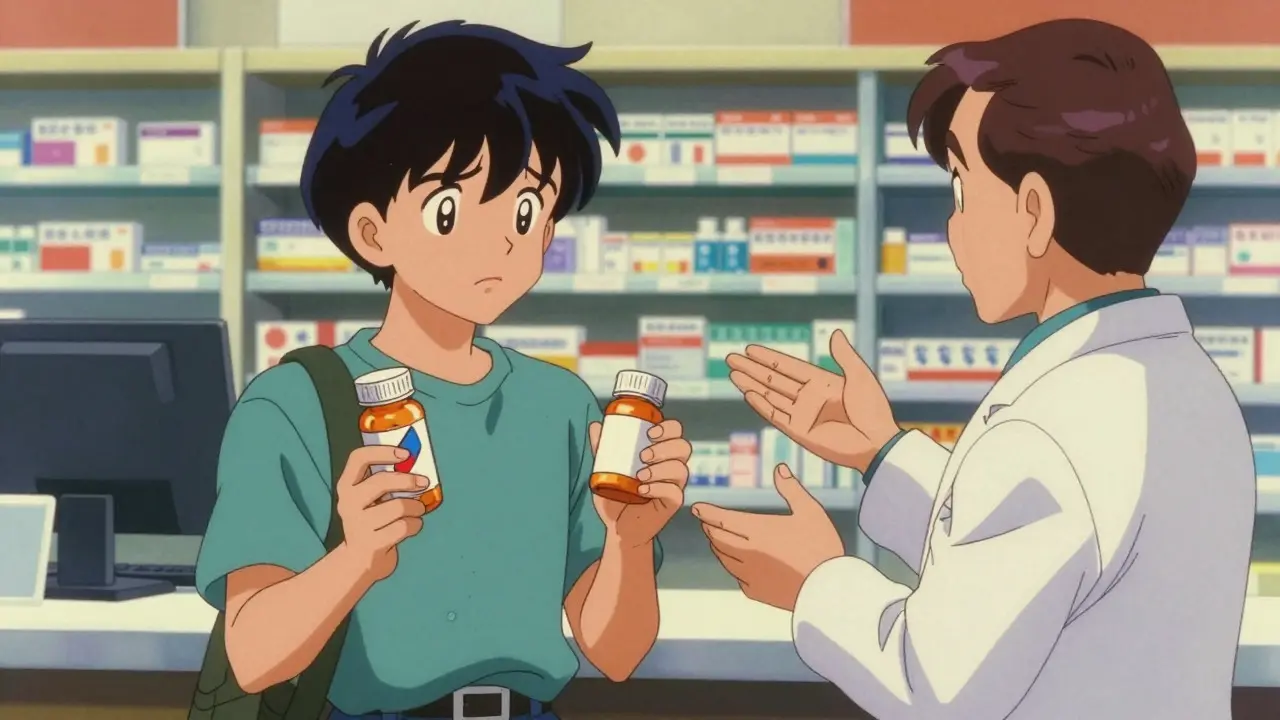
Imagine picking up your prescription at the pharmacy counter. The box looks different-maybe it's a different color or shape-but the pharmacist tells you it's the same medication you've always taken, just cheaper. You might wonder: "Is this really the same drug? Why is it called a generic if the brand maker made it?" This confusion is common because authorized generics are approved brand name drugs marketed without the brand name on their label, making them chemically identical to the original branded product. They sit in a unique spot between expensive brand-name pills and standard low-cost generics, offering a balance of familiarity and savings that many patients don't fully understand.
These medications have been around since the 1990s but became a major strategic tool for pharmaceutical companies in the 2000s. If you're a patient trying to save money, a prescriber wondering about therapeutic equivalence, or just someone curious about why your pill changed appearance, this guide breaks down exactly what authorized generics are, how they differ from traditional generics, and why they matter for your wallet and health.
The Core Definition: What Makes an Authorized Generic Unique?
To understand authorized generics, you first need to know how they are created. Unlike traditional generic drugs, which must go through a separate approval process called the Abbreviated New Drug Application (ANDA) to prove they work the same as the brand-name version, authorized generics use the original New Drug Application (NDA). This means they are legally considered the exact same product as the brand-name drug. The only difference? The label doesn't say the brand name.
Think of it like a private label store brand. A grocery store might sell "Store Brand Milk" that is produced by the same dairy farm that makes "Premium Brand Milk." The milk is identical in taste, nutrition, and quality. The only change is the packaging and the price. In the pharmaceutical world, the "dairy farm" is the brand-name manufacturer, and the "store brand milk" is the authorized generic.
According to the U.S. Food & Drug Administration (FDA), an authorized generic is "the exact same drug product as the branded product" except for the label. This distinction is crucial. It means:
- Same Active Ingredient: The chemical compound that treats your condition is identical.
- Same Inactive Ingredients: Binders, dyes, and fillers are exactly the same as the brand-name version. This is a big deal for patients with allergies or sensitivities to specific excipients.
- Same Manufacturing Process: It comes off the same production line or is licensed directly from the brand maker.
- No Bioequivalence Study Required: Because it's the same drug, it doesn't need to prove it works the same way in the body-it already does.
Authorized Generics vs. Traditional Generics: The Key Differences
Most people assume all generics are created equal. While they are therapeutically equivalent, there are structural differences between authorized generics and traditional generics that affect pricing, availability, and patient experience. Here is how they stack up:
| Feature | Authorized Generic | Traditional Generic |
|---|---|---|
| Manufacturer | Brand-name company or its licensee | Third-party generic company |
| Approval Pathway | Uses existing NDA (Notification only) | Requires ANDA approval |
| Inactive Ingredients | Identical to brand-name | May differ from brand-name |
| Orange Book Listing | Not listed | Listed with therapeutic equivalence rating |
| Typical Price Range | 15-25% lower than brand | Often 80-90% lower than brand |
| Purpose | Defensive market strategy for brand makers | Cost-saving alternative for consumers |
The biggest practical takeaway here is the inactive ingredients. If you react to a specific dye or binder in your brand-name medication, a traditional generic might trigger that reaction because it uses different fillers. An authorized generic will not, because it uses the exact same formula. However, traditional generics are usually significantly cheaper once multiple manufacturers enter the market. Authorized generics often hold prices higher because the brand manufacturer is still involved, capturing some of the profit margin they would otherwise lose to competition.
Why Do Pharmaceutical Companies Launch Them?
If authorized generics cost more than traditional generics, why do brand companies bother making them? The answer lies in market timing and revenue protection. When a patent expires, a flood of traditional generics can hit the market, dropping the price of a drug by 80% or more overnight. For a pharmaceutical company that spent billions developing that drug, this is a financial cliff.
By launching an authorized generic, the brand company keeps a foot in the door. They offer a slightly cheaper option to insurers and pharmacies, maintaining their relationship with Pharmacy Benefit Managers (PBMs) and keeping some sales volume flowing. Research published in Health Affairs in 2022 analyzed 854 authorized generic launches between 2010 and 2019. The study found that in markets where traditional generics were already available, 75% of authorized generics launched *after* the generic competition had started. This suggests a defensive move: "If we're going to lose the high-price brand market, let's at least capture the mid-tier market before the cheap generics take over completely."
It’s a strategic play. The brand company isn't trying to undercut everyone; they're trying to stay relevant. For example, when Colcrys (a brand-name colchicine) faced generic competition, Prasco Laboratories launched an authorized generic. It wasn't the cheapest option on the shelf, but it was the safest bet for patients who trusted the original formulation.
Real-World Examples: Recognizing Authorized Generics
You might encounter an authorized generic without realizing it. Here are a few well-known examples that illustrate how this works in practice:
- Colcrys (Colchicine): The authorized generic is manufactured by Prasco Laboratories. It looks different from the blue brand-name pill, but the internal chemistry is identical.
- Concerta (Methylphenidate ER): Watson/Actavis has offered an authorized generic version. For ADHD patients, this meant getting the exact same extended-release mechanism without paying the premium brand price.
- Celebrex (Celecoxib): Greenstone Pharmaceuticals marketed an authorized generic. This is particularly relevant for arthritis patients who may be sensitive to the specific coating used in the brand-name version.
- Unithroid (Levothyroxine): Jerome Stevens Pharmaceuticals offers an authorized generic. Thyroid hormone replacement is highly sensitive to dosage consistency, so having the exact same formulation as the brand-name product is a significant comfort for many patients.
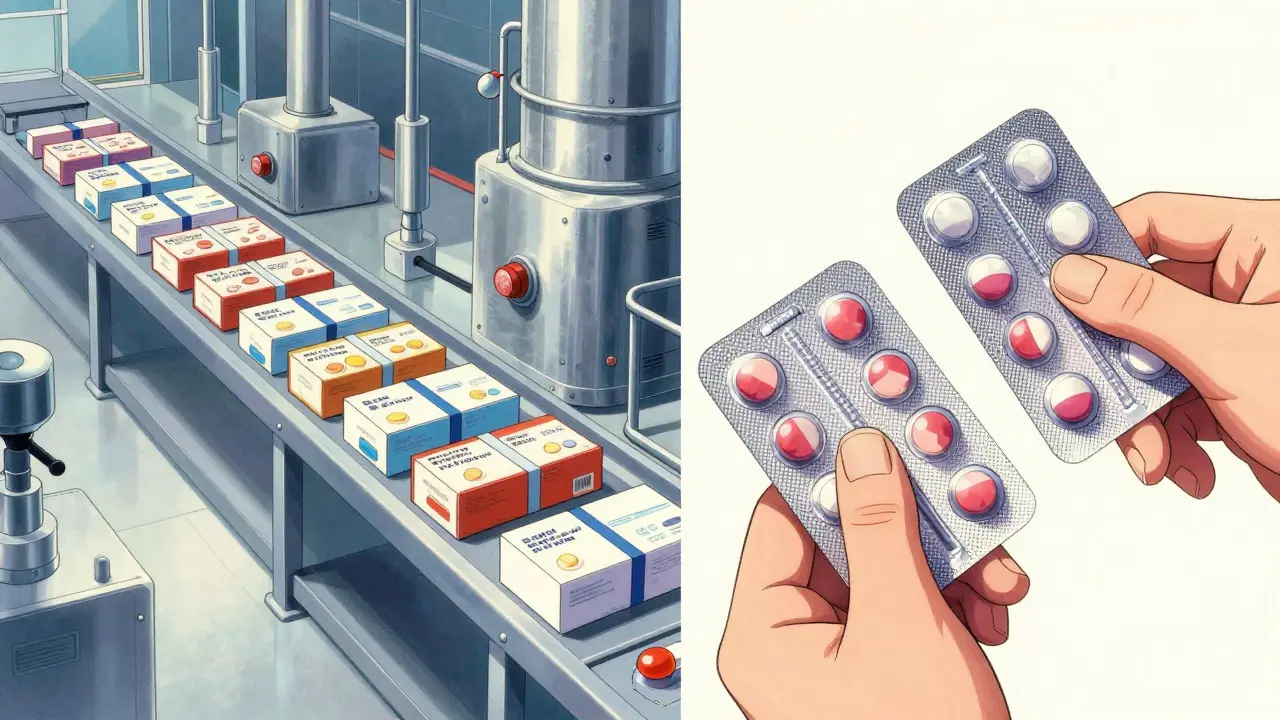
In each case, the physical appearance-color, shape, imprint-changes to distinguish it from the brand-name box. But inside, it's the same molecule, mixed with the same excipients, using the same manufacturing standards.
Impact on Patients and Prescribers
For patients, the main benefit is cost savings without the risk of switching to a completely different formulation. You get a discount (usually 15-30% off the brand price) while keeping the peace of mind that comes from knowing the inactive ingredients haven't changed. However, there is a learning curve. Many patients feel confused when their pill changes color but is still labeled as a "generic." Pharmacists often spend time explaining that "generic" in this context refers to the legal classification, not a drop in quality.
For prescribers, authorized generics add a layer of complexity. They aren't listed in the FDA's Orange Book, which is the standard reference for approved generic equivalents. Instead, you have to check the FDA's official list of authorized generic drugs. This means staying updated on notifications rather than relying on the standard therapeutic equivalence ratings. Some doctors prefer prescribing the brand name specifically to avoid any substitution issues, but others welcome authorized generics as a way to help patients afford necessary treatments without compromising efficacy.
One common concern in online health forums is skepticism. Patients sometimes ask, "Why would the company make a generic version of its own drug? Is it a trick?" The short answer is no, it's business. But for the patient, the result is positive: lower costs and consistent quality. The debate mostly revolves around whether these drugs truly increase competition or just soften the blow for brand companies. Most experts agree that while they may protect brand revenues somewhat, they still provide a valuable middle-ground option for those who cannot afford the full brand price but want to avoid third-party generics.
How to Identify and Access Authorized Generics
Since authorized generics aren't in the Orange Book, identifying them requires a bit of detective work. Here is how you can tell if you're getting one:
- Check the Label: Look for the drug name without the brand logo. If it says "Colchicine" instead of "Colcrys," it could be an authorized generic or a traditional one. You need to look deeper.
- Ask Your Pharmacist: Pharmacists have access to databases that flag authorized generics. Ask, "Is this an authorized generic of [Brand Name]?"
- Compare Inactive Ingredients: If you have a sensitivity issue, compare the inactive ingredient list on the new bottle with your old brand-name bottle. If they match exactly, it's likely an authorized generic.
- Consult the FDA List: The FDA maintains an updated list of authorized generic drugs. Healthcare providers can cross-reference the National Drug Code (NDC) number on your prescription against this list.
Accessing them is straightforward. You don't need a special prescription. If your insurance covers the brand-name drug, the pharmacy may automatically substitute an authorized generic if it's on formulary. If not, you can ask your doctor to specify "dispense as written" for the brand name if you prefer to pay the premium, or request the authorized generic specifically to save money.
Frequently Asked Questions
Are authorized generics safer than traditional generics?
They are equally safe in terms of active ingredients, but they may be safer for patients with allergies to inactive ingredients. Since authorized generics use the exact same fillers and dyes as the brand-name drug, there is no risk of reacting to new excipients. Traditional generics must prove bioequivalence but can use different inactive ingredients, which occasionally causes issues for sensitive patients.
Why aren't authorized generics listed in the Orange Book?
The Orange Book lists drugs that have gone through the Abbreviated New Drug Application (ANDA) process to prove therapeutic equivalence. Authorized generics do not undergo this process because they are legally identical to the brand-name drug under the original New Drug Application (NDA). They are simply re-labeled versions of the already-approved product, so they require only notification to the FDA, not a separate equivalence evaluation.
Can I switch between an authorized generic and a traditional generic?
Yes, you can switch, but be aware of the inactive ingredient differences. If you tolerate the traditional generic well, sticking with it is fine. If you notice side effects or changes in effectiveness, switching back to the authorized generic (or the brand name) might help, as the formulation is identical to the original. Always consult your pharmacist or doctor before making frequent switches, especially for narrow therapeutic index drugs like thyroid hormones or anticoagulants.
Do authorized generics cost less than brand-name drugs?
Yes, typically by 15% to 30%. While they are not as cheap as traditional generics (which can be 80-90% cheaper), they offer a meaningful discount compared to the full brand-name price. The exact savings depend on the specific drug, insurance coverage, and pharmacy pricing, but they generally serve as a mid-tier cost option.
How long do authorized generics remain on the market?
There is no fixed expiration date. They remain available as long as the brand manufacturer chooses to produce and market them. Often, they stay on the market for years after the initial launch, serving as a stable option for patients who prefer the original formulation over third-party generics. However, if a brand company decides to discontinue the authorized generic line, the product may eventually disappear from shelves, though this is rare for popular medications.